Precision Injection Molding
Consistent resin moisture levels help ensure dimensional stability, mechanical strength, and repeatable molding performance.
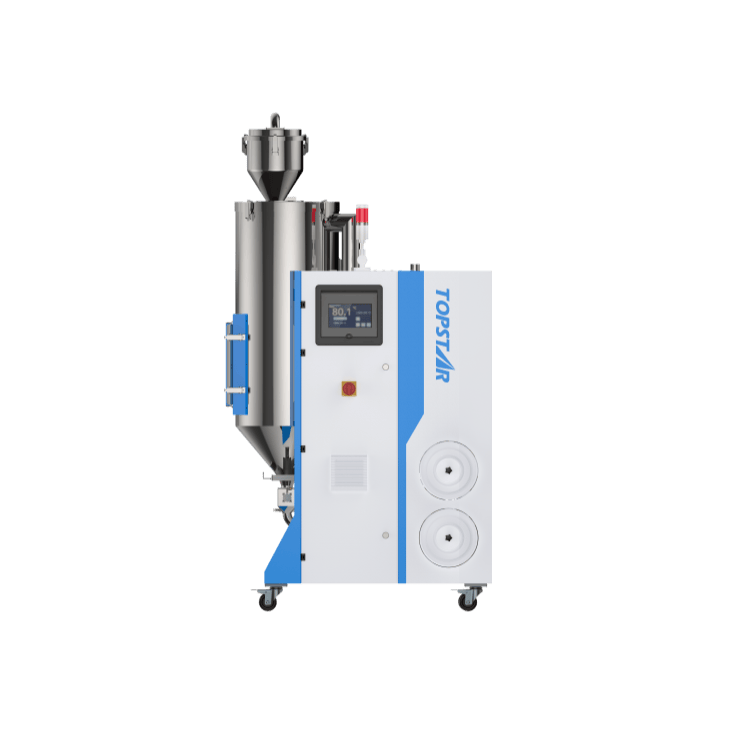
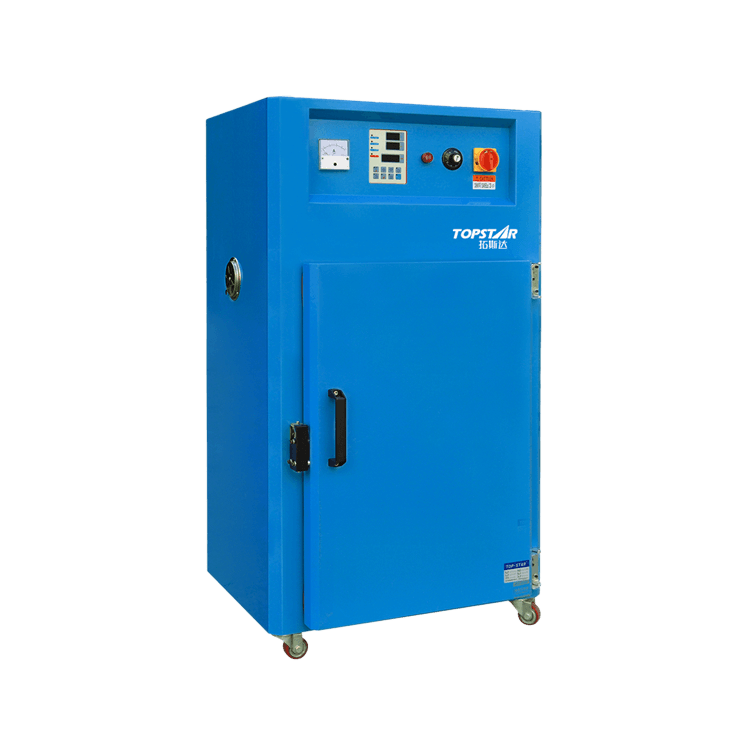
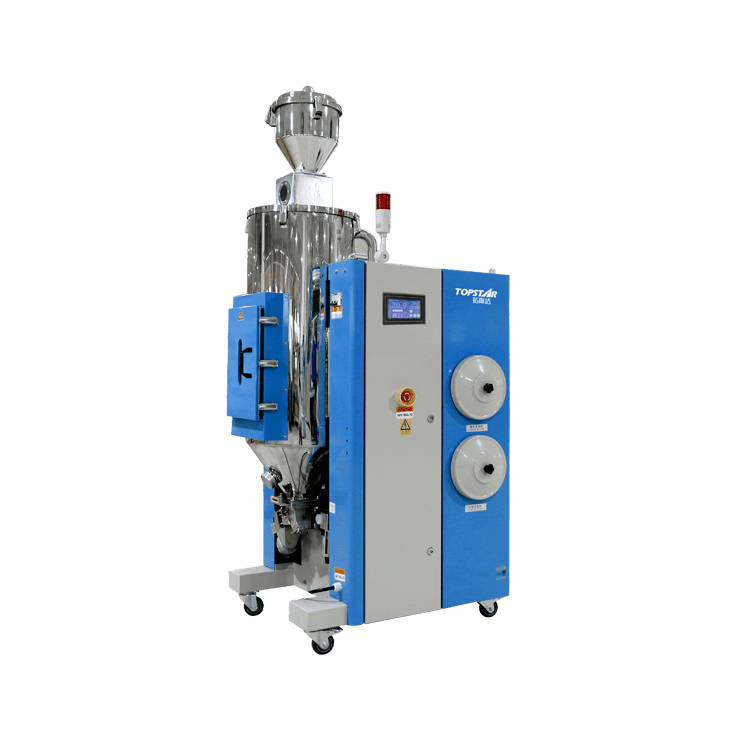
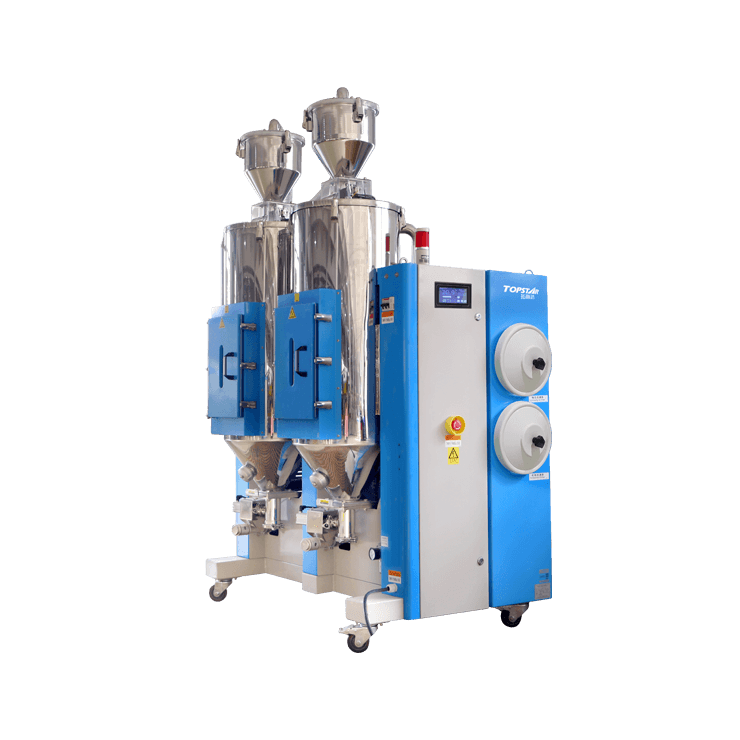
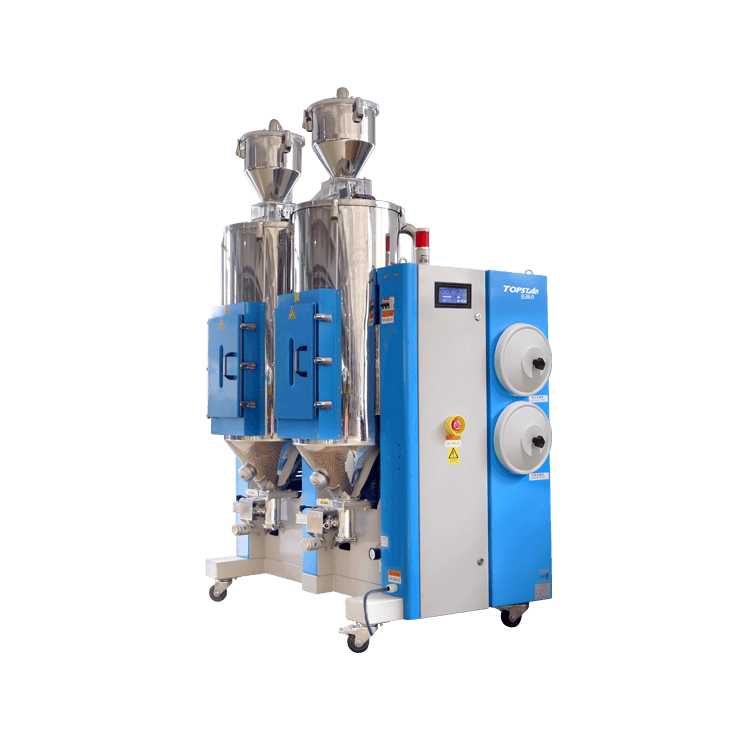
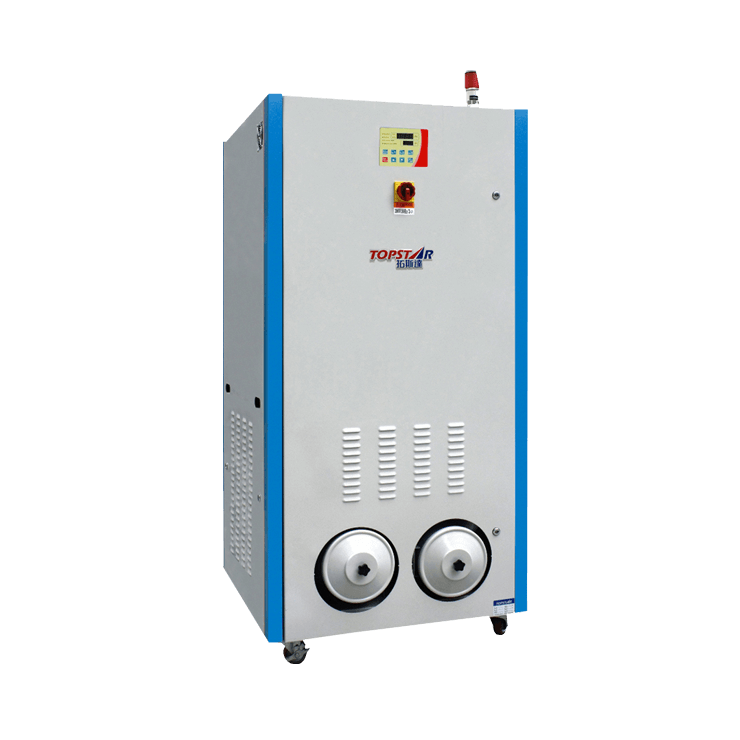
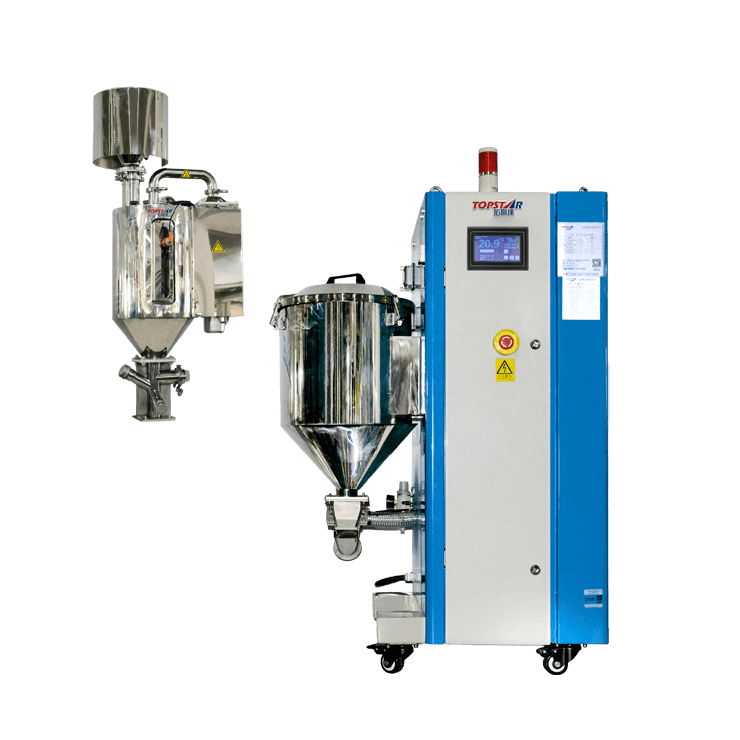
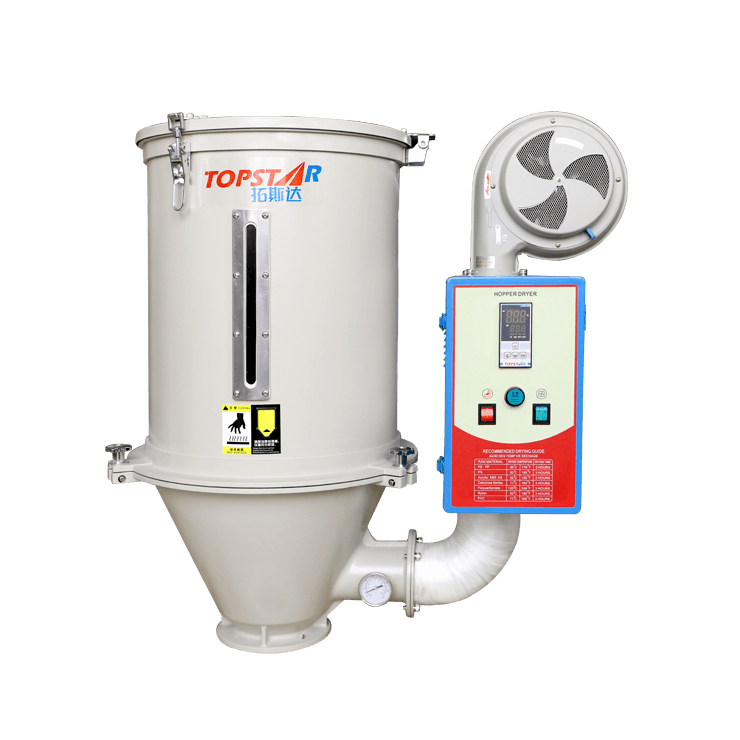
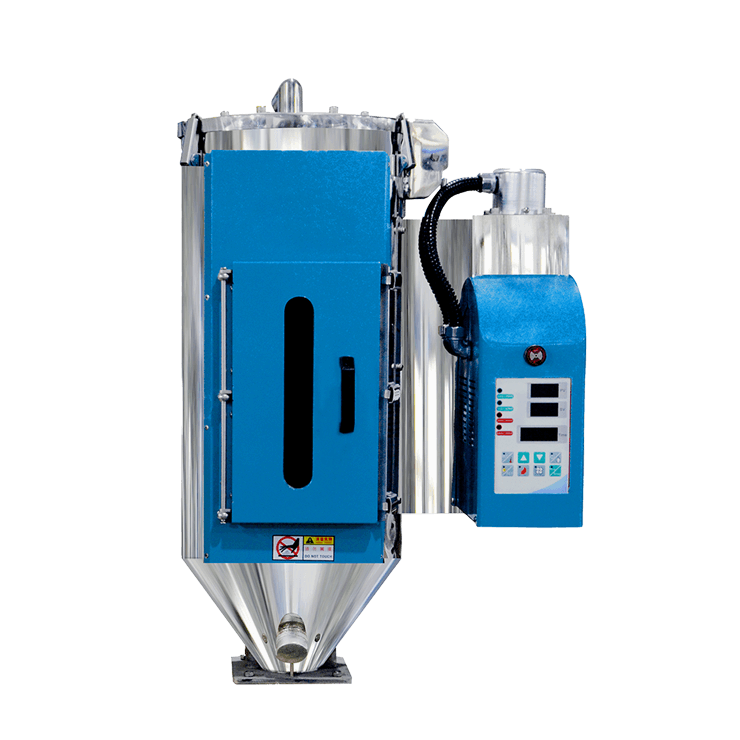
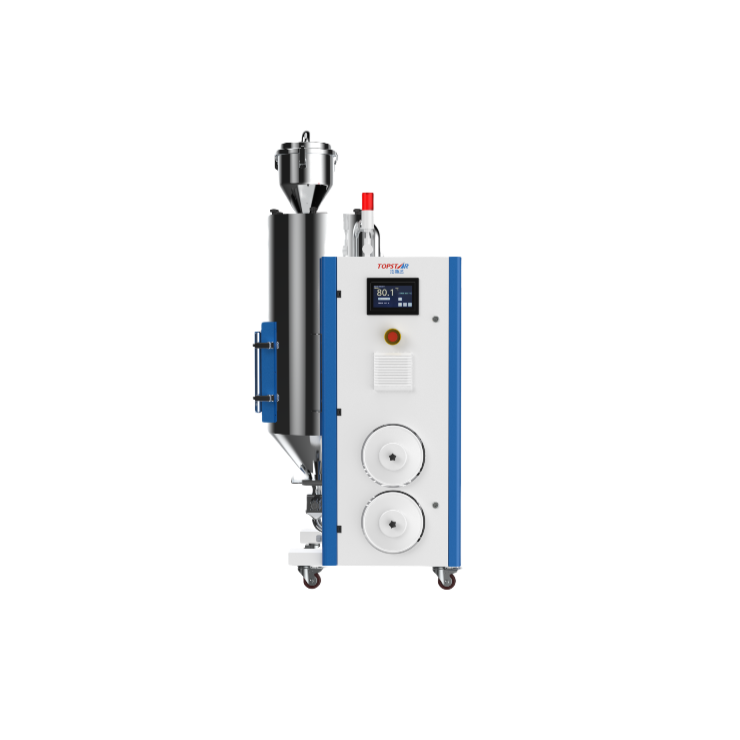
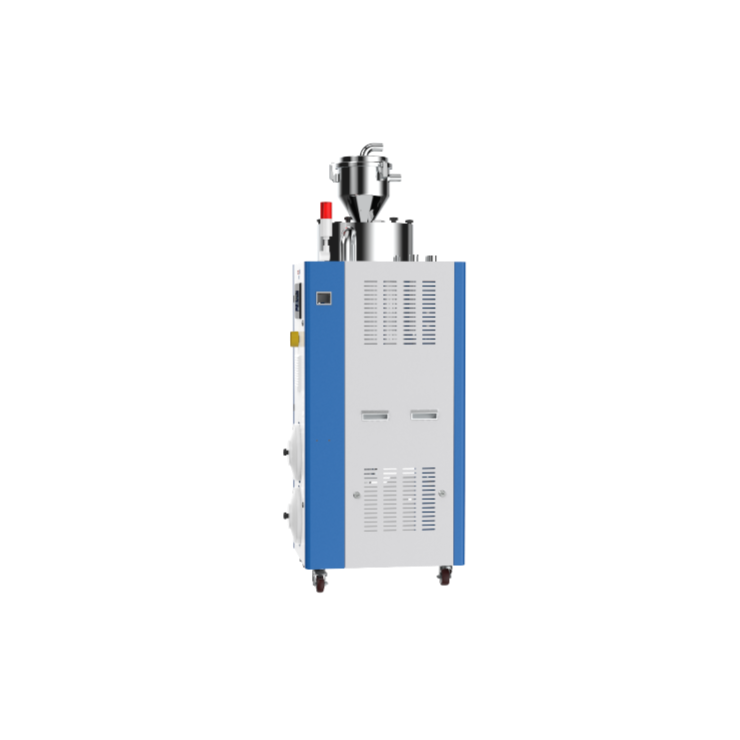
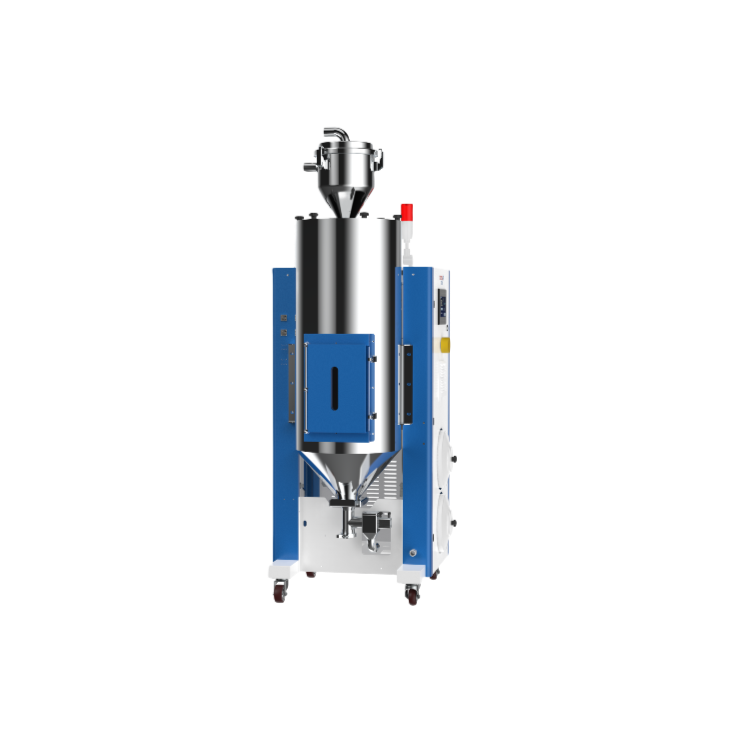
Topstar drying and dehumidification systems are specifically designed for injection molding applications, providing precise humidity control, stable low-dew-point drying, and contamination-free material handling. These dryers and dehumidifier dryers utilize PID temperature control, energy-efficient airflow design, stainless steel construction, and comprehensive safety features to effectively improve product quality while reducing energy consumption. From standard hot air dryers to advanced three-in-one drying systems and nitrogen dehumidification systems, Topstar offers reliable drying solutions for hygroscopic plastics, optical-grade plastics, and high-performance plastics.
Adequate supply of goods, available for delivery within 35 days.
Molding defects related to the material often originate before the resin even reaches the injection unit. Hygroscopic plastics—such as PET, PA, PC, and PBT—absorb moisture during storage and handling. When excessive residual moisture remains in the resin, the high temperatures within the barrel can lead to issues such as hydrolysis, silver streaks, bubbles, reduced strength, surface defects, and dimensional instability.
A comprehensive plastic drying system manages drying air quality, drying temperature, airflow, residence time, and material conveying as an integrated process.
A honeycomb rotor or nitrogen dehumidification unit removes moisture from the process airflow. The system then supplies stable, dry air tailored to the resin's moisture sensitivity and production requirements.
Controlled temperature, appropriate airflow, and sufficient residence time facilitate the migration of moisture from within the resin pellets into the dry air stream.
After drying, the material is transported through a closed-loop conveying system that isolates it from ambient plant air, thereby minimizing moisture re-absorption.
The system conveys the prepared resin based on machine consumption rates, maintaining a steady supply while minimizing unnecessary exposure.
Parameters such as temperature, dew point, alarms, and operational logs—along with optional communication features—enable operators to detect changes before they impact molding quality.
Generates low-dew-point process air required for processing hygroscopic and high-performance plastics.
Controls resin temperature, airflow distribution, and residence time to ensure consistent drying results.
Transports dried material between the hopper and the molding machine while minimizing moisture re-absorption and contamination.
Protects the rotor, fans, piping, and material contact surfaces from dust, oil, and process contaminants.
Coordinates temperature, dew point, timing, alarms, recipes, and optional factory communication via a single operating interface.
Start with the resin and production targets, then work back to the system configuration. Evaluate moisture sensitivity, hourly throughput, drying temperature, residence time, target dew point, conveying distance, the number of molding machines, and contamination control requirements together.
| Material / Process Requirement | System Configuration Direction |
|---|---|
| General-purpose materials such as PP and PE | Controlled hot-air drying |
| PET, PA, PC, and PBT | Low-dew-point honeycomb drying |
| Optical and transparent materials | Sealed, polished material paths with high-efficiency filtration |
| Materials prone to oxidation or yellowing | Nitrogen drying environment |
| Two materials processed simultaneously | Dual-hopper temperature control |
| High-throughput continuous production | Heat recovery and variable-frequency control |
| Material supply to multiple molding machines | Integrated central drying and conveying |
Resin drying is only one part of the overall process. If prepared material travels through open conveying channels, it may re-absorb moisture before reaching the molding machine.
TOPSTAR employs sealed conveying, material shut-off controls, stainless steel contact surfaces, and appropriate filtration to protect the prepared resin between the drying hopper and the injection unit.
Plastic drying and dehumidification systems can integrate resin preparation, material conveying, and injection molding into a single production workflow. Optional communication interfaces allow operational data, alarm information, drying temperatures, and process conditions to be linked to the factory's production management system.
This integration helps manufacturers coordinate material supply with machine consumption, reduce manual intervention, and enhance process consistency during continuous production.
Consistent resin moisture levels help ensure dimensional stability, mechanical strength, and repeatable molding performance.
Polished contact surfaces, high-efficiency filtration, and sealed conveying minimize contamination, yellowing, and visible surface defects.
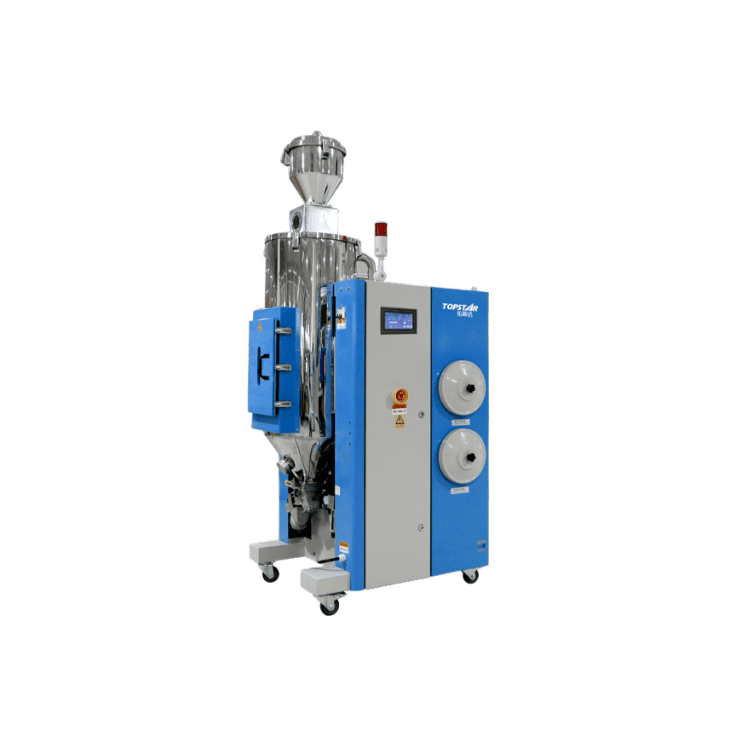
Controlled drying and continuous material conveying support demanding engineering plastics and stable, high-volume production.
Dual-hopper configurations allow different resins to be maintained at their required drying temperatures within a coordinated drying process.
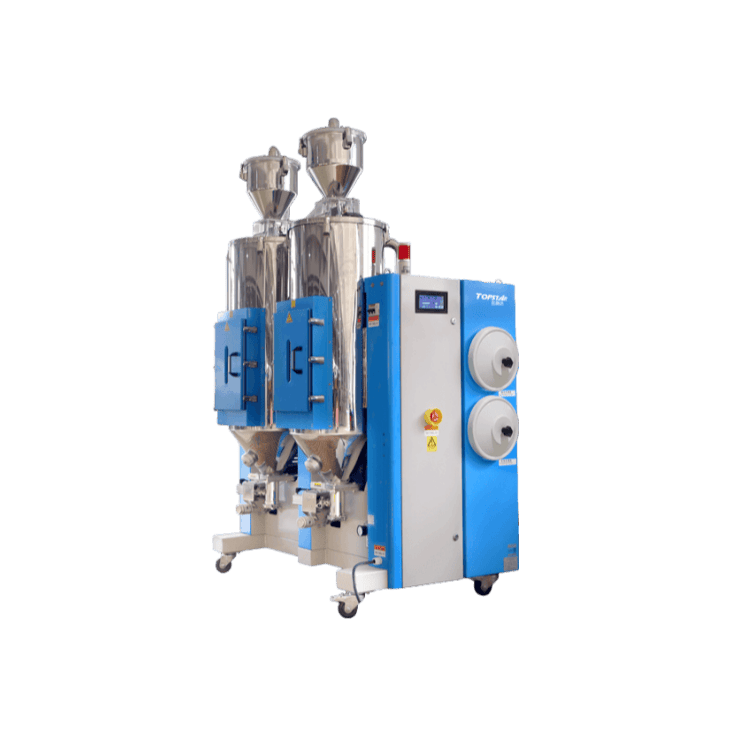
Heat recovery, thermal insulation, and variable-frequency operation reduce unnecessary energy consumption without compromising drying stability.
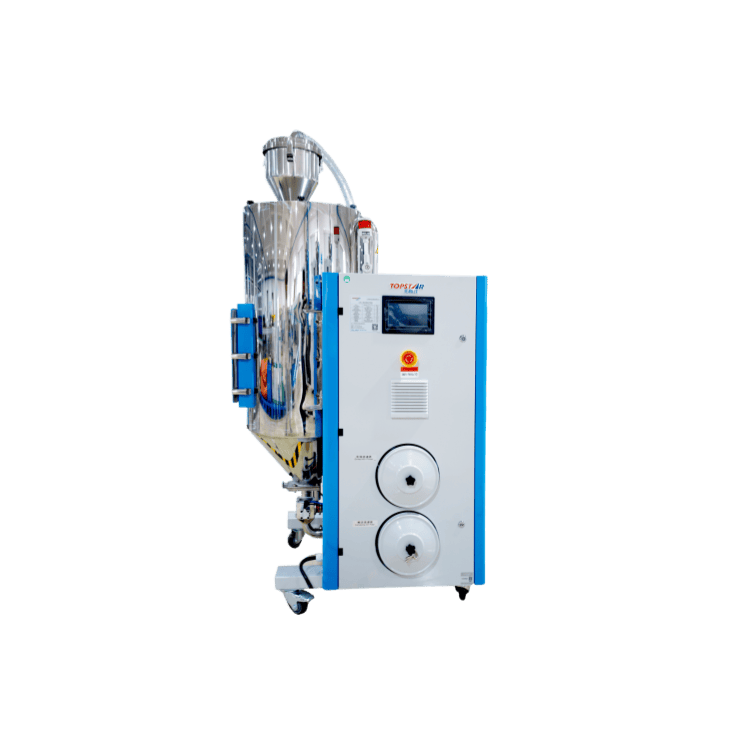
Please let us know the materials you process, your hourly resin consumption, and the quality issues you need to resolve. TOPSTAR will configure the dehumidification, drying, conveying, and control components to match your specific injection molding process.
Select the Right Drying and Dehumidifying Equipment