
News and articles from Topstar
We are committed to the innovation and application of industrial manufacturing automation.
-
2026/10/23 By: le zhan
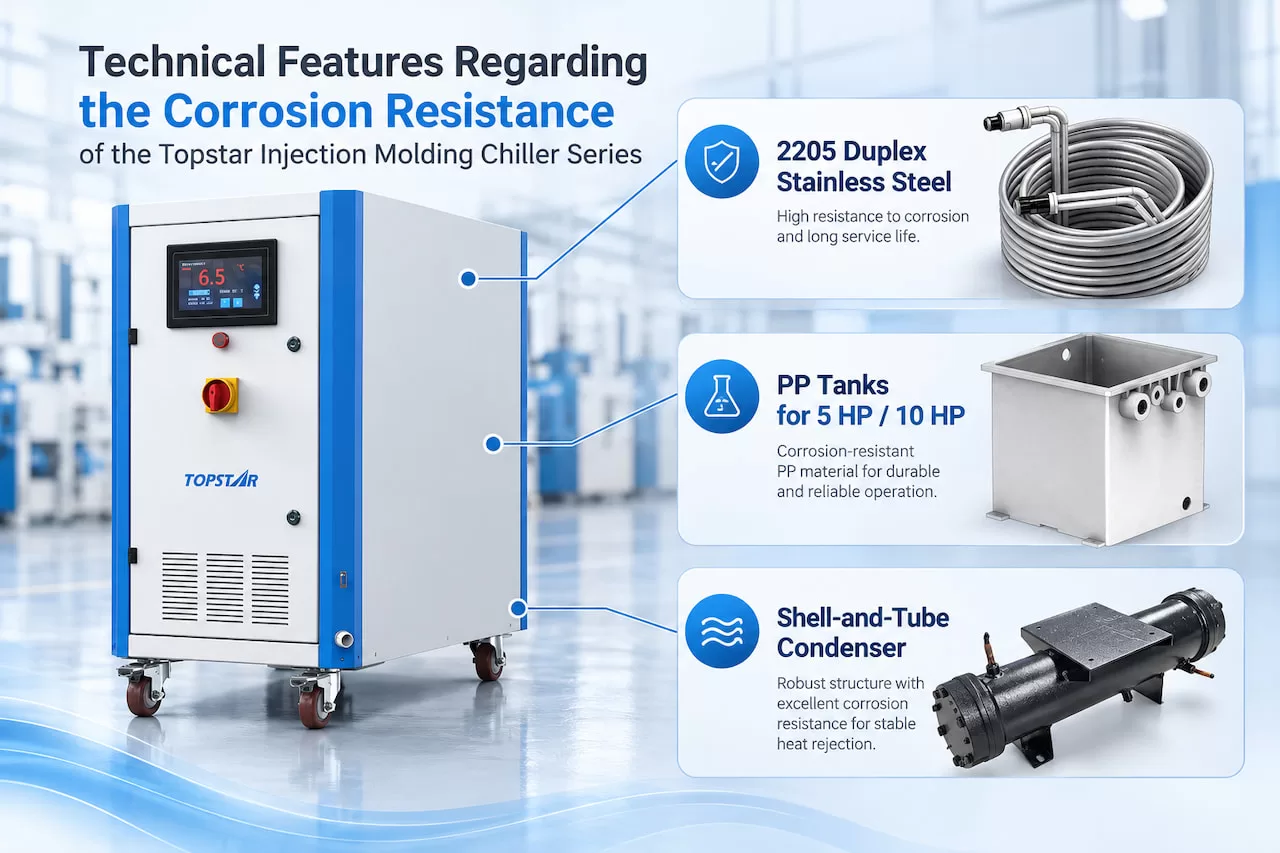
Technical Features Regarding the Corrosion Resistance of the Topstar Injection Molding Chiller Series
Corrosion resistance directly affects the service life, leak risk, and maintenance requirements of injection molding chillers. Topstar’s injection molding chiller series enhances durability through three key design features: These features collectively address potential failures in the refrigerant and water circuits, helping manufacturers minimize downtime, maintain cooling stability during the injection molding process, and improve corrosion… Continue reading Technical Features Regarding the Corrosion Resistance of the Topstar Injection Molding Chiller Series
-
2026/10/21 By: le zhan
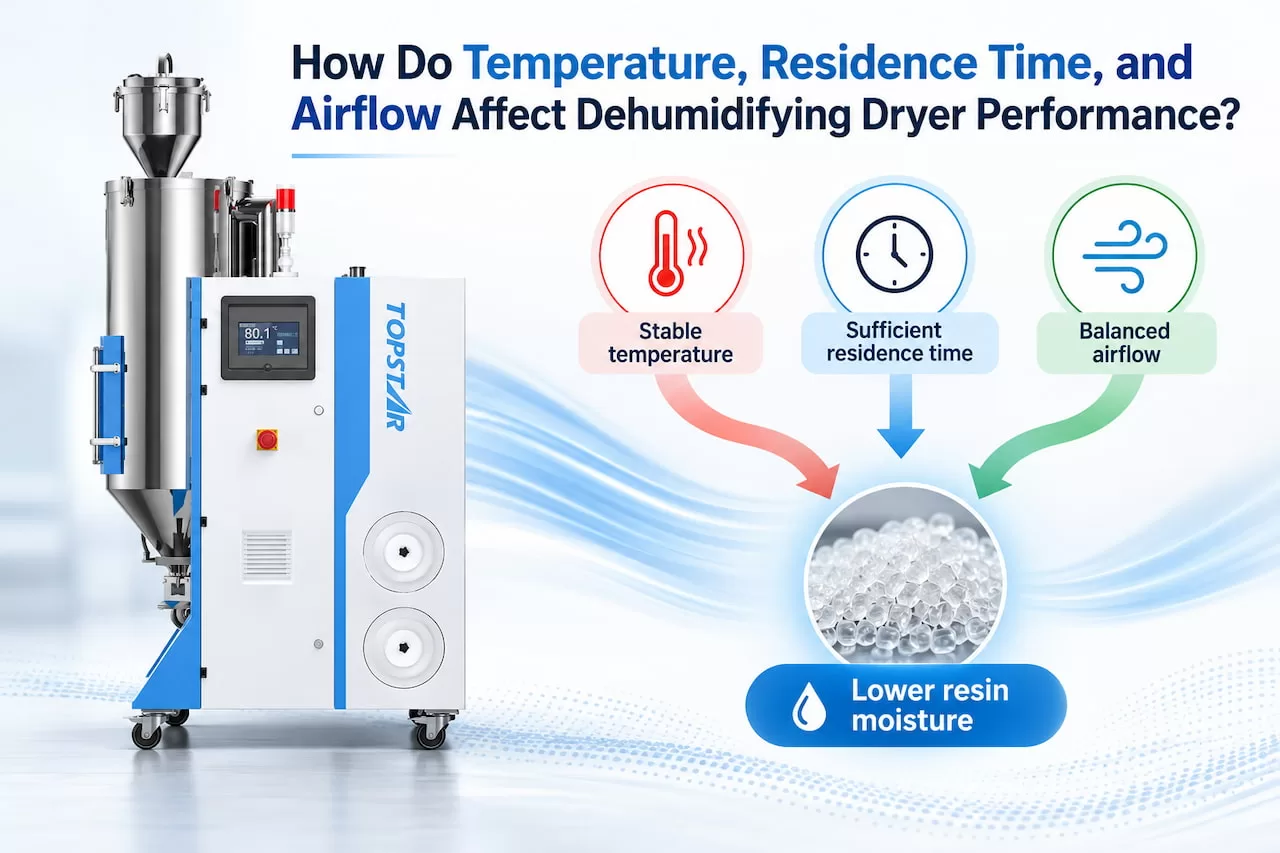
How Do Temperature, Residence Time, and Airflow Affect Dehumidifying Dryer Performance?
In drying plastic raw materials, temperature provides the heat needed to release moisture from the resin pellets; residence time allows moisture to migrate from the pellet interior to the surface; and airflow delivers dry air and carries the moisture away. These factors must work together under appropriate dew point conditions. The performance of a dehumidifying… Continue reading How Do Temperature, Residence Time, and Airflow Affect Dehumidifying Dryer Performance?
-
2026/10/19 By: le zhan
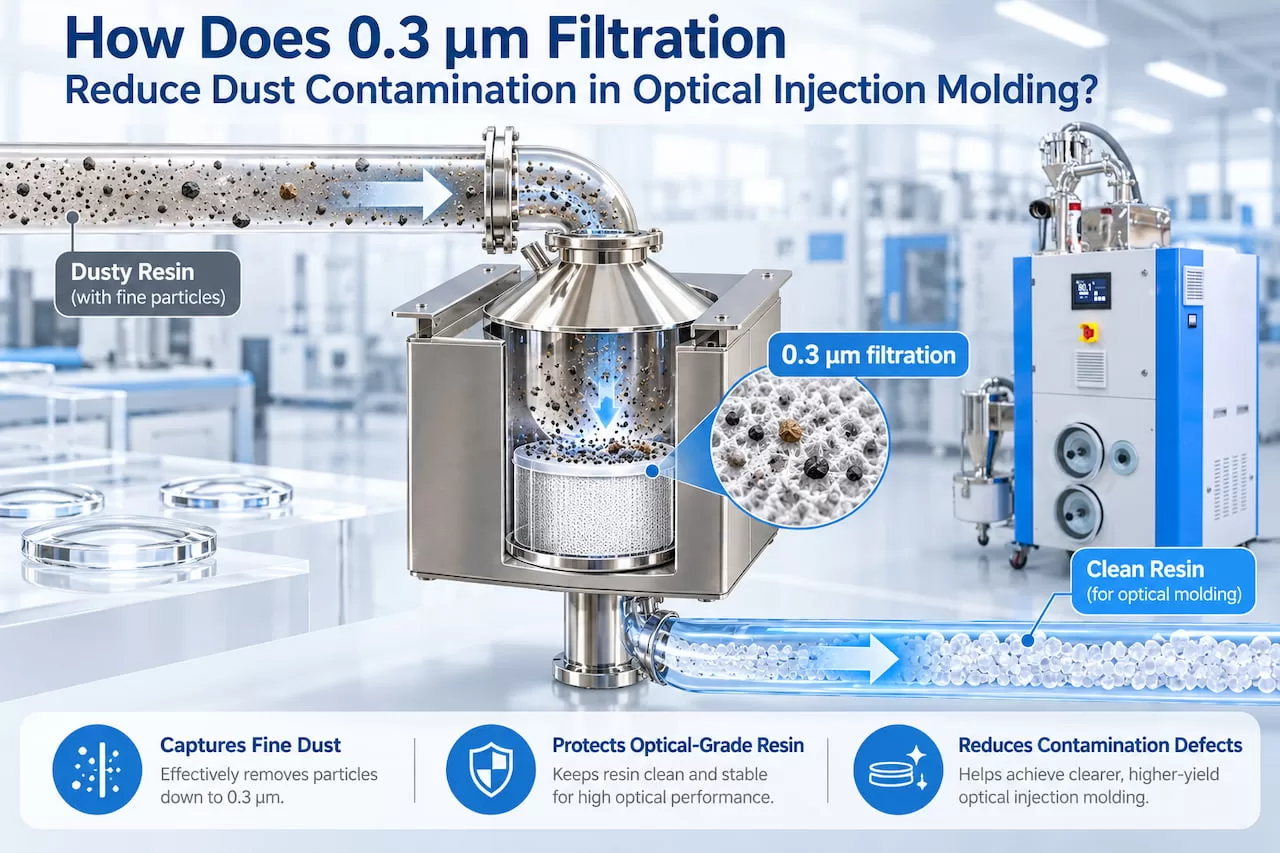
How Does 0.3 μm Filtration Reduce Dust Contamination in Optical Injection Molding?
The 0.3 μm filter achieves up to 99.97% particulate capture efficiency and complies with EU EN 1822. In the three-in-one dehumidifying dryer, the 0.3 μm filtration protects the resin during drying, storage, and conveying by filtering process air and reducing dust contamination in optical injection molding production. Topstar’s TCDH-S optical-grade dehumidifying dryer is equipped with… Continue reading How Does 0.3 μm Filtration Reduce Dust Contamination in Optical Injection Molding?
-
2026/10/16 By: le zhan
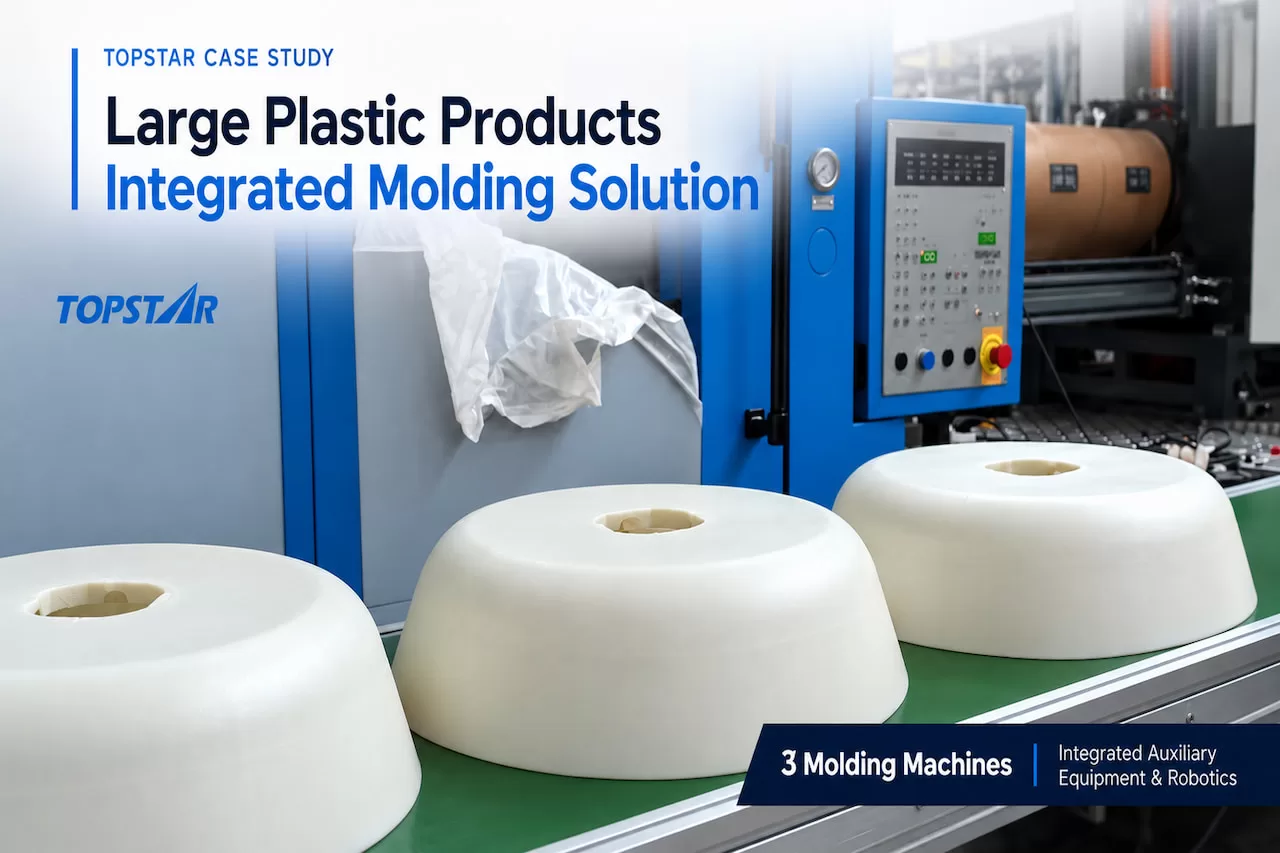
How Did We Address Unstable Injection Molding of Large Plastic Household Products?
Many European manufacturers of everyday plastic products face production challenges: improper equipment configuration when manufacturing large plastic basins and buckets can increase defect rates and reduce output. For this European large plastic household products injection molding project, we integrated three injection molding machines, plus more than 20 pieces of auxiliary equipment and robots, into a… Continue reading How Did We Address Unstable Injection Molding of Large Plastic Household Products?
-
2026/10/14 By: le zhan
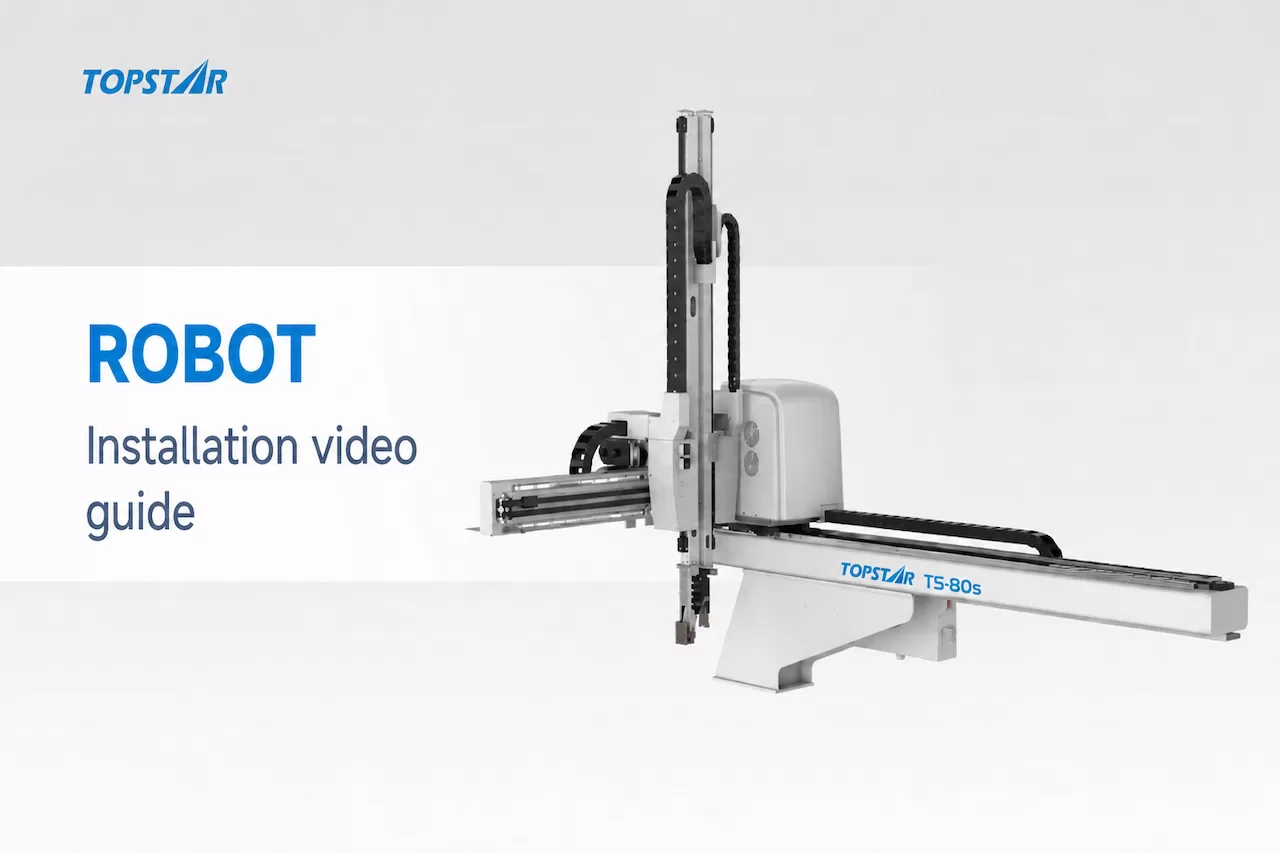
TOPSTAR Cartesian Injection Robot Installation & Commissioning Guide
The installation Cartesian injection robot consists of four stages: equipment isolation and work area safety protection; preparation of the installation site; Cartesian injection robot installation and connection; and verification of synchronized operation with the injection molding machine. A correct and reliable installation requires ensuring that the mounting brackets are accurately positioned, that electrical and signal… Continue reading TOPSTAR Cartesian Injection Robot Installation & Commissioning Guide
-
2026/10/12 By: le zhan
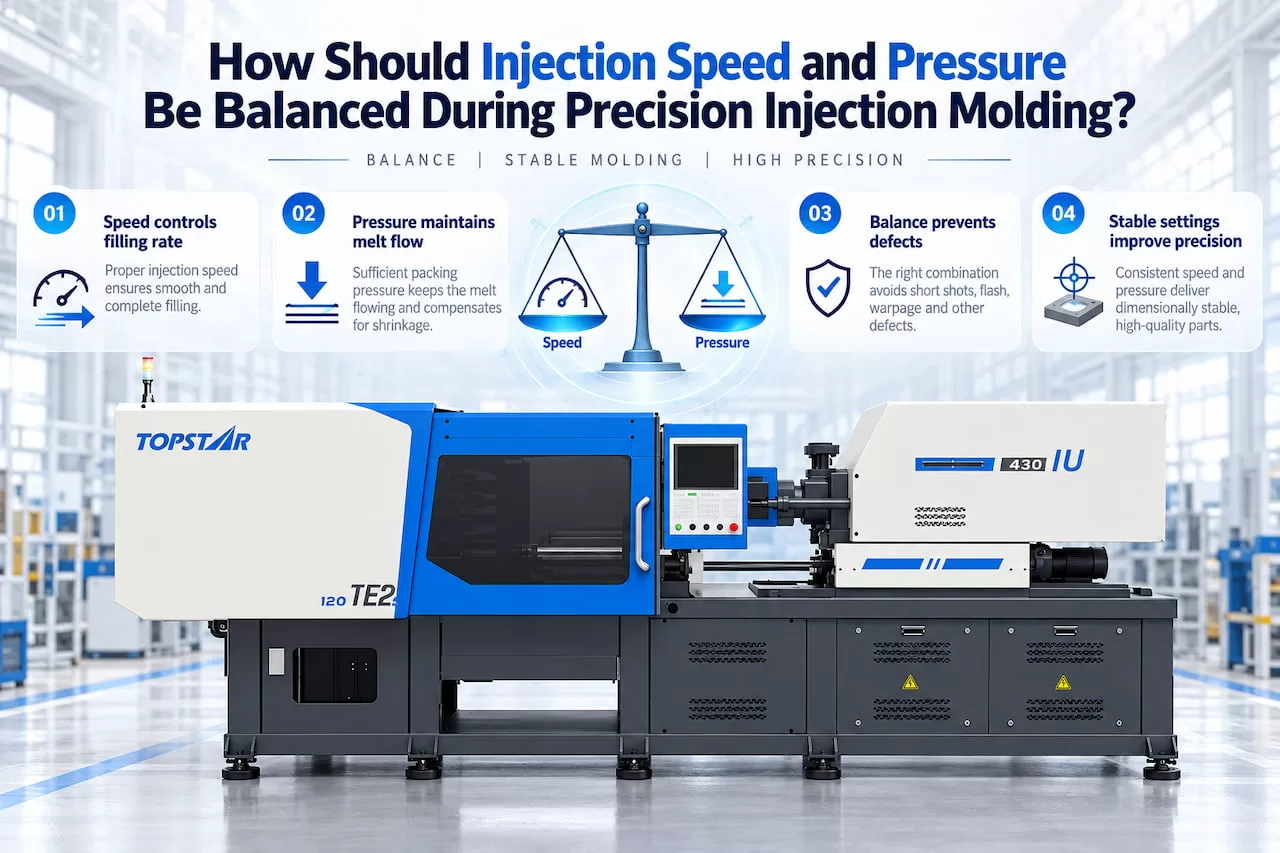
How Should Injection Speed and Pressure Be Balanced During Precision Injection Molding?
In injection molding, the injection speed is primarily used to control the cavity filling process. In contrast, injection pressure must provide enough force to maintain the preset flow conditions without exceeding the limit. For precision injection molding operations, we typically recommend that customers first set a stable speed curve and set the pressure upper limit… Continue reading How Should Injection Speed and Pressure Be Balanced During Precision Injection Molding?
-
2026/10/09 By: le zhan
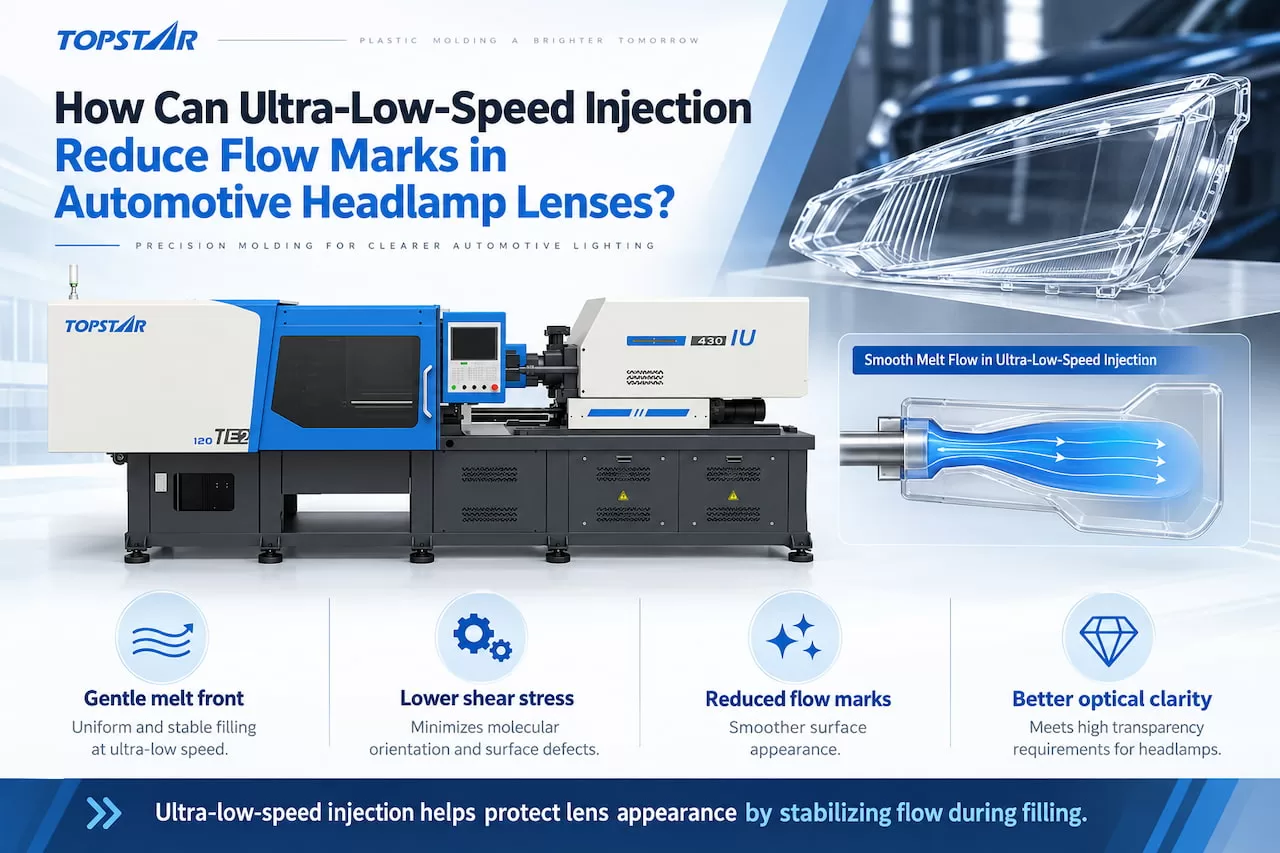
How Can Ultra-Low-Speed Injection Reduce Flow Marks in Automotive Headlamp Lenses?
Ultra-low-speed injection molding technology can reduce flow marks on automotive headlight lenses. It works by ensuring the melt front flows smoothly through optically sensitive areas, preventing visible marks caused by sudden changes in flow velocity, shear force, and pressure. TopStar’s electric injection molding machines utilize servo direct-drive control technology combined with a high-pressure, low-speed coordinated… Continue reading How Can Ultra-Low-Speed Injection Reduce Flow Marks in Automotive Headlamp Lenses?
-
2026/10/09 By: topstar
TOPS DAY 2026: Turning Industrial AI into Real-World Impact
As AI reshapes the manufacturing landscape, companies are looking for new ways to build competitive advantages. How can cutting-edge technologies translate into commercial success and scalable production? This is a key question facing manufacturers today. In our recent call for feedback, we received a wealth of ideas and expressions of interest from industry partners for… Continue reading TOPS DAY 2026: Turning Industrial AI into Real-World Impact
-
2026/10/07 By: le zhan
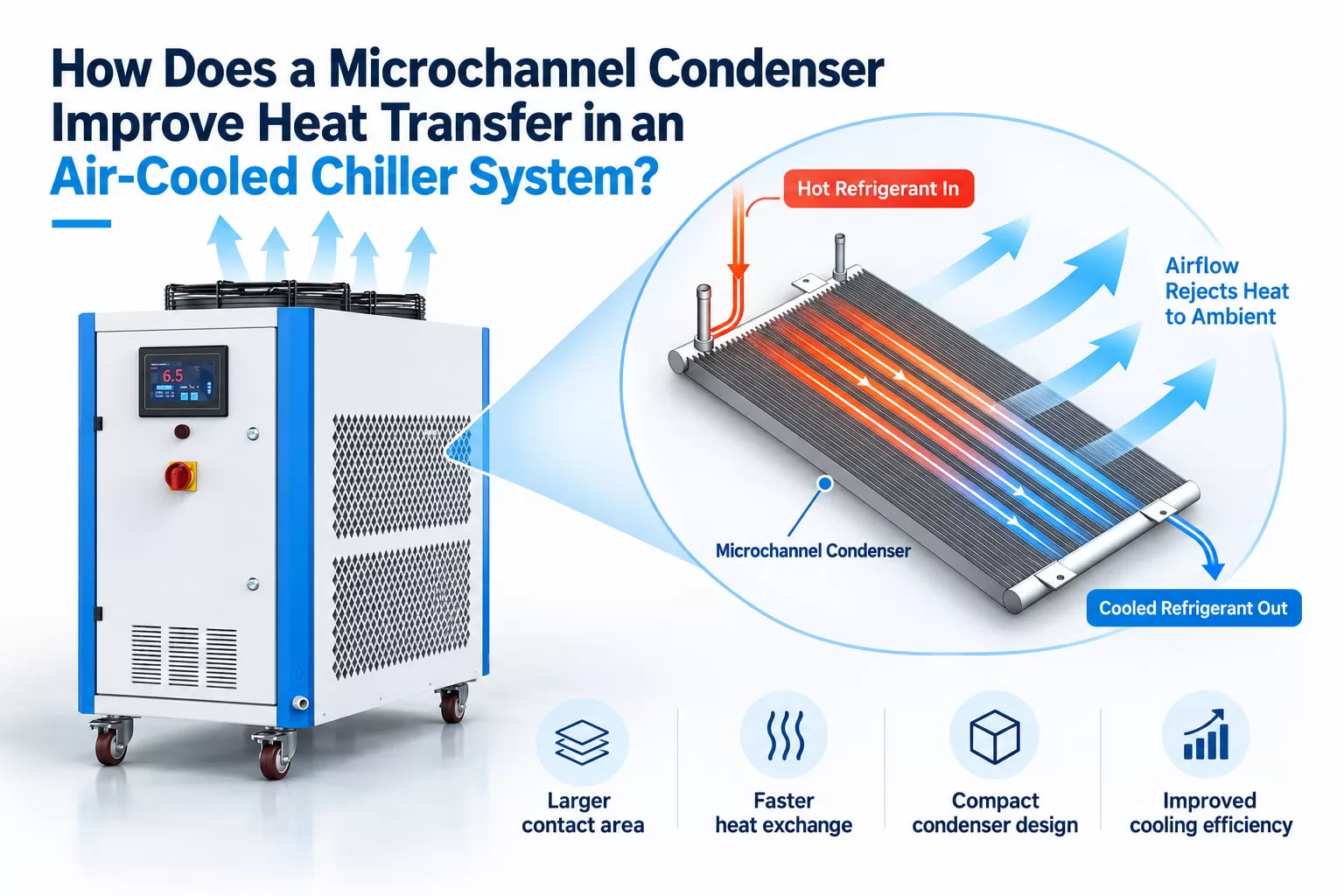
How Does a Microchannel Condenser Improve Heat Transfer in an Air-Cooled Chiller System?
Microchannel condensers improve the heat-exchange performance of air-cooled chiller system by distributing refrigerant across multiple microscopic channels and using a compact tube-fin structure with a large effective heat-exchange area. This design transfers heat more efficiently from the refrigerant to the surrounding airflow while reducing the condenser’s size and maintaining the same cooling capacity. Topstar’s air-cooled… Continue reading How Does a Microchannel Condenser Improve Heat Transfer in an Air-Cooled Chiller System?
-
2026/10/05 By: le zhan
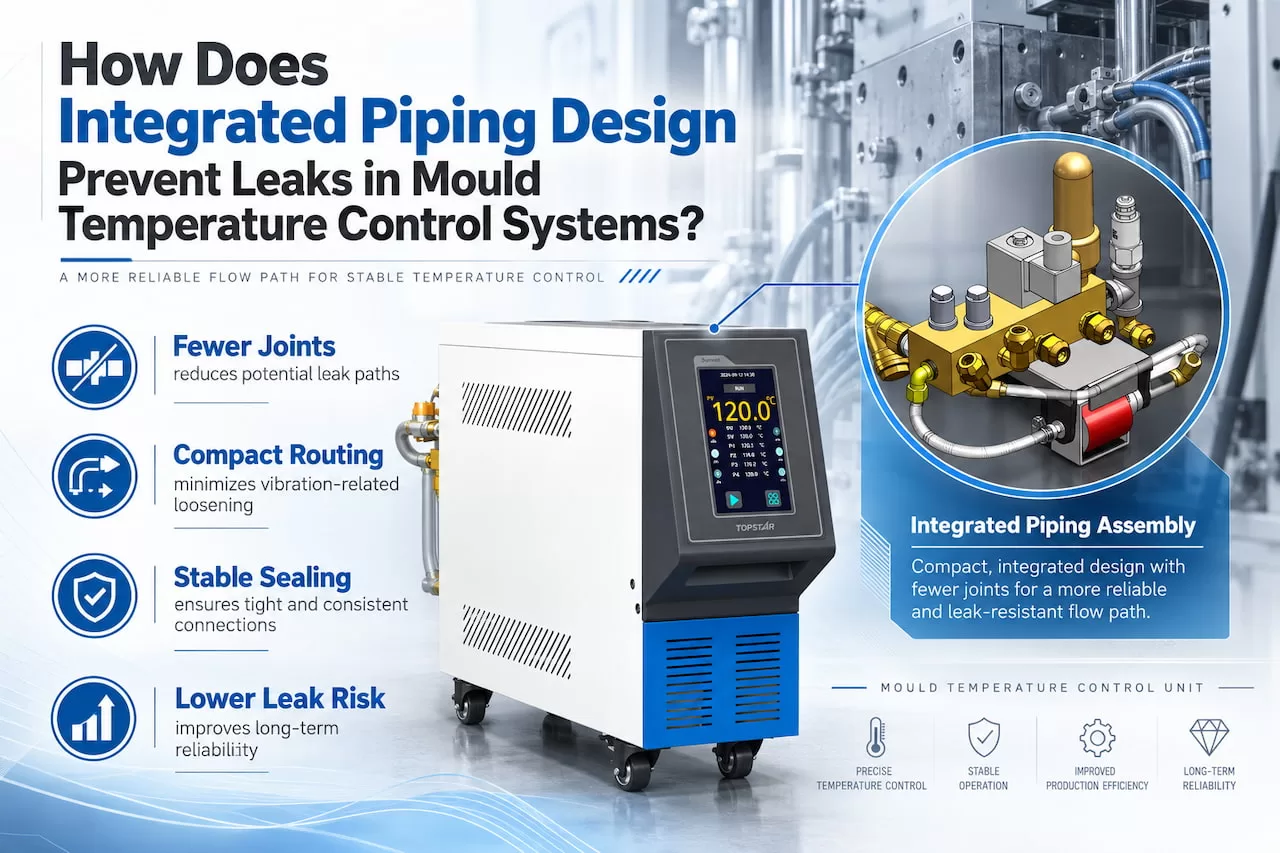
How Does Integrated Piping Design Prevent Leaks in Mould Temperature Control Systems?
The integrated piping design uses a more compact, monolithic flow path to replace the previously dispersed pipe sections, fittings, welds, and connection points in the mould temperature control systems, effectively reducing the risk of leaks. Fewer connection points also minimise potential seal weak points during repeated heating, cooling, pressure fluctuations, and long-term cyclic operation. Topstar… Continue reading How Does Integrated Piping Design Prevent Leaks in Mould Temperature Control Systems?
-
2026/10/02 By: le zhan
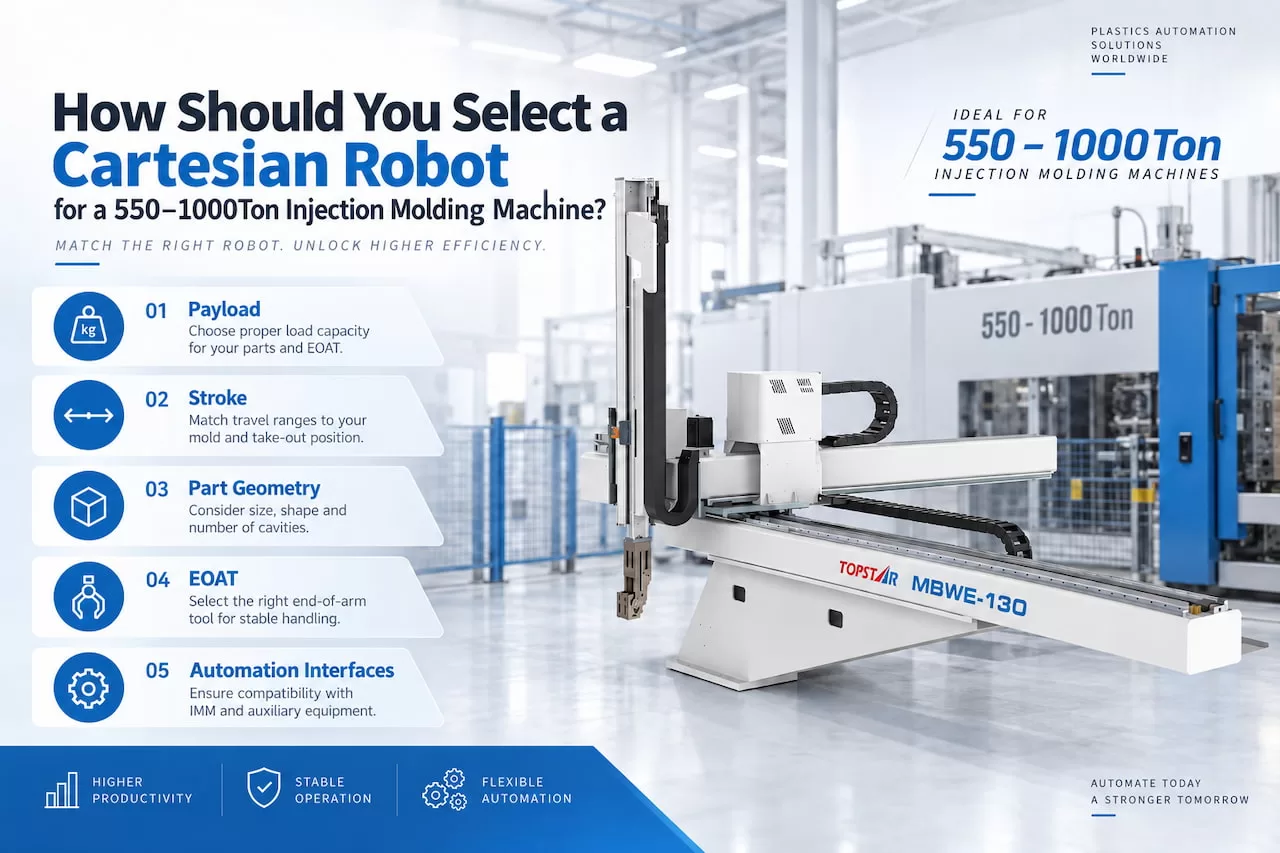
How Should You Select a Cartesian Robot for a 550-1000Ton Injection Molding Machine?
Selecting the right Cartesian robot for a 550-1000Ton Injection Molding Machine requires more than considering clamping force alone. The robot must safely handle the molded part and EOAT, reach the required mold depth and placement position, complete part removal within the target cycle time, and communicate reliably with the injection molding machine and downstream equipment.… Continue reading How Should You Select a Cartesian Robot for a 550-1000Ton Injection Molding Machine?
-
2026/09/28 By: le zhan
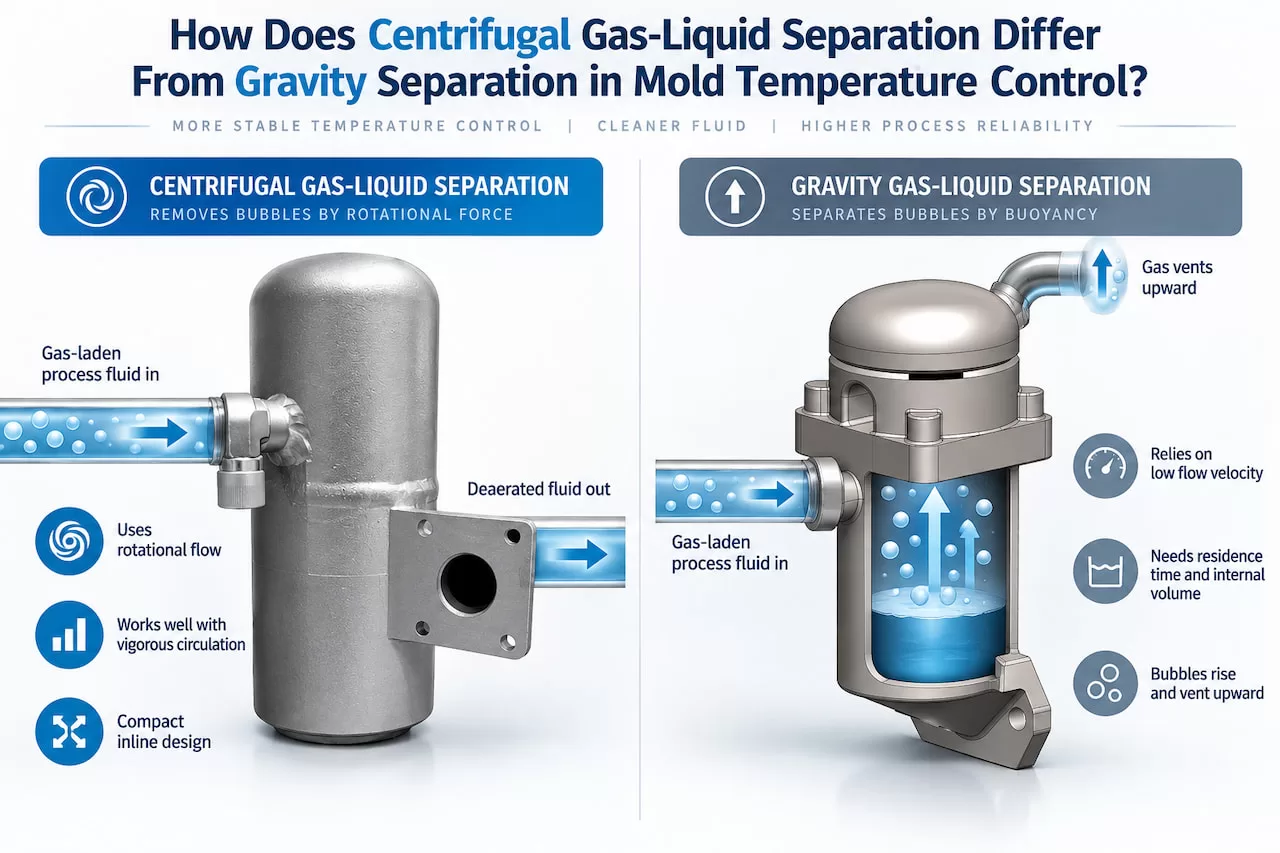
How Does Centrifugal Gas-Liquid Separation Differ From Gravity Separation in Mold Temperature Control?
In mold temperature control, although centrifugal and gravitational gas-liquid separation share the same objective, their separation principles differ fundamentally. Centrifugal separation uses a high-speed rotating flow: under centrifugal force, the denser liquid moves outward, while the less dense gas accumulates in the center. Gravitational separation reduces the fluid flow velocity within a larger chamber, allowing… Continue reading How Does Centrifugal Gas-Liquid Separation Differ From Gravity Separation in Mold Temperature Control?