
Servo Technologies
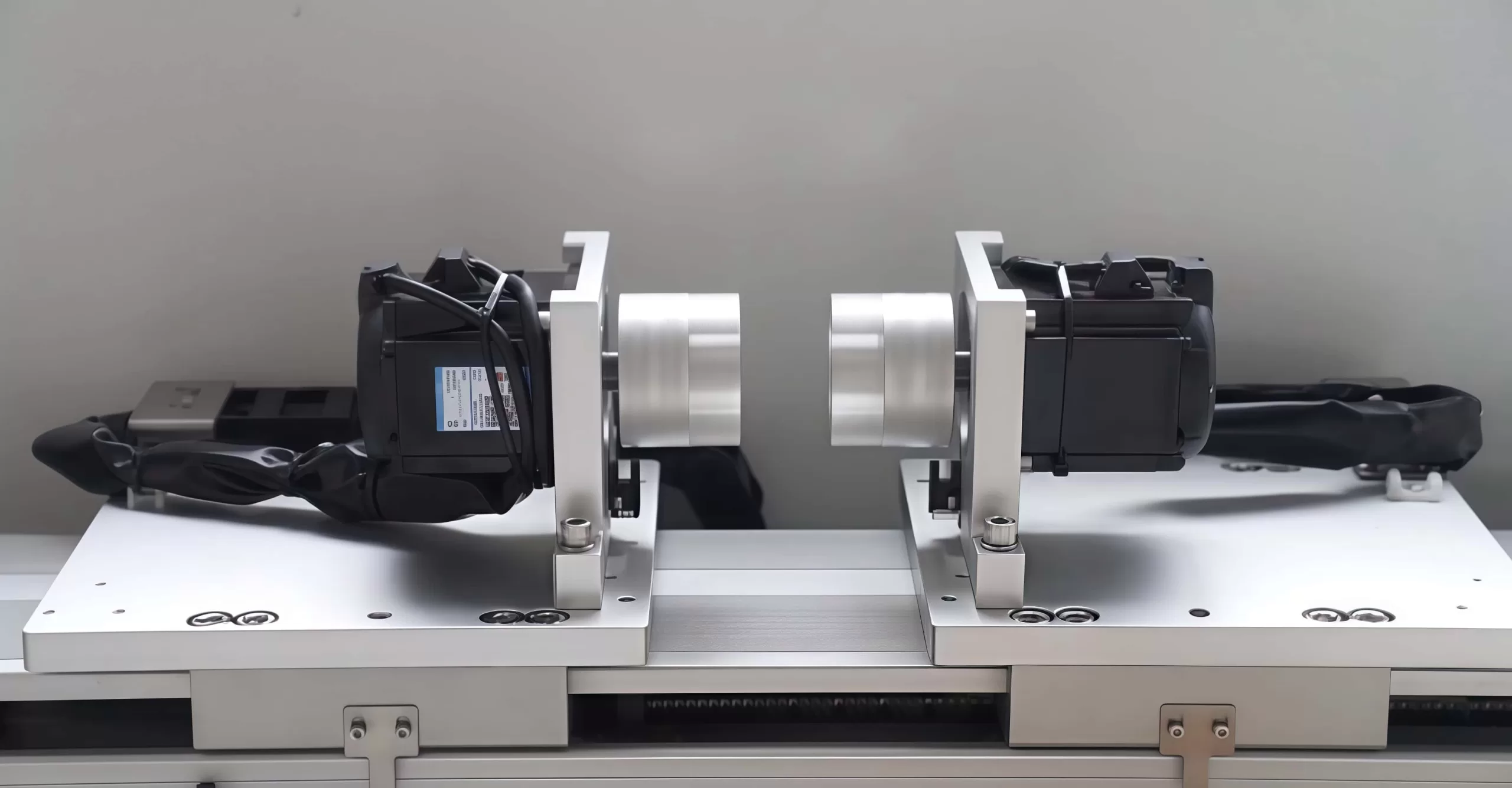
High-Speed, High-Precision Synchronous Motion Control Technology
Leveraging high-bandwidth servo extension technology and multi-axis cross-coupling control algorithms, this solution breaks through the limitations of traditional control architectures to achieve high speed. High-precision synchronized motion control for multi-axis systems. This technology ranks at the forefront of domestic advancements.
Performance Specifications
Maximum Movement Speed
Reaches up to 30 m/min.
Positioning accuracy reaches
+0.1mm
Mechanical End-Effector Jitter Suppression Control Technology
Technical Advantages
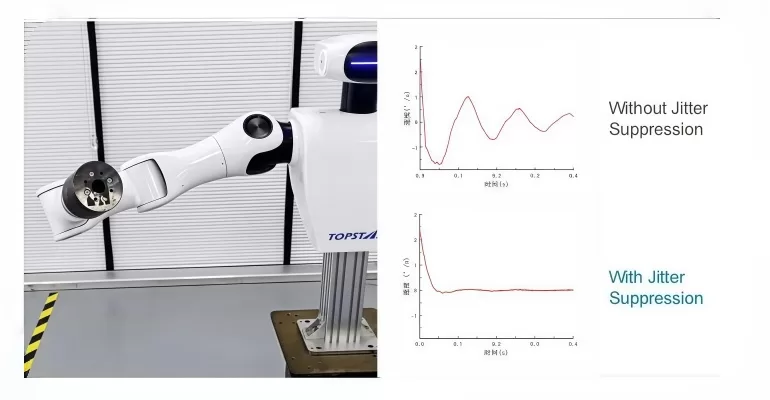
Based on a “command shaping + multi-modal filtering + active compensation” trinity control architecture, this technology achieves closed-loop suppression of end-effector jitter in mechanical systems, reaching an advanced industry level.
Tailored for scenarios requiring sub-micron high precision.
Before application: Settling time is 1s.
After application: Settling time is reduced to 0.2s*, an 80% reduction compared to traditional solutions.
Mechanical Energy Recovery and Conversion Control Technology
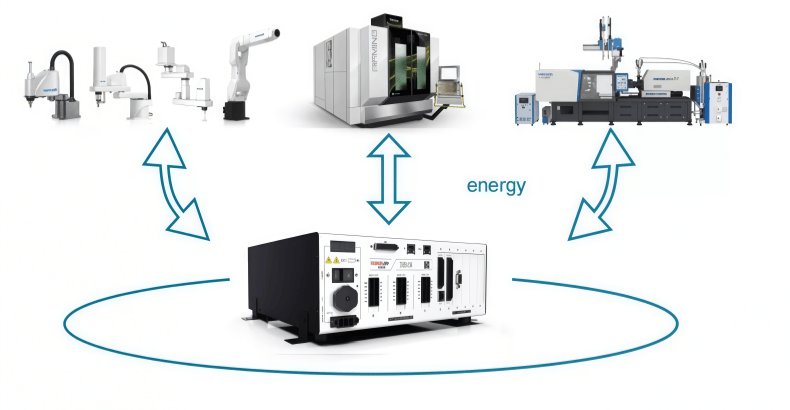
By innovatively adopting intelligent energy storage management and high-efficiency energy recovery technologies, the system achieves dynamic four-quadrant operation and energy balancing across multiple axes. This technology has attained an advanced international standard.
Energy Efficiency Performance
Energy loss reduced by over 80%.
(Specifics depend on the application scenario)
Parameter Self-tuning
Based on a “model-plus-rules” combined architecture for variable-step iterative tuning, it achieves rapid, self-tuning parameter adjustment that is independent of model accuracy, reaching a leading level within the domestic industry.
Technical Advantages

Wider range of applicable scenarios
Requires no reliance on the accuracy of system mathematical models.

Efficiency has significantly improved.
Settling time significantly reduced.

Debugging costs significantly reduced
Enables rapid identification of the optimal engineering solution.