
News and articles from Topstar
We are committed to the innovation and application of industrial manufacturing automation.
-
2026/08/12 By: le zhan
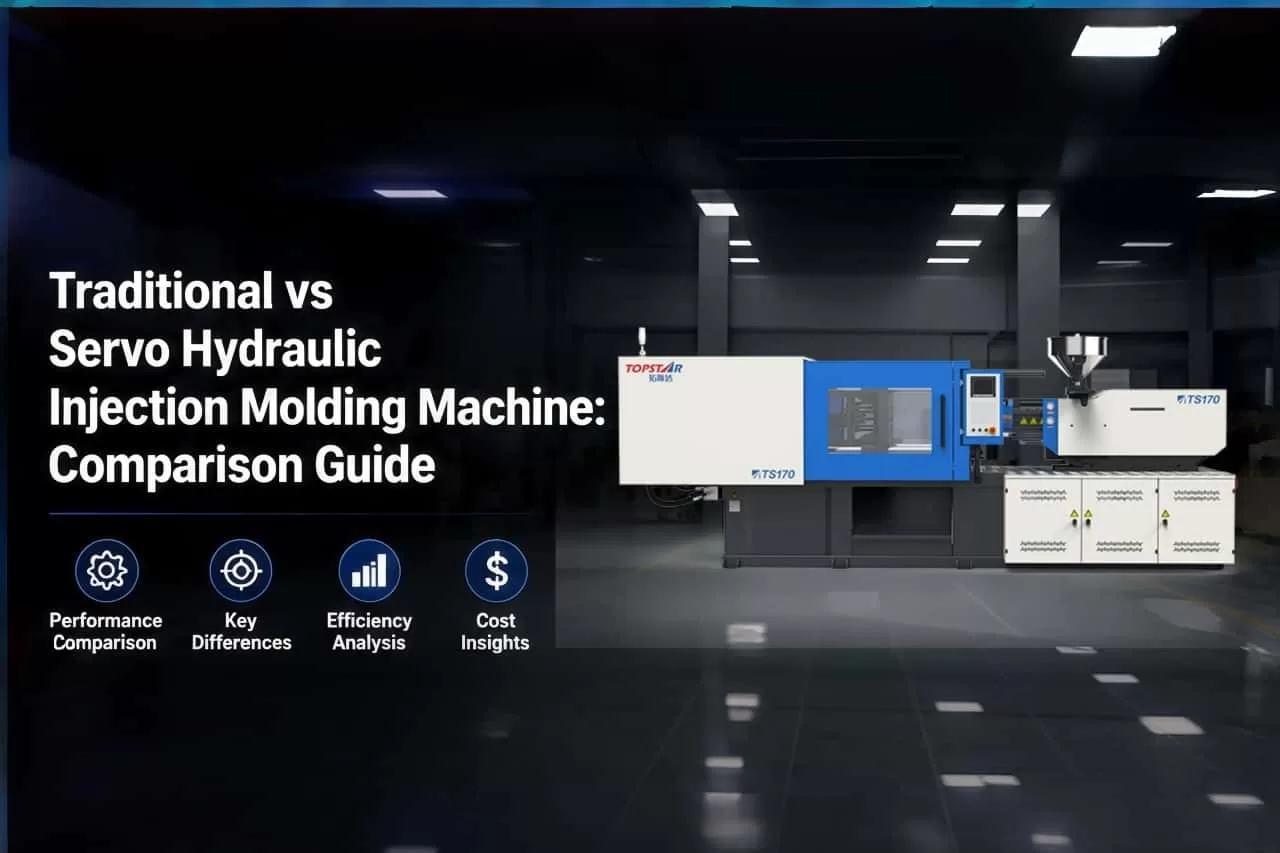
Traditional vs Servo Hydraulic Injection Molding Machine: Comparison Guide
With the advent of all-electric injection molding machines, many have questioned whether traditional hydraulic injection molding machines would gradually fade from the market. However, the reality is quite different. Hydraulic injection molding machine remain among the most widely used production equipment in global manufacturing, particularly for producing large industrial components such as automotive parts and… Continue reading Traditional vs Servo Hydraulic Injection Molding Machine: Comparison Guide
-
2026/08/03 By: le zhan
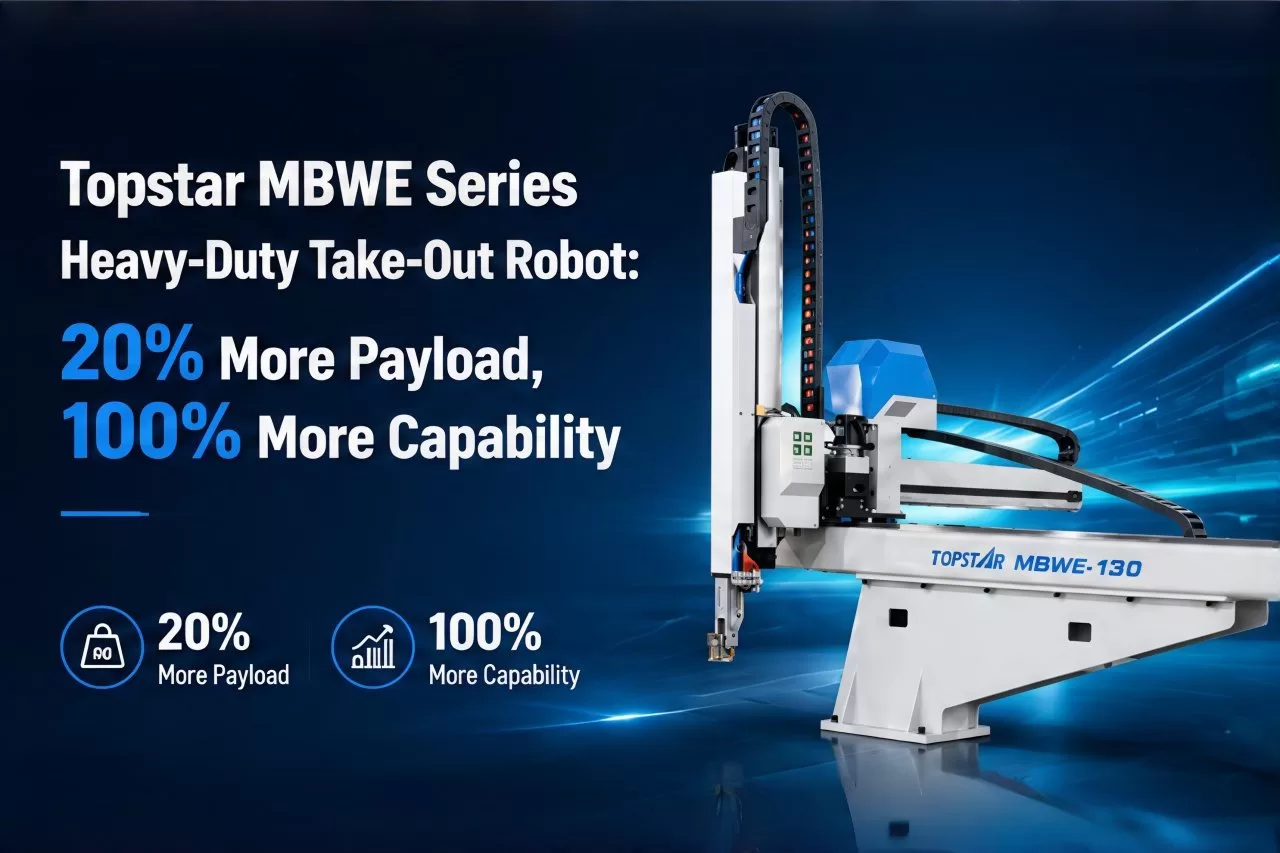
Topstar MBWE Series Heavy-Duty Take-Out Robot: 20% More Payload, 100% More Capability
The production of large plastic parts—such as automotive bumpers, interior panels, and appliance housings—requires not only sufficient handling capacity but also high positioning accuracy, stable operation, and shorter production cycles. As product dimensions and material weights continue to increase, traditional unloading robots often face numerous limitations. Issues such as insufficient payload capacity, robot arm deformation,… Continue reading Topstar MBWE Series Heavy-Duty Take-Out Robot: 20% More Payload, 100% More Capability
-
2026/07/17 By: le zhan
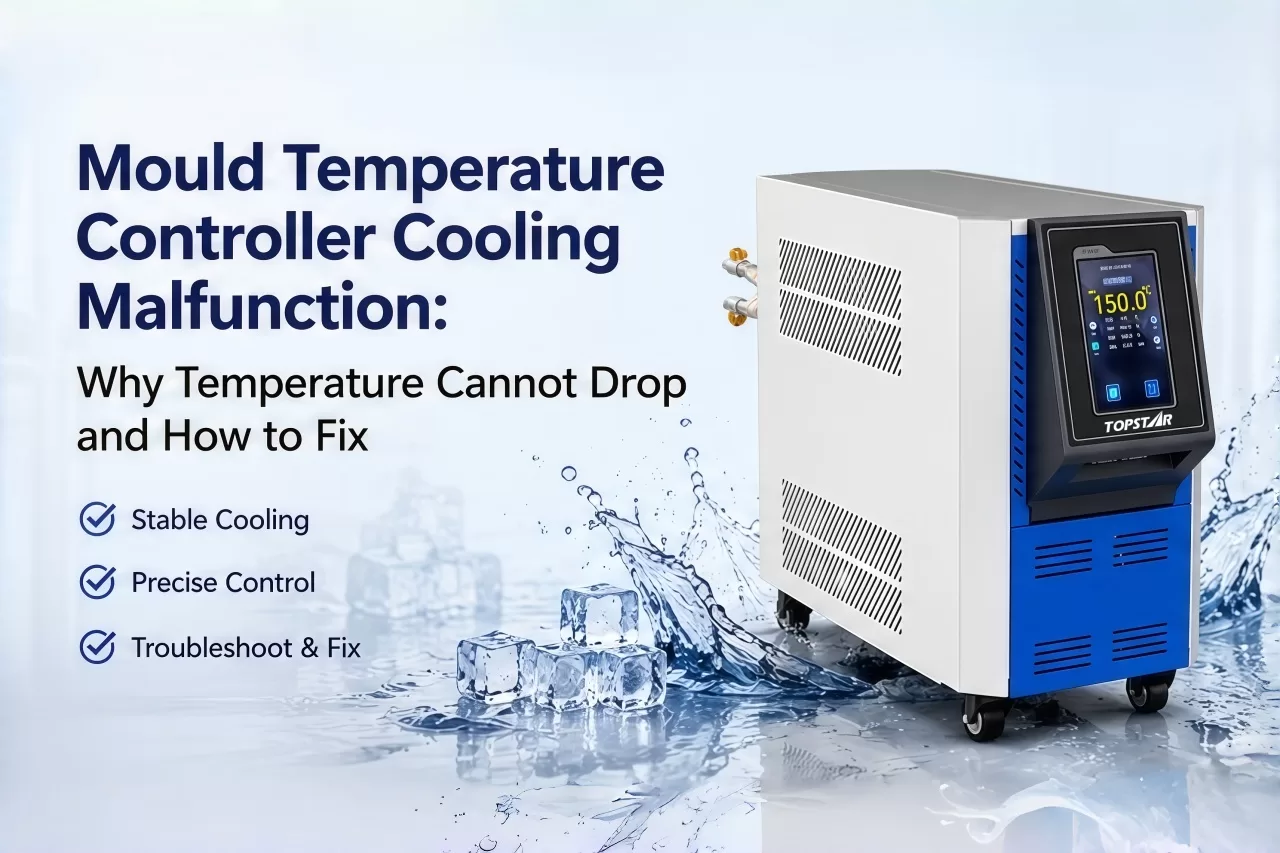
Mould Temperature Controller Cooling Malfunction: Why Temperature Cannot Drop and How to Fix
A properly functioning mould temperature controller can maintain the mould temperature consistently within a specified operating range. However, a common fault encountered by customers during production is cooling failure: that is, whilst the controller can reach the preset heating temperature without issue, it is unable to lower the mould temperature within the expected timeframe. This… Continue reading Mould Temperature Controller Cooling Malfunction: Why Temperature Cannot Drop and How to Fix
-
2026/07/15 By: le zhan
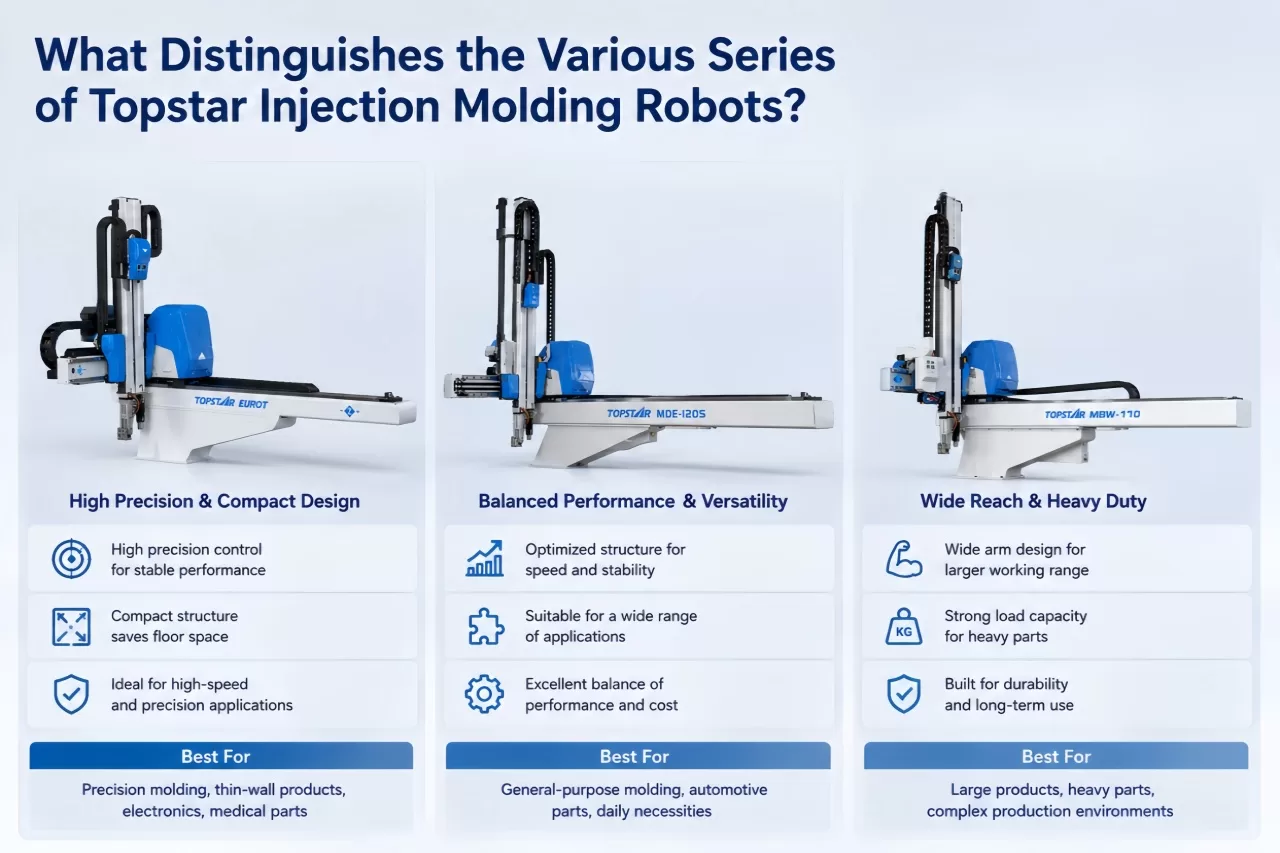
What distinguishes the various series of Topstar injection molding robots?
Production lines for different products place varying emphasis on injection molding robots: some manufacturers focus on the extremely fast molding cycles required for consumer electronics, while others demand exceptional payload capacity; certain applications (such as insert molding) require micron-level positioning accuracy, while others emphasize long-term operational stability under continuous heavy-load production conditions. Customers often ask… Continue reading What distinguishes the various series of Topstar injection molding robots?
-
2026/07/13 By: le zhan
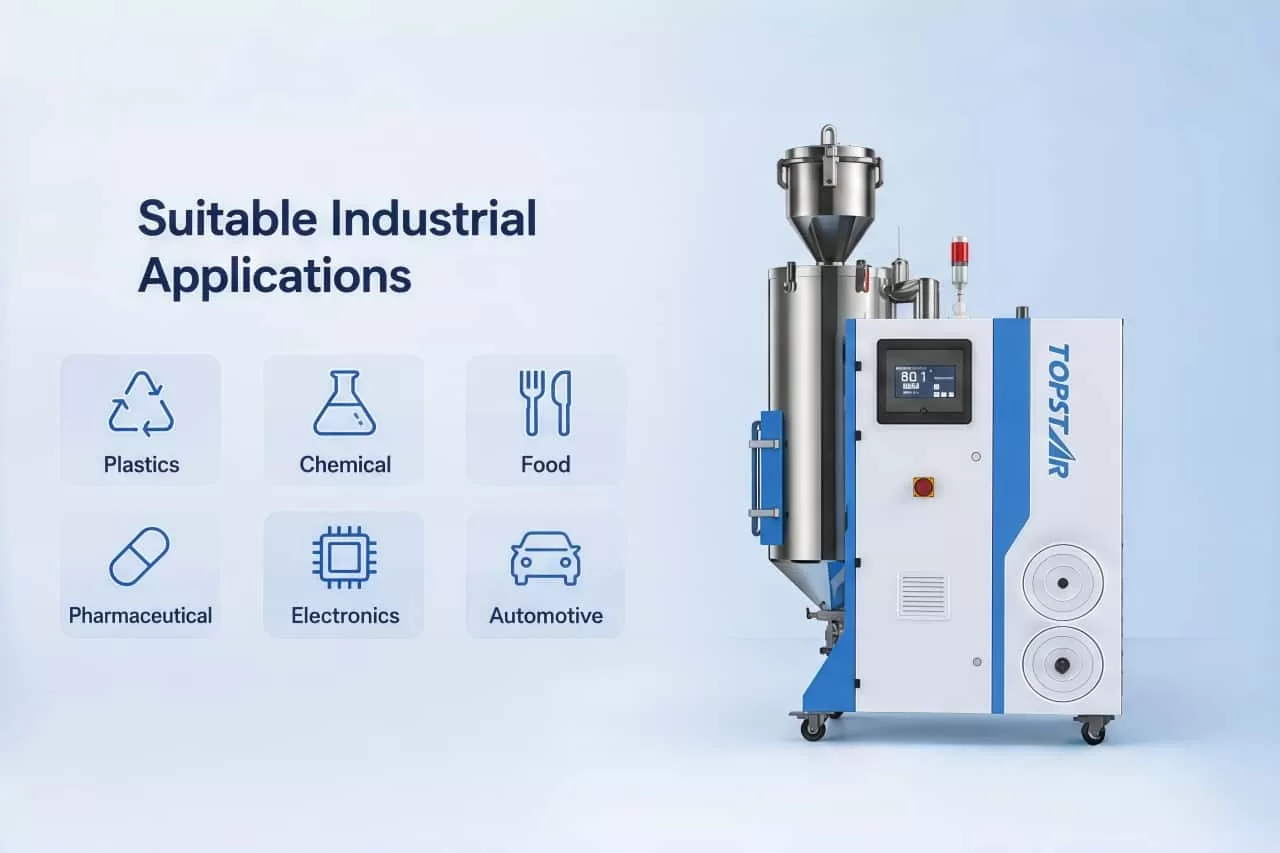
Which industrial applications are suitable for using energy-saving, high-dew-point dehumidifying dryers?
Energy-saving high-dew-point dehumidifying dryers are suitable for industrial applications requiring stable material drying, precise humidity control, low energy consumption, and intelligent production management. Examples include humidity-sensitive applications such as plastics processing, chemical production, packaging materials, automotive parts, and medical product manufacturing. Topstar meets the requirements of these industrial applications for dehumidifying dryers through a range… Continue reading Which industrial applications are suitable for using energy-saving, high-dew-point dehumidifying dryers?
-
2023/04/27 By: Topstar
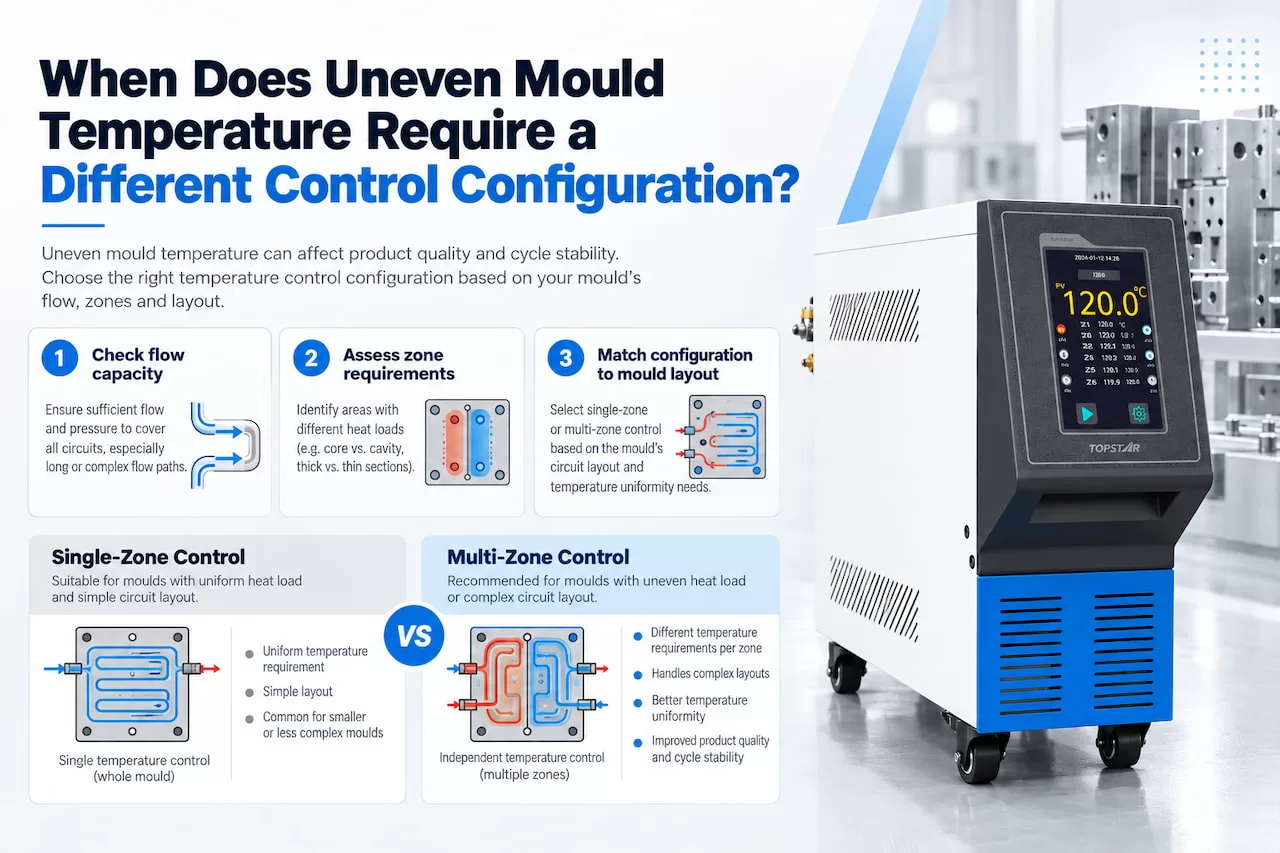
When Does Uneven Mould Temperature Require a Different Control Configuration?
A stable reading on the mould temperature controller does not necessarily indicate that the mould temperature is uniform. The screen value reflects the temperature at a specific sensor location, while conditions inside the mould depend on circuit flow rate, runner layout, localised heat loads, and heat transfer performance. Consequently, even if the circulating medium temperature… Continue reading When Does Uneven Mould Temperature Require a Different Control Configuration?
-
2022/05/23 By: Topstar
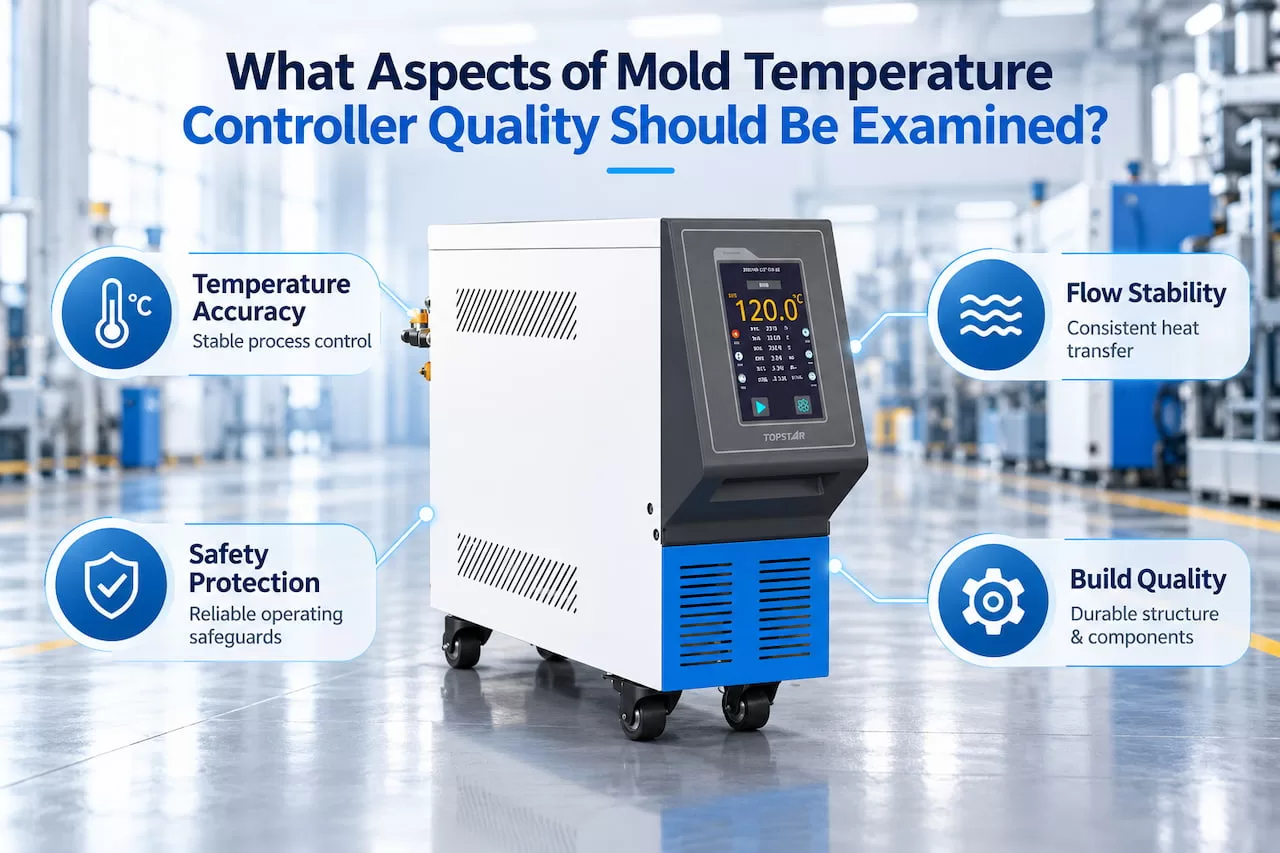
What Aspects of Mold Temperature Controller Quality Should Be Examined?
A stable temperature reading alone does not prove a mold temperature controller’s quality. During procurement, focus on the equipment’s temperature performance under load, circulation and heat-transfer capabilities, structural design and protective features, and evidence of long-term reliability. These evaluations will help you determine whether the equipment can consistently maintain the required process conditions throughout production.… Continue reading What Aspects of Mold Temperature Controller Quality Should Be Examined?