
Which industrial applications are suitable for using energy-saving, high-dew-point dehumidifying dryers?
2026/07/13 By le zhan
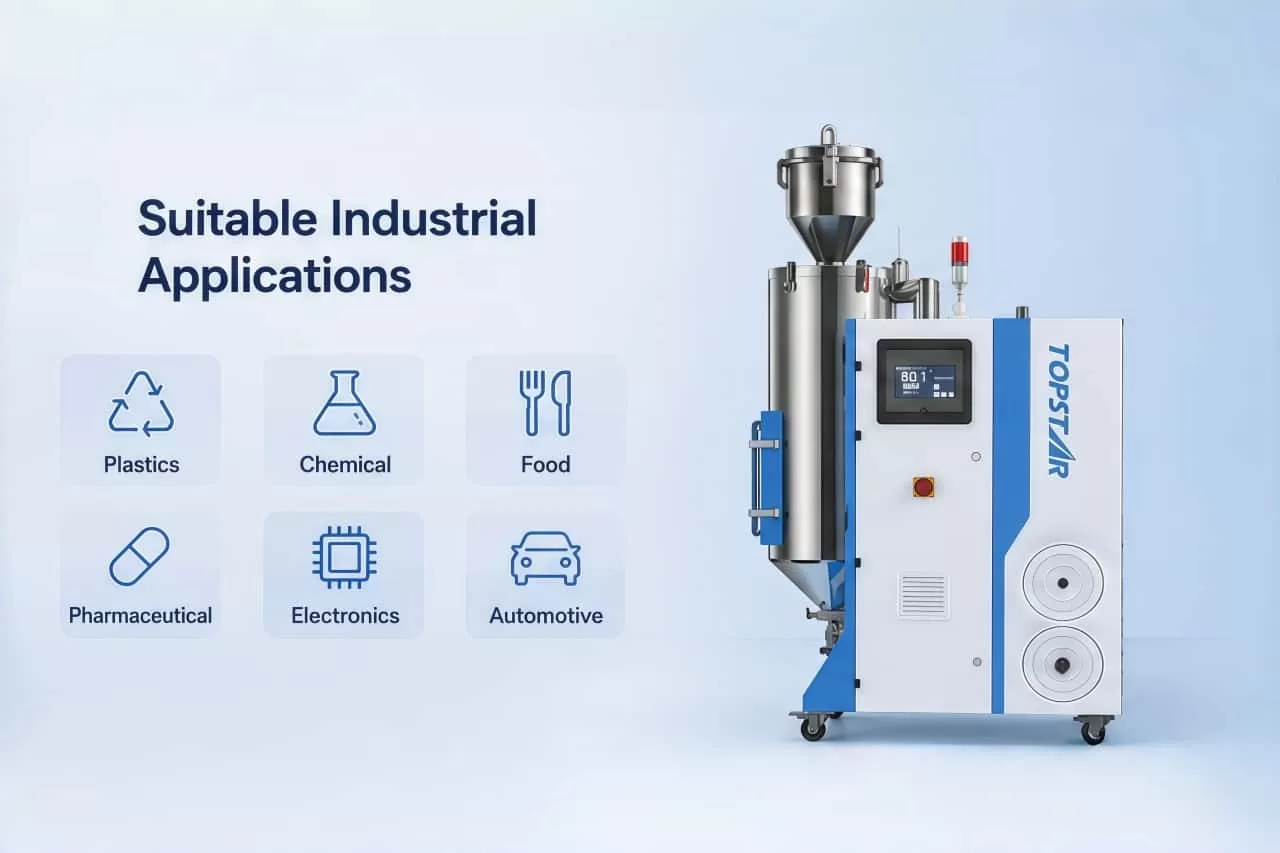
Energy-saving high-dew-point dehumidifying dryers are suitable for industrial applications requiring stable material drying, precise humidity control, low energy consumption, and intelligent production management. Examples include humidity-sensitive applications such as plastics processing, chemical production, packaging materials, automotive parts, and medical product manufacturing. Topstar meets the requirements of these industrial applications for dehumidifying dryers through a range of technologies, including variable-frequency drive technology, heat recovery, high-performance honeycomb rotors, intelligent PID control, timer functions, RS485 communication, the MODBUS protocol, and MES system integration.
Dehumidifying Dryers That Meet Precision Drying and Energy-Efficiency Requirements
Industrial drying is no longer merely a simple heating process. On many production lines, manufacturers must not only precisely remove moisture but also control the energy consumption of workshop equipment.
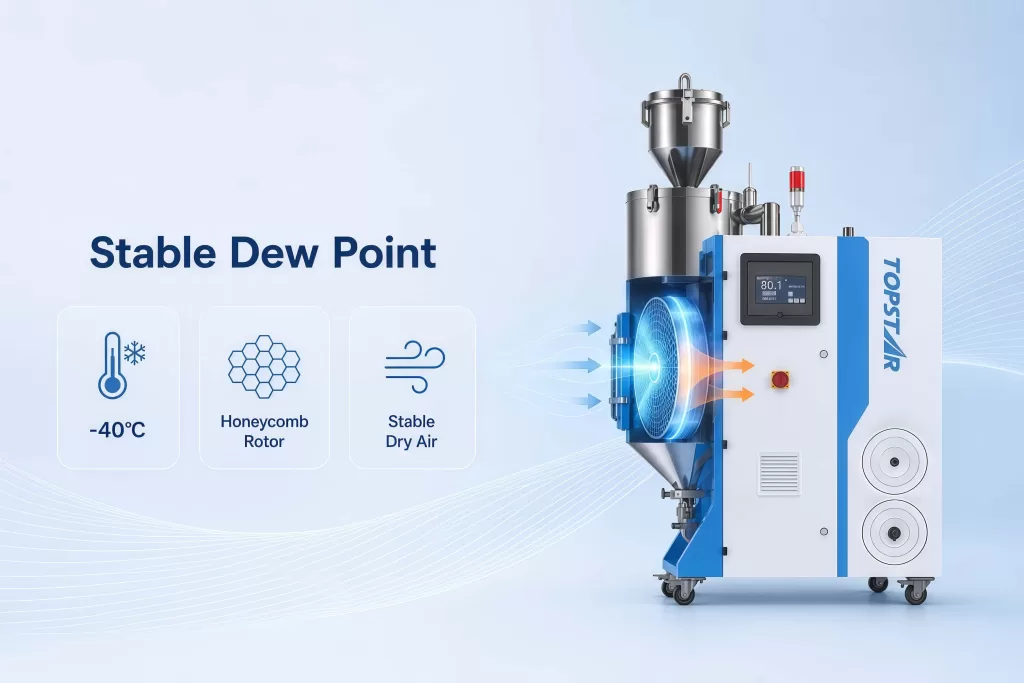
In the plastics processing sector, moisture can cause issues such as silver streaks, bubbles, brittleness, and reduced transparency. In chemical production, moisture may affect reaction stability, storage safety, particle flowability, and the consistency of finished products. Topstar’s high-dew-point, energy-saving dehumidifying dryers address these issues by providing dry air with a low dew point. Compared to conventional hot-air drying, this dry air removes moisture from materials more effectively. Its high-performance, non-segmented honeycomb rotor maintains a stable dew point of -40°C with minimal fluctuations. This stable drying environment not only supports efficient production but also reduces the risk of quality defects caused by humidity issues.
At the same time, Topstar combines variable-frequency drive (VFD) technology with heat recovery technology to achieve dual energy-saving benefits, with a comprehensive energy savings rate of up to 60%. This makes it particularly suitable for plants that operate continuously, handle large material volumes, or need to reduce long-term operating costs.
Reducing Energy Consumption Through VFD Control and Heat Recovery
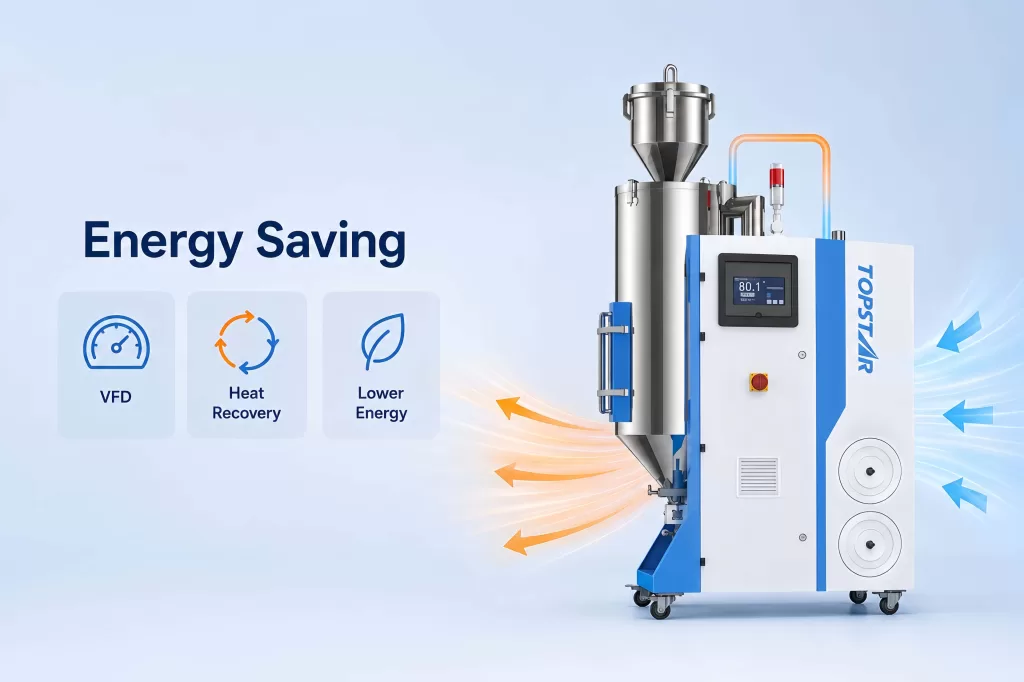
Topstar’s energy-saving dehumidifying dryer utilize variable-frequency drive (VFD) technology and heat recovery functions to achieve comprehensive energy savings of up to 60%. Variable-frequency control technology enables the system to dynamically adjust operating power based on actual demand; when full-load operation is not required, the system automatically reduces power, thereby minimizing unnecessary energy consumption.
Heat recovery technology further enhances energy efficiency. The system recovers and reuses heat generated during operation, preventing the loss of useful thermal energy. Depending on specific operating conditions and application requirements, the equipment can achieve a combined energy savings rate of up to 60%.
Maintaining a Stable Dew Point Using Honeycomb Rotor Technology
The dew point is a key indicator of dry air quality. The lower and more stable the dew point, the stronger the system’s dehumidification capacity. For moisture-sensitive materials, an unstable dew point can lead to fluctuations in product quality. Even if the drying temperature is set correctly, residual moisture may remain in the material if dew point control is inadequate. Topstar employs a high-performance, non-segmented honeycomb rotor that maintains a stable dew point of -40°C with minimal fluctuations. The partition-free design not only promotes smooth airflow but also ensures reliable dehumidification, helping the system maintain efficient drying during extended production runs. The third-generation PID control algorithm further enhances this stability. This algorithm adapts to changes in ambient temperature and adjusts control output more intelligently.
Integration with Smart Production Lines and MES Systems
Modern factories require more than just equipment that can operate independently; they need systems capable of interconnectivity, data logging, production scheduling, and integration with digital management platforms. With its intelligent operation and connectivity capabilities, the Topstar Energy-Saving Dehumidifying Dryer perfectly aligns with this trend.
It supports:
- Scheduling startup and shutdown one week in advance to save energy and improve efficiency;
- Standard RS485 communication interface with MODBUS protocol;
- A 7-inch touchscreen for intuitive operation and real-time monitoring of temperature, operating status, and alarms;
- Integration with MES systems to enable remote monitoring and data collection;
These features make it ideal for industries with strict traceability requirements, such as automotive, electronics, medical, packaging, and high-performance plastics. In smart production lines, dehumidifying dryers can also be part of an interconnected manufacturing system, helping to synchronize material preparation with molding, extrusion, compounding, or packaging processes.
Dehumidifying Dryers Suitable for Plastic Processing Applications
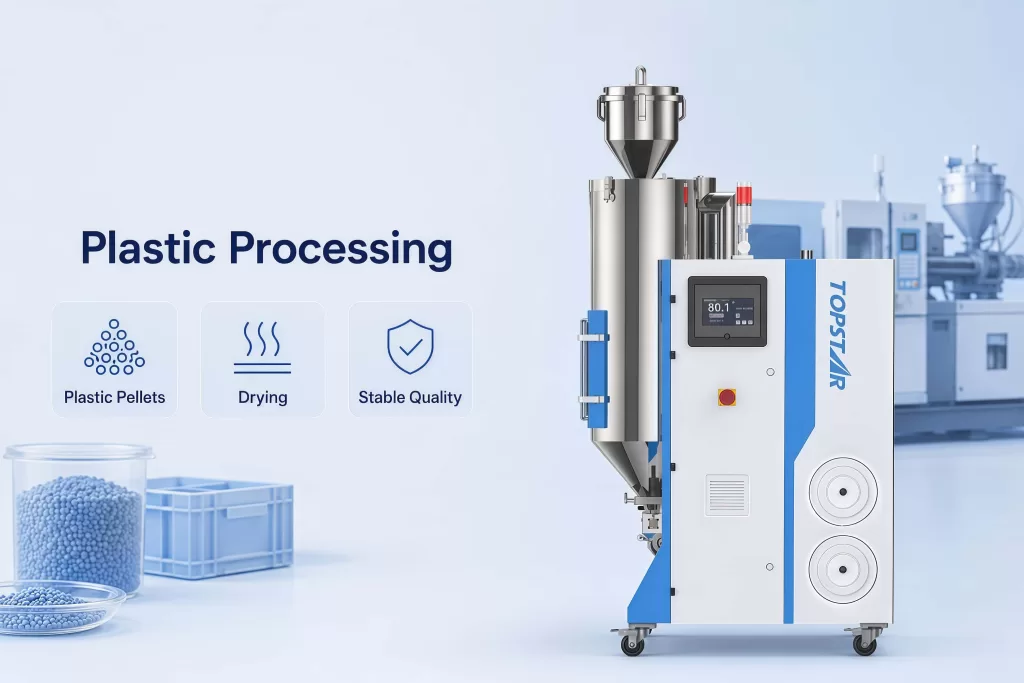
Plastics processing is one of the most important application areas for energy-saving, high-dew-point dehumidifying dryers. Many engineering plastics are highly susceptible to moisture absorption. Common examples include PET, PA, PC, PBT, TPU, ABS blends, and other high-performance resin materials.
In injection molding, consistent drying ensures the quality of automotive parts, electrical enclosures, transparent components, home appliance parts, and precision structural parts. These products typically require consistent strength, appearance, and dimensional control. In the production of PET preforms and packaging, moisture control is even more critical. If residual moisture remains in the material, PET will undergo hydrolysis at high temperatures, reducing intrinsic viscosity and thereby compromising the final product’s performance.
Topstar’s third-generation PID control algorithm further enhances drying stability. This algorithm adapts to changes in ambient temperature, ensuring that the drying process remains highly consistent under various workshop conditions.
Supporting Chemical Production Through Stable Humidity Control
Chemical production often involves powders, granules, modified materials, masterbatches, and moisture-sensitive compounds. In these applications, the impact of moisture extends far beyond appearance; it can also alter material flowability, reaction characteristics, and the final product’s performance. Energy-saving, high-dew-point dehumidifying dryers are also suitable for chemical production lines that require controlled drying before mixing, compounding, pelletizing, or further processing.
Topstar dehumidifying dryers deliver dry air with controlled dew point and temperature, enabling more stable, controllable moisture removal than traditional drying methods. We utilize a high-performance, non-segmented honeycomb rotor design that maintains a stable dew point of -40°C. This design facilitates efficient airflow circulation and consistent dehumidification performance, thereby meeting high-efficiency drying requirements while avoiding excessive energy waste. For chemical plants, energy efficiency is a key concern for many plant managers; by combining variable-frequency control with heat recovery technology, the system reduces energy consumption without compromising drying performance.
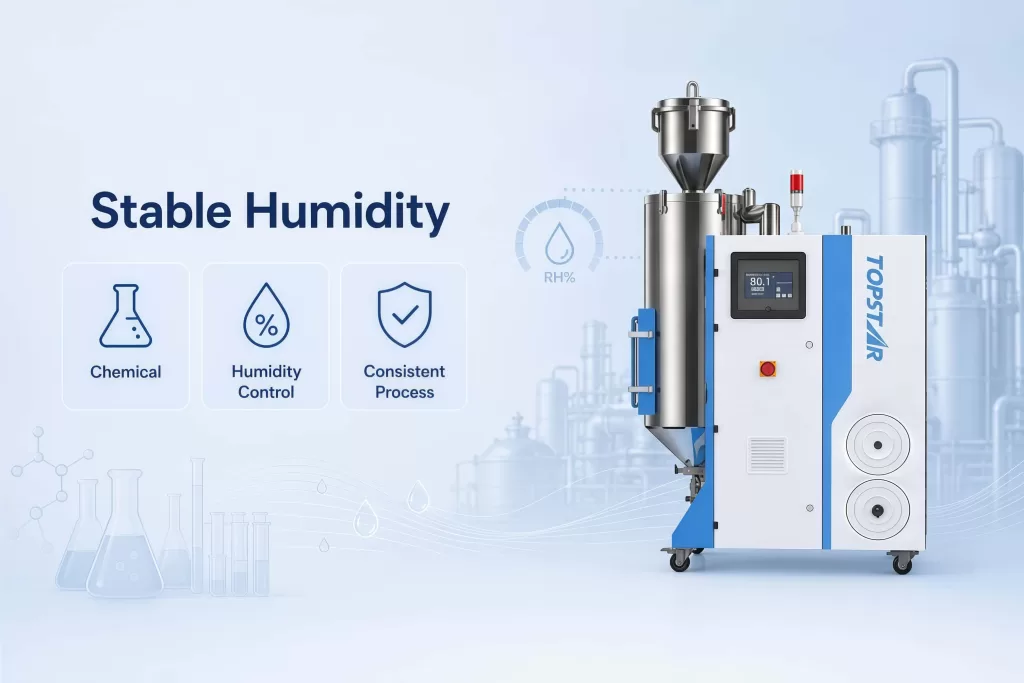
Dehumidifying Dryers Meeting High Standards for Drying Precision and Energy Efficiency
With up to 60% overall energy savings, stable -40°C dew-point control, adaptive PID regulation, scheduled operation, touchscreen monitoring, RS485/MODBUS communication, and MES connectivity, Topstar’s energy-saving, low-dew-point dehumidifying dryers are well-suited for industrial applications demanding high precision and energy efficiency. They provide a reliable drying and dehumidifying system for manufacturers striving for superior quality, lower costs, and smarter production.
TRENDING POSTS
- TOPS DAY 2026: Turning Industrial AI into Real-World Impact 2026/07/13
- Breaking Through the Full Scene-to-AI Link! Topstar Industrial Data Collection Matrix Achieves Major Technical Breakthro 2026/07/13
- TOPSTAR Selected in “Forbes China AI Top 50” and Wins “2026 Embodied AI Industry Benchmark Award” 2026/07/13
- Topstar Achieves ISO 13849 Functional Safety Certification for Robotics 2026/07/13
HOT TOPIC
- .ervo motor-driven linear robots
- •
- 1.0 guangdong topstar technology co. ltd
- 1.0 topstar china
- 1.0 topstar robot
- 11
- 160℃ mold temperature controller
- 170 ton injection molding machine
- 2
- 21
- 220-ton injection molding machine
- 23
- 260 ton injection molding machine
- 3 axis robot
- 3 axis robots
- 3 in 1 Compact Dehumidifying Dryer
- 3-axis robot
- 3-axis robots
- 39
- 4 axis robot
- 4-axis SCARA robot
- 41
- 460T injection molding machine
- 5-axis CNC machine
- 62
- 90 ton injection molding machine
- accuracy
- Air Chillers
- air-cooled chillers
- all electric injection molding machine
- all electric injection molding machines
- all-electric injection molding machine
- All-electric injection molding machines
- and overall production quality. Therefore
- AP-RubberPlas
- auto cooling system
- auto loader
- Auto Loaders
- automated injection molding machine
- Automation changed engineering
- automation of injection molding robots
- automotive parts injection molding
- Auxiliary Equipment
- auxiliary machine
- Bench Injection Molding Machine
- cabinet dryer
- Cabinet dryer manufacturers
- Cabinet dryers
- cartesian coordinate robot
- Cartesian Coordinate Robots
- Cartesian injection robot
- Cartesian robot
- Central Feeding System
- Central Feeding Systems
- chiller
- CNC Drilling Machine
- CNC Drilling Machines
- cnc engraving machine manufacturer
- cnc laser cutting machine manufacturer
- CNC machine
- CNC Machine Center
- CNC Machine for Sale
- CNC Machine Manufacturing
- CNC Machine Tool
- CNC machine tool product
- CNC Machining Center
- CNC wood carving machine
- Compact Dehumidifying Dryer
- Cooling system
- Cross-Walking Single Axis Servo Cylinder Robot
- Cross-Walking Single-Axis Servo Cylinder Robot
- Cross-Walking Three-Axis/Five-Axis Servo Driven Robot
- cross-walking three-axis/five-axis servo-driven robot
- Dehumidifier Dryer
- Dehumidifying Dryer
- dehumidifying dryers
- delta parallel robot
- Desktop Injection Molding Machine
- Desktop injection molding machines
- Desktop Molding Machine
- desktop plastic injection machine
- Desktop Plastic Injection Molding Machine
- detachable autoloader
- Digital Transformation
- direct clamp injection molding machine
- Direct clamp injection molding machines
- Dosing & mixing system
- Drilling Centers
- Drying and dehumidification system
- drying and dehumidifying equipment
- Drying and Dehumidifying System
- drying system
- effective and efficient. Cabinet dryers are also used in other industries where large quantities of material need to be dried
- efficient injection molding machine
- elbow hydraulic injection molding machines
- electric injection molding machine
- electric injection molding machines
- energy-efficient injection molding robot
- energy-efficient water chiller
- energy-efficient water chillers
- energy-saving injection molding machine
- etc. Among injection molding robots
- exhibition
- features of CNC machine
- Feeding And Conveying System
- Five Axis Machine Center
- Flexible Production Line
- Fully automatic injection molding machine
- Gathering Topstar
- giant injection molding machine
- GMU-600 5-Axis Machining Center
- Granulating & Recycling System
- granulator machine
- gravimetric blender
- Heavy duty injection molding machine
- Heavy-Duty Take-Out Robot
- High-precision electric molding machines
- high-precision plastic molding machines
- high-speed all electric injection molding machine
- high-speed electric injection molding machine
- High-Speed Packaging Injection Molding
- Honeycomb rotor dehumidifier
- hopper dryer
- Hopper Dryers
- horizontal injection molding machine
- Horizontal Injection Molding Machines
- Horizontal Injection Moulding Machine
- Horizontal Mixer manufacturer
- How The CNC Machine Works
- hybrid injection molding machine
- hydraulic injection molding machine
- Hydraulic Injection Molding Machines
- in this article
- Industrial AI
- Industrial Automation
- Industrial robot
- Industrial Robot Chinese brand
- industrial robot parts
- industrial robot supplier
- Industrial robots
- Industry Chain
- Injection Manipulator
- injection manipulator robot
- injection mold machines
- Injection molding
- Injection molding automation
- Injection Molding Automation Solution
- injection molding dryer
- Injection molding equipment
- injection molding hopper dryer
- Injection molding machine
- injection molding machine brand
- Injection Molding Machine Factory
- Injection Molding Machine Manufacture
- Injection molding machine manufacturer
- injection molding machine manufacturers
- Injection molding machine procurement
- injection molding machine robotic arm
- injection molding machine with a robot
- Injection molding machines
- injection molding material dehumidifying
- injection molding plant
- injection molding process
- Injection Molding Robot
- injection molding robot arm
- Injection molding robot automation
- Injection molding robotic arm
- injection molding robots
- injection molding whole plant
- injection moulding dryer
- Injection moulding machine
- injection moulding machines
- Injection Moulding Robots
- Injection Robot
- Injection robot arm
- Injection robot manufacturer
- Injection robot wholesale
- injection robots
- Intelligent Factory
- intelligent injection molding machines
- Intelligent Manufacturing
- intelligent mold temperature
- intelligent mold temperature controller
- Intelligent mould temperature controller
- intelligent whole plant solution
- InterPlas Thailand 2025
- Introducing Injection Robot
- It is the best choice for drying large quantities of material at once. Cabinetmakers use these machines because they are fast
- Large flow water type mold temperature controller
- large injection molding machine
- large injection molding machines
- Learn what industrial automation and robotics is
- linear robot
- linear robots
- low speed sound-proof granulator
- machine plastic molding
- make sure to add some! Improvements (2) Keyphrase in introduction: Your keyphrase or its synonyms appear in the first paragraph of the copy
- manipulator machine
- manufacturing
- Manufacturing Innovation
- medical grade injection molding machines
- Medical Injection Molding
- medical injection molding machine
- medical injection molding machines
- micro injection molding machine
- middle speed granulator
- Mini CNC machine manufacturers.
- mobile cover making machine
- Mold Temperature Control System
- mold temperature controller
- mold temperature controllers
- molding machine
- molding material Dehumidifying System
- mould temperature control system
- mould temperature controller
- mould temperature controller
- mould temperature controllers
- New electric injection molding machine
- Nitrogen Dryer
- nitrogen dryer manufacturer
- nitrogen dryer system manufacturer
- Oil type mold temperature controller
- Oil type mold temperature controllers
- open day
- optical component injection molding
- Optical-grade dehumidifying dryer
- Outbound links: No outbound links appear in this page. Add some! Images: No images appear on this page. Add some! Internal links: No internal links appear in this page
- packaging injection molding
- Packaging Solutions
- PET Preform injection molding
- phone case maker machine
- phone case making machine
- phone cover making machine
- PID Control Mold Temperature Controller
- plastic auto loader
- plastic bottle making machine
- plastic bottle manufacturing
- plastic bucket making machine
- plastic bucket manufacturing
- Plastic chair making machine
- plastic dryer for injection molding
- plastic forming equipment
- Plastic Granulator
- Plastic Granulators
- plastic hopper dryer
- plastic injection machine
- plastic injection machines
- plastic injection molding
- Plastic injection molding equipment
- Plastic injection molding machine
- Plastic Injection Molding Machines
- plastic injection moulding machine
- plastic injection moulding machines
- plastic injection robot
- plastic molding
- Plastic Molding Industry
- Plastic Molding machine
- plastic molding machine 1
- Plastic Molding Machines
- plastic molding press
- plastic moulding machine
- plastic phone case making machine
- plastic-molding machine
- powerful granulator
- Powerful Type Sound-Proof Granulator
- precision injection molding
- precision injection molding machines
- production of plastic seats
- pure water mould temperature controller
- Robot injection molding
- robot injection molding machine
- robot manufacturing companies
- Robotic arm for injection molding machine
- robotic injection molding machines
- robotics in injection molding
- SCARA robot
- SCARA robots
- Screw dosers
- Service-oriented manufacturing
- Servo Cylinder Robot
- servo driven robot
- Servo Driven Robots
- servo injection molding machine
- servo injection robots
- servo motor-driven linear robots
- servo-driven 3-axis robot
- Servo-driven injection molding machine
- Servo-Driven Robot
- Setup of injection machine
- Silicone Injection Molding Machine
- six-axis industrial robot
- Smart Manufacturing
- soundproof granulator
- Sprue Picker
- Stainless Hopper Dryer
- Stainless Hopper Dryers
- star club
- swing arm robot
- T1 Cartesian injection robot
- take-out robot
- take-out robots
- Thailand 4.0
- the choice between servo-driven robots and hydraulic robots will have a certain impact on efficiency
- the most popular injection molding machine
- the type of injection molding robot
- TIC2000 Control System
- TMII injection molding machine
- toggle clamp injection molding machine
- Toggle Hydraulic Injection Molding Machines
- toggle injection molding machine
- Top 10 brands of injection robots
- Topstar
- Topstar Electric Injection Molding Machine InterPlas Thailand 2025 Smart Manufacturing Thailand 4.0
- Topstar Engineering
- Topstar Industrial Robots
- Topstar injection molding intelligent
- Topstar Scara Robots
- Useful Injection molding machine
- Vertical machining centers
- volumetric type blender
- Washing Machine Case Molding Solution
- water chiller
- water chillers
- water distributor
- water type mold temperature controller
- Water Type MoldTemperature Controller
- Water-Cooled Chillers
- Water-cooled Mold Temperature Controller
- water-type mold temperature controller
- Water-Type Mould Temperature Controllers
- We often face choices when performing injection molding. We will choose the type of injection molding machine
- wholesale of injection molding machines
- x carve CNC
- 热门查询 点击次数 展示 排名 topstar