
News and articles from Topstar
We are committed to the innovation and application of industrial manufacturing automation.
-
2026/11/09 By: le zhan
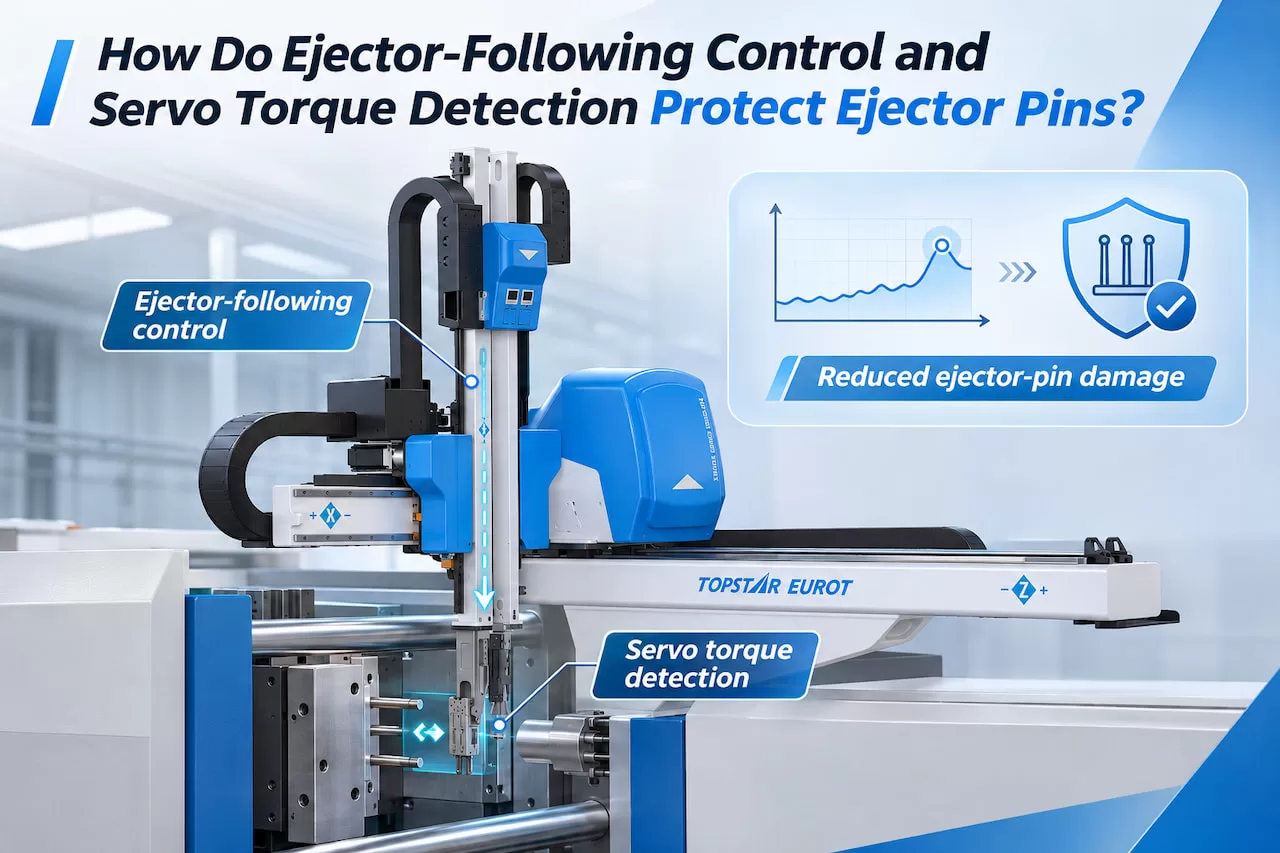
How Do Ejector-Following Control and Servo Torque Detection Protect Ejector Pins?
During part removal on an injection molding robot, poor coordination between the robotic arm, mold ejector pins, and the part-removal sequence can cause collisions, leading to bent ejector pins, mold damage, or product deformation. Topstar effectively mitigates these risks through its “Ejector-Following Control” and “Servo Torque Detection” features, enabling the robotic arm to respond flexibly… Continue reading How Do Ejector-Following Control and Servo Torque Detection Protect Ejector Pins?
-
2026/11/06 By: le zhan
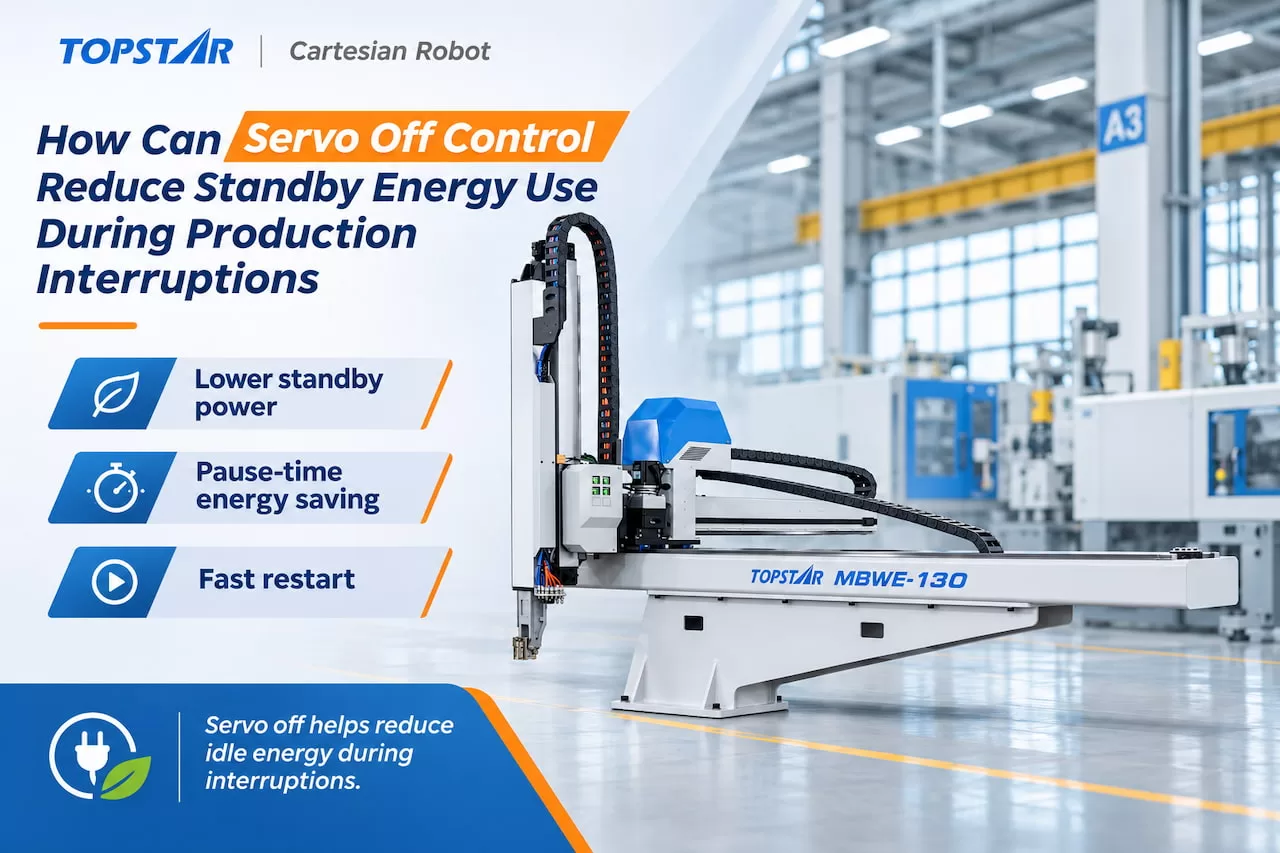
How Can Servo Off Control Reduce Standby Energy Use During Production Interruptions?
During injection molding, robots are not always operating; they may remain idle while waiting for the next molding cycle, material supply, or downstream equipment to become ready. However, even when the robotic arm is not moving, its servo drives may continue to consume power to maintain their operational state. To reduce this unnecessary standby energy… Continue reading How Can Servo Off Control Reduce Standby Energy Use During Production Interruptions?
-
2026/10/23 By: le zhan
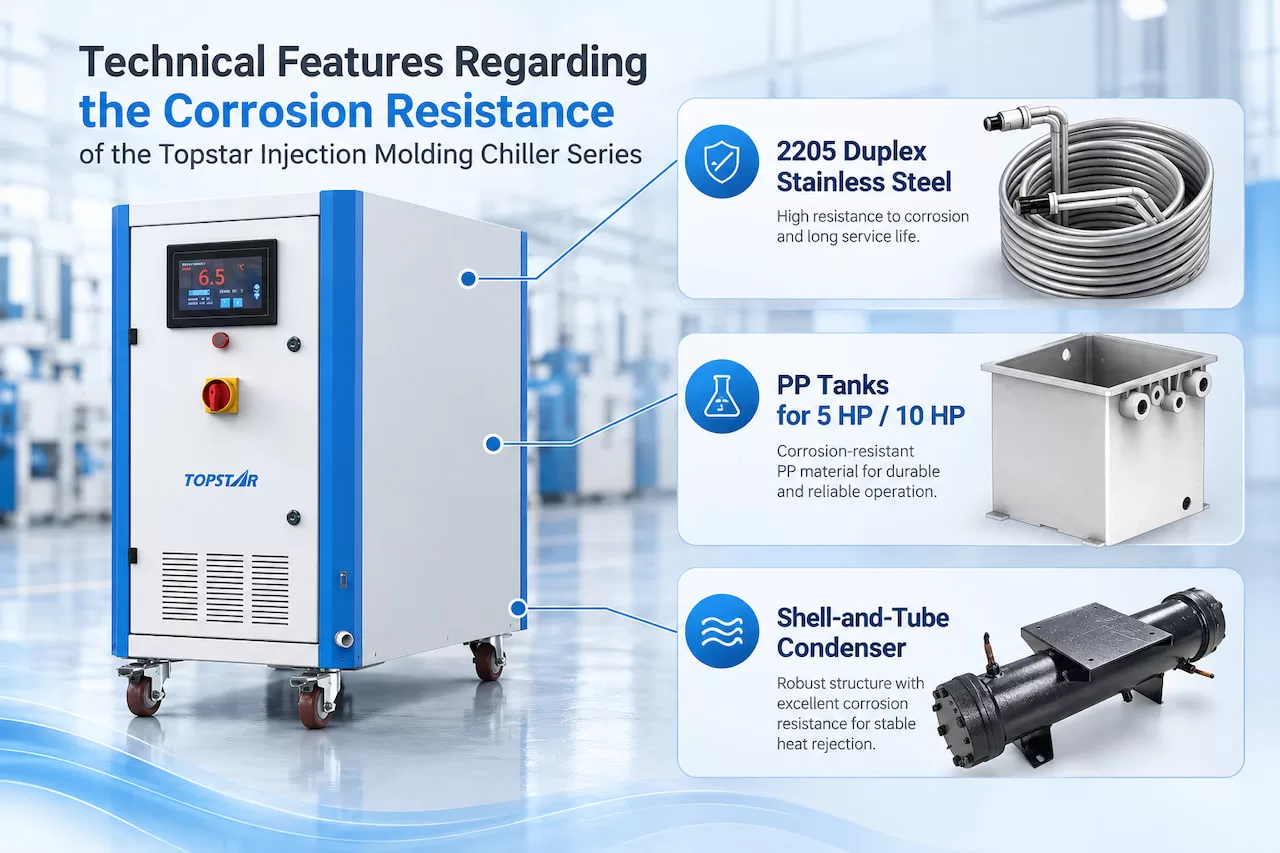
Technical Features Regarding the Corrosion Resistance of the Topstar Injection Molding Chiller Series
Corrosion resistance directly affects the service life, leak risk, and maintenance requirements of injection molding chillers. Topstar’s injection molding chiller series enhances durability through three key design features: These features collectively address potential failures in the refrigerant and water circuits, helping manufacturers minimize downtime, maintain cooling stability during the injection molding process, and improve corrosion… Continue reading Technical Features Regarding the Corrosion Resistance of the Topstar Injection Molding Chiller Series
-
2026/10/07 By: le zhan
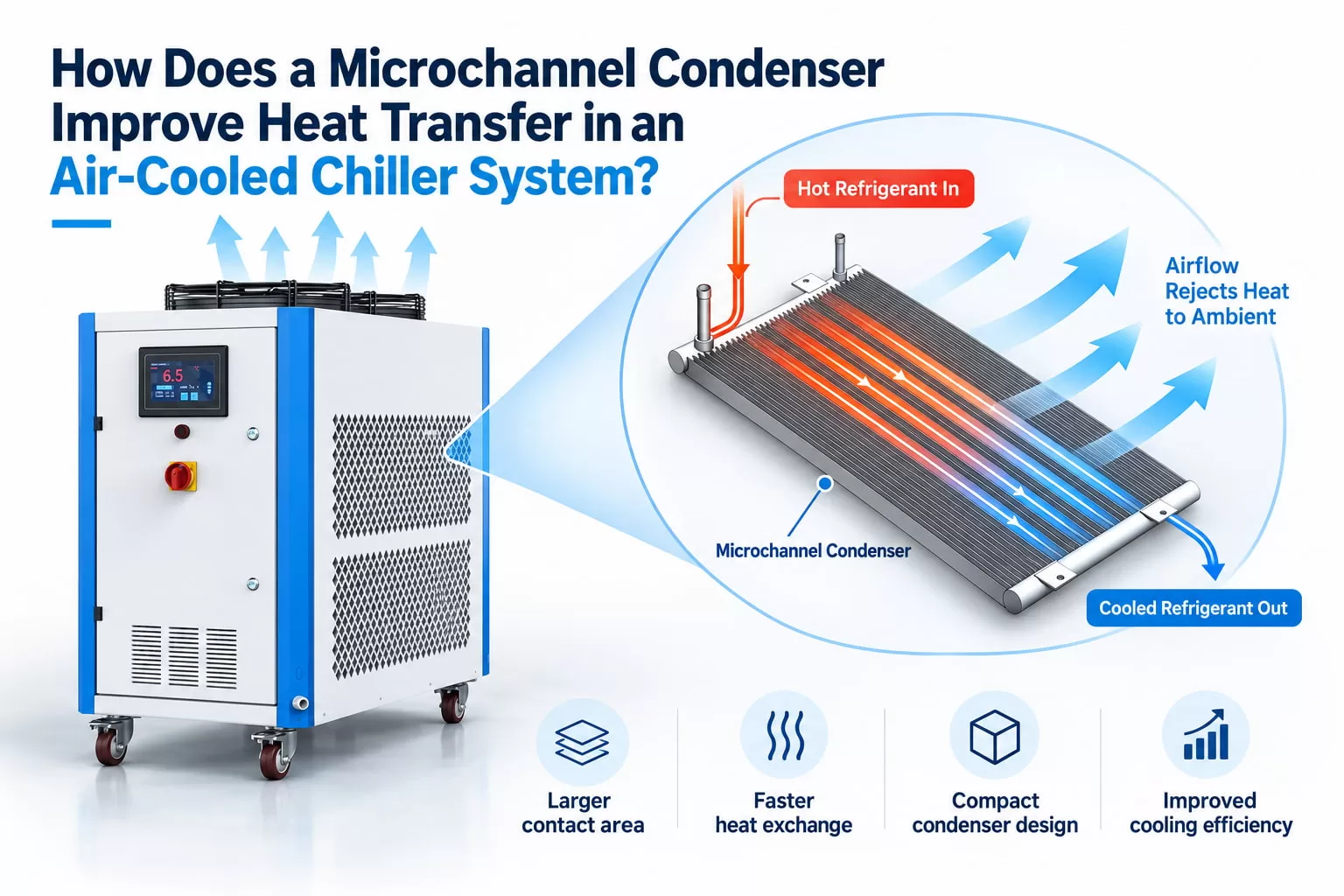
How Does a Microchannel Condenser Improve Heat Transfer in an Air-Cooled Chiller System?
Microchannel condensers improve the heat-exchange performance of air-cooled chiller system by distributing refrigerant across multiple microscopic channels and using a compact tube-fin structure with a large effective heat-exchange area. This design transfers heat more efficiently from the refrigerant to the surrounding airflow while reducing the condenser’s size and maintaining the same cooling capacity. Topstar’s air-cooled… Continue reading How Does a Microchannel Condenser Improve Heat Transfer in an Air-Cooled Chiller System?
-
2026/10/05 By: le zhan
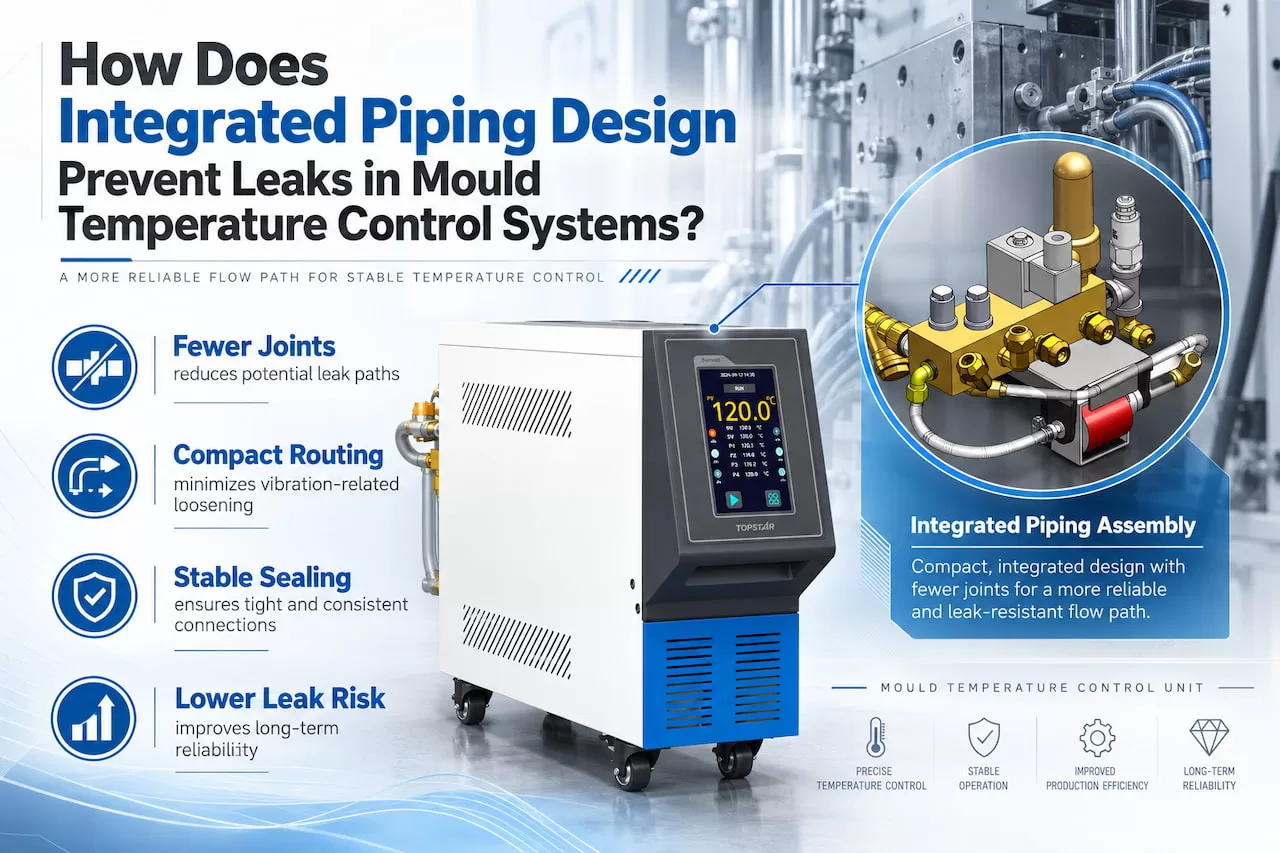
How Does Integrated Piping Design Prevent Leaks in Mould Temperature Control Systems?
The integrated piping design uses a more compact, monolithic flow path to replace the previously dispersed pipe sections, fittings, welds, and connection points in the mould temperature control systems, effectively reducing the risk of leaks. Fewer connection points also minimise potential seal weak points during repeated heating, cooling, pressure fluctuations, and long-term cyclic operation. Topstar… Continue reading How Does Integrated Piping Design Prevent Leaks in Mould Temperature Control Systems?
-
2026/09/28 By: le zhan
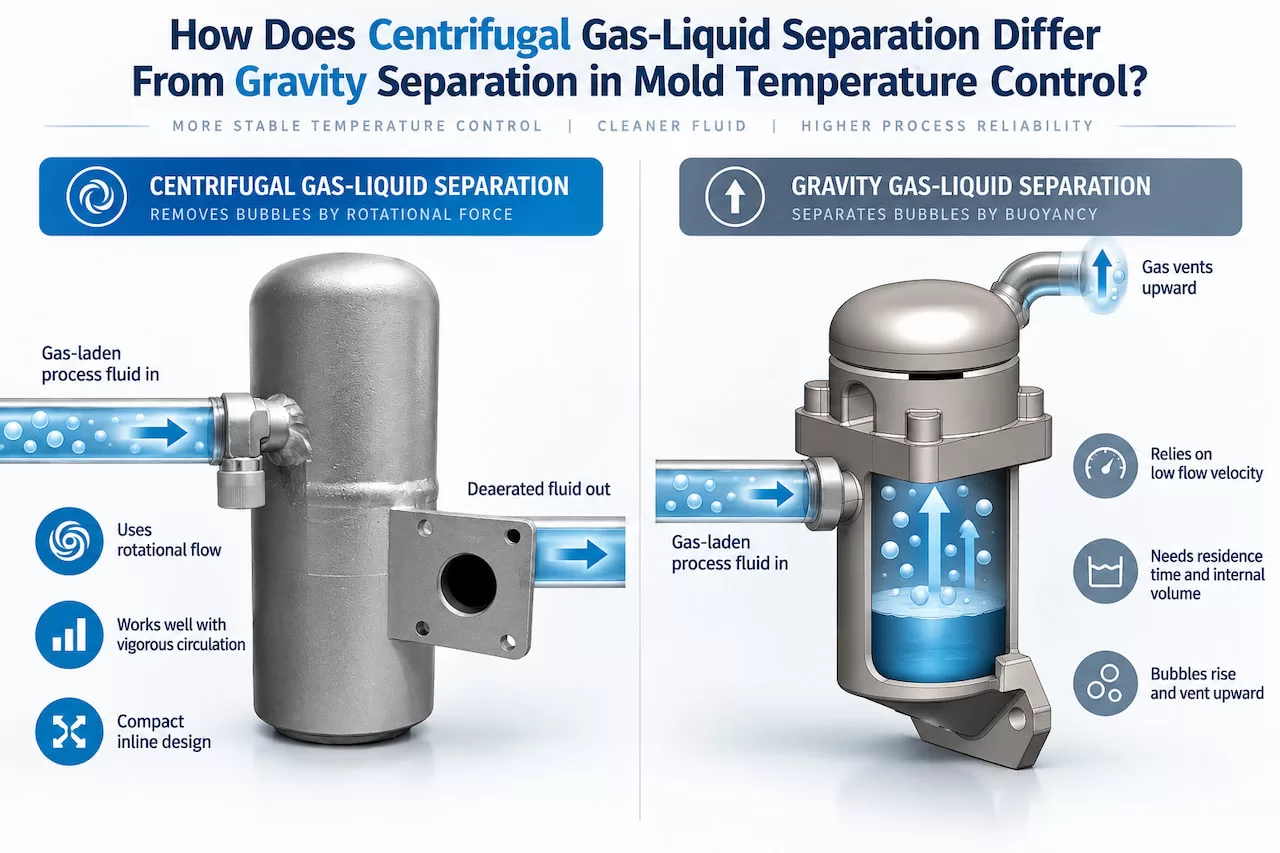
How Does Centrifugal Gas-Liquid Separation Differ From Gravity Separation in Mold Temperature Control?
In mold temperature control, although centrifugal and gravitational gas-liquid separation share the same objective, their separation principles differ fundamentally. Centrifugal separation uses a high-speed rotating flow: under centrifugal force, the denser liquid moves outward, while the less dense gas accumulates in the center. Gravitational separation reduces the fluid flow velocity within a larger chamber, allowing… Continue reading How Does Centrifugal Gas-Liquid Separation Differ From Gravity Separation in Mold Temperature Control?
-
2026/09/02 By: le zhan
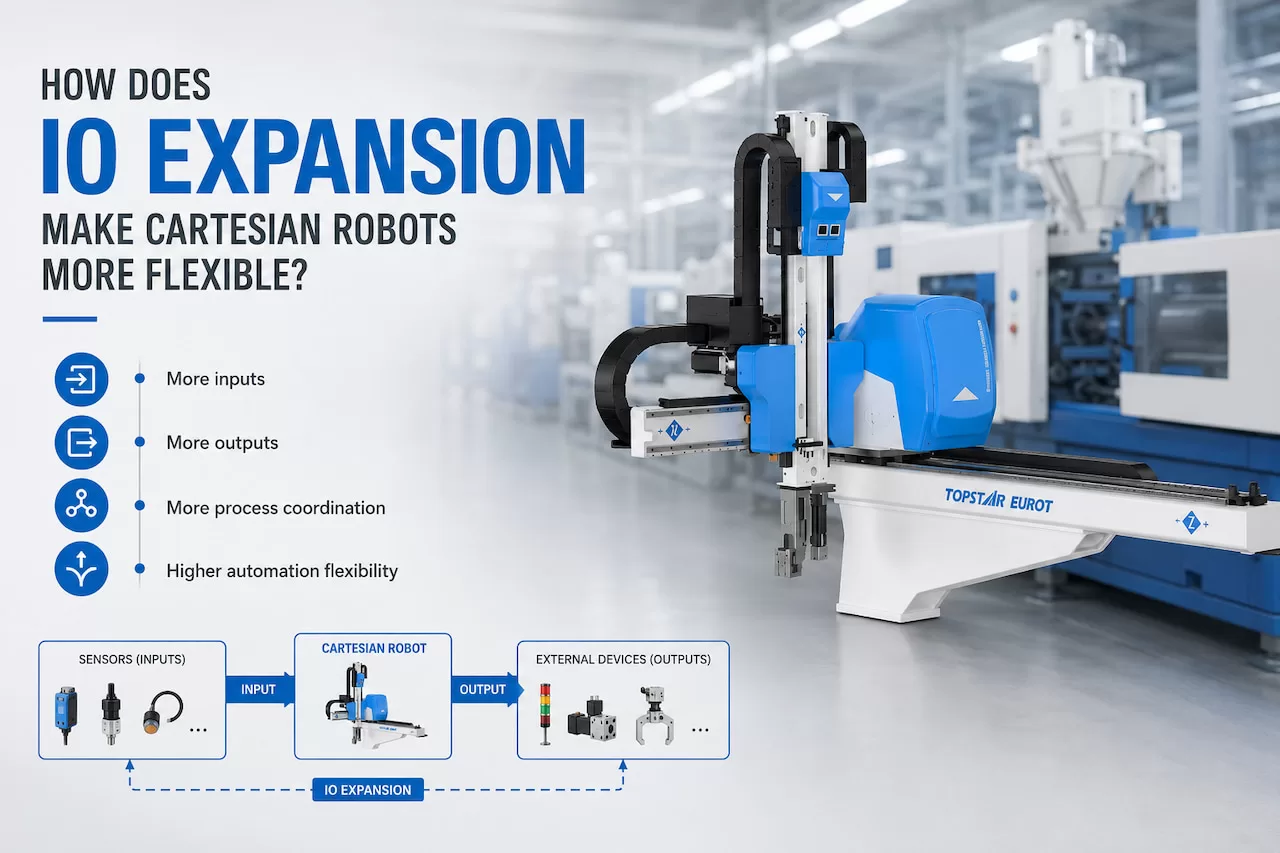
How Does IO Expansion Make Cartesian Robots More Flexible?
Topstar Cartesian robots reserve additional I/O capacity beyond the signals used by the standard program. Based on the standard control configuration, users still have room to expand by at least 11 input and 11 output channels. Although the standard program supports 4 vacuum grippers and 4 fixtures, the control architecture can be expanded to support… Continue reading How Does IO Expansion Make Cartesian Robots More Flexible?
-
2026/08/14 By: le zhan
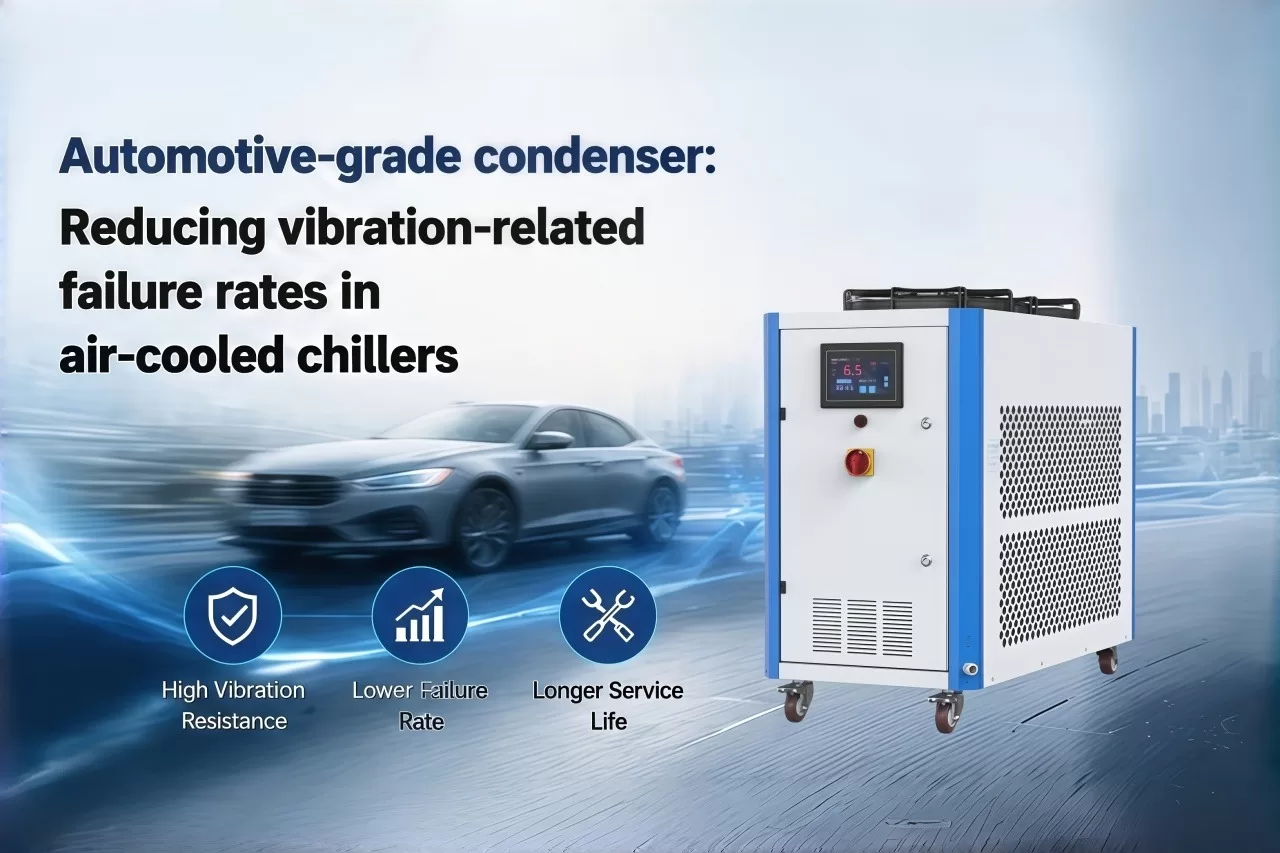
Automotive-grade condenser: Reducing vibration-related failure rates in air-cooled chillers
Air-cooled chillers are typically installed near production equipment and are therefore often subjected to continuous vibrations from injection molding machines, automated robots, material handling systems, compressors, and other equipment. Although these vibrations may seem insignificant during short-term operation, long-term mechanical stress can gradually affect the cooling system’s reliability. Therefore, when designing air-cooled chillers, we not… Continue reading Automotive-grade condenser: Reducing vibration-related failure rates in air-cooled chillers
-
2026/07/22 By: le zhan
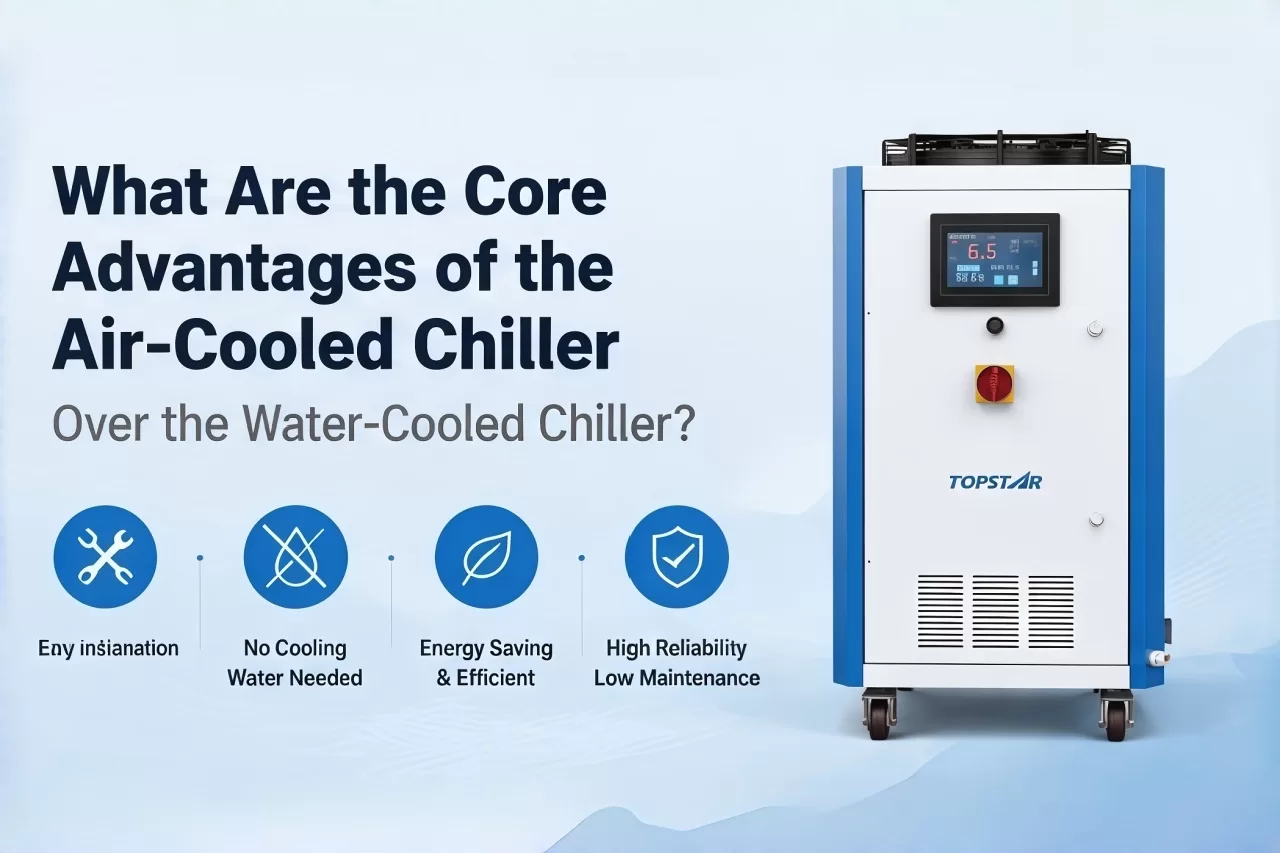
What Are the Core Advantages of the Air-Cooled Chiller Over the Water-Cooled Chiller?
Water-cooled chillers are widely used in injection molding and industrial cooling applications due to their exceptional heat dissipation capabilities. They require additional infrastructure, including cooling towers, circulating water systems, water pumps, piping, and regular water treatment. These requirements increase the complexity of factory installation, the maintenance workload, and long-term operating costs. However, this is not… Continue reading What Are the Core Advantages of the Air-Cooled Chiller Over the Water-Cooled Chiller?
-
2026/07/20 By: le zhan
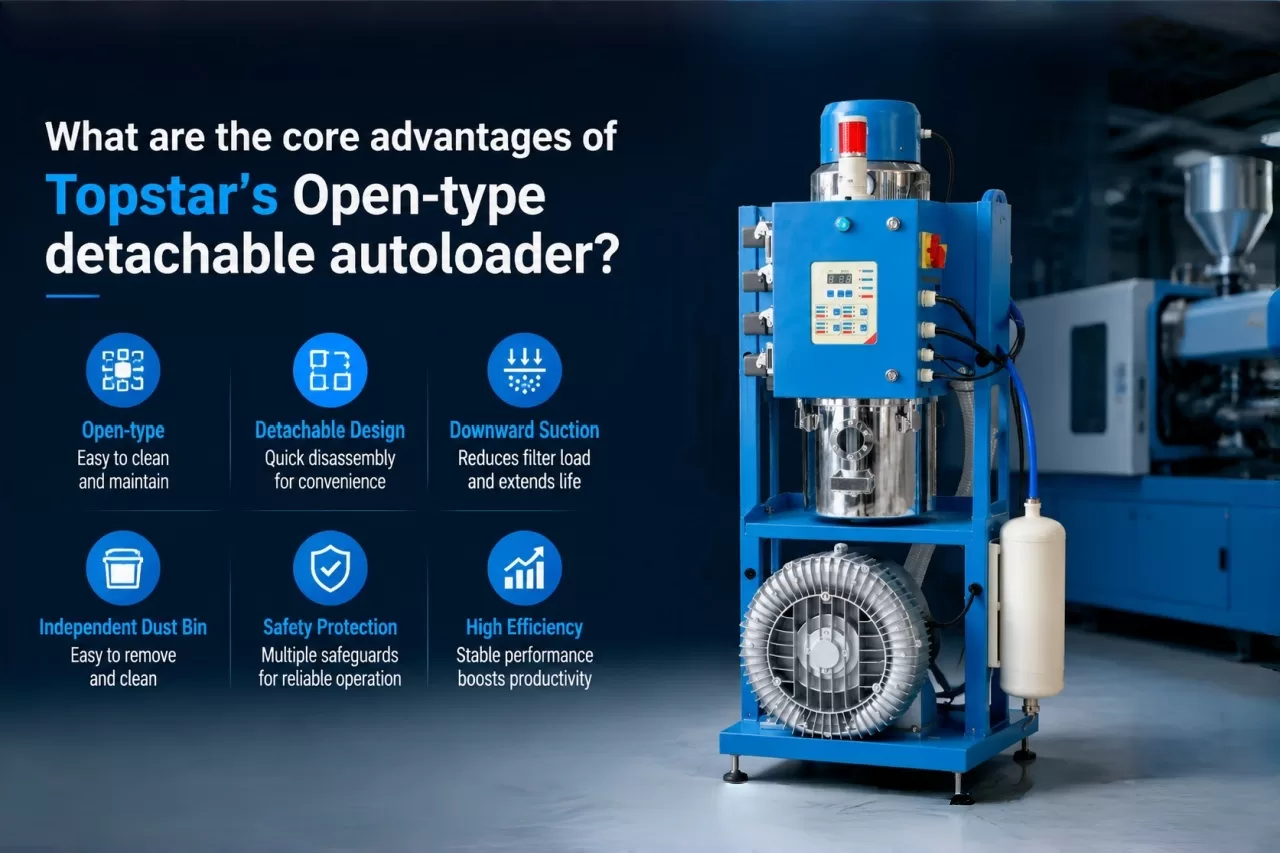
What are the core advantages of Topstar’s Open-type detachable autoloader?
Unlike other traditional material loaders, Topstar’s open-type detachable autoloader is designed to optimize the entire material handling process. It incorporates technologies such as EPROM-based data protection, down-suction airflow, cyclone dust separation, an independent dust-collection design, and a real-time fault-alarm system, providing manufacturers with a more stable, cleaner, and easier-to-maintain feeding solution. Other key features include:… Continue reading What are the core advantages of Topstar’s Open-type detachable autoloader?