
News and articles from Topstar
We are committed to the innovation and application of industrial manufacturing automation.
-
2026/10/12 By: le zhan
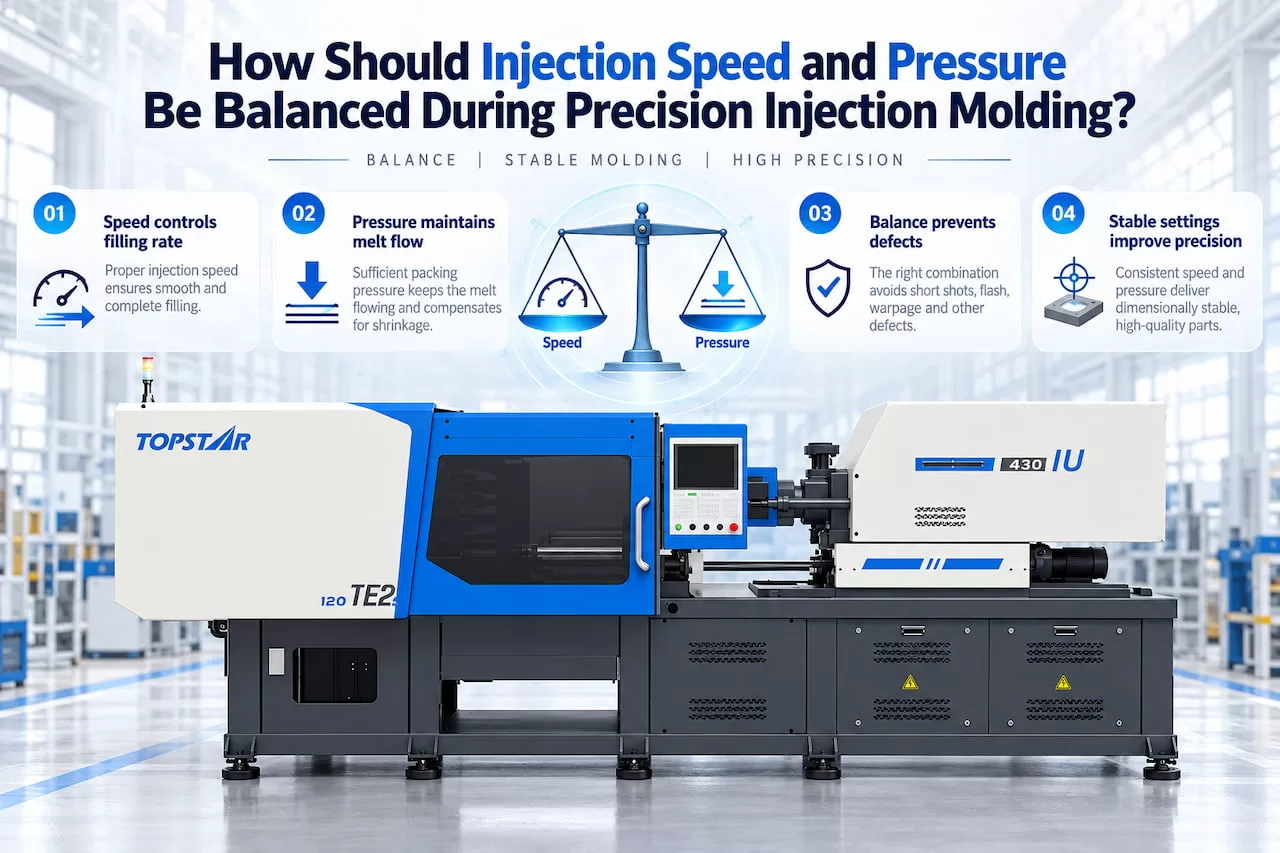
How Should Injection Speed and Pressure Be Balanced During Precision Injection Molding?
In injection molding, the injection speed is primarily used to control the cavity filling process. In contrast, injection pressure must provide enough force to maintain the preset flow conditions without exceeding the limit. For precision injection molding operations, we typically recommend that customers first set a stable speed curve and set the pressure upper limit… Continue reading How Should Injection Speed and Pressure Be Balanced During Precision Injection Molding?
-
2026/09/20 By: le zhan
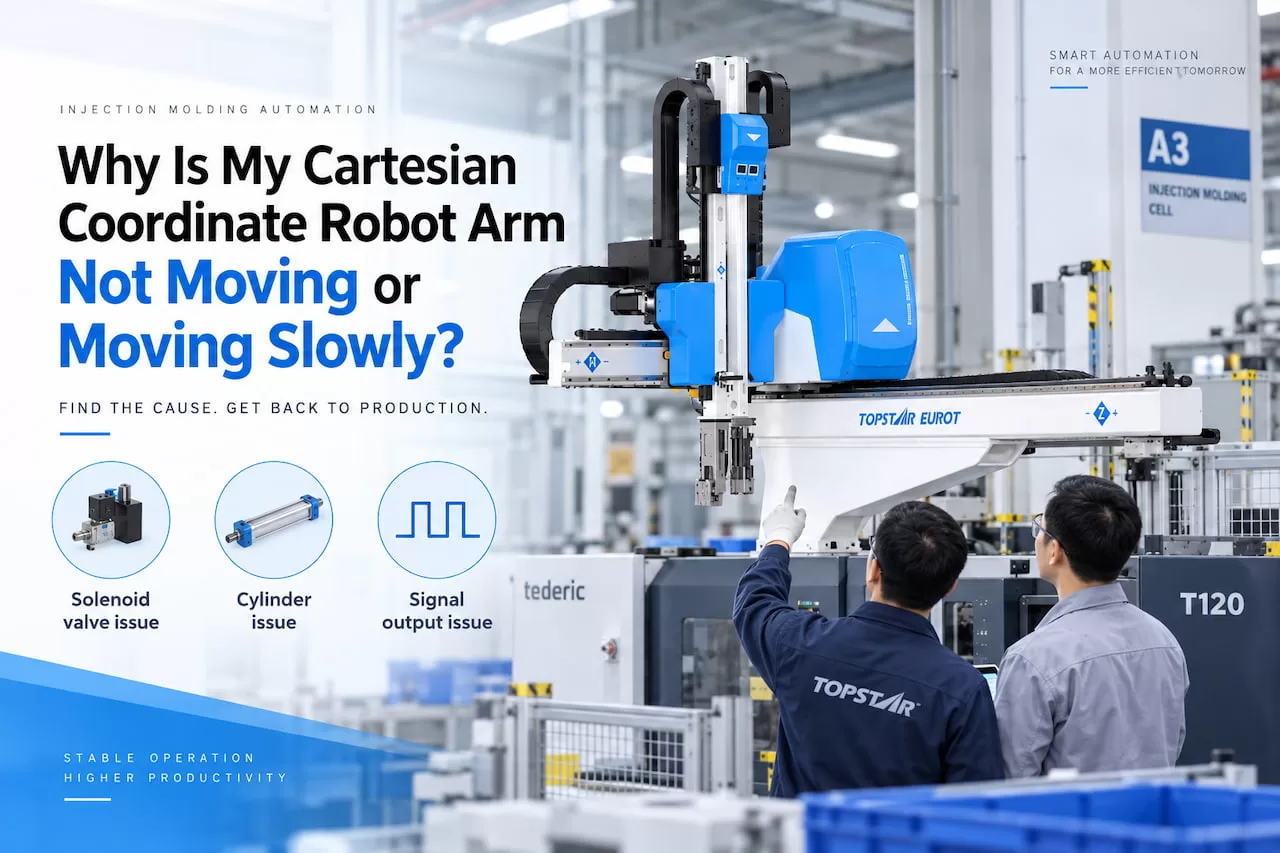
Why Is My Cartesian Coordinate Robot Arm Not Moving or Moving Slowly?
During production, if your Cartesian Coordinate robot arm suddenly stops moving or its operating speed slows significantly, the problem is often in the pneumatic circuit controlling the auxiliary arm, gripper, wrist, or related mechanisms. For pneumatic operations, you should prioritise troubleshooting the following three causes: The following troubleshooting steps apply to abnormal movements related to… Continue reading Why Is My Cartesian Coordinate Robot Arm Not Moving or Moving Slowly?
-
2026/09/16 By: le zhan
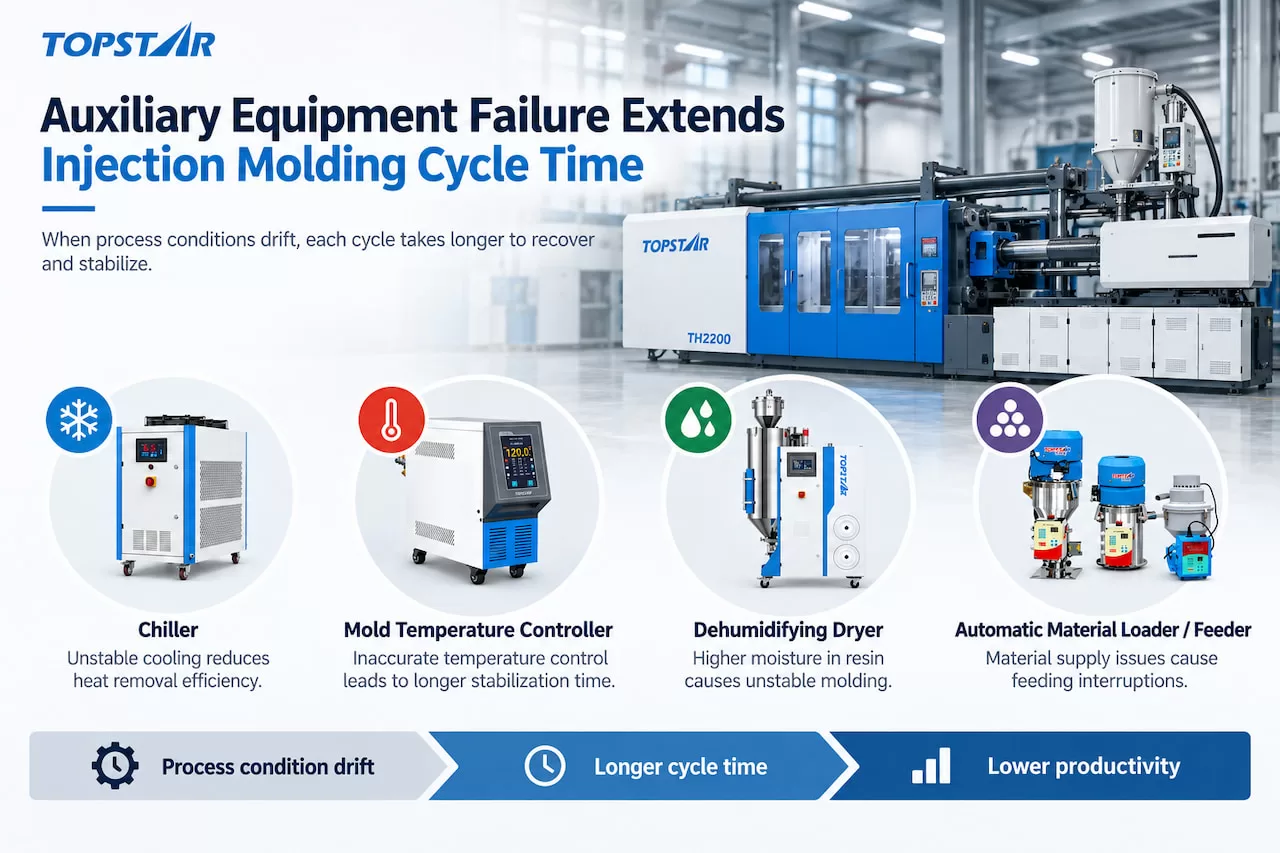
Why Does Injection Molding Cycle Time Gradually Increase During Production?
When the injection molding cycle time gradually increases during production, most operators tend to blame the injection molding machine. However, in this case, we need to analyze and identify issues with auxiliary equipment other than the injection molding machine. The auxiliary equipment surrounding the injection molding machine continuously determines the various conditions entering the molding… Continue reading Why Does Injection Molding Cycle Time Gradually Increase During Production?
-
2026/09/14 By: le zhan
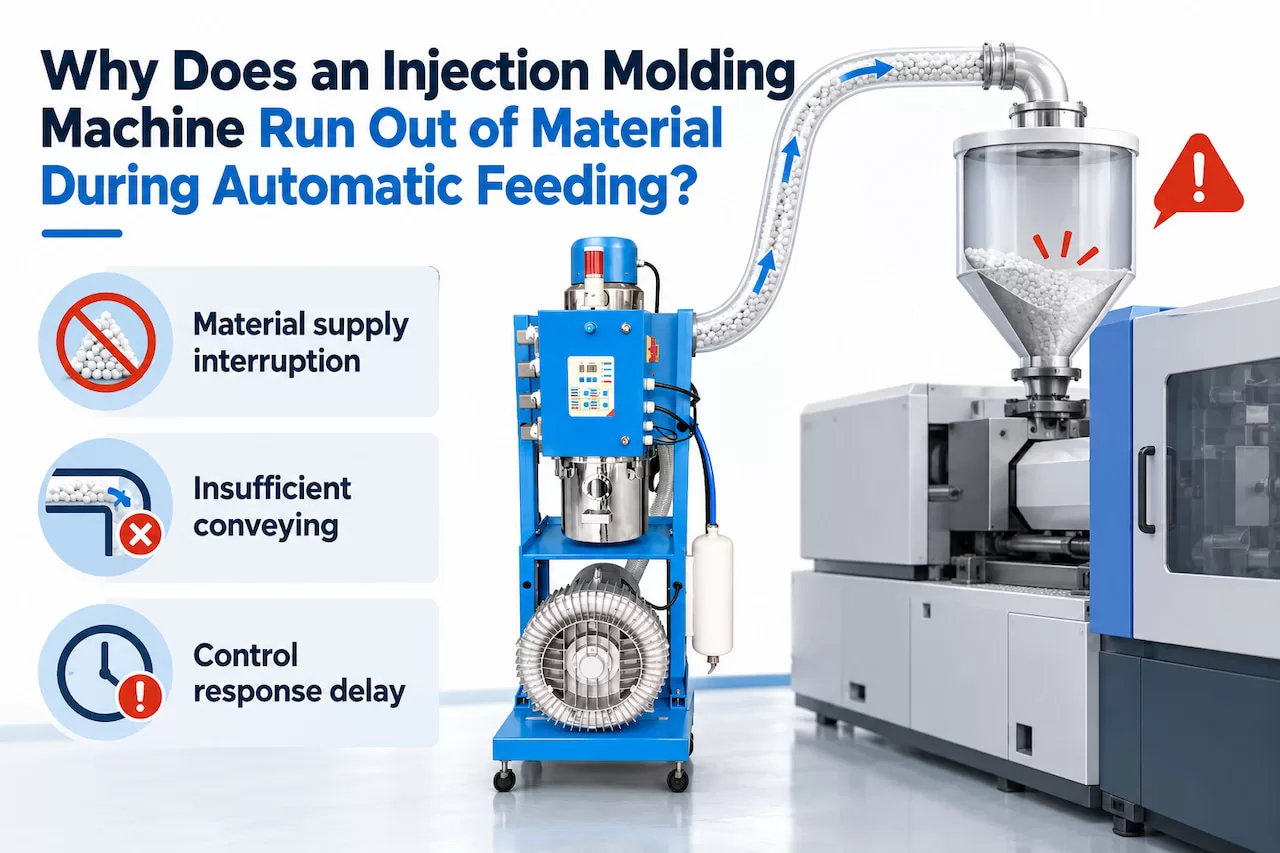
Why Does an Injection Molding Machine Run Out of Material During Automatic Feeding?
Even when an injection molding machine is equipped with a sophisticated automatic material loader, a material shortage alarm may suddenly be triggered during the automatic feeding process. In many cases, the problem is not a shortage of resin at the factory, but rather the automatic feeder’s inability to deliver sufficient material to the injection molding… Continue reading Why Does an Injection Molding Machine Run Out of Material During Automatic Feeding?
-
2026/09/09 By: le zhan
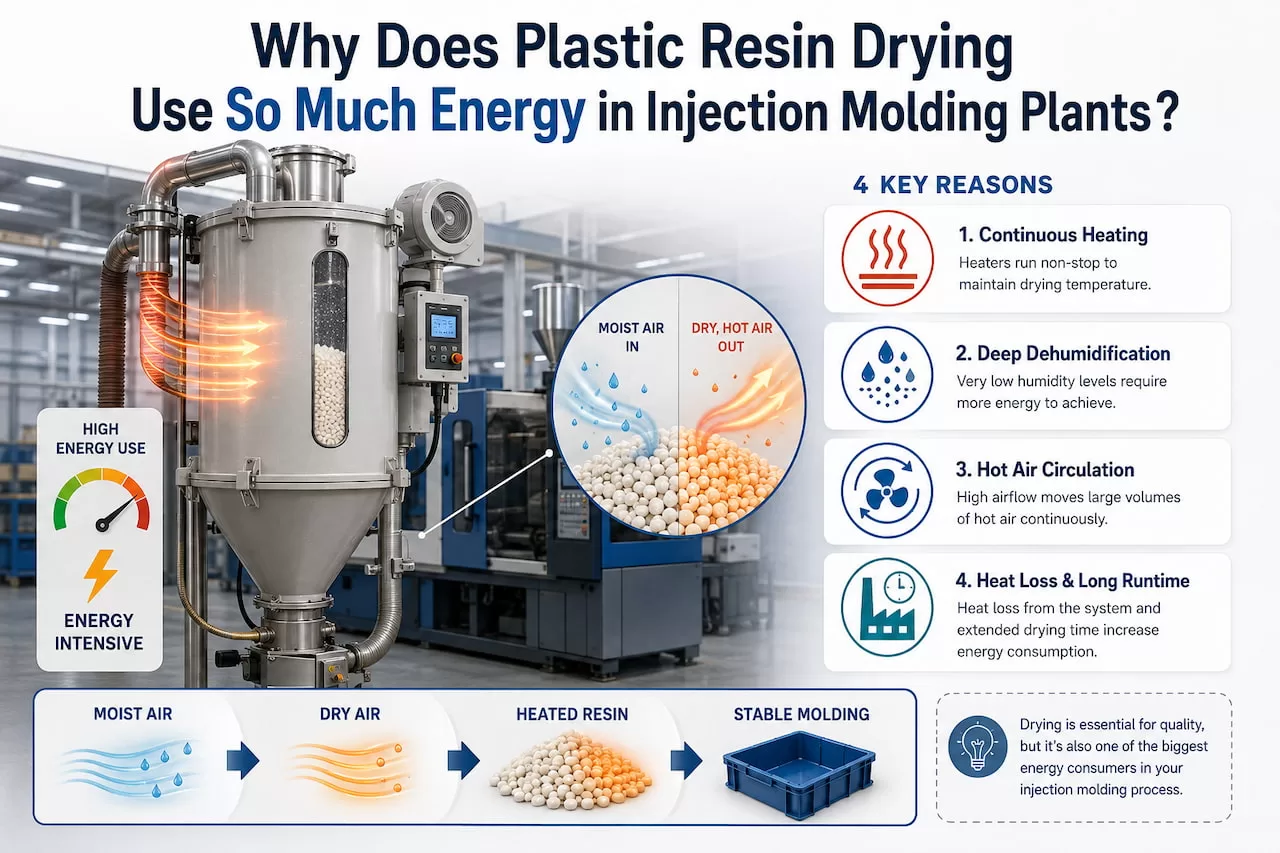
Why Does Plastic Resin Drying Use So Much Energy in Injection Molding Plants?
In the daily operations of an injection molding plant, drying plastic resin often consumes the most energy because a dehumidifying dryer does more than heat plastic pellets once. It must continuously heat the resin, circulate large volumes of air, remove moisture, regenerate the dehumidifying medium, and typically also maintain the material’s temperature. At the same… Continue reading Why Does Plastic Resin Drying Use So Much Energy in Injection Molding Plants?
-
2026/09/07 By: le zhan
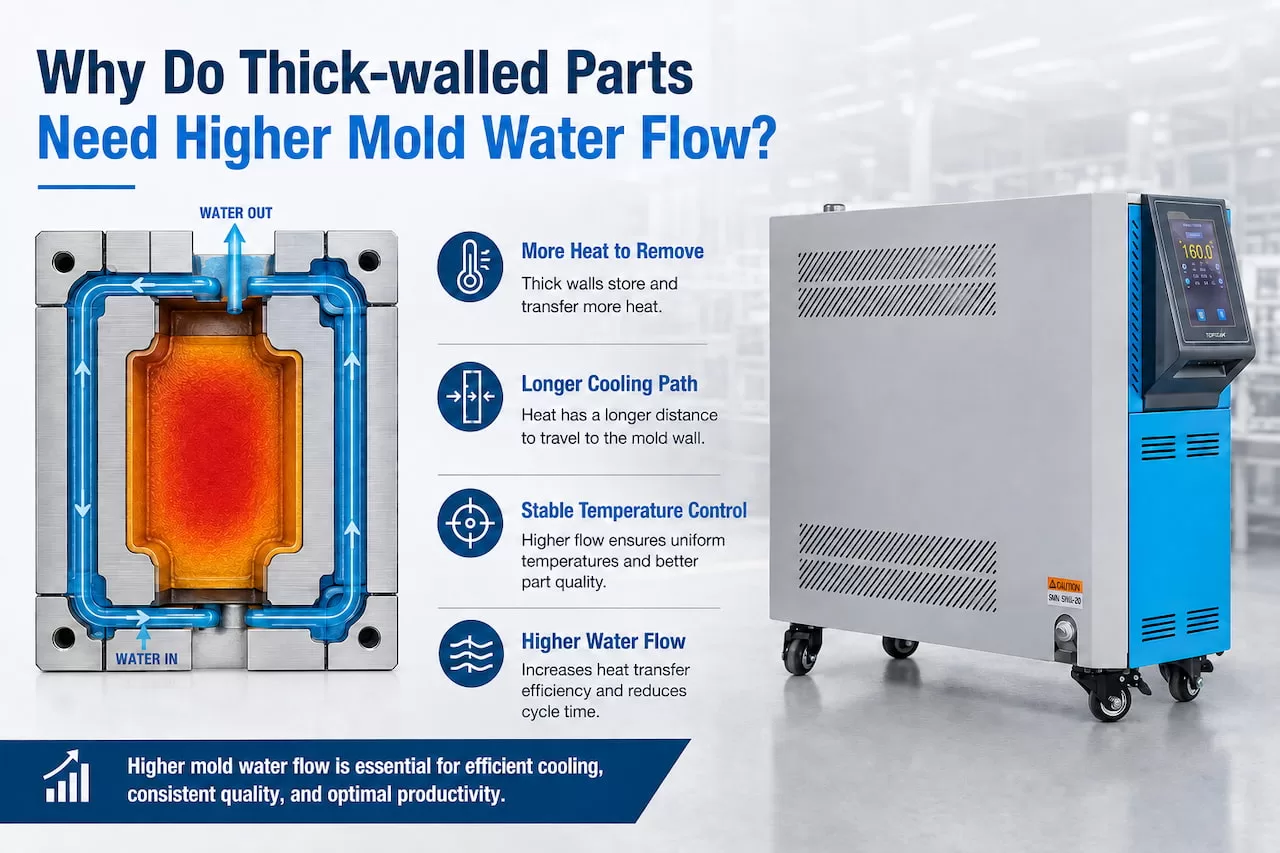
Why Do Thick-walled Parts Need Higher Mold Water Flow?
For thick-walled parts, mold temperature control is more than reaching a set temperature. Rather, it involves removing and redistributing large amounts of heat while keeping the mold surface uniformly temperature throughout each molding cycle. Compared to thin-walled parts, thick-walled plastic products contain more molten material per unit area. As a result, more heat accumulates in… Continue reading Why Do Thick-walled Parts Need Higher Mold Water Flow?
-
2026/08/10 By: le zhan
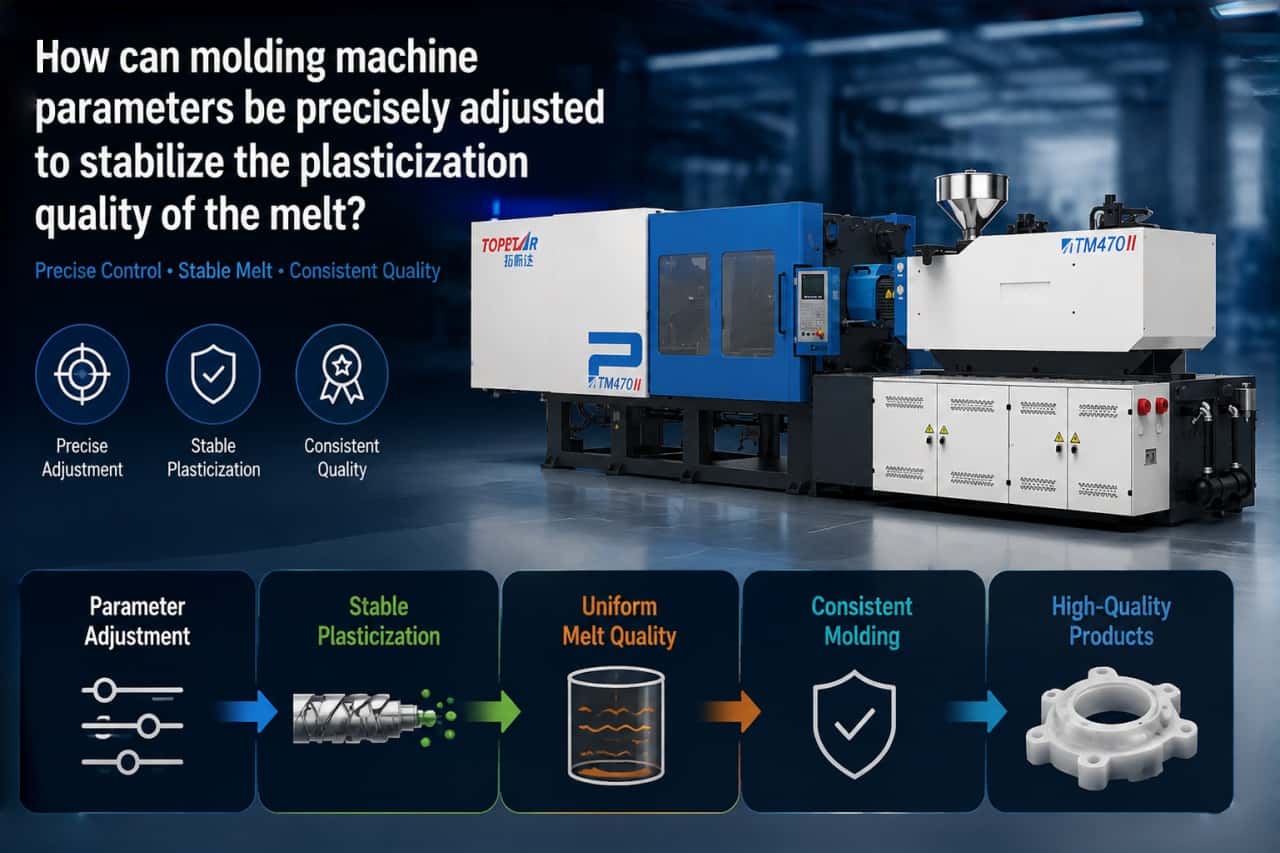
How can molding machine parameters be precisely adjusted to stabilize the plasticization quality of the melt?
The stability of the plastification process inside the molding machine is one of the key factors affecting the consistency of the final product. During the molding process, the plastic raw material must undergo controlled heating, melting, mixing, and homogenization before entering the mold cavity. If the melt quality fluctuates during the plastification stage, the product… Continue reading How can molding machine parameters be precisely adjusted to stabilize the plasticization quality of the melt?
-
2026/07/27 By: le zhan
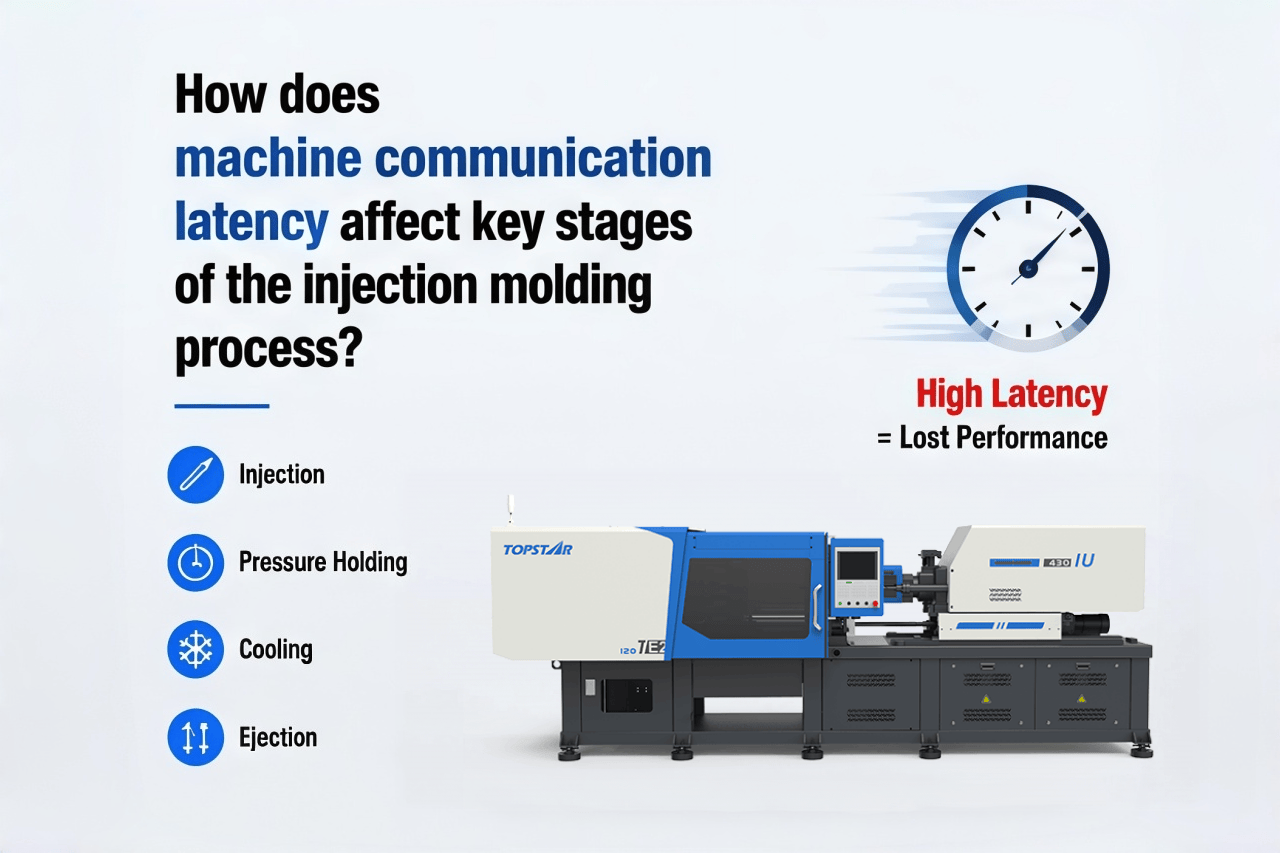
How does machine communication latency affect key stages of the injection molding process?
The injection molding process is, by its very nature, a continuous interaction between the control system, drive units, and mechanical components. Every motion command, feedback signal, and corrective action must first pass through the control system before the machine can respond. When communication is delay-free, the injection molding machine can operate precisely according to the… Continue reading How does machine communication latency affect key stages of the injection molding process?
-
2026/07/24 By: le zhan
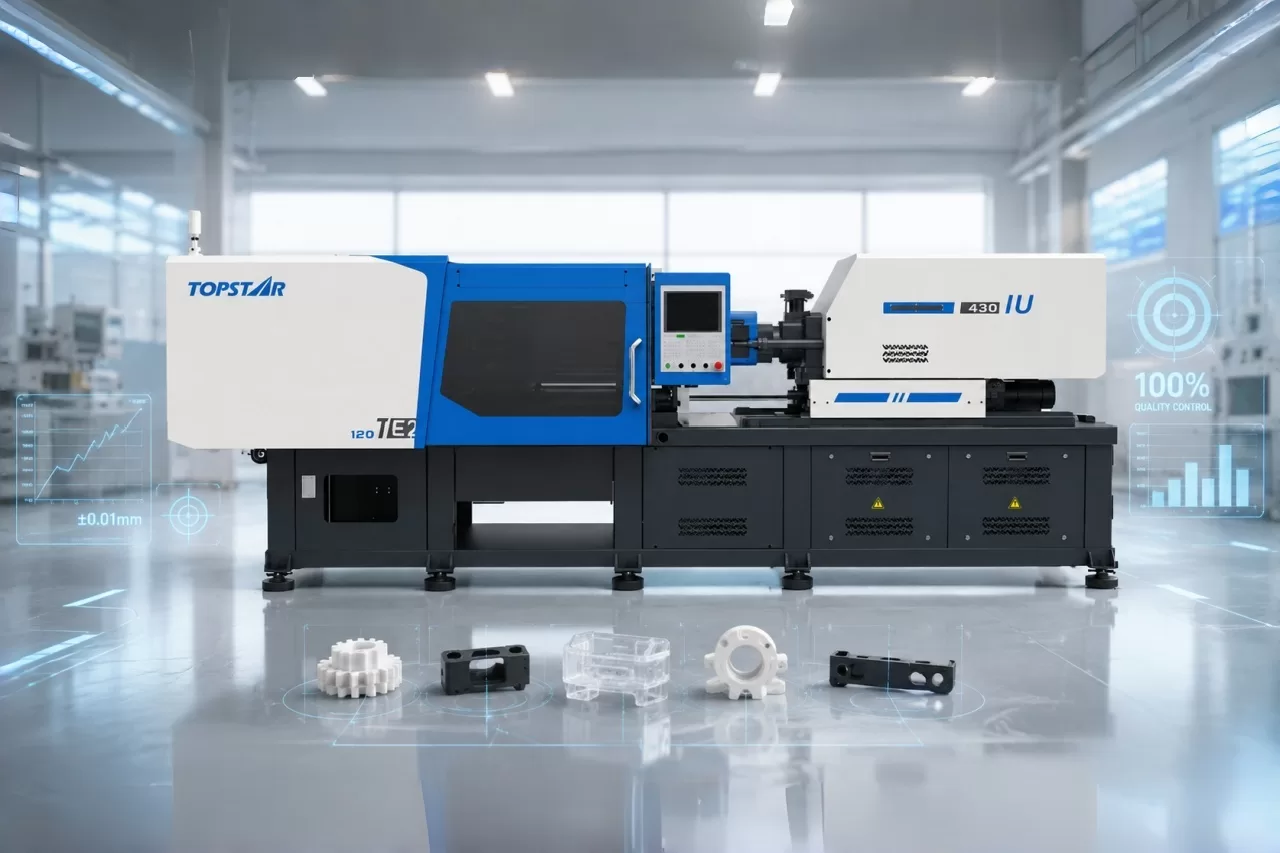
Why do high-precision, high-quality molding requirements call for electric injection molding machines?
Product manufacturing in industries such as medical devices, automotive parts, consumer goods, home appliances, 3C products, and toys all require high-precision, high-quality molding. In these cases, customers no longer focus solely on output volume but demand higher dimensional accuracy, more consistent surface quality, and stricter process control. Traditional hydraulic injection molding machines have limitations in… Continue reading Why do high-precision, high-quality molding requirements call for electric injection molding machines?
-
2024/05/22 By: Topstar
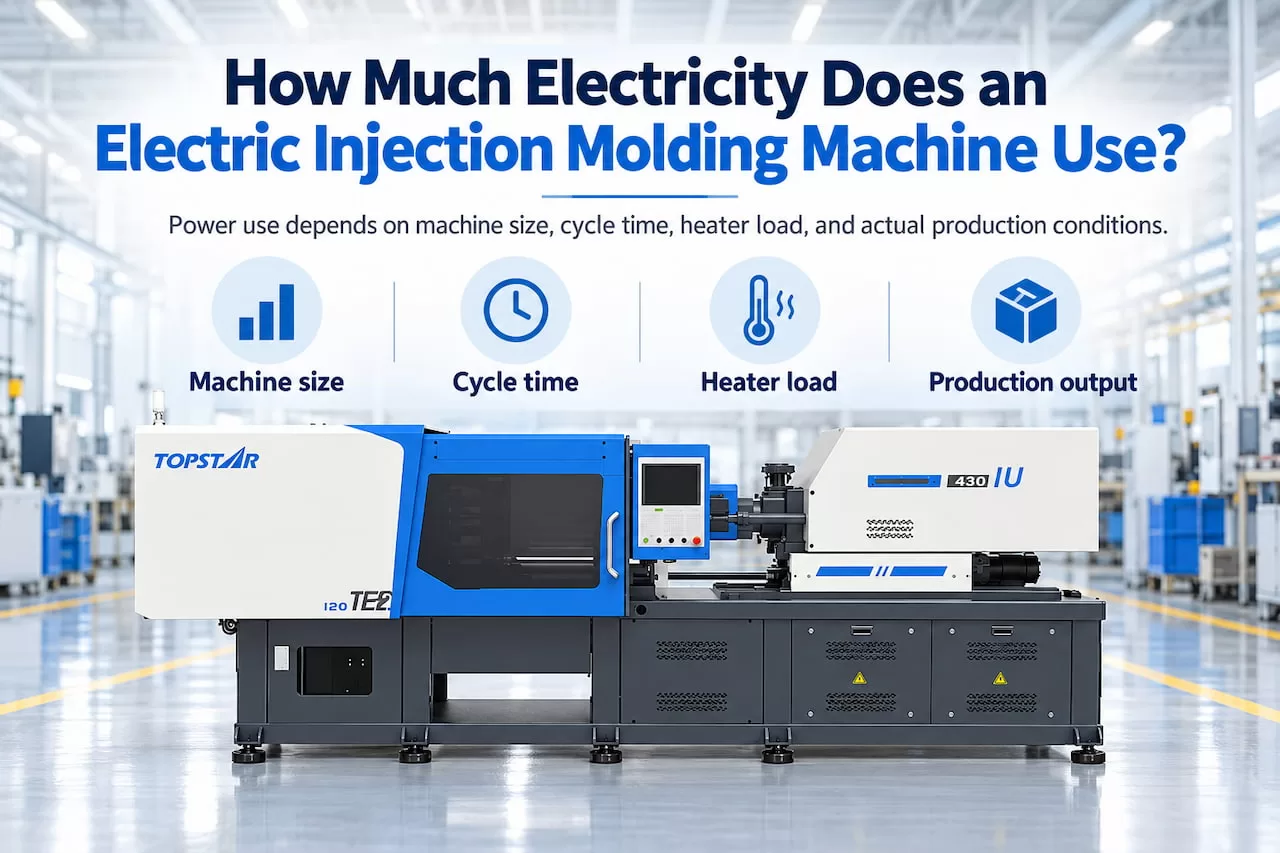
How much electricity does an electric injection molding machine use?
Electric injection molding machine don’t have a single power-consumption figure that applies to all production facilities. This is because actual power consumption depends on machine configuration, the material being processed, shot weight, molding cycle time, temperature settings, and production schedules. To estimate costs, multiply the measured average power by the operating time to get total… Continue reading How much electricity does an electric injection molding machine use?
-
2022/07/22 By: Topstar
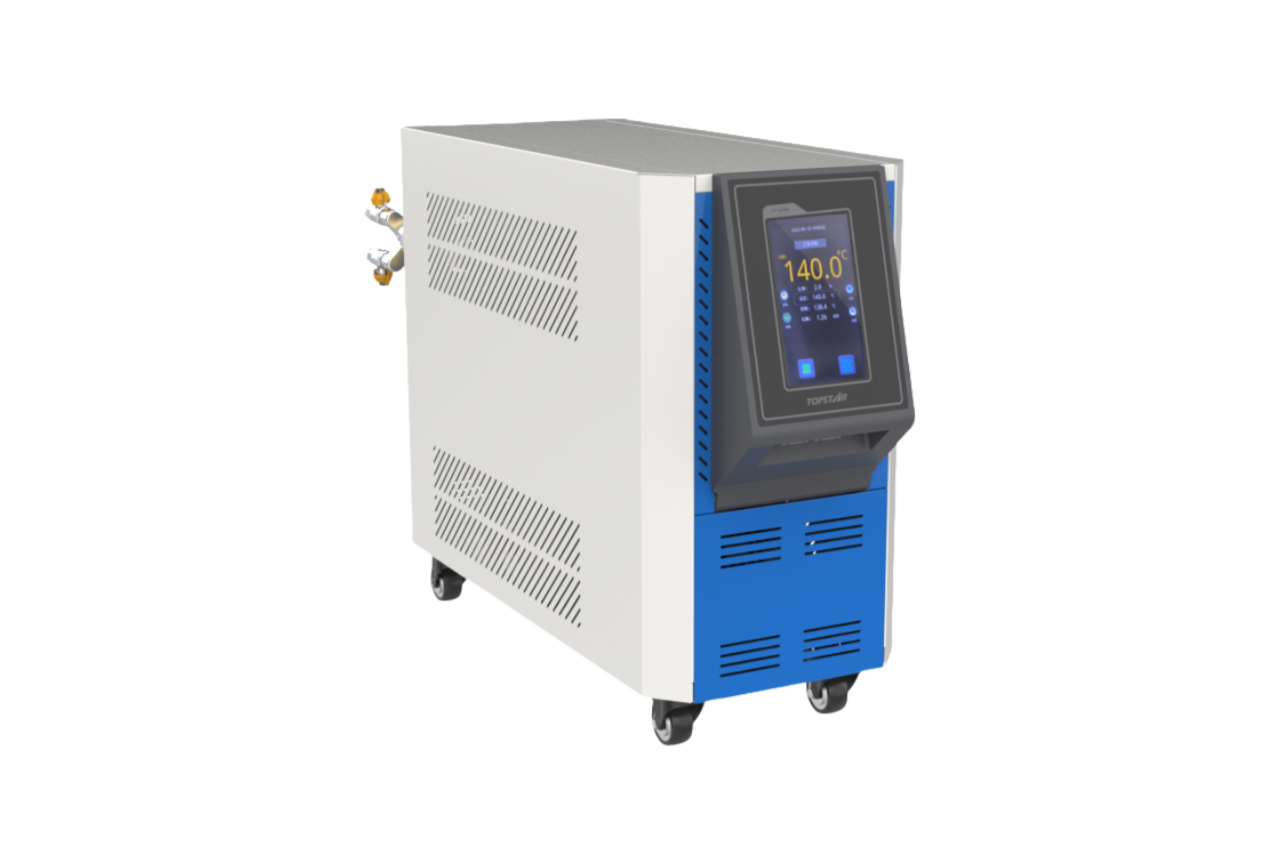
What is a mould temperature controller?
A mould temperature controller is a temperature-control device that circulates water or heat-transfer oil through a mould to heat it to the required operating temperature and maintain a controlled thermal state throughout production. During injection moulding, it helps ensure consistent mould filling, cooling, surface quality, and dimensional stability. In injection moulding production, the mould temperature… Continue reading What is a mould temperature controller?