
How does machine communication latency affect key stages of the injection molding process?
2026/07/27 By le zhan
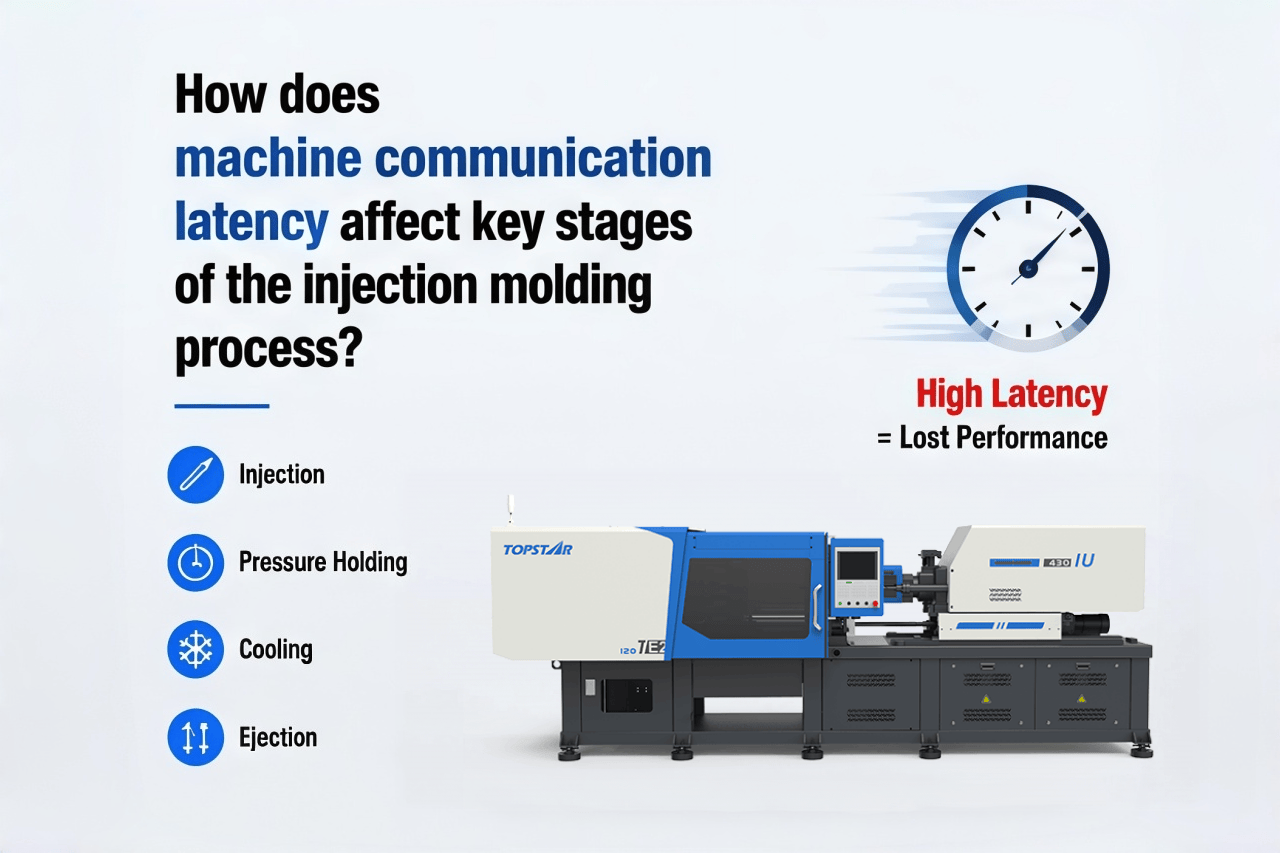
The injection molding process is, by its very nature, a continuous interaction between the control system, drive units, and mechanical components. Every motion command, feedback signal, and corrective action must first pass through the control system before the machine can respond. When communication is delay-free, the injection molding machine can operate precisely according to the preset process curve. However, delays between command transmission and mechanical response can affect critical molding stages, leading to deviations in filling behavior, pressure transitions, dimensional stability, and ultimately, product quality.
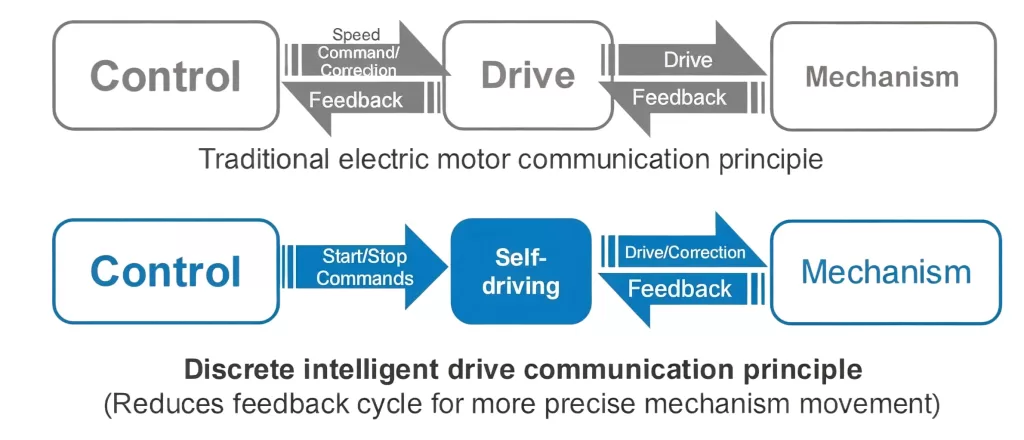
Traditional electric injection molding machines typically employ a layered communication architecture:
Control → Drive → Mechanism
In this architecture, the controller sends commands to the drive system, which then controls motor movement. At the same time, feedback signals are transmitted through the same layers. Although this architecture provides reliable operation, each communication layer introduces additional processing time. These minute delays accumulate, affecting the stability of the entire injection molding process.
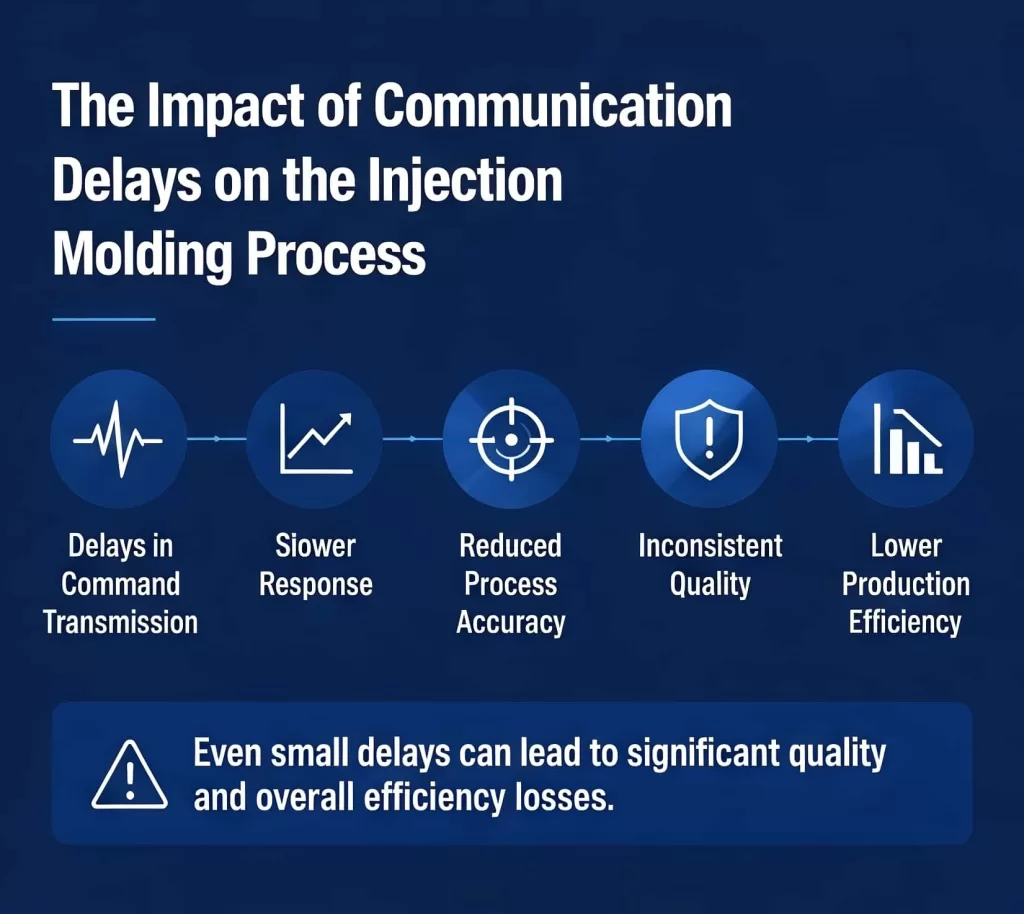
The Impact of Communication Delays on the Injection Molding Process
Modern injection molding is not merely a process of mechanical motion, but rather a highly coordinated interaction among control algorithms, servo drives, motors, mechanical transmission systems, and other components:
During production, the injection molding machine continuously receives and processes information.
For example:
- The controller calculates the required injection speed.
- The command is sent to the drive system.
- The drive controls the motor’s operation.
- The mechanical system executes the motion.
- Feedback information is returned to the controller for correction.
This closed-loop process enables the machine to maintain stable operation. However, the efficiency of this loop depends largely on the communication speed. If the feedback cycle is too long, the controller cannot immediately ascertain the actual mechanical state. Consequently, the machine may continue to operate based on outdated information.
For general injection molding applications, this delay may not cause noticeable problems. However, for precision injection molding—where products demand extremely high dimensional and surface finish stability—communication delays become a major limiting factor.
Injection Molding Process Accuracy Is Affected by Traditional Tiered Communication Methods
Traditional electric injection molding machines typically employ a tiered control structure:
Control System → Drive System → Mechanical System
In this architecture, the controller manages process commands; the drive converts instructions into motion; and the mechanical system executes the motion. These three distinct functional modules are separated:
Although this structure simplifies system management, it increases the number of communication steps. This is because each step requires data transmission, signal processing, command conversion, and feedback calculation. During high-speed injection, these minute delays can affect real-time control performance. This results in a discrepancy between the expected process position and the actual mechanical position. The smaller this gap, the more stable the injection molding process will be.
Increased Communication Delay Leads to Decreased Process Quality
Communication delay affects several critical stages of injection molding.
1. Injection Filling Stage:
During the injection filling process, the screw must follow a precise speed curve. If communication response is delayed, the following situations may occur:
- The actual injection speed may deviate from the target value;
- Melt flow stability may decrease;
- Filling equilibrium may become unstable.
For products with thin walls or complex structures, even minor speed variations can cause flow marks, weld line defects, and uneven surface finishes.
2. V-P Transition Phase:
The transition from speed control to pressure control is one of the most sensitive phases of the injection molding process. During this period, the injection molding machine must accurately monitor screw position, filling status, and cavity pressure conditions.
If communication delays occur, the transition point may occur slightly earlier or later than scheduled. This can lead to over-holding (overfilling), under-holding, dimensional deviations, and internal stress.
For automotive lighting components with extremely high optical performance requirements, unstable pressure switching directly affects light transmission and surface quality.
3. Holding Pressure Phase:
During the holding pressure phase, the injection molding machine compensates for material shrinkage. Response delays may lead to pressure fluctuations, uneven compensation, and product deformation. High-precision parts require stable holding pressure control throughout the entire cooling period. Therefore, reducing communication delays helps maintain product consistency.
How Does Topsta’s Discrete Intelligent Drive Communication Reduce Communication Latency?
With users’ growing demand for high-precision molding, traditional control architectures cannot meet these requirements. Modern injection molding processes are evolving toward higher injection speeds, the production of complex product structures, stricter dimensional tolerances, and higher optical and surface quality requirements.
Against this backdrop, electric injection molding machines, in particular, must not only provide sufficient mechanical power but also respond quickly and precisely to every process change.
The shorter the communication cycle, the more precisely the machine can reproduce the preset molding curve. To address this challenge, Topsta independently developed its Discrete Intelligent Drive technology, optimizing the interaction between the control system and the drive system.
Unlike traditional hierarchical communication, the Discrete Intelligent Drive reduces unnecessary communication steps and shortens the feedback cycle between command output and mechanical response.
The principle can be summarized as follows:
Discrete Intelligent Drive:
Control → Intelligent Drive → Mechanical Response → Real-time Feedback
By shortening the distance between control calculations and mechanical execution, electric injection molding machines achieve faster response times and more precise motion control.
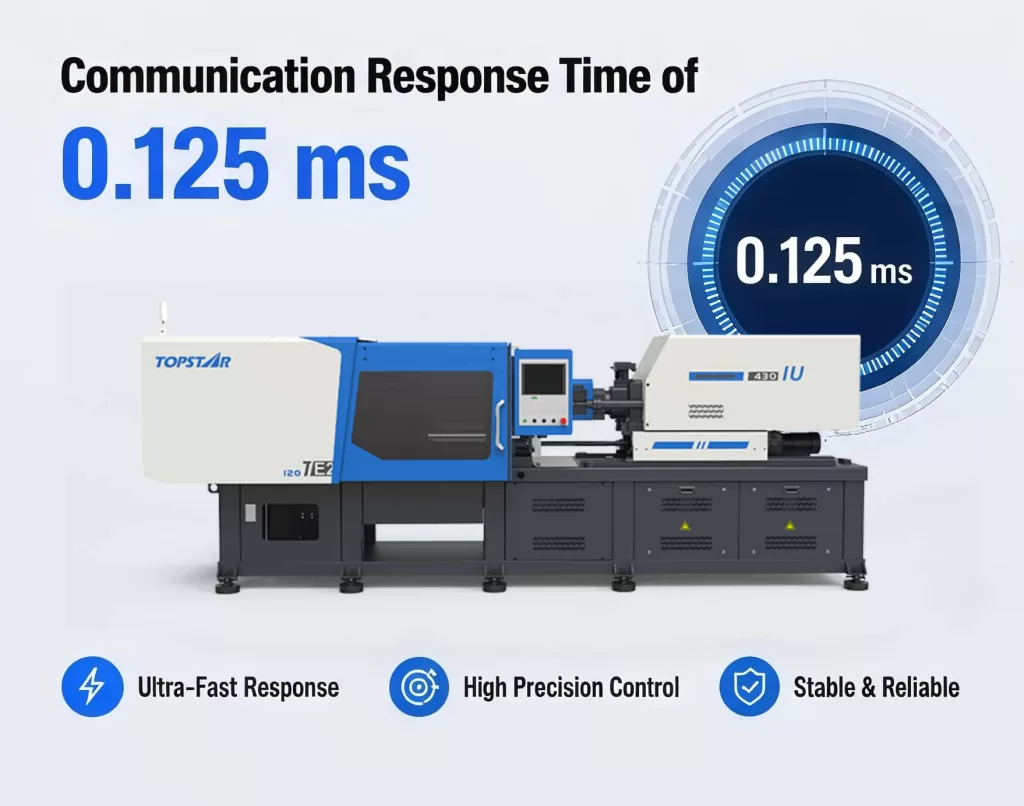
Communication Response Time of 0.125 ms
One of the most significant advantages of Tosda’s electric injection molding machines is their extremely fast communication response time. Thanks to this patented integrated drive and control algorithm, the communication response time has been improved to:
0.125 ms
This means the machine can detect changes and execute corrections almost instantly. For injection molding production, this improvement delivers several significant benefits, including:
Faster process adjustments:
During the injection molding process, process conditions are constantly changing. Factors such as material viscosity, mold temperature, injection resistance, and product geometry all affect the actual molding results. Faster control response enables the machine to adjust operating conditions more quickly, thereby maintaining the expected process curve.
Improved Injection Repeatability:
Communication speed directly affects motion repeatability. Topstar electric injection molding machines achieve:
Injection position repeatability: ±0.01 mm
This precision ensures that every molding cycle follows the same injection position and pressure switch points. For manufacturers producing high-value components, repeatability is not merely a technical parameter—it directly impacts product consistency, production yield, and manufacturing costs. A deviation of just a few micrometers in the injection position can determine whether a product meets quality requirements.
Real-Time Control Enhances Injection Molding Process Stability
The primary advantage of discrete intelligent drives lies not only in faster communication speeds. More importantly, they establish a closer connection between machine intelligence and mechanical execution.
Traditional communication-based control often suffers from information lag, resulting in a time difference between the intended and actual movements.
Discrete intelligent drive minimizes this discrepancy. Its drive system can directly participate in intelligent control decisions, thereby achieving faster correction responses, more precise positioning, and more stable pressure control. During production, even slight fluctuations in filling speed or pressure switching can lead to visible defects. By reducing communication latency, Topstar’s electric injection molding machines can maintain more consistent process conditions and improve injection molding process reliability.
Discrete Intelligent Drive Communication Improves Injection Molding Process Quality
Electric injection molding machines equipped with discrete intelligent drives achieve:
- 0.125-millisecond communication response time
- Injection position repeatability of ±0.01 mm
- Faster process adjustments
- More stable molding performance
By shortening the time between commands and actions, manufacturers can control each stage of the injection molding process with greater precision. For companies pursuing high-quality production, injection molding depends not only on more powerful machines but also on smarter, faster communication between every component in the system.
TRENDING POSTS
- Breaking Through the Full Scene-to-AI Link! Topstar Industrial Data Collection Matrix Achieves Major Technical Breakthro 2026/07/27
- TOPSTAR Selected in “Forbes China AI Top 50” and Wins “2026 Embodied AI Industry Benchmark Award” 2026/07/27
- Topstar Achieves ISO 13849 Functional Safety Certification for Robotics 2026/07/27
- Topstar Completes Key Puzzle in Embodied Intelligence Data Closed Loop — Industrial AI Capability Foundation Now in Place 2026/07/27
HOT TOPIC
- .ervo motor-driven linear robots
- •
- 1.0 guangdong topstar technology co. ltd
- 1.0 topstar china
- 1.0 topstar robot
- 11
- 160℃ mold temperature controller
- 170 ton injection molding machine
- 2
- 21
- 220-ton injection molding machine
- 23
- 260 ton injection molding machine
- 3 axis robot
- 3 axis robots
- 3 in 1 Compact Dehumidifying Dryer
- 3-axis robot
- 3-axis robots
- 39
- 4 axis robot
- 4-axis SCARA robot
- 41
- 460T injection molding machine
- 5-axis CNC machine
- 62
- 90 ton injection molding machine
- accuracy
- Air Chillers
- air-cooled chillers
- all electric injection molding machine
- all electric injection molding machines
- all-electric injection molding machine
- All-electric injection molding machines
- and overall production quality. Therefore
- AP-RubberPlas
- auto cooling system
- auto loader
- Auto Loaders
- automated injection molding machine
- Automation changed engineering
- automation of injection molding robots
- automotive parts injection molding
- Auxiliary Equipment
- auxiliary machine
- Bench Injection Molding Machine
- cabinet dryer
- Cabinet dryer manufacturers
- Cabinet dryers
- cartesian coordinate robot
- Cartesian Coordinate Robots
- Cartesian injection robot
- Cartesian robot
- Central Feeding System
- Central Feeding Systems
- chiller
- CNC Drilling Machine
- CNC Drilling Machines
- cnc engraving machine manufacturer
- cnc laser cutting machine manufacturer
- CNC machine
- CNC Machine Center
- CNC Machine for Sale
- CNC Machine Manufacturing
- CNC Machine Tool
- CNC machine tool product
- CNC Machining Center
- CNC wood carving machine
- Compact Dehumidifying Dryer
- Cooling system
- Cross-Walking Single Axis Servo Cylinder Robot
- Cross-Walking Single-Axis Servo Cylinder Robot
- Cross-Walking Three-Axis/Five-Axis Servo Driven Robot
- cross-walking three-axis/five-axis servo-driven robot
- Dehumidifier Dryer
- Dehumidifying Dryer
- dehumidifying dryers
- delta parallel robot
- Desktop Injection Molding Machine
- Desktop injection molding machines
- Desktop Molding Machine
- desktop plastic injection machine
- Desktop Plastic Injection Molding Machine
- detachable autoloader
- Digital Transformation
- direct clamp injection molding machine
- Direct clamp injection molding machines
- Dosing & mixing system
- Drilling Centers
- Drying and dehumidification system
- drying and dehumidifying equipment
- Drying and Dehumidifying System
- drying system
- effective and efficient. Cabinet dryers are also used in other industries where large quantities of material need to be dried
- efficient injection molding machine
- elbow hydraulic injection molding machines
- electric injection molding machine
- electric injection molding machines
- energy-efficient injection molding robot
- energy-efficient water chiller
- energy-efficient water chillers
- energy-saving injection molding machine
- etc. Among injection molding robots
- exhibition
- features of CNC machine
- Feeding And Conveying System
- Five Axis Machine Center
- Flexible Production Line
- Fully automatic injection molding machine
- Gathering Topstar
- giant injection molding machine
- GMU-600 5-Axis Machining Center
- Granulating & Recycling System
- granulator machine
- gravimetric blender
- Heavy duty injection molding machine
- Heavy-Duty Take-Out Robot
- High-precision electric molding machines
- high-precision plastic molding machines
- high-speed all electric injection molding machine
- high-speed electric injection molding machine
- High-Speed Packaging Injection Molding
- Honeycomb rotor dehumidifier
- hopper dryer
- Hopper Dryers
- horizontal injection molding machine
- Horizontal Injection Molding Machines
- Horizontal Injection Moulding Machine
- Horizontal Mixer manufacturer
- How The CNC Machine Works
- hybrid injection molding machine
- hydraulic injection molding machine
- Hydraulic Injection Molding Machines
- in this article
- Industrial AI
- Industrial Automation
- Industrial robot
- Industrial Robot Chinese brand
- industrial robot parts
- industrial robot supplier
- Industrial robots
- Industry Chain
- Injection Manipulator
- injection manipulator robot
- injection mold machines
- Injection molding
- Injection molding automation
- Injection Molding Automation Solution
- injection molding dryer
- Injection molding equipment
- injection molding hopper dryer
- Injection molding machine
- injection molding machine brand
- Injection Molding Machine Factory
- Injection Molding Machine Manufacture
- Injection molding machine manufacturer
- injection molding machine manufacturers
- Injection molding machine procurement
- injection molding machine robotic arm
- injection molding machine with a robot
- Injection molding machines
- injection molding material dehumidifying
- injection molding plant
- injection molding process
- Injection Molding Robot
- injection molding robot arm
- Injection molding robot automation
- Injection molding robotic arm
- injection molding robots
- injection molding whole plant
- injection moulding dryer
- Injection moulding machine
- injection moulding machines
- Injection Moulding Robots
- Injection Robot
- Injection robot arm
- Injection robot manufacturer
- Injection robot wholesale
- injection robots
- Intelligent Factory
- intelligent injection molding machines
- Intelligent Manufacturing
- intelligent mold temperature
- intelligent mold temperature controller
- Intelligent mould temperature controller
- intelligent whole plant solution
- InterPlas Thailand 2025
- Introducing Injection Robot
- It is the best choice for drying large quantities of material at once. Cabinetmakers use these machines because they are fast
- Large flow water type mold temperature controller
- large injection molding machine
- large injection molding machines
- Learn what industrial automation and robotics is
- linear robot
- linear robots
- low speed sound-proof granulator
- machine plastic molding
- make sure to add some! Improvements (2) Keyphrase in introduction: Your keyphrase or its synonyms appear in the first paragraph of the copy
- manipulator machine
- manufacturing
- Manufacturing Innovation
- medical grade injection molding machines
- Medical Injection Molding
- medical injection molding machine
- medical injection molding machines
- micro injection molding machine
- middle speed granulator
- Mini CNC machine manufacturers.
- mobile cover making machine
- Mold Temperature Control System
- mold temperature controller
- mold temperature controllers
- molding machine
- molding material Dehumidifying System
- mould temperature control system
- mould temperature controller
- mould temperature controller
- mould temperature controllers
- New electric injection molding machine
- Nitrogen Dryer
- nitrogen dryer manufacturer
- nitrogen dryer system manufacturer
- Oil type mold temperature controller
- Oil type mold temperature controllers
- open day
- optical component injection molding
- Optical-grade dehumidifying dryer
- Outbound links: No outbound links appear in this page. Add some! Images: No images appear on this page. Add some! Internal links: No internal links appear in this page
- packaging injection molding
- Packaging Solutions
- PET Preform injection molding
- phone case maker machine
- phone case making machine
- phone cover making machine
- PID Control Mold Temperature Controller
- plastic auto loader
- plastic bottle making machine
- plastic bottle manufacturing
- plastic bucket making machine
- plastic bucket manufacturing
- Plastic chair making machine
- plastic dryer for injection molding
- plastic forming equipment
- Plastic Granulator
- Plastic Granulators
- plastic hopper dryer
- plastic injection machine
- plastic injection machines
- plastic injection molding
- Plastic injection molding equipment
- Plastic injection molding machine
- Plastic Injection Molding Machines
- plastic injection moulding machine
- plastic injection moulding machines
- plastic injection robot
- plastic molding
- Plastic Molding Industry
- Plastic Molding machine
- plastic molding machine 1
- Plastic Molding Machines
- plastic molding press
- plastic moulding machine
- plastic phone case making machine
- plastic-molding machine
- powerful granulator
- Powerful Type Sound-Proof Granulator
- precision injection molding
- precision injection molding machines
- production of plastic seats
- pure water mould temperature controller
- Robot injection molding
- robot injection molding machine
- robot manufacturing companies
- Robotic arm for injection molding machine
- robotic injection molding machines
- robotics in injection molding
- SCARA robot
- SCARA robots
- Screw dosers
- Service-oriented manufacturing
- Servo Cylinder Robot
- servo driven robot
- Servo Driven Robots
- servo injection molding machine
- servo injection robots
- servo motor-driven linear robots
- servo-driven 3-axis robot
- Servo-driven injection molding machine
- Servo-Driven Robot
- Setup of injection machine
- Silicone Injection Molding Machine
- six-axis industrial robot
- Smart Manufacturing
- soundproof granulator
- Sprue Picker
- Stainless Hopper Dryer
- Stainless Hopper Dryers
- star club
- swing arm robot
- T1 Cartesian injection robot
- take-out robot
- take-out robots
- Thailand 4.0
- the choice between servo-driven robots and hydraulic robots will have a certain impact on efficiency
- the most popular injection molding machine
- the type of injection molding robot
- TIC2000 Control System
- TMII injection molding machine
- toggle clamp injection molding machine
- Toggle Hydraulic Injection Molding Machines
- toggle injection molding machine
- Top 10 brands of injection robots
- Topstar
- Topstar Electric Injection Molding Machine InterPlas Thailand 2025 Smart Manufacturing Thailand 4.0
- Topstar Engineering
- Topstar Industrial Robots
- Topstar injection molding intelligent
- Topstar Scara Robots
- Useful Injection molding machine
- Vertical machining centers
- volumetric type blender
- Washing Machine Case Molding Solution
- water chiller
- water chillers
- water distributor
- water type mold temperature controller
- Water Type MoldTemperature Controller
- Water-Cooled Chillers
- Water-cooled Mold Temperature Controller
- water-type mold temperature controller
- Water-Type Mould Temperature Controllers
- We often face choices when performing injection molding. We will choose the type of injection molding machine
- wholesale of injection molding machines
- x carve CNC
- 热门查询 点击次数 展示 排名 topstar