
Why Does Injection Molding Cycle Time Gradually Increase During Production?
2026/09/16 By le zhan
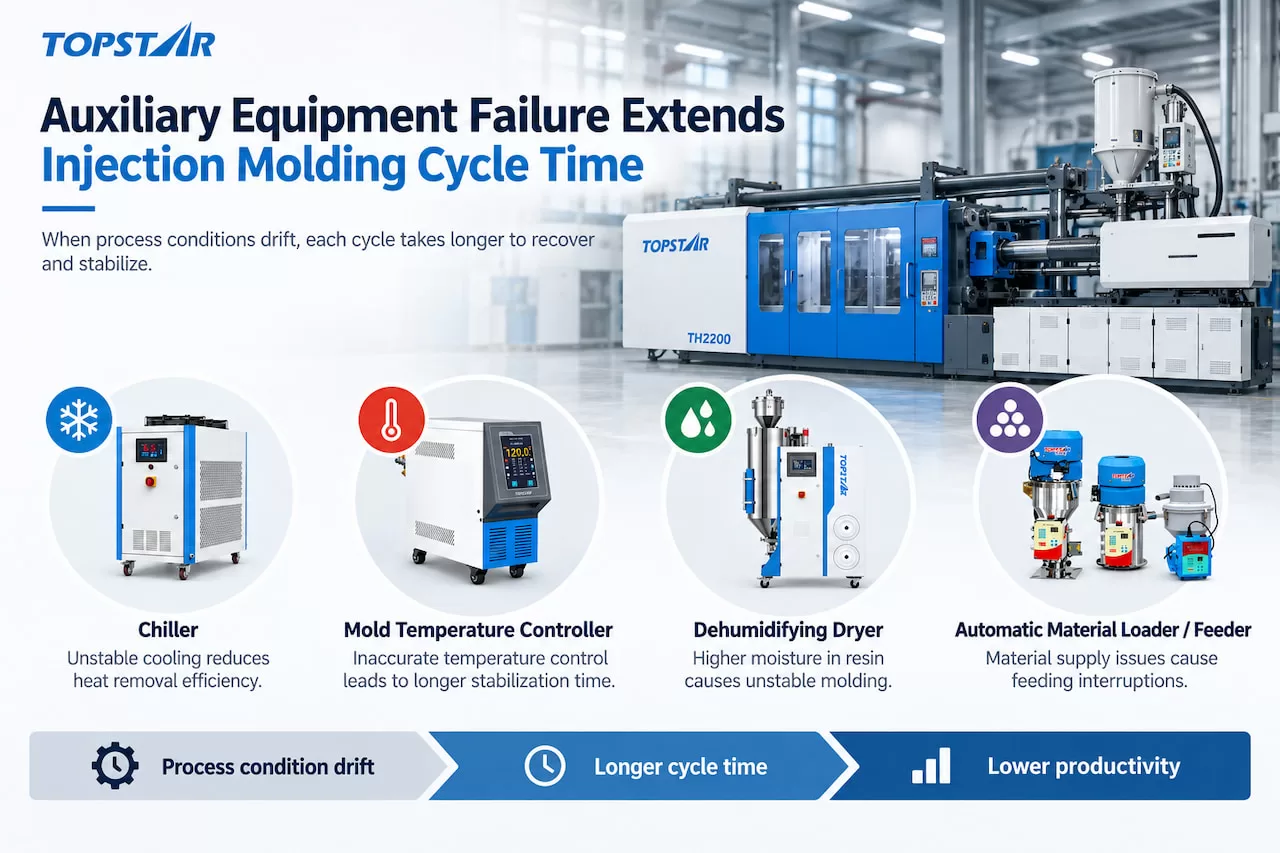
When the injection molding cycle time gradually increases during production, most operators tend to blame the injection molding machine. However, in this case, we need to analyze and identify issues with auxiliary equipment other than the injection molding machine.
The auxiliary equipment surrounding the injection molding machine continuously determines the various conditions entering the molding process. The feeder must supply resin continuously; the dehumidifying dryer must maintain stable resin temperature and humidity, and so on. If these auxiliary devices gradually decline in performance, the injection molding machine will be forced to extend its waiting time or compensate by prolonging the cooling phase. Therefore, we derive another diagnostic principle:
If the molding cycle is normal at startup but lengthens after several hours of operation, investigate whether deviations occurred in material supply, mold water circulation, chilled water temperature, or resin drying conditions during production.
Failure of auxiliary equipment to maintain process conditions extends the Injection Molding cycle time
The injection molding cycle consists of a series of actions, including injection, holding pressure, cooling, plasticizing, mold opening, part removal, and mold closing. Although the injection molding machine controls these actions, some of them rely on auxiliary equipment.
The most obvious example is cooling.
At the start of production, the mold, cooling water, and peripheral equipment may be at relatively low temperatures. As the machine runs through hundreds of cycles, heat generated by the molten resin continuously transfers into the mold. Mold temperature controllers and chillers must remove this accumulated heat at a rate roughly equivalent to the process’s heat generation rate. If the equipment lacks sufficient capacity, the mold temperature will gradually rise.
On the surface, it may appear that the injection molding machine is running more slowly, but the actual cause is a decline in thermal control capability.
The same principle applies to the material feeding process. If the filter in the feeder becomes partially clogged, the equipment can keep running. Still, the amount of material delivered per suction cycle may gradually decrease, eventually causing the injection molding machine to stall while waiting for material replenishment. Similarly, instability in the resin drying process may force operators to slow down production or increase process allowances to ensure product quality.
Therefore, simply adjusting the injection molding machine parameters can only address the surface-level issues and fails to resolve the problem at its root.
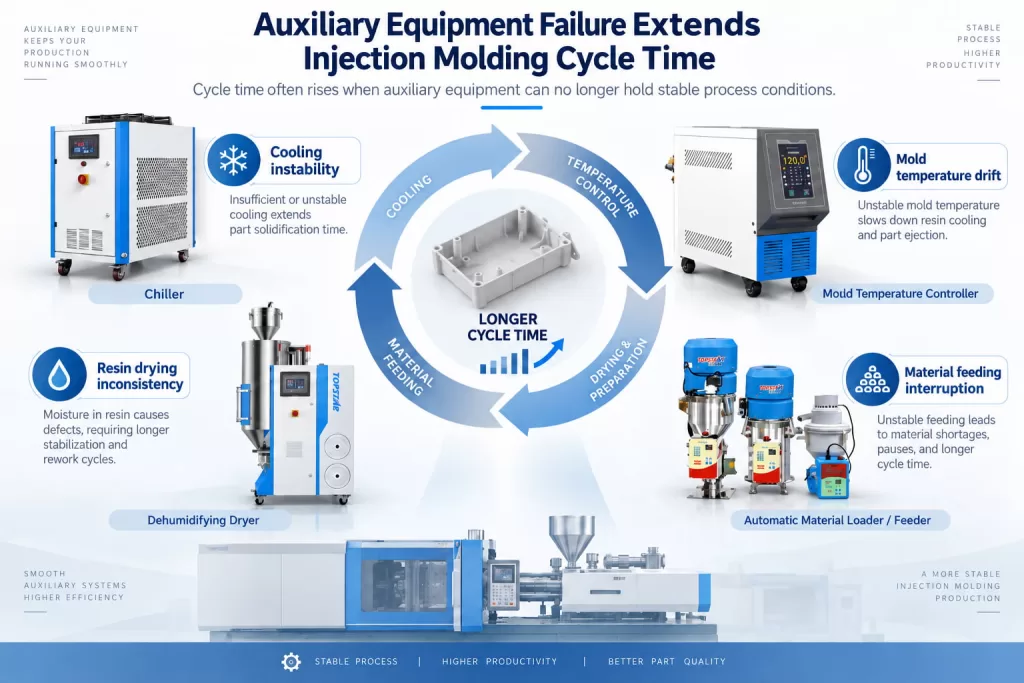
Four Common Auxiliary Equipment Issues That Cause Injection Molding Cycle Time to Increase
Changes in peripheral auxiliary equipment operating conditions can also lengthen injection molding cycle times. In most cases, we attribute the primary issues to the following four factors:
- Insufficient mold cooling water flow;
- Declining performance of the chiller;
- Slower automatic feeding speed;
- Unstable resin drying.
These issues affect cooling efficiency, material supply, and resin condition, causing the molding cycle to gradually exceed the values set at the start of production. Next, we will analyze these four causes and explain how to troubleshoot and adjust the injection molding auxiliary equipment by comparing data from normal production with that from periods of extended cycle times—before adjusting the injection molding machine parameters.
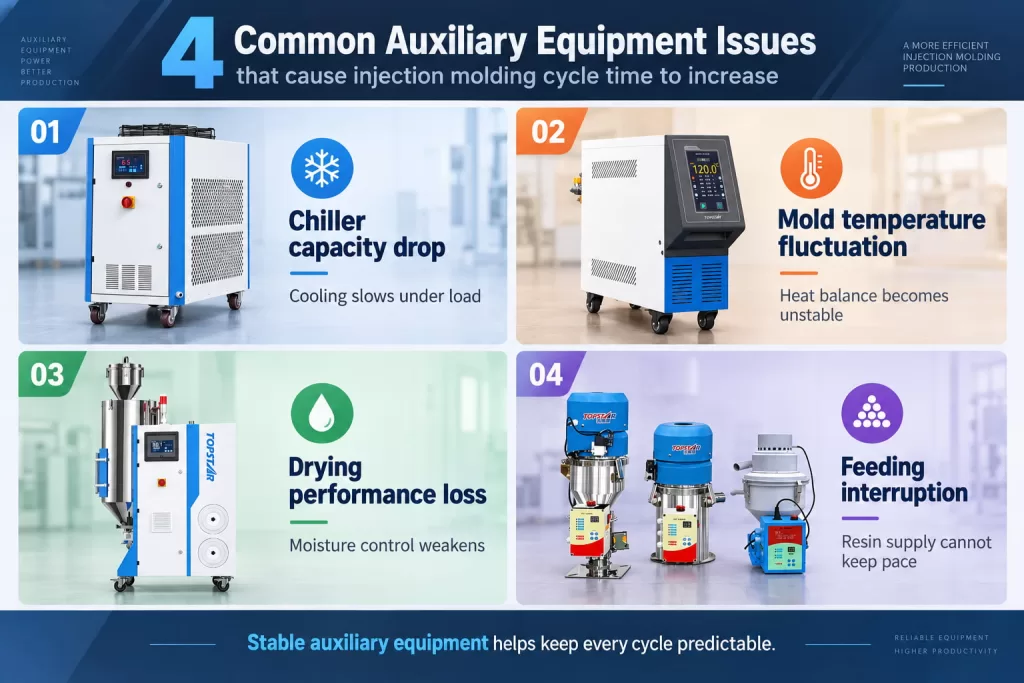
A Gradual Decrease in Mold Water Flow Rate May Lead to Longer Injection Molding Cycle Times
The cooling phase typically accounts for a significant portion of the entire injection molding cycle. The mold temperature controller must ensure adequate water circulation within the mold to remove heat continuously. If the flow rate decreases due to scale buildup, blockages in the cooling circuit, insufficient pump performance, or partially clogged filters, the temperature difference between the incoming and returning water may increase.
This slows the heat dissipation rate.
For large molds, this issue becomes particularly pronounced, as longer cooling channels and higher thermal loads require a greater effective water flow rate. Therefore, if the injection molding cycle gradually lengthens—accompanied by rising mold return water temperature, uneven cavity temperatures, or longer part solidification times—operators should inspect the cooling water system before adjusting injection parameters.
Key Checkpoints
Compare the mold inlet and outlet temperatures at startup with those after several hours of operation. At the same time, check the flow rate, pressure, filters, hoses, cooling channels, and valves. If the temperature difference increases and the flow rate decreases, the extended injection cycle is likely due to the temperature control system.
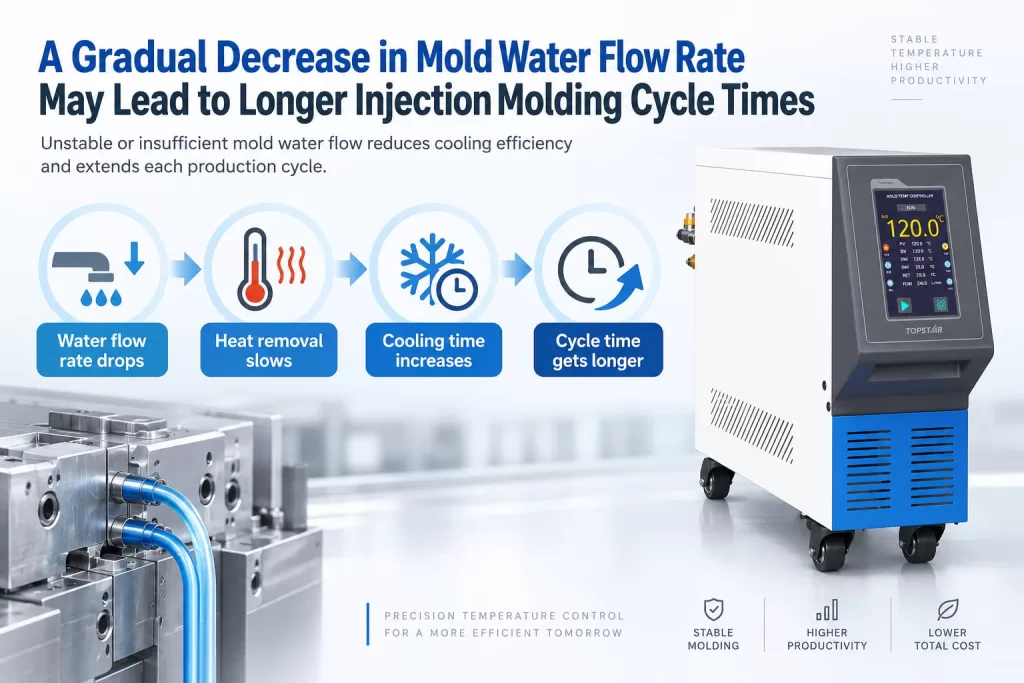
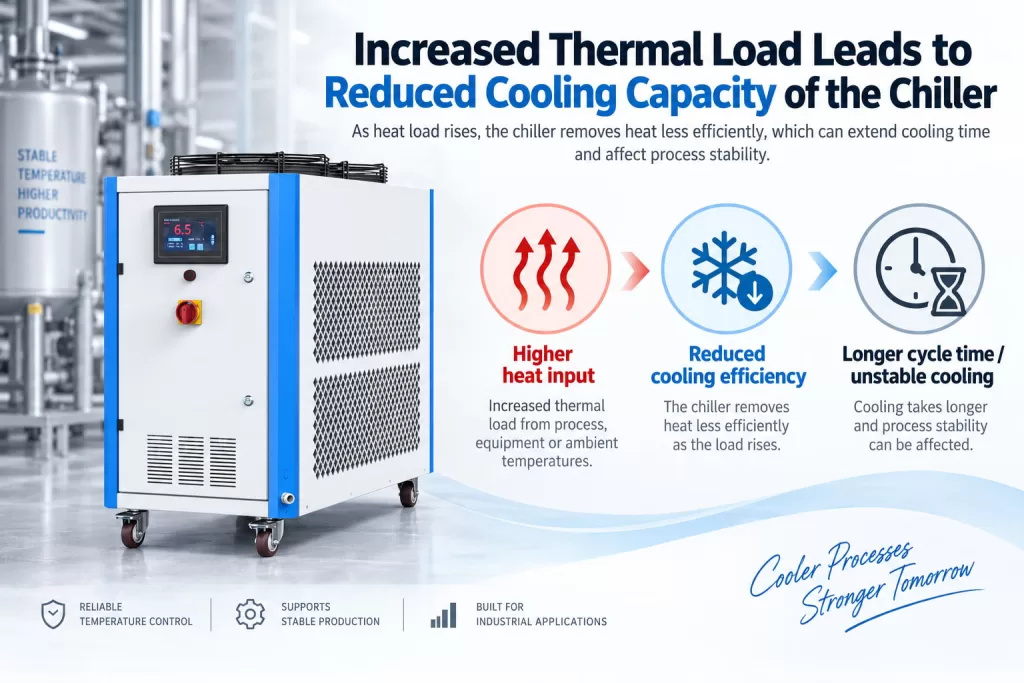
Increased Thermal Load Leads to Reduced Cooling Capacity of the Chiller
The chiller is located upstream in the process flow.
Even if the mold temperature controller has sufficient water circulation, the system cannot maintain the expected cooling effect if the factory’s chilled water supply temperature gradually rises.
As the number of injection molding machines increases or daytime temperatures rise, total cooling demand may exceed the chilled water system’s effective cooling capacity. Additionally, a dirty or clogged condenser, insufficient airflow, poor chilled water quality, or scale buildup in the heat exchanger can further reduce the chiller’s performance.
Therefore, the key to our inspection is not whether the chiller is running, but whether it can maintain the chilled water supply temperature at the setpoint during full-load production. If the setpoint is 15°C but the supply temperature gradually rises as the system’s heat load increases, the mold cooling rate will slow down even if the injection molding machine and mold temperature settings remain unchanged.
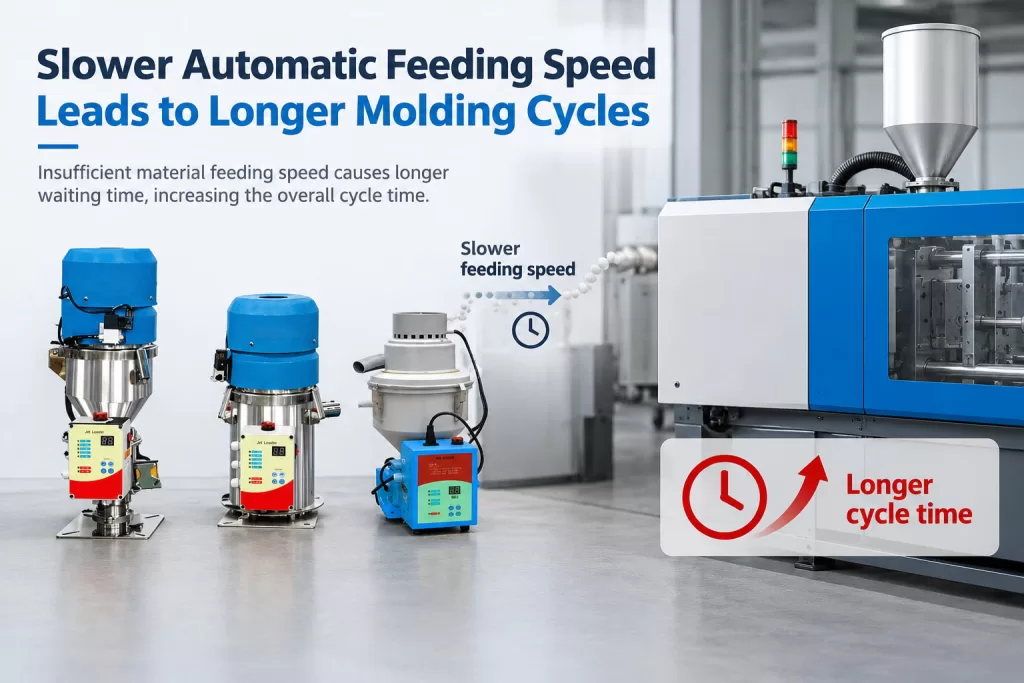
Slower Automatic Feeding Speed Leads to Longer Molding Cycles
Even minor and recurring feeding delays in the automatic feeder can extend the actual molding cycle.
When dust accumulates in the filter, or partial blockages occur in the conveying lines, the automatic feeder may require a longer suction time to convey the same amount of resin. If the material consumption rate approaches or exceeds the replenishment capacity, the hopper level will eventually drop.
At this point, because the feed port cannot receive a continuous supply of material, the injection molding machine may shut down due to material shortage or experience uneven plasticization. If the feeder previously required only a short suction cycle but now needs to run repeatedly or for extended periods, inspect the material conveying path before a material shortage halts production.
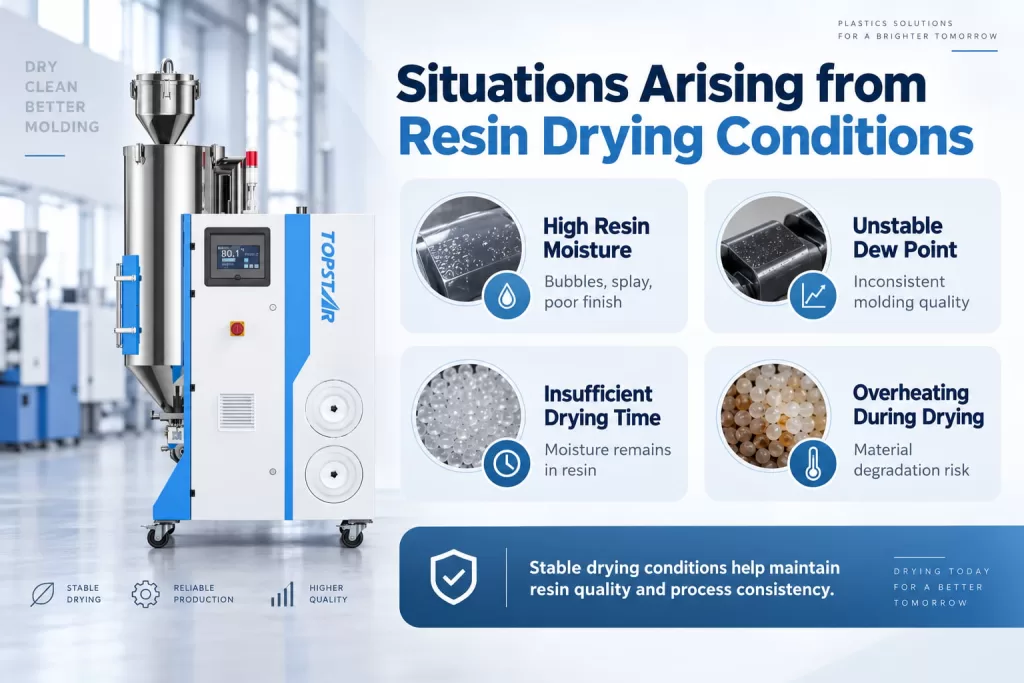
Situations Arising from Resin Drying Conditions
Although drying does not have as significant a direct impact on the molding cycle as mold cooling, it still affects production stability.
Dehumidifying dryers must strictly maintain the set resin temperature, drying time, air flow rate, and dew point. If the airflow rate decreases, thermal efficiency changes, or material throughput exceeds drying capacity, the resin may be unstable when it enters the injection molding machine.
Insufficient drying affects melt characteristics and product quality. Operators often have to take compensatory measures to ensure material stability. Conversely, if the material stays at the set drying temperature too long, it may over-dry and waste energy. Therefore, when molding cycles fluctuate and are accompanied by changes in melt characteristics or material condition, check the resin drying process first.
Diagnosing Injection Molding Cycle Time by Comparing Data from Different Production Stages
The most effective troubleshooting method is to compare operating conditions at two different points in time: during normal production startup and when cycle times are prolonged.
| Auxiliary Equipment | Check at Startup vs. Later | Warning Sign |
| Mold temperature controller | Flow, pressure, supply/return temperature | Lower flow or larger ホ乃 |
| Chiller | Actual chilled-water supply temperature | Water temperature gradually rises |
| Material loader | Suction time and loading frequency | Longer or more frequent cycles |
| Dehumidifying dryer | Material temperature, airflow, dew point | Drying condition drifts |
This method allows for faster troubleshooting than repeatedly adjusting the injection molding machine’s process parameters.
Controlling Auxiliary Equipment Can Shorten Injection Molding Cycle Times
Before changing injection molding machine settings, first ensure the surrounding auxiliary equipment is operating stably.
We recommend following a practical optimization sequence to stabilize each stage:
Material supply → Resin condition → Mold water flow → Chilled water temperature → Optimize injection molding machine settings.
This approach helps shorten the injection molding cycle while avoiding issues such as warpage, mold sticking, inconsistent shrinkage, or increased scrap rates. It enables the shortest, most stable, and reliable cycle times during continuous production.
TRENDING POSTS
- Breaking Through the Full Scene-to-AI Link! Topstar Industrial Data Collection Matrix Achieves Major Technical Breakthro 2026/09/16
- TOPSTAR Selected in “Forbes China AI Top 50” and Wins “2026 Embodied AI Industry Benchmark Award” 2026/09/16
- Topstar Achieves ISO 13849 Functional Safety Certification for Robotics 2026/09/16
- Topstar Completes Key Puzzle in Embodied Intelligence Data Closed Loop — Industrial AI Capability Foundation Now in Place 2026/09/16
HOT TOPIC
- .ervo motor-driven linear robots
- •
- 1.0 guangdong topstar technology co. ltd
- 1.0 topstar china
- 1.0 topstar robot
- 11
- 160℃ mold temperature controller
- 170 ton injection molding machine
- 2
- 21
- 220-ton injection molding machine
- 23
- 260 ton injection molding machine
- 3 axis robot
- 3 axis robots
- 3 in 1 Compact Dehumidifying Dryer
- 3-axis robot
- 3-axis robots
- 39
- 4 axis robot
- 4-axis SCARA robot
- 41
- 460T injection molding machine
- 5-axis CNC machine
- 62
- 90 ton injection molding machine
- accuracy
- Air Chillers
- air-cooled chillers
- all electric injection molding machine
- all electric injection molding machines
- all-electric injection molding machine
- All-electric injection molding machines
- and overall production quality. Therefore
- AP-RubberPlas
- auto cooling system
- auto loader
- Auto Loaders
- automated injection molding machine
- Automation changed engineering
- automation of injection molding robots
- automotive parts injection molding
- Auxiliary Equipment
- auxiliary machine
- Bench Injection Molding Machine
- cabinet dryer
- Cabinet dryer manufacturers
- Cabinet dryers
- cartesian coordinate robot
- Cartesian Coordinate Robots
- Cartesian injection robot
- Cartesian robot
- Central Feeding System
- Central Feeding Systems
- chiller
- CNC Drilling Machine
- CNC Drilling Machines
- cnc engraving machine manufacturer
- cnc laser cutting machine manufacturer
- CNC machine
- CNC Machine Center
- CNC Machine for Sale
- CNC Machine Manufacturing
- CNC Machine Tool
- CNC machine tool product
- CNC Machining Center
- CNC wood carving machine
- Compact Dehumidifying Dryer
- Cooling system
- Cross-Walking Single Axis Servo Cylinder Robot
- Cross-Walking Single-Axis Servo Cylinder Robot
- Cross-Walking Three-Axis/Five-Axis Servo Driven Robot
- cross-walking three-axis/five-axis servo-driven robot
- Dehumidifier Dryer
- Dehumidifying Dryer
- dehumidifying dryers
- delta parallel robot
- Desktop Injection Molding Machine
- Desktop injection molding machines
- Desktop Molding Machine
- desktop plastic injection machine
- Desktop Plastic Injection Molding Machine
- detachable autoloader
- Digital Transformation
- direct clamp injection molding machine
- Direct clamp injection molding machines
- Dosing & mixing system
- Drilling Centers
- Drying and dehumidification system
- drying and dehumidifying equipment
- Drying and Dehumidifying System
- drying system
- effective and efficient. Cabinet dryers are also used in other industries where large quantities of material need to be dried
- efficient injection molding machine
- elbow hydraulic injection molding machines
- electric injection molding machine
- electric injection molding machines
- energy-efficient injection molding robot
- energy-efficient water chiller
- energy-efficient water chillers
- energy-saving injection molding machine
- etc. Among injection molding robots
- exhibition
- features of CNC machine
- Feeding And Conveying System
- Five Axis Machine Center
- Flexible Production Line
- Fully automatic injection molding machine
- Gathering Topstar
- giant injection molding machine
- GMU-600 5-Axis Machining Center
- Granulating & Recycling System
- granulator machine
- gravimetric blender
- Heavy duty injection molding machine
- Heavy-Duty Take-Out Robot
- High-precision electric molding machines
- high-precision plastic molding machines
- high-speed all electric injection molding machine
- high-speed electric injection molding machine
- High-Speed Packaging Injection Molding
- Honeycomb rotor dehumidifier
- hopper dryer
- Hopper Dryers
- horizontal injection molding machine
- Horizontal Injection Molding Machines
- Horizontal Injection Moulding Machine
- Horizontal Mixer manufacturer
- How The CNC Machine Works
- hybrid injection molding machine
- hydraulic injection molding machine
- Hydraulic Injection Molding Machines
- in this article
- Industrial AI
- Industrial Automation
- Industrial robot
- Industrial Robot Chinese brand
- industrial robot parts
- industrial robot supplier
- Industrial robots
- Industry Chain
- Injection Manipulator
- injection manipulator robot
- injection mold machines
- Injection molding
- Injection molding automation
- Injection Molding Automation Solution
- injection molding dryer
- Injection molding equipment
- injection molding hopper dryer
- Injection molding machine
- injection molding machine brand
- Injection Molding Machine Factory
- Injection Molding Machine Manufacture
- Injection molding machine manufacturer
- injection molding machine manufacturers
- Injection molding machine procurement
- injection molding machine robotic arm
- injection molding machine with a robot
- Injection molding machines
- injection molding material dehumidifying
- injection molding plant
- injection molding process
- Injection Molding Robot
- injection molding robot arm
- Injection molding robot automation
- Injection molding robotic arm
- injection molding robots
- injection molding whole plant
- injection moulding dryer
- Injection moulding machine
- injection moulding machines
- Injection Moulding Robots
- Injection Robot
- Injection robot arm
- Injection robot manufacturer
- Injection robot wholesale
- injection robots
- Intelligent Factory
- intelligent injection molding machines
- Intelligent Manufacturing
- intelligent mold temperature
- intelligent mold temperature controller
- Intelligent mould temperature controller
- intelligent whole plant solution
- InterPlas Thailand 2025
- Introducing Injection Robot
- It is the best choice for drying large quantities of material at once. Cabinetmakers use these machines because they are fast
- Large flow water type mold temperature controller
- large injection molding machine
- large injection molding machines
- Learn what industrial automation and robotics is
- linear robot
- linear robots
- low speed sound-proof granulator
- machine plastic molding
- make sure to add some! Improvements (2) Keyphrase in introduction: Your keyphrase or its synonyms appear in the first paragraph of the copy
- manipulator machine
- manufacturing
- Manufacturing Innovation
- medical grade injection molding machines
- Medical Injection Molding
- medical injection molding machine
- medical injection molding machines
- micro injection molding machine
- middle speed granulator
- Mini CNC machine manufacturers.
- mobile cover making machine
- Mold Temperature Control System
- mold temperature controller
- mold temperature controllers
- molding machine
- molding material Dehumidifying System
- mould temperature control system
- mould temperature controller
- mould temperature controller
- mould temperature controllers
- New electric injection molding machine
- Nitrogen Dryer
- nitrogen dryer manufacturer
- nitrogen dryer system manufacturer
- Oil type mold temperature controller
- Oil type mold temperature controllers
- open day
- optical component injection molding
- Optical-grade dehumidifying dryer
- Outbound links: No outbound links appear in this page. Add some! Images: No images appear on this page. Add some! Internal links: No internal links appear in this page
- packaging injection molding
- Packaging Solutions
- PET Preform injection molding
- phone case maker machine
- phone case making machine
- phone cover making machine
- PID Control Mold Temperature Controller
- plastic auto loader
- plastic bottle making machine
- plastic bottle manufacturing
- plastic bucket making machine
- plastic bucket manufacturing
- Plastic chair making machine
- plastic dryer for injection molding
- plastic forming equipment
- Plastic Granulator
- Plastic Granulators
- plastic hopper dryer
- plastic injection machine
- plastic injection machines
- plastic injection molding
- Plastic injection molding equipment
- Plastic injection molding machine
- Plastic Injection Molding Machines
- plastic injection moulding machine
- plastic injection moulding machines
- plastic injection robot
- plastic molding
- Plastic Molding Industry
- Plastic Molding machine
- plastic molding machine 1
- Plastic Molding Machines
- plastic molding press
- plastic moulding machine
- plastic phone case making machine
- plastic-molding machine
- powerful granulator
- Powerful Type Sound-Proof Granulator
- precision injection molding
- precision injection molding machines
- production of plastic seats
- pure water mould temperature controller
- Robot injection molding
- robot injection molding machine
- robot manufacturing companies
- Robotic arm for injection molding machine
- robotic injection molding machines
- robotics in injection molding
- SCARA robot
- SCARA robots
- Screw dosers
- Service-oriented manufacturing
- Servo Cylinder Robot
- servo driven robot
- Servo Driven Robots
- servo injection molding machine
- servo injection robots
- servo motor-driven linear robots
- servo-driven 3-axis robot
- Servo-driven injection molding machine
- Servo-Driven Robot
- Setup of injection machine
- Silicone Injection Molding Machine
- six-axis industrial robot
- Smart Manufacturing
- soundproof granulator
- Sprue Picker
- Stainless Hopper Dryer
- Stainless Hopper Dryers
- star club
- swing arm robot
- T1 Cartesian injection robot
- take-out robot
- take-out robots
- Thailand 4.0
- the choice between servo-driven robots and hydraulic robots will have a certain impact on efficiency
- the most popular injection molding machine
- the type of injection molding robot
- TIC2000 Control System
- TMII injection molding machine
- toggle clamp injection molding machine
- Toggle Hydraulic Injection Molding Machines
- toggle injection molding machine
- Top 10 brands of injection robots
- Topstar
- Topstar Electric Injection Molding Machine InterPlas Thailand 2025 Smart Manufacturing Thailand 4.0
- Topstar Engineering
- Topstar Industrial Robots
- Topstar injection molding intelligent
- Topstar Scara Robots
- Useful Injection molding machine
- Vertical machining centers
- volumetric type blender
- Washing Machine Case Molding Solution
- water chiller
- water chillers
- water distributor
- water type mold temperature controller
- Water Type MoldTemperature Controller
- Water-Cooled Chillers
- Water-cooled Mold Temperature Controller
- water-type mold temperature controller
- Water-Type Mould Temperature Controllers
- We often face choices when performing injection molding. We will choose the type of injection molding machine
- wholesale of injection molding machines
- x carve CNC
- 热门查询 点击次数 展示 排名 topstar