
News and articles from Topstar
We are committed to the innovation and application of industrial manufacturing automation.
-

2026/10/28 By: le zhan
How Did Topstar Plan a Turnkey Injection Molding Solution for the Automotive Lighting Industry?
Producing automotive lighting products requires consistent optical quality, clean material handling, stable mold temperatures, and precise workpiece handling. When designing a turnkey injection molding solution for the automotive lighting industry, Topstar doesn’t view each piece of equipment as an independent unit; instead, we focus on ensuring these requirements work in concert across the entire factory.… Continue reading How Did Topstar Plan a Turnkey Injection Molding Solution for the Automotive Lighting Industry?
-
2026/10/19 By: le zhan
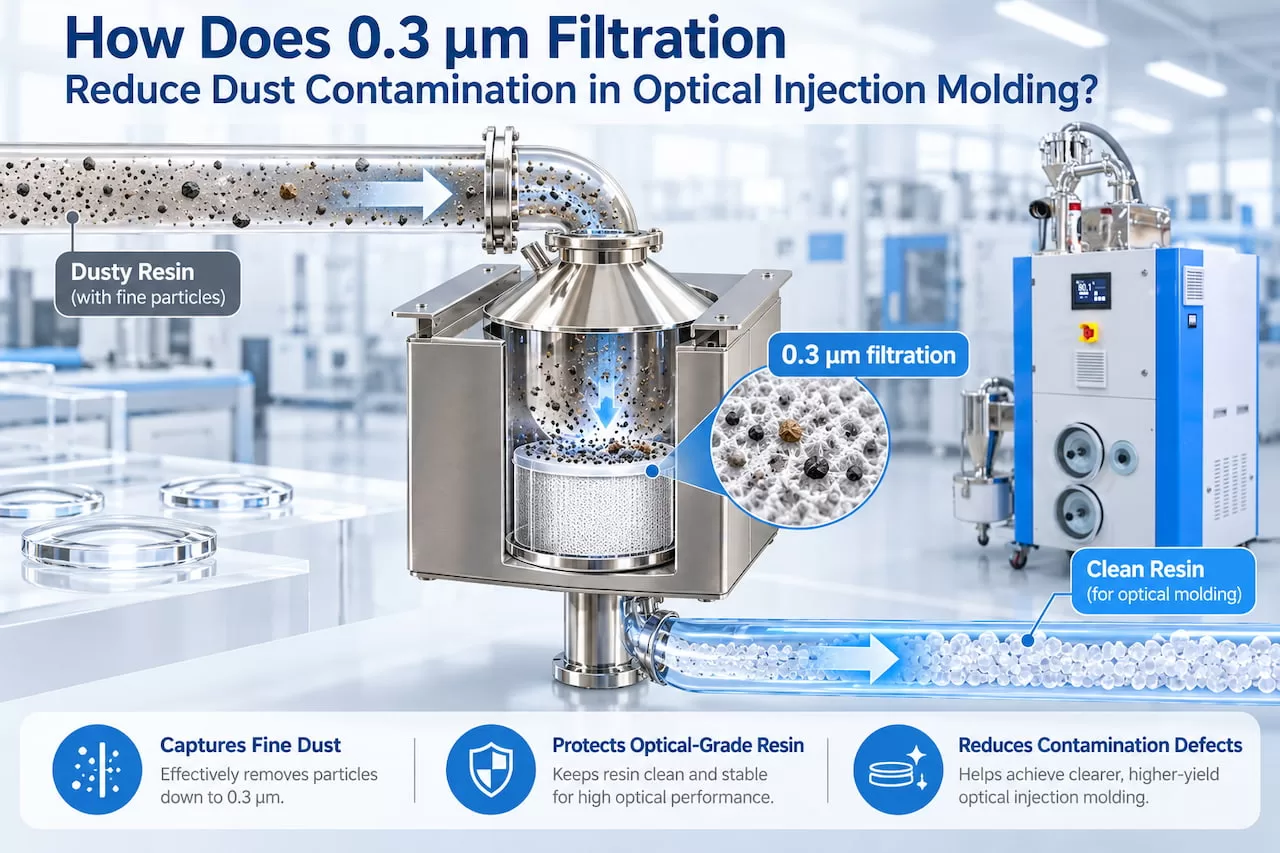
How Does 0.3 μm Filtration Reduce Dust Contamination in Optical Injection Molding?
The 0.3 μm filter achieves up to 99.97% particulate capture efficiency and complies with EU EN 1822. In the three-in-one dehumidifying dryer, the 0.3 μm filtration protects the resin during drying, storage, and conveying by filtering process air and reducing dust contamination in optical injection molding production. Topstar’s TCDH-S optical-grade dehumidifying dryer is equipped with… Continue reading How Does 0.3 μm Filtration Reduce Dust Contamination in Optical Injection Molding?
-
2026/10/16 By: le zhan
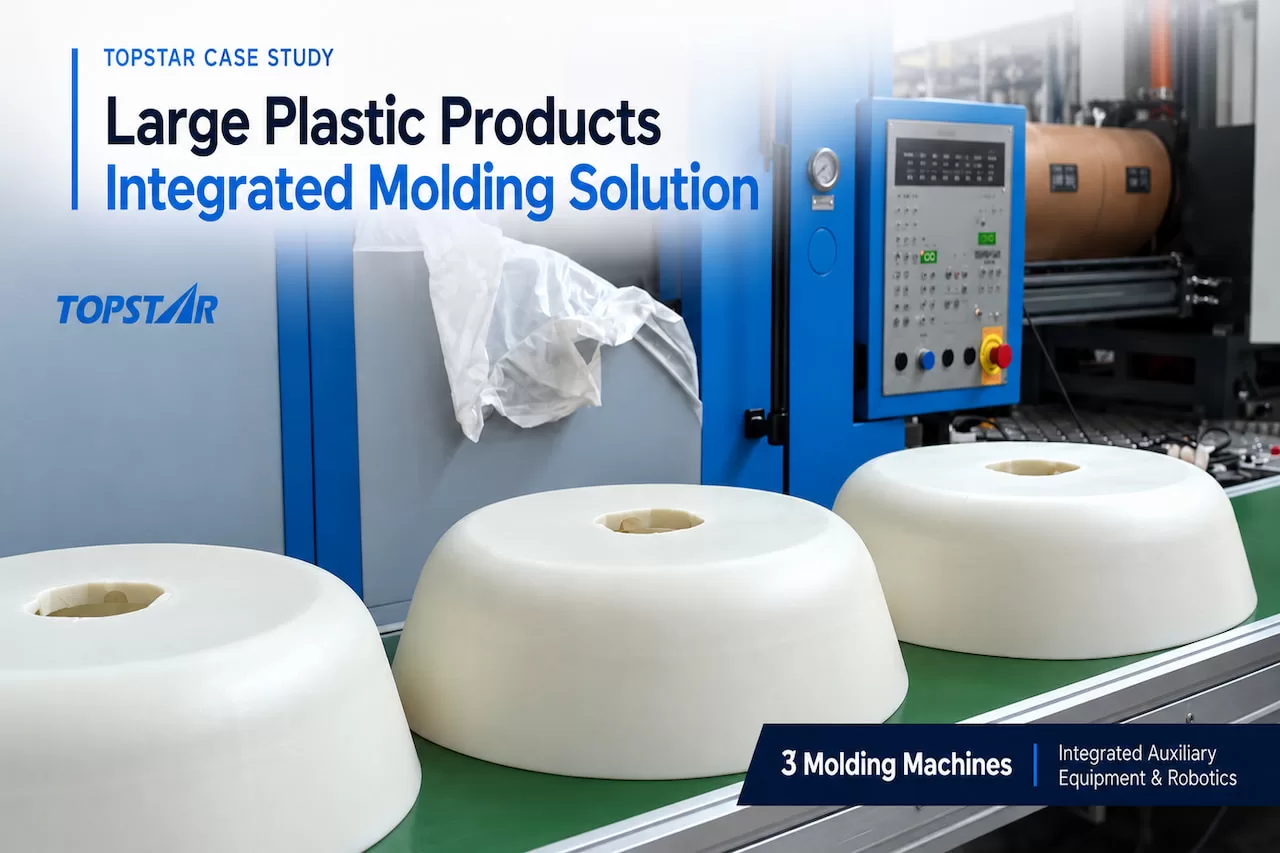
How Did We Address Unstable Injection Molding of Large Plastic Household Products?
Many European manufacturers of everyday plastic products face production challenges: improper equipment configuration when manufacturing large plastic basins and buckets can increase defect rates and reduce output. For this European large plastic household products injection molding project, we integrated three injection molding machines, plus more than 20 pieces of auxiliary equipment and robots, into a… Continue reading How Did We Address Unstable Injection Molding of Large Plastic Household Products?
-

2026/10/09 By: le zhan
How Can Ultra-Low-Speed Injection Reduce Flow Marks in Automotive Headlamp Lenses?
Ultra-low-speed injection molding technology can reduce flow marks on automotive headlight lenses. It works by ensuring the melt front flows smoothly through optically sensitive areas, preventing visible marks caused by sudden changes in flow velocity, shear force, and pressure. TopStar’s electric injection molding machines utilize servo direct-drive control technology combined with a high-pressure, low-speed coordinated… Continue reading How Can Ultra-Low-Speed Injection Reduce Flow Marks in Automotive Headlamp Lenses?
-

2026/09/23 By: le zhan
How Does a High-Speed Injection Molding Machine Reduce Thin-Wall Food Container Cycles?
High-speed injection molding machine reduce molding cycle time for thin-walled food containers by shortening fill time, accelerating mold movement and part ejection, and cooling parts only as long as needed to prevent deformation. However, for thin-walled packaging, speed alone is not enough. The injection molding machine must fill the cavity before the melt front solidifies,… Continue reading How Does a High-Speed Injection Molding Machine Reduce Thin-Wall Food Container Cycles?
-
2026/09/21 By: le zhan
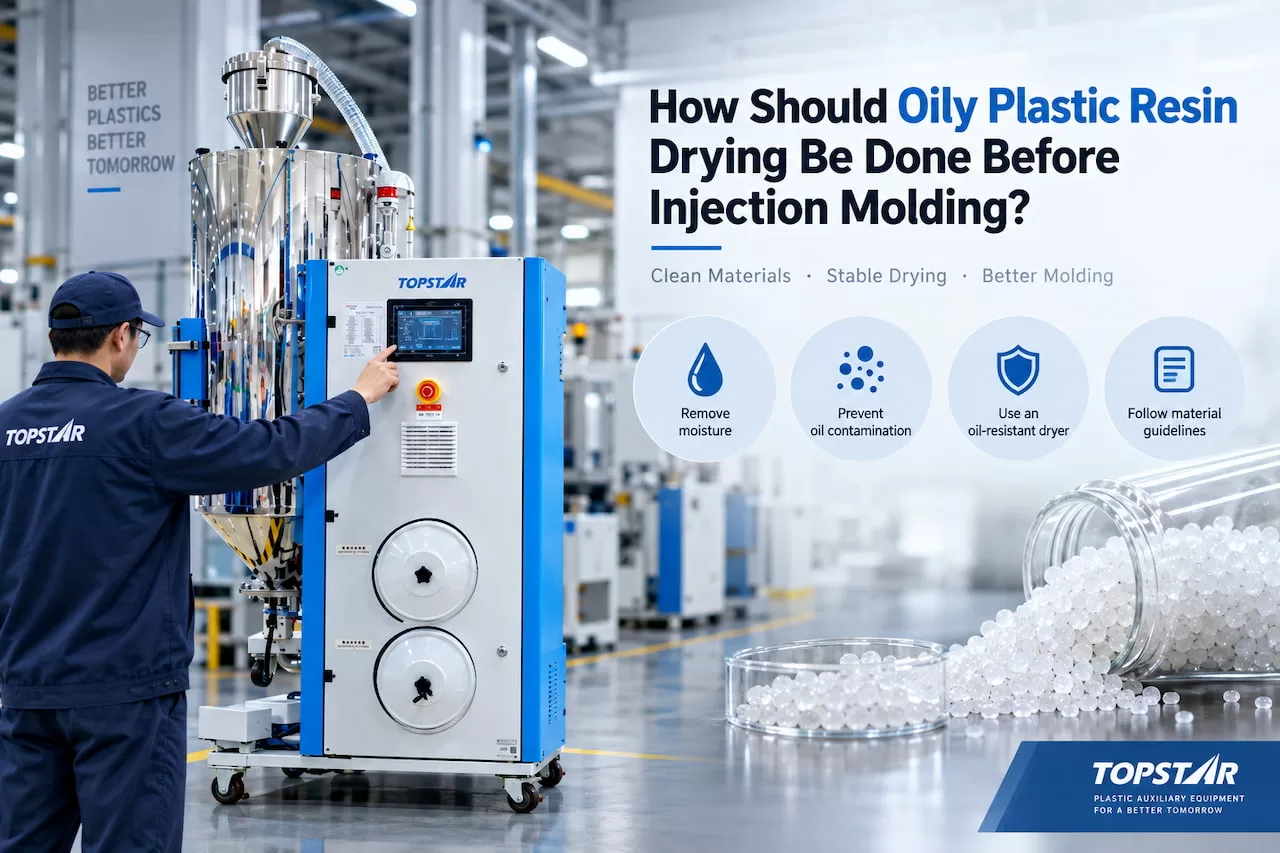
How Should Oily Plastic Resin Drying Be Done Before Injection Molding?
When volatile, oil-based additives enter the dry-air circulation system, manufacturers should use specialized oil-resistant dehumidifiers for oily plastic resin drying instead of conventional 3-in-1 dryers. Operators should also follow the material supplier’s recommendations when setting the resin temperature and residence time to control oil contamination while maintaining stable, low-dew-point airflow. For applications involving oily plastic… Continue reading How Should Oily Plastic Resin Drying Be Done Before Injection Molding?
-
2026/09/18 By: le zhan
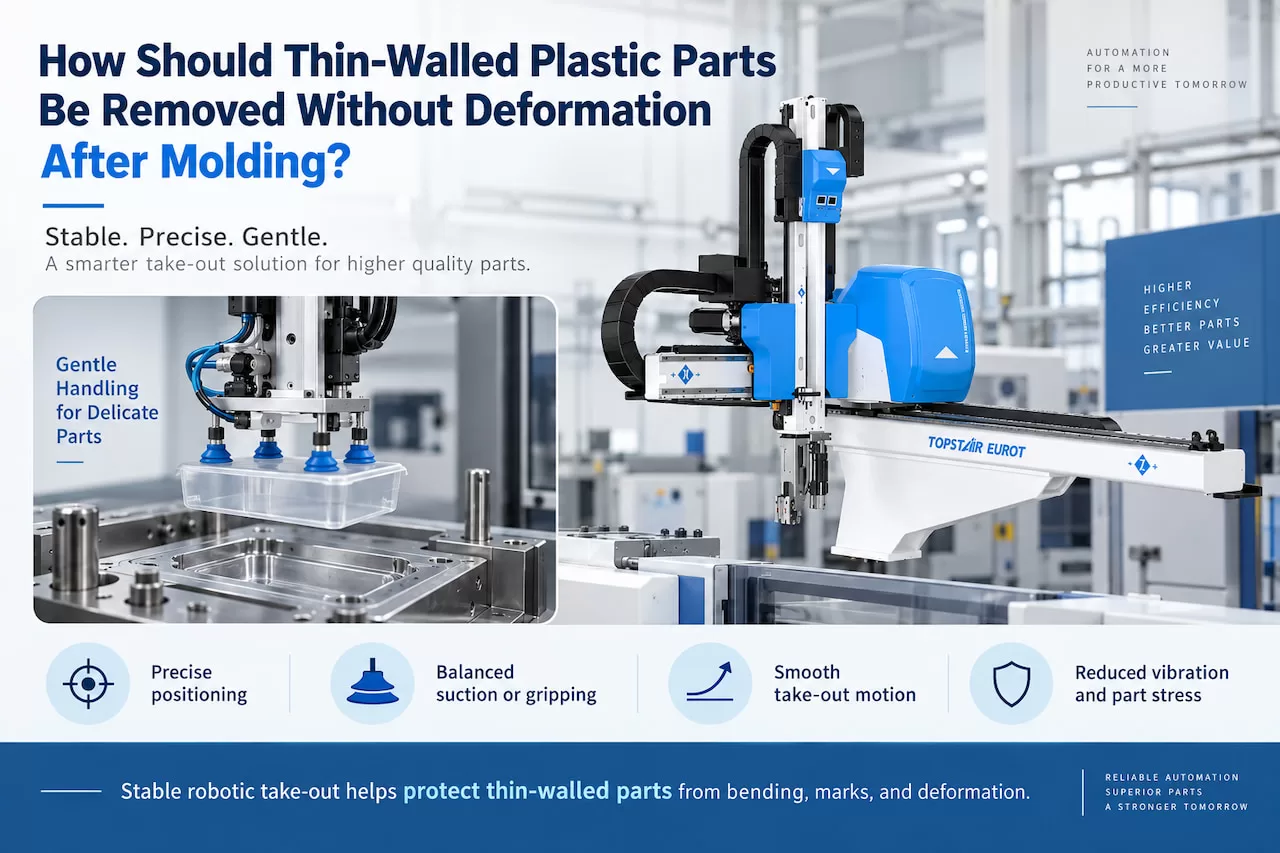
How Should Thin-Walled Plastic Parts Be Removed Without Deformation After Molding?
Although thin-walled plastic parts are rigid enough to be ejected from the mold cavity, they remain hot and relatively soft, so they cannot withstand concentrated gripping forces, excessive acceleration, torsional stress, or imprecise removal paths. This places extremely high demands on automated removal technologies in thin-wall injection molding. Cartesian injection molding robots must not only… Continue reading How Should Thin-Walled Plastic Parts Be Removed Without Deformation After Molding?
-
2026/08/26 By: le zhan
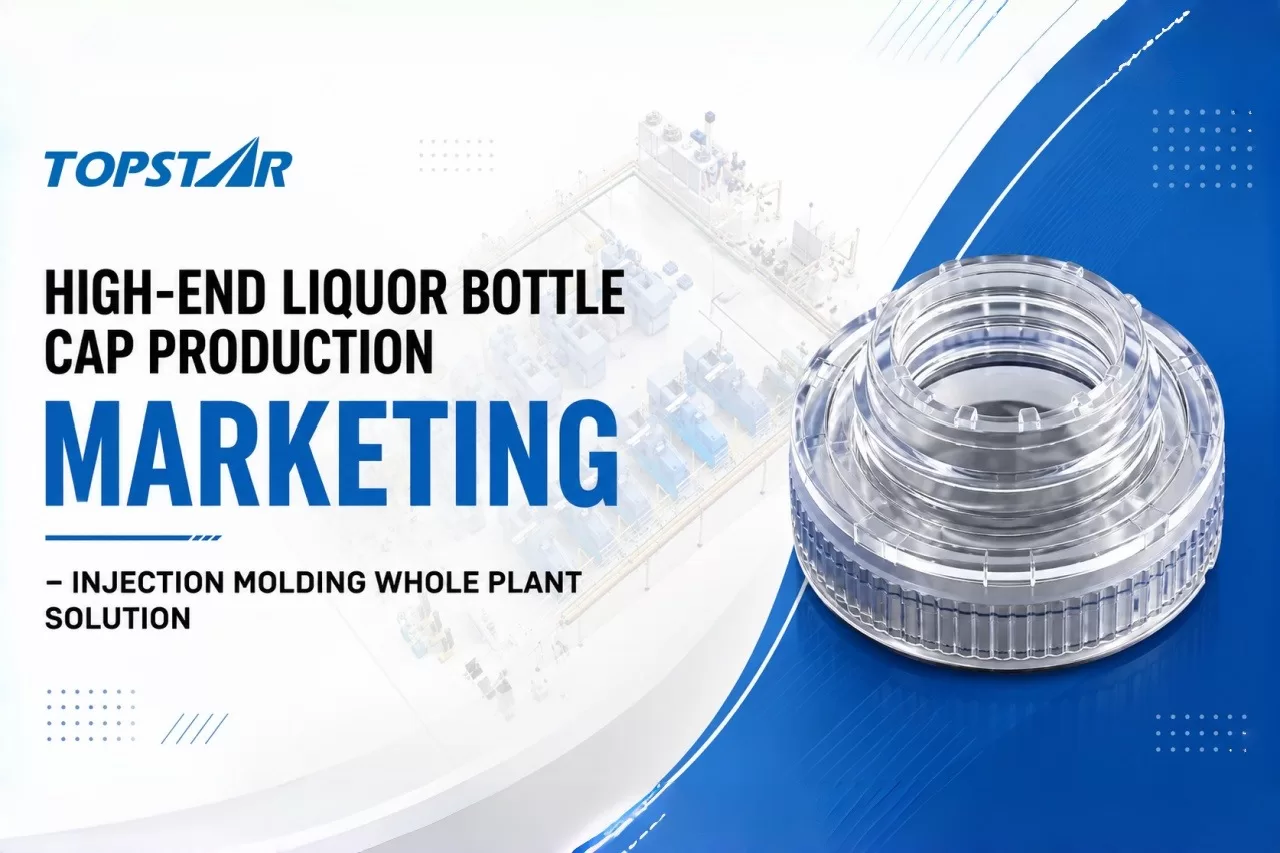
Injection Molding Whole Plant Solution for High-end Liquor Bottle Cap Production
The liquor packaging Industry must meet three basic requirements: compliance with food contact safety standards, a clear and consistent appearance, and reliable sealing performance. To meet these standards, injection molding machines alone are not sufficient; strict control is also required over processes such as material storage, conveyance, drying, cooling, molding, and automated part removal. For… Continue reading Injection Molding Whole Plant Solution for High-end Liquor Bottle Cap Production
-

2026/08/24 By: le zhan
Topstar TS130 Injection Molding Machine | Injection Molding Solution for Artificial Plants
The artificial plant industry experiences distinct seasonal production peaks. Traditional equipment has slow production speeds and limited per-machine capacity, making it difficult to fulfill large orders on time during peak seasons. If injection molding equipment suffers from low output per mold, slow part removal, or unstable continuous operation, factories quickly face capacity bottlenecks. Topstar offers… Continue reading Topstar TS130 Injection Molding Machine | Injection Molding Solution for Artificial Plants
-
2026/08/17 By: le zhan
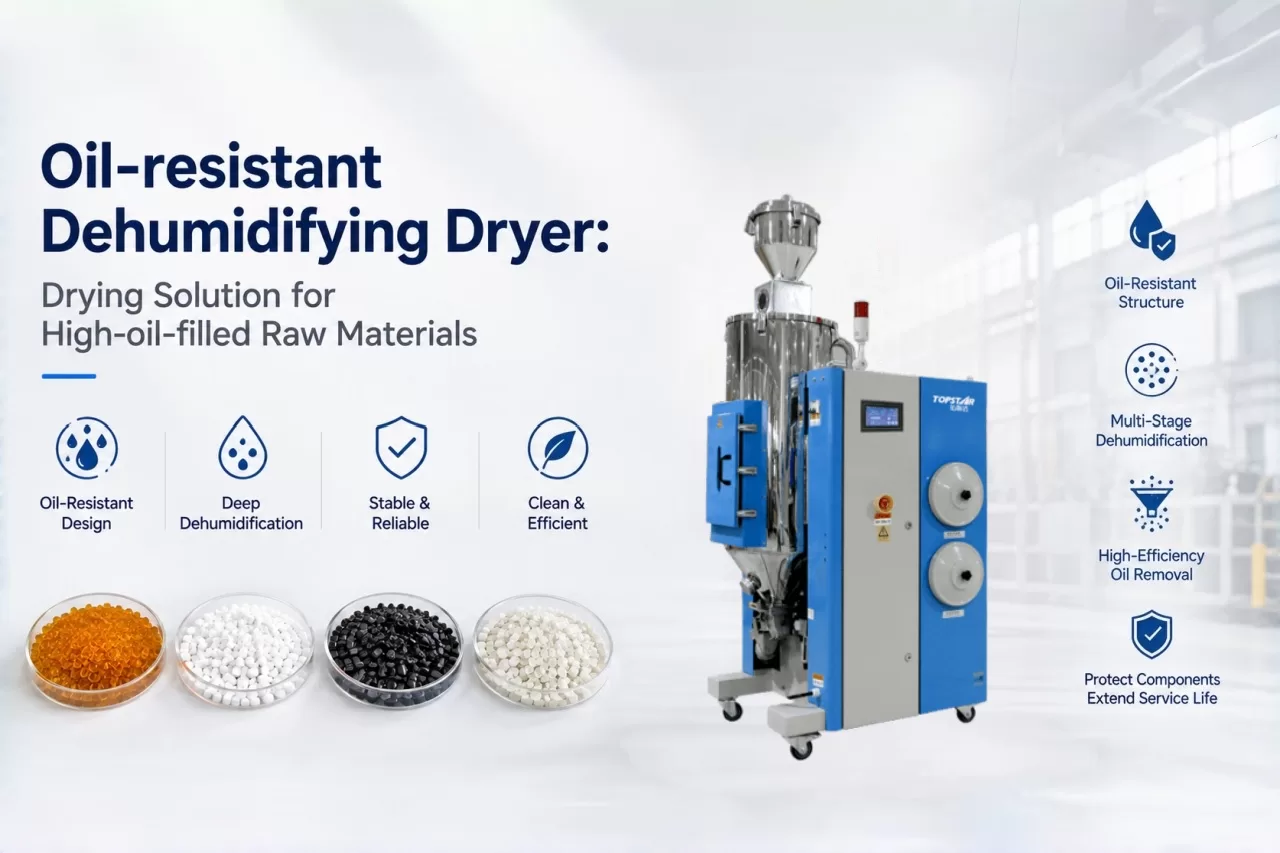
Oil‑resistant Dehumidifying Dryer: Drying Solution for High‑oil‑filled Raw Materials
Oil-containing materials are widely used in fields with high mechanical performance requirements, such as automotive components and electronic product housings. Oil molecules in these materials may gradually evaporate and enter the dry air circulation system, thereby contaminating filters and reducing heat transfer efficiency. Therefore, when processing raw materials with high oil content, it is not… Continue reading Oil‑resistant Dehumidifying Dryer: Drying Solution for High‑oil‑filled Raw Materials
-
2026/08/07 By: le zhan
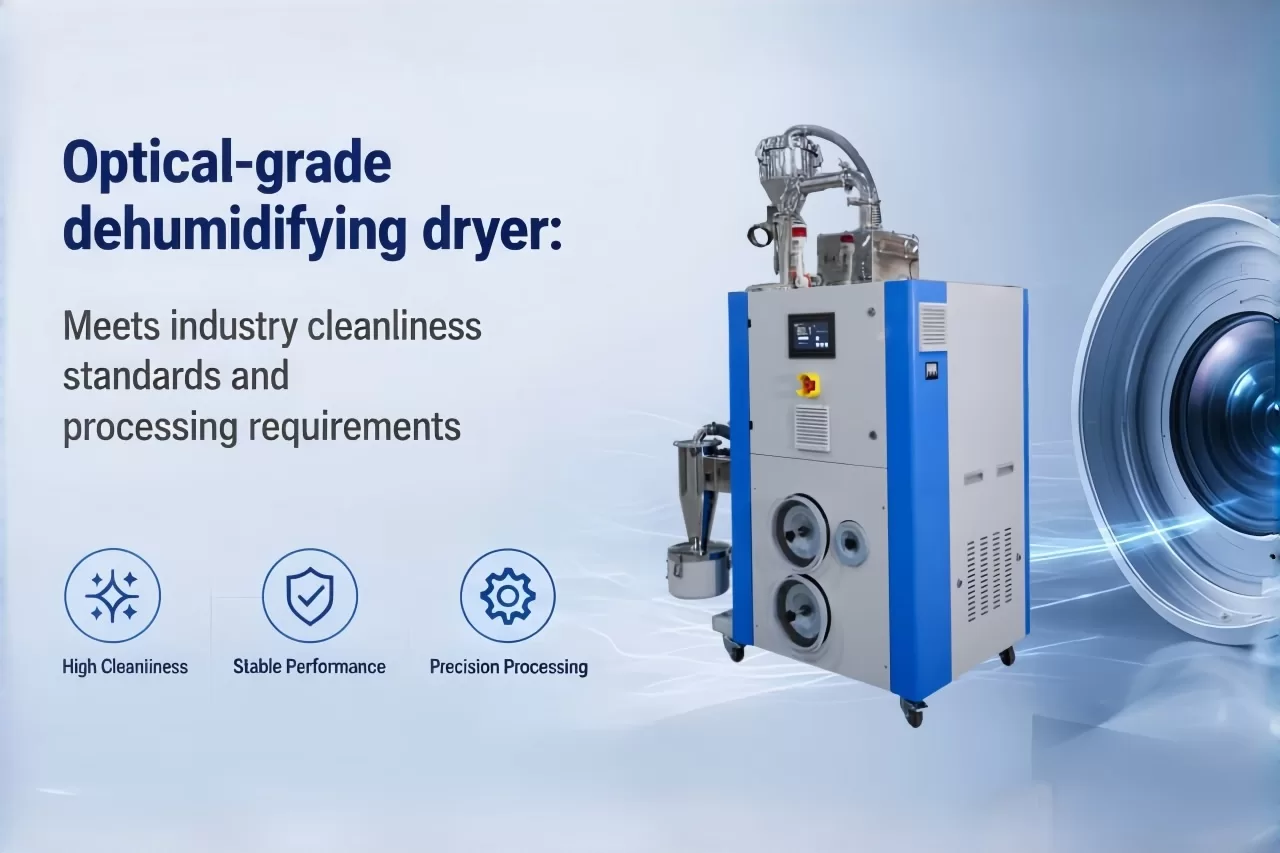
Optical-grade dehumidifying dryer: Meets industry cleanliness standards and processing requirements
Optical components used in lenses, LED light guides, displays, and precision electronic devices require extremely stringent production environments—one that rivals the cleanliness standards of semiconductor manufacturing facilities. Therefore, the drying process in injection molding must not only achieve highly efficient dehumidification but also ensure ultra-high cleanliness and stable temperature control throughout the material handling process.… Continue reading Optical-grade dehumidifying dryer: Meets industry cleanliness standards and processing requirements
-
2026/08/05 By: le zhan
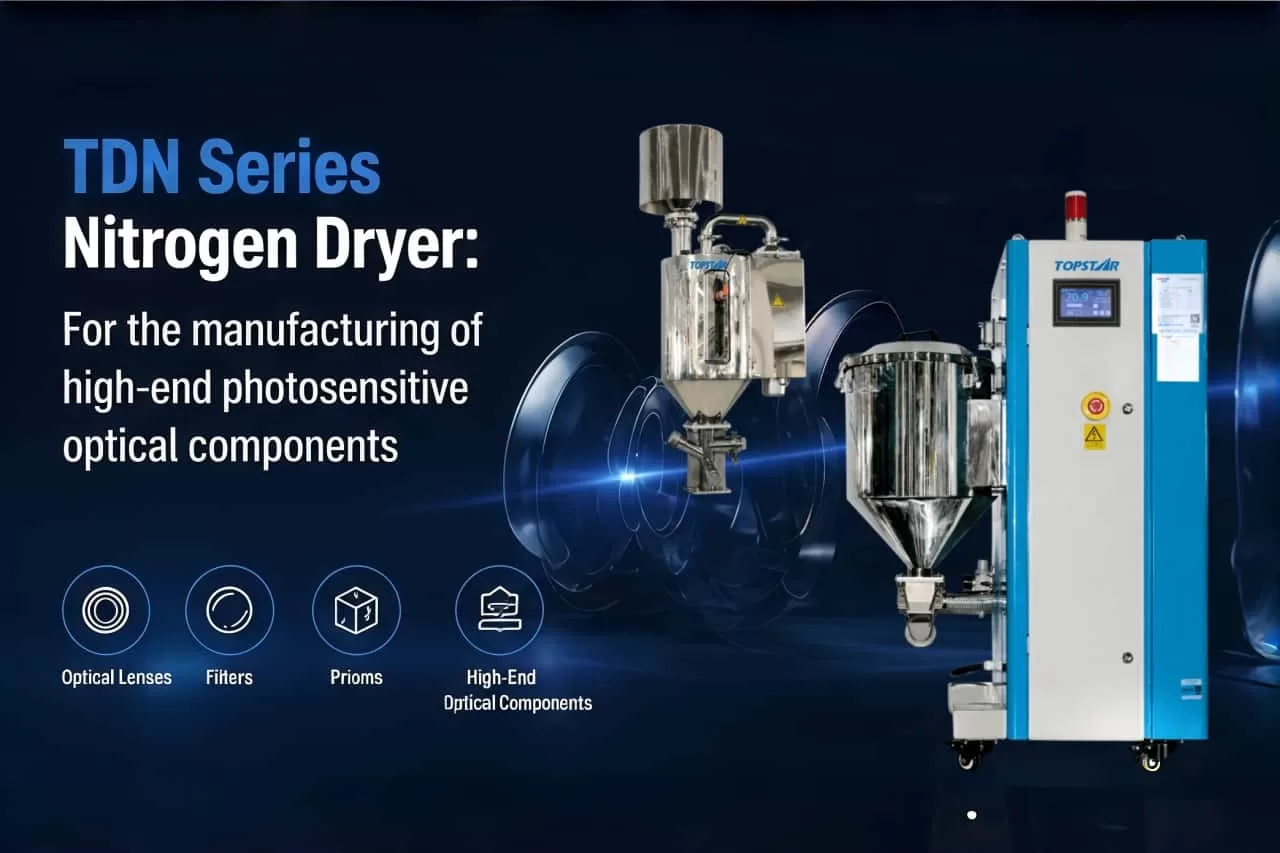
TDN Series Nitrogen Dryer: For the manufacturing of high-end photosensitive optical components
In the manufacturing process of high-end photosensitive optical components, extremely high standards are often required for color consistency, transparency, dimensional accuracy, and long-term durability. Even minor material degradation during drying or molding can lead to defects such as yellowing, reduced light transmittance, surface discoloration, and unstable optical performance. Conventional dehumidifying dryers primarily focus on removing… Continue reading TDN Series Nitrogen Dryer: For the manufacturing of high-end photosensitive optical components