
Why is your plastic dryer for injection molding not reaching the dew point?
2026/01/26 By le zhan
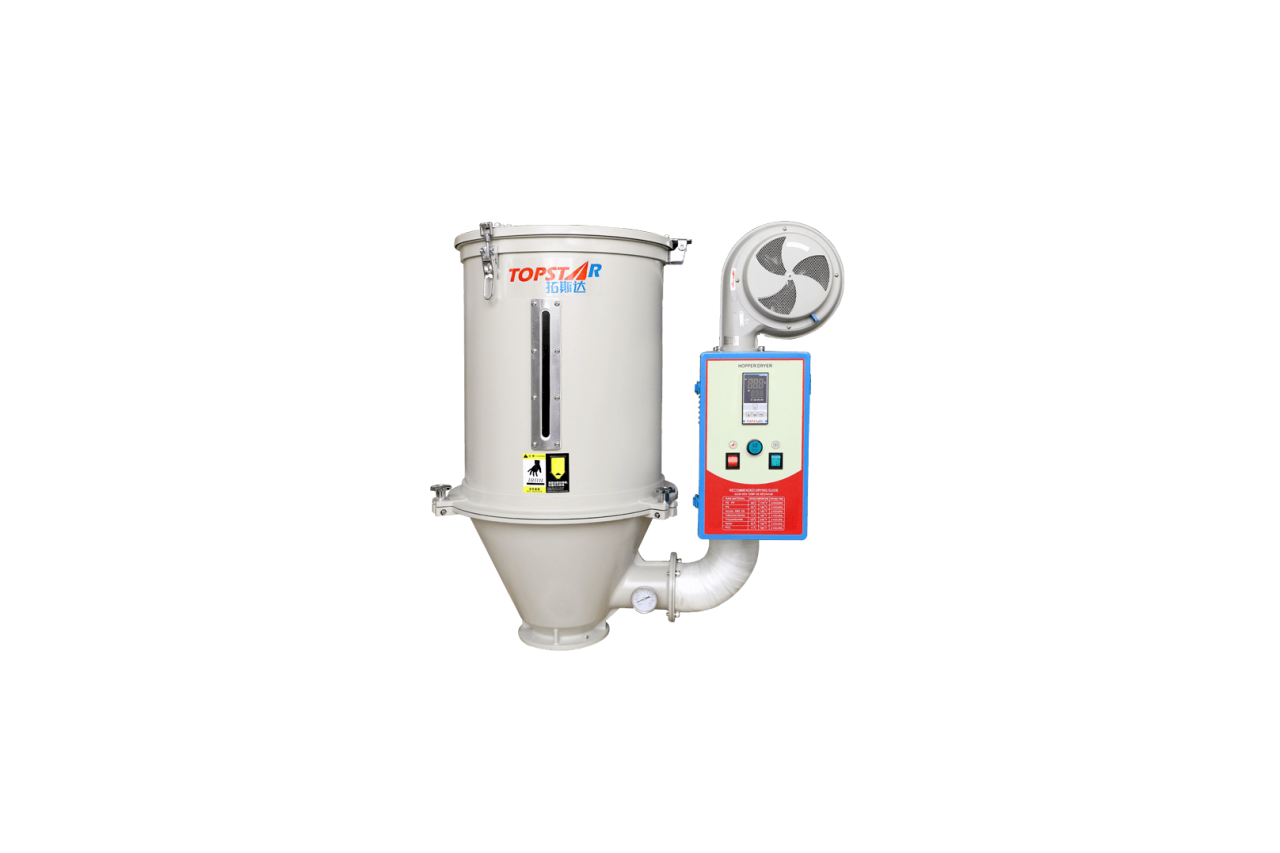
The temperature has been precisely set, the injection volume optimized, and the cycle time configured, but the parts still exhibit problems such as splashing, bubbles, or inconsistent mechanical properties. Often, the common cause is moisture. If the plastic dryer for injection molding fails to reach the specified dew point, it cannot completely remove moisture from hygroscopic resins. This results in cycle stalls and poor surface finish. As a Topstar engineer, I will explain the real reasons why the dryer fails to reach the dew point, how to verify the actual situation, and how to restore reliable drying performance.
Determining whether the plastic dryer for injection molding is reaching the dew point?
Before concluding that the target dew point is not being achieved, the problem needs to be verified. Engineers often rely too much on control panel readings or data from a single sensor, neglecting to verify the actual dew point of the drying air at the hopper and resin surface.
Therefore, you need to verify the following:
Dew point measurement method: There are many methods for measuring dew point, such as the chilled-mirror method, capacitive sensor method, and non-dispersive infrared (NDIR) humidity sensor method, all of which map to the dew point. The chilled mirror method is the gold standard, and engineers should use it for verification. Inexpensive capacitive sensors may drift and give inaccurate readings in dirty, high-temperature environments.
Probe location is essential: The dew point temperature should be measured at the hopper inlet and the dryer return air/circulation line. Readings at the regeneration outlet differ from the dry air temperature at the resin surface. If the sensor is located inside the regenerator or near the heater, it may overestimate performance.
Transient errors: Rapid changes in the feeding or purging cycle can cause transient fluctuations in dew point readings. Wait a few minutes for it to stabilize, then record the dew point values over time to identify fluctuations.
Regular sensor calibration: Sensors with a dew-point deviation of 5–10°C can skew measurements. Schedule calibration according to the manufacturer’s guidelines and calibrate after each maintenance.
Actual testing: With the plastic dryer for injection molding in a stable operating state, place a chilled mirror dew-point meter at the hopper opening. If the chilled mirror dew point meter shows a high dew point while the hopper dryer shows a low one, trust the chilled mirror dew point meter reading and suspect problems with the sensor, controller, or the installation location.
1. Most Common Root Causes: Desiccant and Regeneration Problems
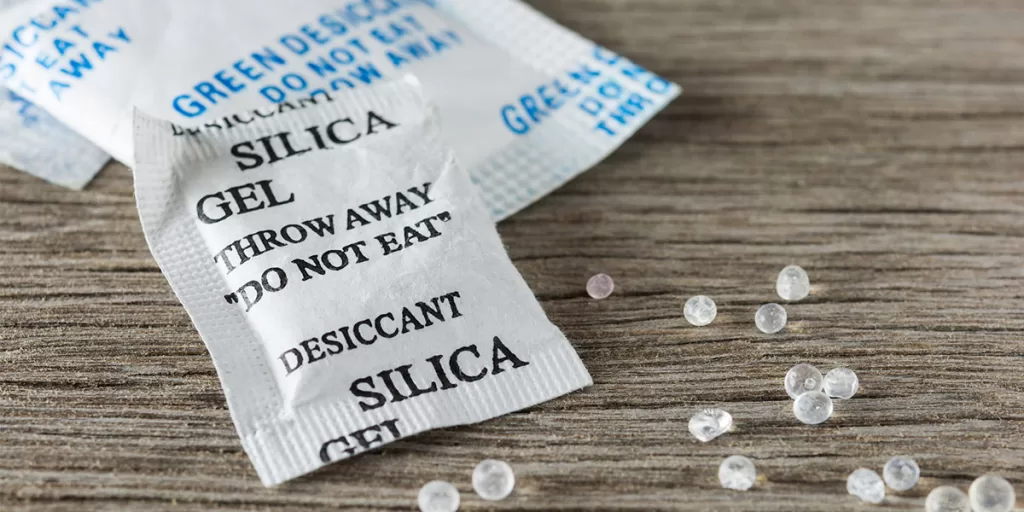
The performance of the desiccant is central to the operation of plastic dryers for injection molding. If the desiccant fails, becomes contaminated, or regenerates improperly, the dryer will not achieve the target dew point.
Main Failure Modes:
Desiccant Degradation or Failure: Over time, the desiccant becomes saturated or undergoes chemical degradation. Once saturated, a breakthrough occurs, and the dew point rises sharply. The typical lifespan of the desiccant depends on the operating temperature and the degree of contamination; silica gel, molecular sieves, and specialized beads each have different lifespan curves.
Insufficient Regeneration Temperature: The desiccant must be heated to the appropriate temperature and held for a sufficient time to remove adsorbed moisture. Check that the regeneration heater reaches the recommended temperature and that the regeneration time is adequate.
Poor Purging or Insufficient Purge Flow: Some dryers use heated purging to remove moisture. If the purge flow is too low, regeneration will be ineffective.
Desiccant Contamination by Oil or Particulate Matter: Compressor oil or dust can coat the desiccant particles, reducing their drying capacity. Pre-filters and oil separators are essential when using compressed air.
Rotor or Wheel Failure: In continuous-rotor desiccant dryers, misalignment or motor failure can reduce dwell time and cause moisture carryover.
How to Diagnose and Repair?
First, perform a visual and weight inspection. For bead-type desiccants, take a small sample (if safe) and check for color or weight changes. Molecular sieves usually show little change in appearance, but their capacity will decrease. Also, perform a replacement test. If you suspect desiccant failure, replace the desiccant cartridge or bed with a known good one and compare the dew point. If the dew point returns to normal, the desiccant needs to be replaced, or the desiccant regeneration schedule needs to be adjusted. Then inspect the regeneration cycle, verifying the heater output, the regenerator air path, and the purge valve operation. Finally, install pre-filters and oil separators; if compressed air is used in the circuit, add appropriate coalescing filters and oil/water separators upstream of the hopper dryer.
2. Airflow, Leakage, and Distribution Issues in a Plastic Dryer for Injection Molding
Even with good desiccant and properly functioning heaters, poor airflow or leaks can reduce the dew point. The plastic dryer must have a closed-loop, well-ventilated airflow path between the blower, the drying hopper, and the return air outlet.
Common problems include:
Air leaks in the hopper or piping: Leaks draw in surrounding humid air, increasing the load and hindering the achievement of low dew points. Common leak points include aging gasket seals, sight glass fittings, hose clamps, quick connectors, and hopper windows. Even small leaks can transport significant amounts of moisture under pressure differential.
Filter blockage or dead zones leading to insufficient airflow: Dirty intake filters, clogged diaphragms, or blocked piping reduce airflow, increasing dwell time on the wet side. Conversely, excessively high airflow can minimize contact time with the desiccant system if the regeneration time is not adjusted, resulting in insufficient drying.
Improper return air path: If the return air bypasses the desiccant, the circulation loop will be ineffective.
Hopper design and distribution: Uneven airflow within the hopper can expose some material to higher-humidity air. Uneven distribution of hot air or a lack of diffusion devices can lead to material channeling.
Testing methods and countermeasures:
Smoke test method: Use a small smoke generator or stage smoke machine to detect leaks at seams and gaskets. This method is quick and effective.
Differential pressure check: Measure the pressure across the filter to determine if it is clogged.
Flow measurement: Use an anemometer or calibrated flow meter to confirm the blower output and adjust as needed.
Check distribution plates and diffusion devices: For hopper dryers, ensure that the upward-blowing diffusion device or distributor is intact and not clogged. Consider adding flow balancing baffles.
Address airflow issues first; many dew point mysteries stem from poor sealing or distribution, not just the chemical properties of the desiccant.
3. Heater, blower, and mechanical failures leading to performance degradation
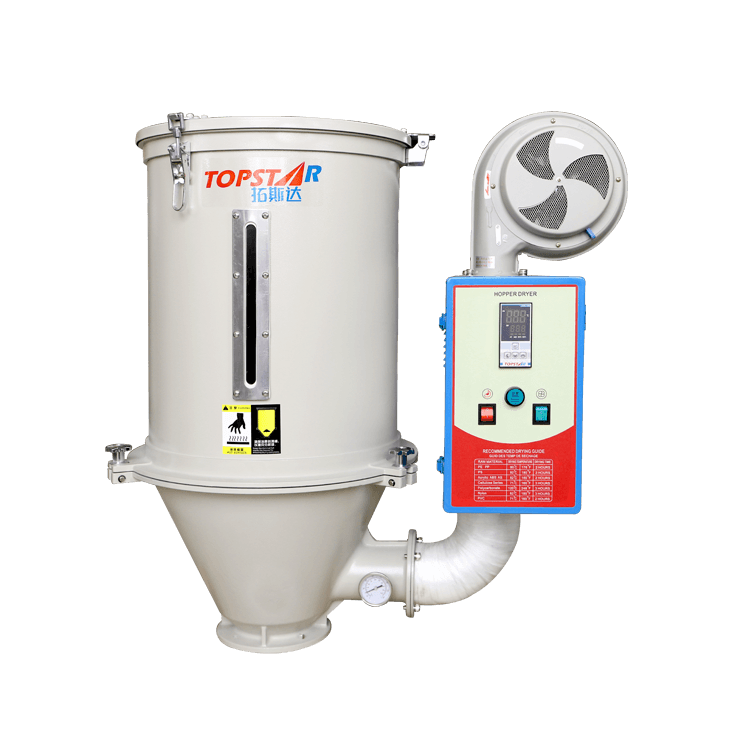
Mechanical failures of heaters, blowers, or valves are common causes of dew point problems. Without proper heat regeneration or circulation, the system cannot remove moisture from the desiccant or deliver dry air to the hopper.
Therefore, you need to check the heating elements and power supply. Resistive heaters age, and their elements can fail or increase in resistance. Check the power supply voltage, contactors, solid-state relays (SSRs), and the on/off status of the heater. Some malfunctioning heaters may still heat the regenerator, but fail to reach the required desorption temperature. Simultaneously, check the condition of the blower motor and impeller. Worn blower bearings and dust accumulation on the impeller will reduce airflow. Insufficient airflow minimizes the contact area and increases the dew point. Additionally, check the settings of the variable frequency drive or motor controller; sometimes the controller will limit the speed due to fault codes.
Furthermore, pneumatic or electric valves used to direct regeneration air may be stuck or leaking. If the purge valve fails, the regeneration cycle will not effectively remove moisture. A faulty check valve allows mixing of wet and dry fluids during the cycle.
Diagnosis and Treatment Methods:
Electrical Inspection: Use a clamp meter to confirm that the heater current and fan current match the values shown on the nameplate. Verify the gating signal of the solid-state relay and the operation of the contactor.
Visual and Mechanical Inspection: Check the heater for soot, burn marks, and brittle insulation; check that the impeller moves freely and the bearing clearance is correct.
Valve Function Test: Manually or by command cycle the valves and observe if they operate promptly. Replace faulty solenoid valves or actuators.
4. Problems Caused by Resin Characteristics, Capacity Mismatch, and Process Issues
Sometimes, the plastic dryer for injection molding itself is not faulty, but the upstream process choices prevent it from handling excessive material. Therefore, it is necessary to understand the moisture characteristics of the resin and how the feeding strategy and throughput affect the hopper dryer’s processing capacity.
Considerations when processing materials:
Resin Type and Hygroscopicity: PET, PA, PBT, and PVC are all hygroscopic and readily absorb moisture. Materials stored in a single environment or under poor storage conditions will have higher moisture content upon arrival and require longer drying times.
Wet Recycling vs. Dry Recycling: Regrind and recycled materials contain higher moisture content and fine powders. If the amount of regrind added exceeds 10-20% without considering the additional drying load, it may exceed the capacity of the hopper dryer.
High Throughput or Overloading the Hopper: Increasing the material quantity, cycle speed, or the number of receivers will increase the drying load. Each dryer has its designed processing capacity; exceeding this capacity will prevent reaching the dew point target. Material Storage Methods: Open packaging bags, containers, or humid loading environments will increase moisture content. Hygroscopic resins should be stored in sealed containers with desiccants or vacuum-sealed packaging.
Troubleshooting and Solutions:
You can use a moisture analyzer to test the moisture content of the granules before drying. If the resin arrives with excessive moisture, increase the pre-drying time or use a dryer feeder. Alternatively, adjust throughput or increase capacity. If the load frequently exceeds the dryer’s capacity, add parallel dryers, increase the size of the dryer, or pre-dry the material in batches in a centralized dryer.
Improve material handling by using sealed conveying devices, vacuum loaders, and closed-loop receivers to minimize moisture absorption between pre-drying and the hopper. For critical resins, use a dryer hopper with closed-loop dew-point control. Also, minimize the proportion of recycled material, or pre-treat the recycled material separately to reduce moisture content.
Achieving Target Dew Point
Achieving the target dew point is a systemic issue – sensors, desiccant condition, airflow sealing, mechanical integrity, control systems, and process requirements must all be coordinated. You can use cold-mirror verification, follow the troubleshooting steps above, and implement a maintenance roadmap to ensure your plastic dryer for injection molding reliably maintains the target dew point. If needed, Topstar can provide site-specific checklists, on-site verification, or dryer capacity analysis tailored to your resin blend, throughput, and production layout.
TRENDING POSTS
- TOPSTAR Global Open Day 2025: Humanoid Robot Debuts, Pioneering a New Decade of Intelligent Manufacturing 2026/01/26
- Topstar Showcases TE II Electric Injection Molding Machines at InterPlas Thailand 2025 2026/01/26
- Topstar Expands Its Ecosystem Partnerships to Drive Smart Manufacturing Innovation 2026/01/26
- What factors can cause delays in the injection molding process of plastic molding machine? 2026/01/26
HOT TOPIC
- .ervo motor-driven linear robots
- •
- 1.0 guangdong topstar technology co. ltd
- 1.0 topstar china
- 1.0 topstar robot
- 11
- 160℃ mold temperature controller
- 170 ton injection molding machine
- 2
- 21
- 220-ton injection molding machine
- 23
- 260 ton injection molding machine
- 3 axis robot
- 3 axis robots
- 3 in 1 Compact Dehumidifying Dryer
- 3-axis robot
- 3-axis robots
- 39
- 41
- 460T injection molding machine
- 5-axis CNC machine
- 62
- 90 ton injection molding machine
- accuracy
- Air Chillers
- all electric injection molding machine
- all electric injection molding machines
- all-electric injection molding machine
- All-electric injection molding machines
- and overall production quality. Therefore
- AP-RubberPlas
- auto loader
- automated injection molding machine
- Automation changed engineering
- automation of injection molding robots
- automotive parts injection molding
- Auxiliary Equipment
- auxiliary machine
- Bench Injection Molding Machine
- cabinet dryer
- Cabinet dryer manufacturers
- Cabinet dryers
- chiller
- CNC Drilling Machine
- CNC Drilling Machines
- cnc engraving machine manufacturer
- cnc laser cutting machine manufacturer
- CNC machine
- CNC Machine Center
- CNC Machine for Sale
- CNC Machine Manufacturing
- CNC Machine Tool
- CNC machine tool product
- CNC Machining Center
- CNC wood carving machine
- Cooling system
- Cross-Walking Single Axis Servo Cylinder Robot
- Cross-Walking Single-Axis Servo Cylinder Robot
- Cross-Walking Three-Axis/Five-Axis Servo Driven Robot
- cross-walking three-axis/five-axis servo-driven robot
- Dehumidifier Dryer
- Dehumidifying Dryer
- delta parallel robot
- Desktop Injection Molding Machine
- Desktop injection molding machines
- Desktop Molding Machine
- desktop plastic injection machine
- Desktop Plastic Injection Molding Machine
- Digital Transformation
- direct clamp injection molding machine
- Direct clamp injection molding machines
- Dosing & mixing system
- Drilling Centers
- Drying and dehumidification system
- drying and dehumidifying equipment
- Drying and Dehumidifying System
- drying system
- effective and efficient. Cabinet dryers are also used in other industries where large quantities of material need to be dried
- efficient injection molding machine
- elbow hydraulic injection molding machines
- electric injection molding machine
- electric injection molding machines
- energy-efficient injection molding robot
- energy-efficient water chiller
- energy-efficient water chillers
- energy-saving injection molding machine
- etc. Among injection molding robots
- exhibition
- features of CNC machine
- Feeding And Conveying System
- Five Axis Machine Center
- Flexible Production Line
- Fully automatic injection molding machine
- Gathering Topstar
- giant injection molding machine
- GMU-600 5-Axis Machining Center
- Granulating & Recycling System
- granulator machine
- gravimetric blender
- Heavy duty injection molding machine
- High-precision electric molding machines
- high-precision plastic molding machines
- high-speed all electric injection molding machine
- high-speed electric injection molding machine
- High-Speed Packaging Injection Molding
- Honeycomb rotor dehumidifier
- Hopper Dryers
- horizontal injection molding machine
- Horizontal Injection Molding Machines
- Horizontal Injection Moulding Machine
- Horizontal Mixer manufacturer
- How The CNC Machine Works
- hybrid injection molding machine
- hydraulic injection molding machine
- Hydraulic Injection Molding Machines
- in this article
- Industrial AI
- Industrial Automation
- Industrial robot
- Industrial Robot Chinese brand
- industrial robot parts
- industrial robot supplier
- Industrial robots
- Industry Chain
- Injection Manipulator
- injection manipulator robot
- injection mold machines
- Injection molding
- Injection molding automation
- Injection Molding Automation Solution
- injection molding dryer
- Injection molding equipment
- injection molding hopper dryer
- Injection molding machine
- injection molding machine brand
- Injection Molding Machine Factory
- Injection Molding Machine Manufacture
- Injection molding machine manufacturer
- injection molding machine manufacturers
- Injection molding machine procurement
- injection molding machine robotic arm
- injection molding machine with a robot
- Injection molding machines
- injection molding material dehumidifying
- injection molding plant
- injection molding process
- Injection Molding Robot
- injection molding robot arm
- Injection molding robot automation
- Injection molding robotic arm
- injection molding robots
- injection moulding dryer
- Injection moulding machine
- injection moulding machines
- Injection Moulding Robots
- Injection Robot
- Injection robot arm
- Injection robot manufacturer
- Injection robot wholesale
- injection robots
- Intelligent Factory
- intelligent injection molding machines
- Intelligent Manufacturing
- intelligent mold temperature
- intelligent mold temperature controller
- Intelligent mould temperature controller
- InterPlas Thailand 2025
- Introducing Injection Robot
- It is the best choice for drying large quantities of material at once. Cabinetmakers use these machines because they are fast
- Large flow water type mold temperature controller
- large injection molding machine
- large injection molding machines
- Learn what industrial automation and robotics is
- linear robot
- linear robots
- low speed sound-proof granulator
- machine plastic molding
- make sure to add some! Improvements (2) Keyphrase in introduction: Your keyphrase or its synonyms appear in the first paragraph of the copy
- manipulator machine
- manufacturing
- Manufacturing Innovation
- medical grade injection molding machines
- Medical Injection Molding
- medical injection molding machine
- medical injection molding machines
- micro injection molding machine
- middle speed granulator
- Mini CNC machine manufacturers.
- mobile cover making machine
- Mold Temperature Control System
- mold temperature controller
- mold temperature controllers
- molding machine
- molding material Dehumidifying System
- mould temperature control system
- mould temperature controller
- mould temperature controllers
- New electric injection molding machine
- nitrogen dryer manufacturer
- nitrogen dryer system manufacturer
- Oil type mold temperature controller
- Oil type mold temperature controllers
- open day
- optical component injection molding
- Outbound links: No outbound links appear in this page. Add some! Images: No images appear on this page. Add some! Internal links: No internal links appear in this page
- packaging injection molding
- Packaging Solutions
- PET Preform injection molding
- phone case maker machine
- phone case making machine
- phone cover making machine
- PID Control Mold Temperature Controller
- plastic auto loader
- plastic bottle making machine
- plastic bottle manufacturing
- plastic bucket making machine
- plastic bucket manufacturing
- Plastic chair making machine
- plastic dryer for injection molding
- plastic forming equipment
- Plastic Granulators
- plastic hopper dryer
- plastic injection machine
- plastic injection machines
- plastic injection molding
- Plastic injection molding equipment
- Plastic injection molding machine
- Plastic Injection Molding Machines
- plastic injection moulding machine
- plastic injection moulding machines
- plastic injection robot
- plastic molding
- Plastic Molding Industry
- Plastic Molding machine
- plastic molding machine 1
- Plastic Molding Machines
- plastic molding press
- plastic moulding machine
- plastic phone case making machine
- plastic-molding machine
- powerful granulator
- Powerful Type Sound-Proof Granulator
- precision injection molding
- precision injection molding machines
- production of plastic seats
- pure water mould temperature controller
- Robot injection molding
- robot injection molding machine
- robot manufacturing companies
- Robotic arm for injection molding machine
- robotic injection molding machines
- robotics in injection molding
- SCARA robot
- SCARA robots
- Screw dosers
- Service-oriented manufacturing
- Servo Cylinder Robot
- servo driven robot
- Servo Driven Robots
- servo injection molding machine
- servo injection robots
- servo motor-driven linear robots
- servo-driven 3-axis robot
- Servo-driven injection molding machine
- Servo-Driven Robot
- Setup of injection machine
- Silicone Injection Molding Machine
- six-axis industrial robot
- Smart Manufacturing
- soundproof granulator
- Stainless Hopper Dryer
- Stainless Hopper Dryers
- star club
- swing arm robot
- take-out robot
- take-out robots
- Thailand 4.0
- the choice between servo-driven robots and hydraulic robots will have a certain impact on efficiency
- the most popular injection molding machine
- the type of injection molding robot
- TIC2000 Control System
- TMII injection molding machine
- toggle clamp injection molding machine
- Toggle Hydraulic Injection Molding Machines
- toggle injection molding machine
- Top 10 brands of injection robots
- Topstar
- Topstar Electric Injection Molding Machine InterPlas Thailand 2025 Smart Manufacturing Thailand 4.0
- Topstar Engineering
- Topstar Industrial Robots
- Topstar injection molding intelligent
- Topstar Scara Robots
- Useful Injection molding machine
- Vertical machining centers
- volumetric type blender
- water chiller
- water chillers
- water distributor
- water type mold temperature controller
- Water Type MoldTemperature Controller
- Water-Type Mould Temperature Controllers
- We often face choices when performing injection molding. We will choose the type of injection molding machine
- wholesale of injection molding machines
- x carve CNC
- 热门查询 点击次数 展示 排名 topstar