
120℃/160℃/180℃: Which mould temperature controller is suitable for your injection molding process?
2026/03/11 By le zhan
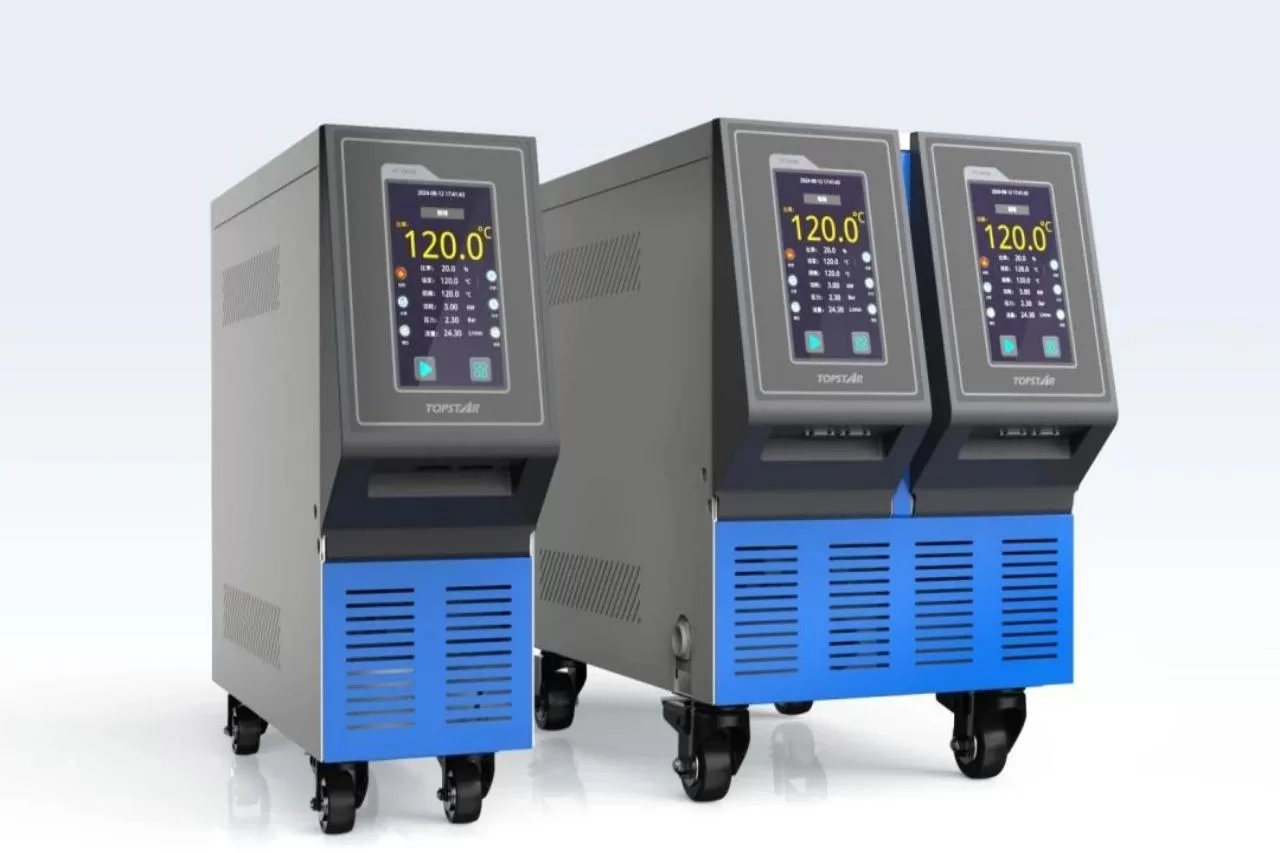
In injection moulding, depending on material properties and process requirements, different mould temperature controllers settings, such as 120°C, 160°C, or 180°C, may be needed to achieve optimal moulding performance. This is because injection moulding typically involves a variety of materials, from general-purpose plastics to engineering polymers. Each material has specific requirements for mould heating and cooling temperatures. Therefore, selecting a mould temperature controller with an appropriate temperature range helps maintain stable mould temperatures, improve surface finish, reduce defects, and increase production efficiency. Topstar offers a variety of mould temperature controller models to meet these diverse needs.
Temperature Requirements in Mould Temperature Controller Selection
In injection moulding, mould temperature determines the flow, solidification, and final moulding of molten plastic. If the temperature is too low, the material may not fill the cavity, resulting in defects such as short shots, weld lines, or a poor surface finish. On the other hand, excessively high mould temperatures will prolong production cycles and reduce production efficiency.
A properly selected mould temperature controller maintains a stable heating and cooling cycle throughout the moulding process. This stability ensures consistent melt flow behaviour and improves part quality. Furthermore, precise temperature control helps reduce internal stress in moulded parts, especially in engineering plastics used in automotive, electronics, and precision components. For many manufacturers, maintaining a stable mould temperature is crucial for improving production consistency. Therefore, selecting the appropriate temperature range—120°C, 160°C, or 180°C—is a critical step in optimising the entire injection moulding process.

Factors Influencing Selection
Several factors should be considered when making a selection. These factors include the type of plastic material, mould design, production speed requirements, and the available water pressure in the factory. For example, many general-purpose plastics, such as polypropylene, polystyrene, and ABS, typically only require a moderate mould temperature. In this case, a 120°C mould temperature controller provides sufficient heating capacity while maintaining energy efficiency.
However, engineering plastics such as nylon, PBT, or polycarbonate often require higher mould temperatures to achieve optimal crystallinity and dimensional stability. In these applications, a 160°C or even 180°C mould temperature controller may be necessary. Another important factor is the water pressure supply. Topstar addresses this issue by incorporating an indirect-cooling sealed-circulation system and a miniature booster pump into its 160°C and 180°C mould temperature controllers. This design ensures reliable system operation even under relatively low inlet water pressure, guaranteeing stable performance in a variety of industrial environments.
H2: Comparison of 120°C, 160°C, and 180°C Mould Temperature Controllers
The 120°C mould temperature controller is widely used in standard injection moulding processes and is particularly suitable for processing general-purpose plastics and products with less stringent mould temperature requirements. Topstar’s 120°C water-cooled mould temperature controller offers several practical advantages. One of its key features is a pressure detector with up to 1% accuracy, enabling the system to monitor inlet water pressure and maintain stable operation. Furthermore, the upper temperature limit can be adjusted according to the inlet water pressure, ensuring reliable performance even under fluctuating water pressure.
Due to its relatively simple design and efficient water-based heating system, the 120°C mould temperature controller offers excellent energy efficiency and low operating costs. It is commonly used in packaging products, consumer goods, and general-purpose plastic parts.
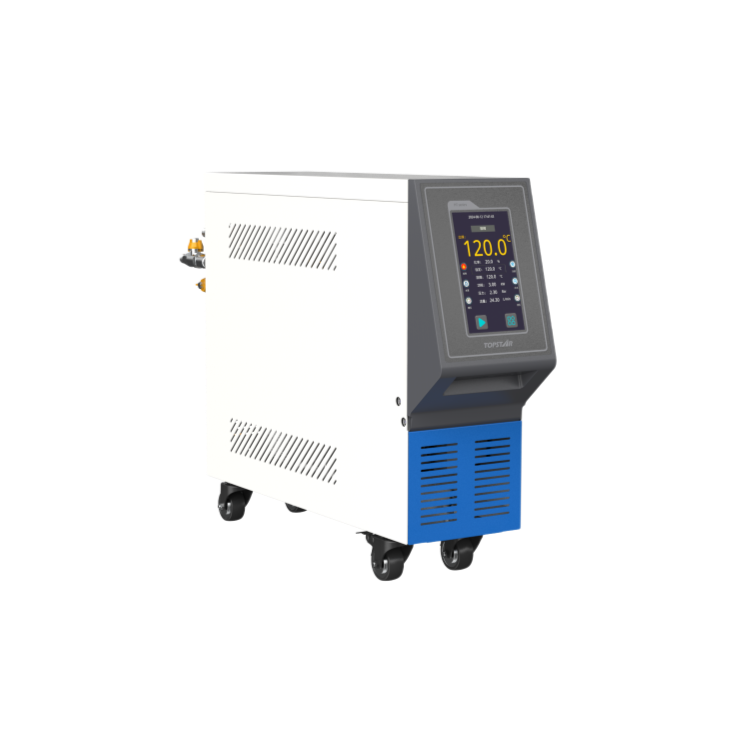
160℃ for Engineering Plastics Processing
When injection moulding processes involve high-performance materials, 160°C is a more suitable choice. Many engineering plastics require higher mould temperatures to achieve good crystallisation and reduce internal stress in the moulded parts.
Topstar’s 160°C mould temperature controller employs an indirect-cooling, sealed-circulation mode, improving thermal stability and protecting the internal circulation system. Furthermore, it features a built-in micro-booster pump for water replenishment, ensuring effective controller operation even with inlet water pressure slightly above 0.3 bar. This design ensures stable heat transfer and consistent mould temperature throughout the production process. Therefore, manufacturers can achieve higher surface quality, better dimensional accuracy, and more reliable product performance when moulding engineering plastics.

180℃ for High-Temperature Molding Processes
For advanced injection moulding processes that require higher temperatures, 180°C provides the necessary heating capacity. Manufacturers typically use this controller in applications that process high-performance materials or require precise control of mould temperature.
Similar to the 160°C system, Topstar’s 180°C mould temperature controller employs an indirect-cooling, sealed-circulation design and a miniature booster pump. This configuration ensures stable water circulation and reduces reliance on high inlet water pressure. High-temperature mould control is particularly important for certain engineering plastics that require high temperatures to achieve optimal mechanical properties and surface finishes. Precise temperature control helps manufacturers produce high-quality parts with consistent performance.
Choosing the Appropriate Mould Range for Long-Term Stable Temperature Control
Each temperature range—120°C, 160°C, and 180°C—has a specific application in injection moulding. The 120°C mould temperature controller is suitable for general plastic applications and energy-efficient production. The 160°C mould temperature controller provides better temperature control for engineering plastics. In comparison, the 180°C mould temperature controller supports high-temperature moulding processes that require precise thermal stability. With advanced features such as pressure sensing, a sealed circulation system, and a miniature booster pump, Topstar’s mould temperature controllers deliver reliable performance even in harsh industrial environments.
TRENDING POSTS
- TOPSTAR Global Open Day 2025: Humanoid Robot Debuts, Pioneering a New Decade of Intelligent Manufacturing 2026/03/11
- Topstar Showcases TE II Electric Injection Molding Machines at InterPlas Thailand 2025 2026/03/11
- Topstar Expands Its Ecosystem Partnerships to Drive Smart Manufacturing Innovation 2026/03/11
- What factors can cause delays in the injection molding process of plastic molding machine? 2026/03/11
HOT TOPIC
- .ervo motor-driven linear robots
- •
- 1.0 guangdong topstar technology co. ltd
- 1.0 topstar china
- 1.0 topstar robot
- 11
- 160℃ mold temperature controller
- 170 ton injection molding machine
- 2
- 21
- 220-ton injection molding machine
- 23
- 260 ton injection molding machine
- 3 axis robot
- 3 axis robots
- 3 in 1 Compact Dehumidifying Dryer
- 3-axis robot
- 3-axis robots
- 39
- 41
- 460T injection molding machine
- 5-axis CNC machine
- 62
- 90 ton injection molding machine
- accuracy
- Air Chillers
- all electric injection molding machine
- all electric injection molding machines
- all-electric injection molding machine
- All-electric injection molding machines
- and overall production quality. Therefore
- AP-RubberPlas
- auto loader
- automated injection molding machine
- Automation changed engineering
- automation of injection molding robots
- automotive parts injection molding
- Auxiliary Equipment
- auxiliary machine
- Bench Injection Molding Machine
- cabinet dryer
- Cabinet dryer manufacturers
- Cabinet dryers
- chiller
- CNC Drilling Machine
- CNC Drilling Machines
- cnc engraving machine manufacturer
- cnc laser cutting machine manufacturer
- CNC machine
- CNC Machine Center
- CNC Machine for Sale
- CNC Machine Manufacturing
- CNC Machine Tool
- CNC machine tool product
- CNC Machining Center
- CNC wood carving machine
- Cooling system
- Cross-Walking Single Axis Servo Cylinder Robot
- Cross-Walking Single-Axis Servo Cylinder Robot
- Cross-Walking Three-Axis/Five-Axis Servo Driven Robot
- cross-walking three-axis/five-axis servo-driven robot
- Dehumidifier Dryer
- Dehumidifying Dryer
- delta parallel robot
- Desktop Injection Molding Machine
- Desktop injection molding machines
- Desktop Molding Machine
- desktop plastic injection machine
- Desktop Plastic Injection Molding Machine
- Digital Transformation
- direct clamp injection molding machine
- Direct clamp injection molding machines
- Dosing & mixing system
- Drilling Centers
- Drying and dehumidification system
- drying and dehumidifying equipment
- Drying and Dehumidifying System
- drying system
- effective and efficient. Cabinet dryers are also used in other industries where large quantities of material need to be dried
- efficient injection molding machine
- elbow hydraulic injection molding machines
- electric injection molding machine
- electric injection molding machines
- energy-efficient injection molding robot
- energy-efficient water chiller
- energy-efficient water chillers
- energy-saving injection molding machine
- etc. Among injection molding robots
- exhibition
- features of CNC machine
- Feeding And Conveying System
- Five Axis Machine Center
- Flexible Production Line
- Fully automatic injection molding machine
- Gathering Topstar
- giant injection molding machine
- GMU-600 5-Axis Machining Center
- Granulating & Recycling System
- granulator machine
- gravimetric blender
- Heavy duty injection molding machine
- High-precision electric molding machines
- high-precision plastic molding machines
- high-speed all electric injection molding machine
- high-speed electric injection molding machine
- High-Speed Packaging Injection Molding
- Honeycomb rotor dehumidifier
- Hopper Dryers
- horizontal injection molding machine
- Horizontal Injection Molding Machines
- Horizontal Injection Moulding Machine
- Horizontal Mixer manufacturer
- How The CNC Machine Works
- hybrid injection molding machine
- hydraulic injection molding machine
- Hydraulic Injection Molding Machines
- in this article
- Industrial AI
- Industrial Automation
- Industrial robot
- Industrial Robot Chinese brand
- industrial robot parts
- industrial robot supplier
- Industrial robots
- Industry Chain
- Injection Manipulator
- injection manipulator robot
- injection mold machines
- Injection molding
- Injection molding automation
- Injection Molding Automation Solution
- injection molding dryer
- Injection molding equipment
- injection molding hopper dryer
- Injection molding machine
- injection molding machine brand
- Injection Molding Machine Factory
- Injection Molding Machine Manufacture
- Injection molding machine manufacturer
- injection molding machine manufacturers
- Injection molding machine procurement
- injection molding machine robotic arm
- injection molding machine with a robot
- Injection molding machines
- injection molding material dehumidifying
- injection molding plant
- injection molding process
- Injection Molding Robot
- injection molding robot arm
- Injection molding robot automation
- Injection molding robotic arm
- injection molding robots
- injection moulding dryer
- Injection moulding machine
- injection moulding machines
- Injection Moulding Robots
- Injection Robot
- Injection robot arm
- Injection robot manufacturer
- Injection robot wholesale
- injection robots
- Intelligent Factory
- intelligent injection molding machines
- Intelligent Manufacturing
- intelligent mold temperature
- intelligent mold temperature controller
- Intelligent mould temperature controller
- InterPlas Thailand 2025
- Introducing Injection Robot
- It is the best choice for drying large quantities of material at once. Cabinetmakers use these machines because they are fast
- Large flow water type mold temperature controller
- large injection molding machine
- large injection molding machines
- Learn what industrial automation and robotics is
- linear robot
- linear robots
- low speed sound-proof granulator
- machine plastic molding
- make sure to add some! Improvements (2) Keyphrase in introduction: Your keyphrase or its synonyms appear in the first paragraph of the copy
- manipulator machine
- manufacturing
- Manufacturing Innovation
- medical grade injection molding machines
- Medical Injection Molding
- medical injection molding machine
- medical injection molding machines
- micro injection molding machine
- middle speed granulator
- Mini CNC machine manufacturers.
- mobile cover making machine
- Mold Temperature Control System
- mold temperature controller
- mold temperature controllers
- molding machine
- molding material Dehumidifying System
- mould temperature control system
- mould temperature controller
- mould temperature controllers
- New electric injection molding machine
- nitrogen dryer manufacturer
- nitrogen dryer system manufacturer
- Oil type mold temperature controller
- Oil type mold temperature controllers
- open day
- optical component injection molding
- Outbound links: No outbound links appear in this page. Add some! Images: No images appear on this page. Add some! Internal links: No internal links appear in this page
- packaging injection molding
- Packaging Solutions
- PET Preform injection molding
- phone case maker machine
- phone case making machine
- phone cover making machine
- PID Control Mold Temperature Controller
- plastic auto loader
- plastic bottle making machine
- plastic bottle manufacturing
- plastic bucket making machine
- plastic bucket manufacturing
- Plastic chair making machine
- plastic dryer for injection molding
- plastic forming equipment
- Plastic Granulators
- plastic hopper dryer
- plastic injection machine
- plastic injection machines
- plastic injection molding
- Plastic injection molding equipment
- Plastic injection molding machine
- Plastic Injection Molding Machines
- plastic injection moulding machine
- plastic injection moulding machines
- plastic injection robot
- plastic molding
- Plastic Molding Industry
- Plastic Molding machine
- plastic molding machine 1
- Plastic Molding Machines
- plastic molding press
- plastic moulding machine
- plastic phone case making machine
- plastic-molding machine
- powerful granulator
- Powerful Type Sound-Proof Granulator
- precision injection molding
- precision injection molding machines
- production of plastic seats
- pure water mould temperature controller
- Robot injection molding
- robot injection molding machine
- robot manufacturing companies
- Robotic arm for injection molding machine
- robotic injection molding machines
- robotics in injection molding
- SCARA robot
- SCARA robots
- Screw dosers
- Service-oriented manufacturing
- Servo Cylinder Robot
- servo driven robot
- Servo Driven Robots
- servo injection molding machine
- servo injection robots
- servo motor-driven linear robots
- servo-driven 3-axis robot
- Servo-driven injection molding machine
- Servo-Driven Robot
- Setup of injection machine
- Silicone Injection Molding Machine
- six-axis industrial robot
- Smart Manufacturing
- soundproof granulator
- Stainless Hopper Dryer
- Stainless Hopper Dryers
- star club
- swing arm robot
- take-out robot
- take-out robots
- Thailand 4.0
- the choice between servo-driven robots and hydraulic robots will have a certain impact on efficiency
- the most popular injection molding machine
- the type of injection molding robot
- TIC2000 Control System
- TMII injection molding machine
- toggle clamp injection molding machine
- Toggle Hydraulic Injection Molding Machines
- toggle injection molding machine
- Top 10 brands of injection robots
- Topstar
- Topstar Electric Injection Molding Machine InterPlas Thailand 2025 Smart Manufacturing Thailand 4.0
- Topstar Engineering
- Topstar Industrial Robots
- Topstar injection molding intelligent
- Topstar Scara Robots
- Useful Injection molding machine
- Vertical machining centers
- volumetric type blender
- water chiller
- water chillers
- water distributor
- water type mold temperature controller
- Water Type MoldTemperature Controller
- Water-Type Mould Temperature Controllers
- We often face choices when performing injection molding. We will choose the type of injection molding machine
- wholesale of injection molding machines
- x carve CNC
- 热门查询 点击次数 展示 排名 topstar