
6 Essential Parameters Affecting Injection Molding Efficiency of Plastic Molding Machines
2026/02/06 By le zhan
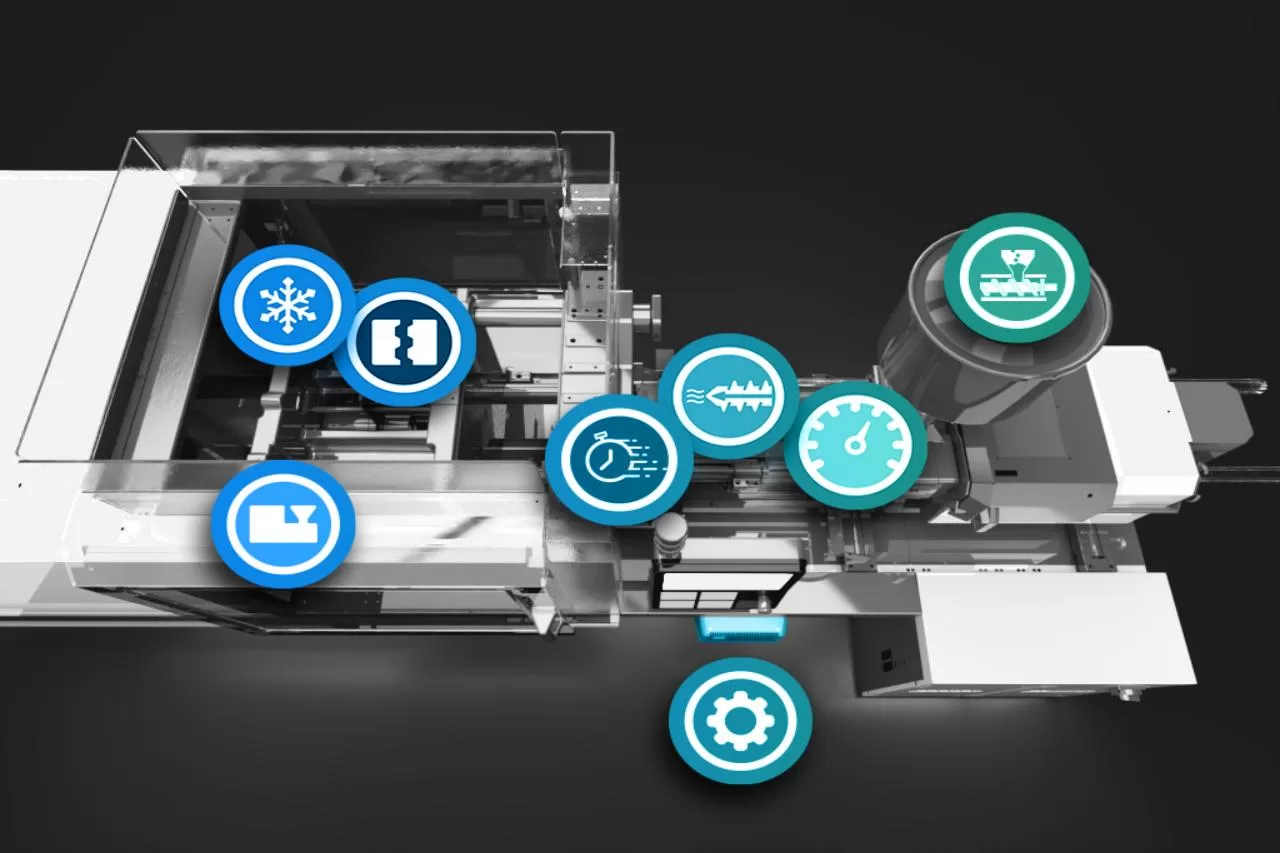
Injection molding efficiency determines a company’s competitiveness; shorter cycle times, higher first-pass yields, and predictable production efficiency directly reduce product costs. In any injection molding plant, the plastic molding machines are the core equipment, and injection molding efficiency depends on six controllable parameters that govern the physical processes of melting, filling, holding pressure, cooling, and ejection. We aim to significantly improve your production efficiency and quality through small, targeted adjustments.
Material Properties and Raw Material Management
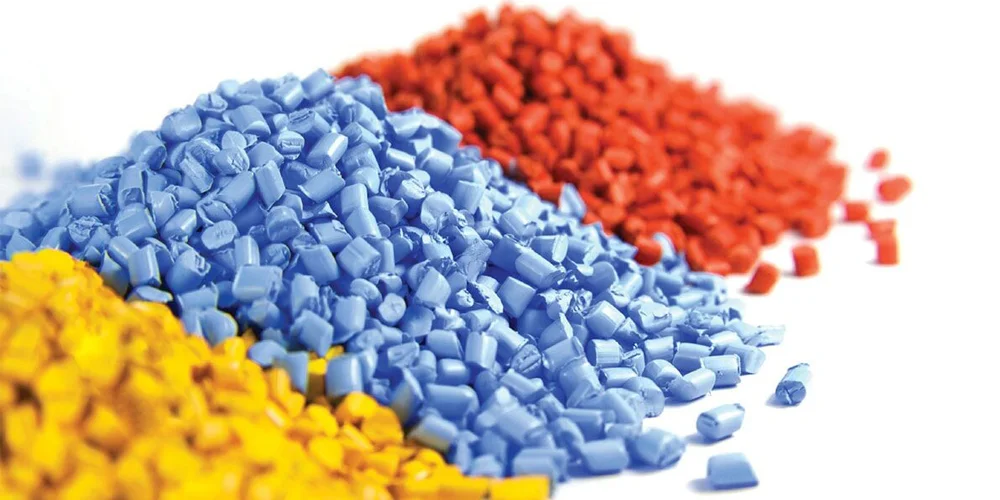
Material selection and raw material condition are among the most important factors affecting injection molding efficiency. The choice of resin—whether nylon, ABS, or general-purpose polypropylene—determines melt flowability, required processing temperature, sensitivity to moisture, and tolerances of the final parts. For example, hygroscopic resins require effective drying; otherwise, moisture-induced hydrolysis creates bubbles, reduces mechanical properties, and increases visible defects, leading to rework and slower production. Therefore, treating materials as a controllable process input is crucial.
From a practical production perspective, operators should regularly measure key properties of recycled materials, including moisture content, melt flow rate (MFI), bulk density, and particle size distribution. They use calibrated moisture analyzers and gravimetric scales to ensure consistent feed. Furthermore, engineers integrate auxiliary equipment—such as gravimetric mixers and centralized conveying systems—as needed to maintain precise amounts of colorants and additives. Controlling material properties and managing raw materials stabilizes the injection molding machine’s performance with each injection. When raw material preparation is stable and reliable, operators can reduce troubleshooting time, allowing them to focus more on optimizing cycle times and quality indicators.
Melt Temperature and Barrel Control in Plastic Molding Machines
The control architecture for melt temperature and the various barrel zones plays a key technical role in enabling the rapid production of high-quality injection-molded parts. Melt temperature controls viscosity, shear sensitivity, and the resin’s thermal degradation threshold. Incorrect or unstable melt temperatures can lead to short shots, flash, burn marks, or polymer chain degradation—all of which reduce first-pass yield and require downtime for correction. Therefore, our control of barrel temperature zones, screw speed, and back pressure directly impacts part quality and production efficiency.
In actual production, strict temperature control is essential. High-precision thermocouples are used in the barrel zone, and their calibration is verified regularly. Additionally, by controlling the screw profile and rotation speed, melt residence time and shear heating are balanced. Excessive residence time leads to thermal degradation; insufficient residence time hinders melting and homogenization, resulting in defects. Back pressure is adjusted to improve melt uniformity, but its trade-off with cycle time must be carefully considered. When a plastic molding machine achieves stable, repeatable melt temperatures, downstream processes become more predictable, enabling a safe reduction in cycle time while maintaining dimensional accuracy and mechanical properties.
Mold Temperature and Cooling System Efficiency of Plastic Molding Machines
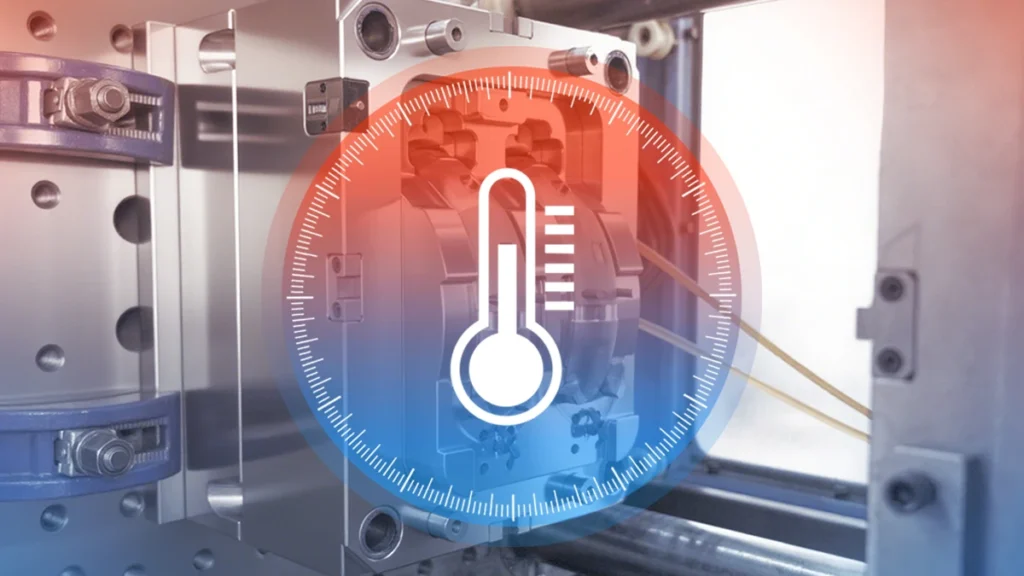
Mold temperature and cooling system efficiency affect molding cycle time, dimensional stability, and surface quality. Even small changes in mold temperature can alter shrinkage and warpage characteristics, prolong cooling time, and produce visual defects such as sink marks. In semi-crystalline materials, mold temperature control typically determines crystallinity, directly affecting ejection stiffness and dimensional stability.
To effectively manage this parameter, engineers must control it in conjunction with a mold temperature controller. At the same time, designers should design conformal cooling channels or optimize the channel layout to achieve uniform temperature distribution within the cavity. In addition, the process requires a chiller with stable setpoint control and sufficient capacity; operators should measure and record inlet and outlet temperatures to detect deviations. From an operational standpoint, technicians should preheat the mold to a stable temperature using a mold temperature controller before starting full-scale production and monitor the cooling time for each cycle. Once engineers optimize mold temperature control, cooling time becomes a predictable part of the cycle time, allowing them to safely shorten the overall cycle time without increasing the risk of dimensional inconsistencies.
Controlling Injection Speed and Pressure Profiles
The setting of injection speed and pressure profiles must fully consider the resin rheology, gate design, and mold geometry. Excessively fast injection speeds and pressure profiles can lead to shear heating, flow stagnation, and flash; excessively slow injection speeds and pressure profiles can lead to cold flow, short shots, and increased cycle time. Therefore, the injection speed and pressure profiles of a plastic injection molding machine are key factors for both quality and efficiency.
First, we must develop a robust filling strategy. They should adopt a multi-stage injection profile: use rapid filling to quickly reach near-fill completion, then reduce speed and control holding pressure to fill the cavity. Engineers use cavity pressure sensors and screw position profiles to precisely control the transition between filling and holding pressure. Cavity pressure feedback is a powerful tool: it helps you consistently determine the true “fill end” position, minimizing overfilling or underfilling and reducing cycle fluctuations. Furthermore, screw springback and cushioning are monitored to ensure stable injection weight and prevent slippage or insufficient backflow. A well-calibrated injection profile allows the plastic molding machine to achieve a balance between “rapid filling and controlled holding pressure,” resulting in high throughput while maintaining quality.
Cycle Time Optimization, Size Selection, and Clamping Efficiency
Cycle time serves as the most direct indicator of efficiency: shorter cycle times allow manufacturers to produce more parts per hour, thereby increasing equipment utilization. However, optimizing cycle time requires a balanced approach. Therefore, an efficient plastic molding machine requires coordinated operation between mold handling, ejection, part removal, and auxiliary systems.
First, select the appropriate injection molding machine size. Based on the part geometry and mold cavity, choose a plastic molding machine with sufficient injection capacity, clamping tonnage, and injection rate. Machines that are too small are prone to incomplete filling, while those that are too large waste energy and incur higher costs. When evaluating clamping tonnage, engineers should allow a safety margin (typically 10–20% above the theoretical clamping requirement) to account for part imbalance and dynamic forces. Secondly, minimize non-value-adding time. Use quick mold change systems and automated part removal (robotics) to reduce auxiliary delays. By treating cycle time as a system metric rather than a single variable, engineers can significantly improve hourly part output and unit energy efficiency.
Auxiliary Systems, Automation, and Preventive Maintenance
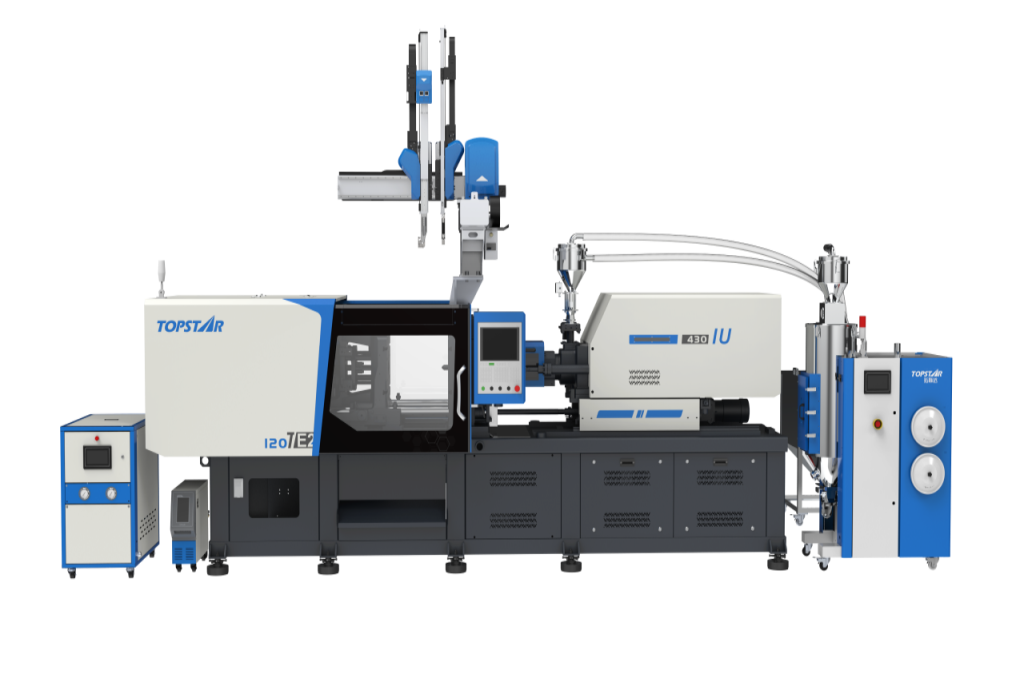
Auxiliary equipment, such as material dryers, coolers, granulators, conveyors, and injection robots, has a significant but often underestimated impact on injection molding efficiency. If auxiliary equipment is unreliable or improperly sized, the injection molding machine will not reach its rated output. For example, insufficient dryer capacity can lead to intermittent moisture problems, resulting in longer production cycles or increased scrap rates; improperly maintained coolers can cause temperature drift; and a malfunctioning granulator can generate dust and contaminants, reducing part quality.
Therefore, we can select auxiliary equipment with integrated digital control and incorporate it into the production control system. They link the material-conveying system to the machine’s cycle count to ensure timely replenishment and prevent hopper runouts. A central chiller monitoring system issues alarms for flow and temperature deviations and integrates a dust-removal device for the granulator to protect air quality and to avoid pollution.
Controlling plastic molding machines parameters to improve injection molding efficiency
Improving plastic molding machines’ efficiency is not achieved through a single adjustment; rather, it requires systematic control of six key process parameters. From material management and melt temperature control to mold cooling, injection dynamics, cycle optimization, and auxiliary system integration, each parameter directly affects the efficiency with which the injection molding machine transforms raw materials into high-quality parts. When these parameters can be well controlled, measured, and optimized, manufacturers can achieve higher production efficiency and more consistent product quality.
TRENDING POSTS
- CHINAPLAS 2026 is Coming Soon! 2026/02/06
- New Year, New Beginnings: Topstar Robotics Delivers Heartfelt Service to Keep Customers Thriving! 2026/02/06
- TOPSTAR Global Open Day 2025: Humanoid Robot Debuts, Pioneering a New Decade of Intelligent Manufacturing 2026/02/06
- Topstar Showcases TE II Electric Injection Molding Machines at InterPlas Thailand 2025 2026/02/06
HOT TOPIC
- .ervo motor-driven linear robots
- •
- 1.0 guangdong topstar technology co. ltd
- 1.0 topstar china
- 1.0 topstar robot
- 11
- 160℃ mold temperature controller
- 170 ton injection molding machine
- 2
- 21
- 220-ton injection molding machine
- 23
- 260 ton injection molding machine
- 3 axis robot
- 3 axis robots
- 3 in 1 Compact Dehumidifying Dryer
- 3-axis robot
- 3-axis robots
- 39
- 41
- 460T injection molding machine
- 5-axis CNC machine
- 62
- 90 ton injection molding machine
- accuracy
- Air Chillers
- all electric injection molding machine
- all electric injection molding machines
- all-electric injection molding machine
- All-electric injection molding machines
- and overall production quality. Therefore
- AP-RubberPlas
- auto loader
- automated injection molding machine
- Automation changed engineering
- automation of injection molding robots
- automotive parts injection molding
- Auxiliary Equipment
- auxiliary machine
- Bench Injection Molding Machine
- cabinet dryer
- Cabinet dryer manufacturers
- Cabinet dryers
- chiller
- CNC Drilling Machine
- CNC Drilling Machines
- cnc engraving machine manufacturer
- cnc laser cutting machine manufacturer
- CNC machine
- CNC Machine Center
- CNC Machine for Sale
- CNC Machine Manufacturing
- CNC Machine Tool
- CNC machine tool product
- CNC Machining Center
- CNC wood carving machine
- Cooling system
- Cross-Walking Single Axis Servo Cylinder Robot
- Cross-Walking Single-Axis Servo Cylinder Robot
- Cross-Walking Three-Axis/Five-Axis Servo Driven Robot
- cross-walking three-axis/five-axis servo-driven robot
- Dehumidifier Dryer
- Dehumidifying Dryer
- delta parallel robot
- Desktop Injection Molding Machine
- Desktop injection molding machines
- Desktop Molding Machine
- desktop plastic injection machine
- Desktop Plastic Injection Molding Machine
- Digital Transformation
- direct clamp injection molding machine
- Direct clamp injection molding machines
- Dosing & mixing system
- Drilling Centers
- Drying and dehumidification system
- drying and dehumidifying equipment
- Drying and Dehumidifying System
- drying system
- effective and efficient. Cabinet dryers are also used in other industries where large quantities of material need to be dried
- efficient injection molding machine
- elbow hydraulic injection molding machines
- electric injection molding machine
- electric injection molding machines
- energy-efficient injection molding robot
- energy-efficient water chiller
- energy-efficient water chillers
- energy-saving injection molding machine
- etc. Among injection molding robots
- exhibition
- features of CNC machine
- Feeding And Conveying System
- Five Axis Machine Center
- Flexible Production Line
- Fully automatic injection molding machine
- Gathering Topstar
- giant injection molding machine
- GMU-600 5-Axis Machining Center
- Granulating & Recycling System
- granulator machine
- gravimetric blender
- Heavy duty injection molding machine
- High-precision electric molding machines
- high-precision plastic molding machines
- high-speed all electric injection molding machine
- high-speed electric injection molding machine
- High-Speed Packaging Injection Molding
- Honeycomb rotor dehumidifier
- hopper dryer
- Hopper Dryers
- horizontal injection molding machine
- Horizontal Injection Molding Machines
- Horizontal Injection Moulding Machine
- Horizontal Mixer manufacturer
- How The CNC Machine Works
- hybrid injection molding machine
- hydraulic injection molding machine
- Hydraulic Injection Molding Machines
- in this article
- Industrial AI
- Industrial Automation
- Industrial robot
- Industrial Robot Chinese brand
- industrial robot parts
- industrial robot supplier
- Industrial robots
- Industry Chain
- Injection Manipulator
- injection manipulator robot
- injection mold machines
- Injection molding
- Injection molding automation
- Injection Molding Automation Solution
- injection molding dryer
- Injection molding equipment
- injection molding hopper dryer
- Injection molding machine
- injection molding machine brand
- Injection Molding Machine Factory
- Injection Molding Machine Manufacture
- Injection molding machine manufacturer
- injection molding machine manufacturers
- Injection molding machine procurement
- injection molding machine robotic arm
- injection molding machine with a robot
- Injection molding machines
- injection molding material dehumidifying
- injection molding plant
- injection molding process
- Injection Molding Robot
- injection molding robot arm
- Injection molding robot automation
- Injection molding robotic arm
- injection molding robots
- injection molding whole plant
- injection moulding dryer
- Injection moulding machine
- injection moulding machines
- Injection Moulding Robots
- Injection Robot
- Injection robot arm
- Injection robot manufacturer
- Injection robot wholesale
- injection robots
- Intelligent Factory
- intelligent injection molding machines
- Intelligent Manufacturing
- intelligent mold temperature
- intelligent mold temperature controller
- Intelligent mould temperature controller
- InterPlas Thailand 2025
- Introducing Injection Robot
- It is the best choice for drying large quantities of material at once. Cabinetmakers use these machines because they are fast
- Large flow water type mold temperature controller
- large injection molding machine
- large injection molding machines
- Learn what industrial automation and robotics is
- linear robot
- linear robots
- low speed sound-proof granulator
- machine plastic molding
- make sure to add some! Improvements (2) Keyphrase in introduction: Your keyphrase or its synonyms appear in the first paragraph of the copy
- manipulator machine
- manufacturing
- Manufacturing Innovation
- medical grade injection molding machines
- Medical Injection Molding
- medical injection molding machine
- medical injection molding machines
- micro injection molding machine
- middle speed granulator
- Mini CNC machine manufacturers.
- mobile cover making machine
- Mold Temperature Control System
- mold temperature controller
- mold temperature controllers
- molding machine
- molding material Dehumidifying System
- mould temperature control system
- mould temperature controller
- mould temperature controllers
- New electric injection molding machine
- nitrogen dryer manufacturer
- nitrogen dryer system manufacturer
- Oil type mold temperature controller
- Oil type mold temperature controllers
- open day
- optical component injection molding
- Outbound links: No outbound links appear in this page. Add some! Images: No images appear on this page. Add some! Internal links: No internal links appear in this page
- packaging injection molding
- Packaging Solutions
- PET Preform injection molding
- phone case maker machine
- phone case making machine
- phone cover making machine
- PID Control Mold Temperature Controller
- plastic auto loader
- plastic bottle making machine
- plastic bottle manufacturing
- plastic bucket making machine
- plastic bucket manufacturing
- Plastic chair making machine
- plastic dryer for injection molding
- plastic forming equipment
- Plastic Granulators
- plastic hopper dryer
- plastic injection machine
- plastic injection machines
- plastic injection molding
- Plastic injection molding equipment
- Plastic injection molding machine
- Plastic Injection Molding Machines
- plastic injection moulding machine
- plastic injection moulding machines
- plastic injection robot
- plastic molding
- Plastic Molding Industry
- Plastic Molding machine
- plastic molding machine 1
- Plastic Molding Machines
- plastic molding press
- plastic moulding machine
- plastic phone case making machine
- plastic-molding machine
- powerful granulator
- Powerful Type Sound-Proof Granulator
- precision injection molding
- precision injection molding machines
- production of plastic seats
- pure water mould temperature controller
- Robot injection molding
- robot injection molding machine
- robot manufacturing companies
- Robotic arm for injection molding machine
- robotic injection molding machines
- robotics in injection molding
- SCARA robot
- SCARA robots
- Screw dosers
- Service-oriented manufacturing
- Servo Cylinder Robot
- servo driven robot
- Servo Driven Robots
- servo injection molding machine
- servo injection robots
- servo motor-driven linear robots
- servo-driven 3-axis robot
- Servo-driven injection molding machine
- Servo-Driven Robot
- Setup of injection machine
- Silicone Injection Molding Machine
- six-axis industrial robot
- Smart Manufacturing
- soundproof granulator
- Sprue Picker
- Stainless Hopper Dryer
- Stainless Hopper Dryers
- star club
- swing arm robot
- take-out robot
- take-out robots
- Thailand 4.0
- the choice between servo-driven robots and hydraulic robots will have a certain impact on efficiency
- the most popular injection molding machine
- the type of injection molding robot
- TIC2000 Control System
- TMII injection molding machine
- toggle clamp injection molding machine
- Toggle Hydraulic Injection Molding Machines
- toggle injection molding machine
- Top 10 brands of injection robots
- Topstar
- Topstar Electric Injection Molding Machine InterPlas Thailand 2025 Smart Manufacturing Thailand 4.0
- Topstar Engineering
- Topstar Industrial Robots
- Topstar injection molding intelligent
- Topstar Scara Robots
- Useful Injection molding machine
- Vertical machining centers
- volumetric type blender
- water chiller
- water chillers
- water distributor
- water type mold temperature controller
- Water Type MoldTemperature Controller
- Water-Type Mould Temperature Controllers
- We often face choices when performing injection molding. We will choose the type of injection molding machine
- wholesale of injection molding machines
- x carve CNC
- 热门查询 点击次数 展示 排名 topstar