
Why is the Topstar gravimetric blender the best choice for metering and mixing?
2026/02/02 By le zhan
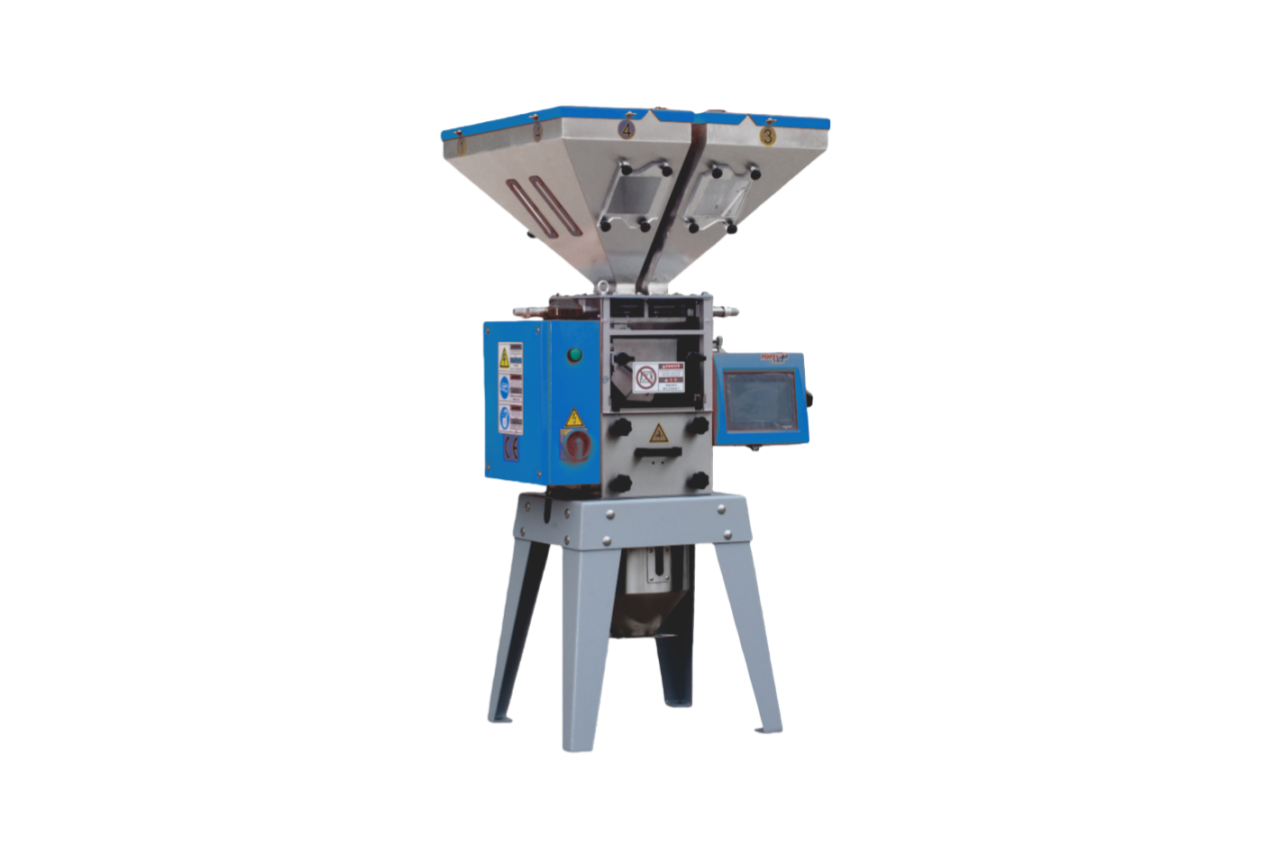
When you rely on expensive masterbatches or variable additives, even minor deviations in proportion can lead to economic losses and affect product performance. The Topstar gravimetric blender is designed to address these pain points effectively. As auxiliary equipment specifically designed for injection molding, the Topstar plastic gravimetric blender accurately meters and mixes two to six raw materials, including virgin resins, recycled materials, masterbatches, and additives, at high speed, with processing capacities ranging from 20 kg/hour to 1000 kg/hour. Thanks to high-precision weight sensors and advanced control logic, batch mixing ratio errors can be precisely controlled between ±0.3% and ±0.5%, meeting the most stringent production specifications. Combining precision, processing capacity, and integration, it is the most practical and economical choice for manufacturers who prioritize consistent plastic part quality and reduced material costs, and is specifically designed for injection molding applications requiring precise control of material ratios.
Gravimetric Blender Metering Accuracy, Multi-Component Mixing, and Throughput Range
The core of any gravimetric blender lies in its ability to weigh accurately and control material flow. Topstar designed the gravimetric blender to meet the practical needs of injection molding: precisely dispensing masterbatches, controlling the proportion of recycled materials, and accurately adding trace additives such as flame retardants, stabilizers, and pigments. It supports 2 to 6 dosing channels, enabling standard production formulas such as virgin material, recycled material, masterbatch, lubricant, and stabilizer. You can configure each channel for continuous or intermittent batch addition, depending on your process requirements.
The Topstar gravimetric blender offers:
Capacity Flexibility: 20–1000 kg/hour, meeting the needs of various applications from small R&D workstations to high-volume production units. This range reduces the need for multiple blenders in the same workshop.
Precise Weighing: High-precision weighing sensors and short-cycle control technology enable batch mixing ratio errors to be controlled within ±0.3%–0.5%, depending on the compound type and set values. Repeatability: Consistent, periodic dosing reduces part-to-part variations, lowers scrap rates, and ensures downstream process setpoints (flow rate, temperature, cooling) match predictable part performance.
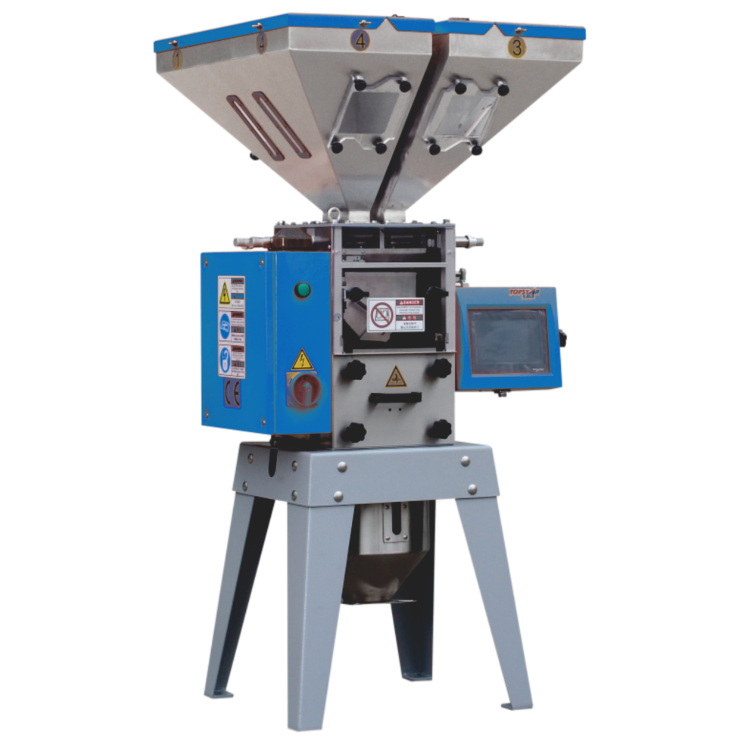
Maintaining weighing accuracy of ±0.3%–0.5%
Topstar utilizes high-precision weighing sensors and robust signal conditioning technology to measure raw material weight in real time. As a result, the mixer maintains target ratios within ±0.3%–0.5%, a range that meets the demands for precise color control and critical additive metering in demanding injection molding applications. More importantly, Topstar optimizes its control logic for both small-batch accuracy and high-volume throughput. At low production rates (20–100 kg/hr), the system prioritizes acceptable metering resolution; at high production rates (hundreds to 1000 kg/hr), it prioritizes stable dynamic response.
Furthermore, the user interface provides precise diagnostics and trend data, allowing operators and engineers to verify performance at a glance. If any feeder’s flow characteristics deviate from expectations, the system flags the issue and logs the event. This diagnostic transparency reduces downtime and enables maintenance teams to identify the root cause quickly.
Seamless Integration with Auxiliary Equipment
Modern injection molding demands that gravimetric blenders not only be highly accurate but also easily integrated into production cells and compatible with injection molding machine control systems and Central Manufacturing Execution Systems (MES). Topstar has designed this gravimetric blender as an auxiliary device that plugs directly into the production process.
Standardized Interfaces: Modbus, OPC UA, and discrete I/O enable the gravimetric blender to communicate with injection molding machines, material handling systems, and plant control systems. This supports recipe-driven production, where material ratios are part of the machine’s mold program.
Compact, Modular Layout: The Topstar plastic gravimetric blender features modular feeding stations that operators mount above a standard mixing hopper and can quickly remove or reconfigure to accommodate color or material changes. This reduces downtime during product changeovers.
Automatic Feeding Compatibility: The gravimetric blender is compatible with automatic loaders. It can receive bulk materials (large bags) or serve as an inline feeder for masterbatches and additives.
Additionally, the gravimetric blender’s touchscreen interface displays target setpoints, real-time weight, deviation alarms, and historical batch logs. Operators can lock recipes and restrict parameter changes through user-level permissions. When the injection molding machine loads a mold program, the blender receives its material recipe and automatically sets the metering ratio and feeding status. This reduces human error during the material setup process.
Lower Material Costs, Improved Quality, and Enhanced Recycling
Precise gravimetric blending delivers direct benefits in three operational areas: lower material costs, improved product quality, and better integration of recycling.
Lower Material Costs:
Precise Masterbatch Dosing: Masterbatches and high-value additives can cost several dollars per kilogram. Controlling dosing to within ±0.3% avoids over-addition, which often leads to unnecessary cost increases in the production of each part.
Optimized Regrind Utilization: By precisely metering regrind into the mixture, manufacturers can increase the regrind content while maintaining performance. Topstar’s gravimetric blenders enable you to confidently improve the regrind proportion incrementally and monitor part quality at each step.
Quality Improvement:
Uniform Color and Mechanical Properties: Precise blending reduces flashing, streaking, and variations in mechanical properties caused by inconsistent additive amounts. This helps improve first-pass yield and reduce customer returns.
Repeatable Mold Changes: Recipe-based operation eliminates operator variability during setup, ensuring consistent parts after each mold change. This is especially important in multi-shift and multi-product blending environments.
Promoting the Circular Economy:
Controlled Regrind Addition: Topstar gravimetric blenders enable precise, testable regrind addition. Through controlled dosing and accompanying process monitoring, engineers can evaluate the optimal amount of regrind to add without compromising part performance.
Designed for applications requiring precise control of material ratios.
The Topstar gravimetric blender combines laboratory-grade weighing accuracy with industrial-grade durability: it can precisely meter 2 to 6 raw materials with a throughput range of 20 to 1000 kg/hour, and the weighing error is controlled within approximately ±0.3% to 0.5%. In practical applications, this translates to predictable colors, reliable mechanical performance, and less time spent troubleshooting material quality issues. Whether used in conjunction with automatic feeders or integrated into centralized auxiliary equipment, the Topstar gravimetric blender delivers repeatable results—exactly what injection molding processes require.
TRENDING POSTS
- TOPSTAR Selected in “Forbes China AI Top 50” and Wins “2026 Embodied AI Industry Benchmark Award” 2026/02/02
- Topstar Achieves ISO 13849 Functional Safety Certification for Robotics 2026/02/02
- Topstar Completes Key Puzzle in Embodied Intelligence Data Closed Loop — Industrial AI Capability Foundation Now in Place 2026/02/02
- Topstar Honored with SING TAO GLOBAL CHINA 2025 Distinguished Leading Enterprise in Global Expansion 2026/02/02
HOT TOPIC
- .ervo motor-driven linear robots
- •
- 1.0 guangdong topstar technology co. ltd
- 1.0 topstar china
- 1.0 topstar robot
- 11
- 160℃ mold temperature controller
- 170 ton injection molding machine
- 2
- 21
- 220-ton injection molding machine
- 23
- 260 ton injection molding machine
- 3 axis robot
- 3 axis robots
- 3 in 1 Compact Dehumidifying Dryer
- 3-axis robot
- 3-axis robots
- 39
- 4 axis robot
- 4-axis SCARA robot
- 41
- 460T injection molding machine
- 5-axis CNC machine
- 62
- 90 ton injection molding machine
- accuracy
- Air Chillers
- air-cooled chillers
- all electric injection molding machine
- all electric injection molding machines
- all-electric injection molding machine
- All-electric injection molding machines
- and overall production quality. Therefore
- AP-RubberPlas
- auto cooling system
- auto loader
- Auto Loaders
- automated injection molding machine
- Automation changed engineering
- automation of injection molding robots
- automotive parts injection molding
- Auxiliary Equipment
- auxiliary machine
- Bench Injection Molding Machine
- cabinet dryer
- Cabinet dryer manufacturers
- Cabinet dryers
- cartesian coordinate robot
- Cartesian Coordinate Robots
- Cartesian injection robot
- Cartesian robot
- Central Feeding System
- Central Feeding Systems
- chiller
- CNC Drilling Machine
- CNC Drilling Machines
- cnc engraving machine manufacturer
- cnc laser cutting machine manufacturer
- CNC machine
- CNC Machine Center
- CNC Machine for Sale
- CNC Machine Manufacturing
- CNC Machine Tool
- CNC machine tool product
- CNC Machining Center
- CNC wood carving machine
- Compact Dehumidifying Dryer
- Cooling system
- Cross-Walking Single Axis Servo Cylinder Robot
- Cross-Walking Single-Axis Servo Cylinder Robot
- Cross-Walking Three-Axis/Five-Axis Servo Driven Robot
- cross-walking three-axis/five-axis servo-driven robot
- Dehumidifier Dryer
- Dehumidifying Dryer
- dehumidifying dryers
- delta parallel robot
- Desktop Injection Molding Machine
- Desktop injection molding machines
- Desktop Molding Machine
- desktop plastic injection machine
- Desktop Plastic Injection Molding Machine
- detachable autoloader
- Digital Transformation
- direct clamp injection molding machine
- Direct clamp injection molding machines
- Dosing & mixing system
- Drilling Centers
- Drying and dehumidification system
- drying and dehumidifying equipment
- Drying and Dehumidifying System
- drying system
- effective and efficient. Cabinet dryers are also used in other industries where large quantities of material need to be dried
- efficient injection molding machine
- elbow hydraulic injection molding machines
- electric injection molding machine
- electric injection molding machines
- energy-efficient injection molding robot
- energy-efficient water chiller
- energy-efficient water chillers
- energy-saving injection molding machine
- etc. Among injection molding robots
- exhibition
- features of CNC machine
- Feeding And Conveying System
- Five Axis Machine Center
- Flexible Production Line
- Fully automatic injection molding machine
- Gathering Topstar
- giant injection molding machine
- GMU-600 5-Axis Machining Center
- Granulating & Recycling System
- granulator machine
- gravimetric blender
- Heavy duty injection molding machine
- Heavy-Duty Take-Out Robot
- High-precision electric molding machines
- high-precision plastic molding machines
- high-speed all electric injection molding machine
- high-speed electric injection molding machine
- High-Speed Packaging Injection Molding
- Honeycomb rotor dehumidifier
- hopper dryer
- Hopper Dryers
- horizontal injection molding machine
- Horizontal Injection Molding Machines
- Horizontal Injection Moulding Machine
- Horizontal Mixer manufacturer
- How The CNC Machine Works
- hybrid injection molding machine
- hydraulic injection molding machine
- Hydraulic Injection Molding Machines
- in this article
- Industrial AI
- Industrial Automation
- Industrial robot
- Industrial Robot Chinese brand
- industrial robot parts
- industrial robot supplier
- Industrial robots
- Industry Chain
- Injection Manipulator
- injection manipulator robot
- injection mold machines
- Injection molding
- Injection molding automation
- Injection Molding Automation Solution
- injection molding dryer
- Injection molding equipment
- injection molding hopper dryer
- Injection molding machine
- injection molding machine brand
- Injection Molding Machine Factory
- Injection Molding Machine Manufacture
- Injection molding machine manufacturer
- injection molding machine manufacturers
- Injection molding machine procurement
- injection molding machine robotic arm
- injection molding machine with a robot
- Injection molding machines
- injection molding material dehumidifying
- injection molding plant
- injection molding process
- Injection Molding Robot
- injection molding robot arm
- Injection molding robot automation
- Injection molding robotic arm
- injection molding robots
- injection molding whole plant
- injection moulding dryer
- Injection moulding machine
- injection moulding machines
- Injection Moulding Robots
- Injection Robot
- Injection robot arm
- Injection robot manufacturer
- Injection robot wholesale
- injection robots
- Intelligent Factory
- intelligent injection molding machines
- Intelligent Manufacturing
- intelligent mold temperature
- intelligent mold temperature controller
- Intelligent mould temperature controller
- intelligent whole plant solution
- InterPlas Thailand 2025
- Introducing Injection Robot
- It is the best choice for drying large quantities of material at once. Cabinetmakers use these machines because they are fast
- Large flow water type mold temperature controller
- large injection molding machine
- large injection molding machines
- Learn what industrial automation and robotics is
- linear robot
- linear robots
- low speed sound-proof granulator
- machine plastic molding
- make sure to add some! Improvements (2) Keyphrase in introduction: Your keyphrase or its synonyms appear in the first paragraph of the copy
- manipulator machine
- manufacturing
- Manufacturing Innovation
- medical grade injection molding machines
- Medical Injection Molding
- medical injection molding machine
- medical injection molding machines
- micro injection molding machine
- middle speed granulator
- Mini CNC machine manufacturers.
- mobile cover making machine
- Mold Temperature Control System
- mold temperature controller
- mold temperature controllers
- molding machine
- molding material Dehumidifying System
- mould temperature control system
- mould temperature controller
- mould temperature controller
- mould temperature controllers
- New electric injection molding machine
- Nitrogen Dryer
- nitrogen dryer manufacturer
- nitrogen dryer system manufacturer
- Oil type mold temperature controller
- Oil type mold temperature controllers
- open day
- optical component injection molding
- Optical-grade dehumidifying dryer
- Outbound links: No outbound links appear in this page. Add some! Images: No images appear on this page. Add some! Internal links: No internal links appear in this page
- packaging injection molding
- Packaging Solutions
- PET Preform injection molding
- phone case maker machine
- phone case making machine
- phone cover making machine
- PID Control Mold Temperature Controller
- plastic auto loader
- plastic bottle making machine
- plastic bottle manufacturing
- plastic bucket making machine
- plastic bucket manufacturing
- Plastic chair making machine
- plastic dryer for injection molding
- plastic forming equipment
- Plastic Granulator
- Plastic Granulators
- plastic hopper dryer
- plastic injection machine
- plastic injection machines
- plastic injection molding
- Plastic injection molding equipment
- Plastic injection molding machine
- Plastic Injection Molding Machines
- plastic injection moulding machine
- plastic injection moulding machines
- plastic injection robot
- plastic molding
- Plastic Molding Industry
- Plastic Molding machine
- plastic molding machine 1
- Plastic Molding Machines
- plastic molding press
- plastic moulding machine
- plastic phone case making machine
- plastic-molding machine
- powerful granulator
- Powerful Type Sound-Proof Granulator
- precision injection molding
- precision injection molding machines
- production of plastic seats
- pure water mould temperature controller
- Robot injection molding
- robot injection molding machine
- robot manufacturing companies
- Robotic arm for injection molding machine
- robotic injection molding machines
- robotics in injection molding
- SCARA robot
- SCARA robots
- Screw dosers
- Service-oriented manufacturing
- Servo Cylinder Robot
- servo driven robot
- Servo Driven Robots
- servo injection molding machine
- servo injection robots
- servo motor-driven linear robots
- servo-driven 3-axis robot
- Servo-driven injection molding machine
- Servo-Driven Robot
- Setup of injection machine
- Silicone Injection Molding Machine
- six-axis industrial robot
- Smart Manufacturing
- soundproof granulator
- Sprue Picker
- Stainless Hopper Dryer
- Stainless Hopper Dryers
- star club
- swing arm robot
- T1 Cartesian injection robot
- take-out robot
- take-out robots
- Thailand 4.0
- the choice between servo-driven robots and hydraulic robots will have a certain impact on efficiency
- the most popular injection molding machine
- the type of injection molding robot
- TIC2000 Control System
- TMII injection molding machine
- toggle clamp injection molding machine
- Toggle Hydraulic Injection Molding Machines
- toggle injection molding machine
- Top 10 brands of injection robots
- Topstar
- Topstar Electric Injection Molding Machine InterPlas Thailand 2025 Smart Manufacturing Thailand 4.0
- Topstar Engineering
- Topstar Industrial Robots
- Topstar injection molding intelligent
- Topstar Scara Robots
- Useful Injection molding machine
- Vertical machining centers
- volumetric type blender
- Washing Machine Case Molding Solution
- water chiller
- water chillers
- water distributor
- water type mold temperature controller
- Water Type MoldTemperature Controller
- Water-Cooled Chillers
- Water-cooled Mold Temperature Controller
- water-type mold temperature controller
- Water-Type Mould Temperature Controllers
- We often face choices when performing injection molding. We will choose the type of injection molding machine
- wholesale of injection molding machines
- x carve CNC
- 热门查询 点击次数 展示 排名 topstar