
Advantages of Q235 steel arm: Enables injection molding robots to perform various non-standard insert motions
2026/03/04 By le zhan
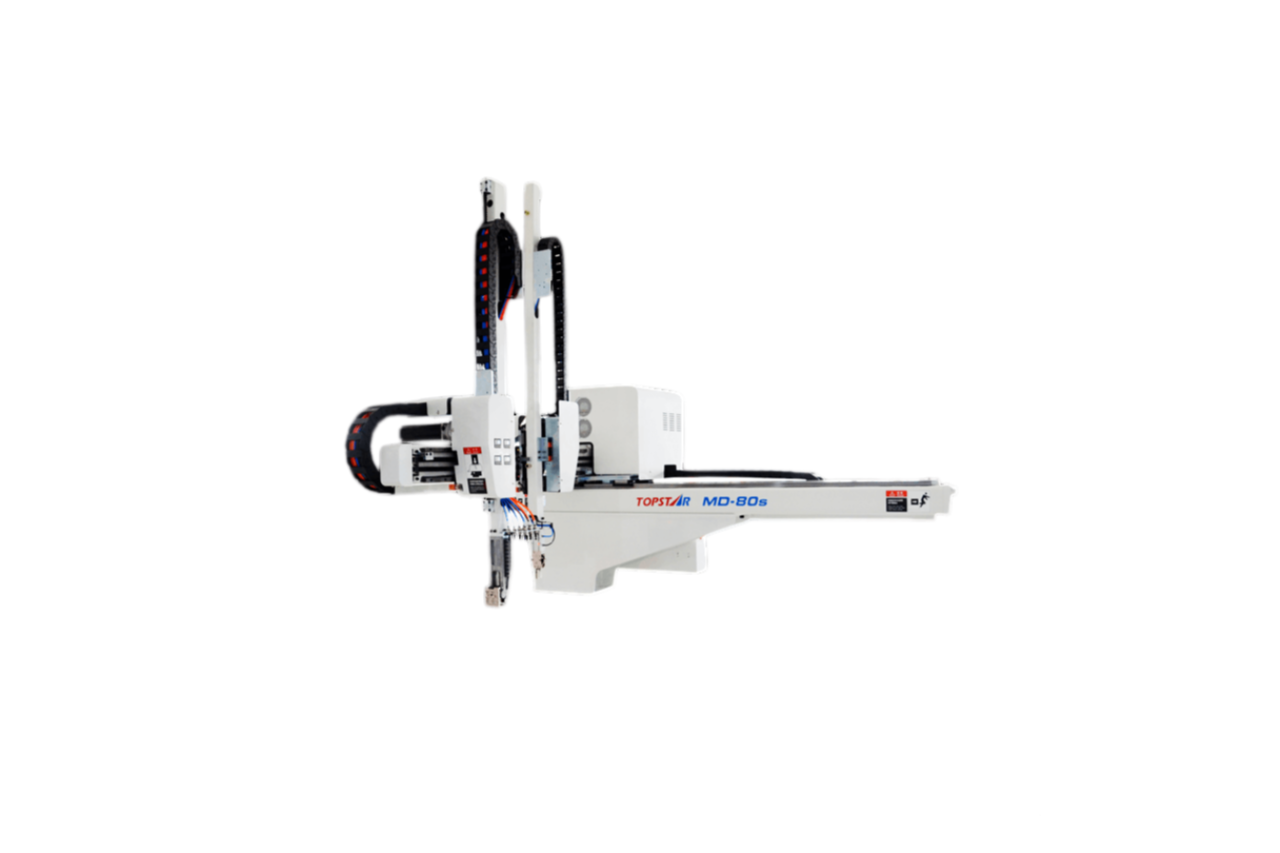
When performing non-standard insert movements, such as angular insertion, deep cavity placement, multi-step orientation, or combined handling and assembly, the mechanical structure and control system of injection molding robots require extremely high precision. In Topstar’s MDE series of robotic arms, the AC servo injection molding robot combines a servo drive platform with a main arm made of Q235 steel. This combination achieves structural stability, excellent rigidity, long-term dimensional stability, and repeatable motion. This allows injection molding robots to perform far more than simple pick-and-place operations; they can reliably execute complex non-standard insert tasks and operate continuously and stably.
Q235 Steel: The High-Rigidity Structural Foundation of Injection Molding Robots
When performing non-standard insert movements, the robotic arm of injection molding robots must withstand repeated acceleration, deceleration, torsional forces, and insertion impacts without accumulating micro-deformations that affect positioning accuracy. Q235 structural steel exhibits excellent properties, including yield strength, ductility, weldability, and fatigue resistance.
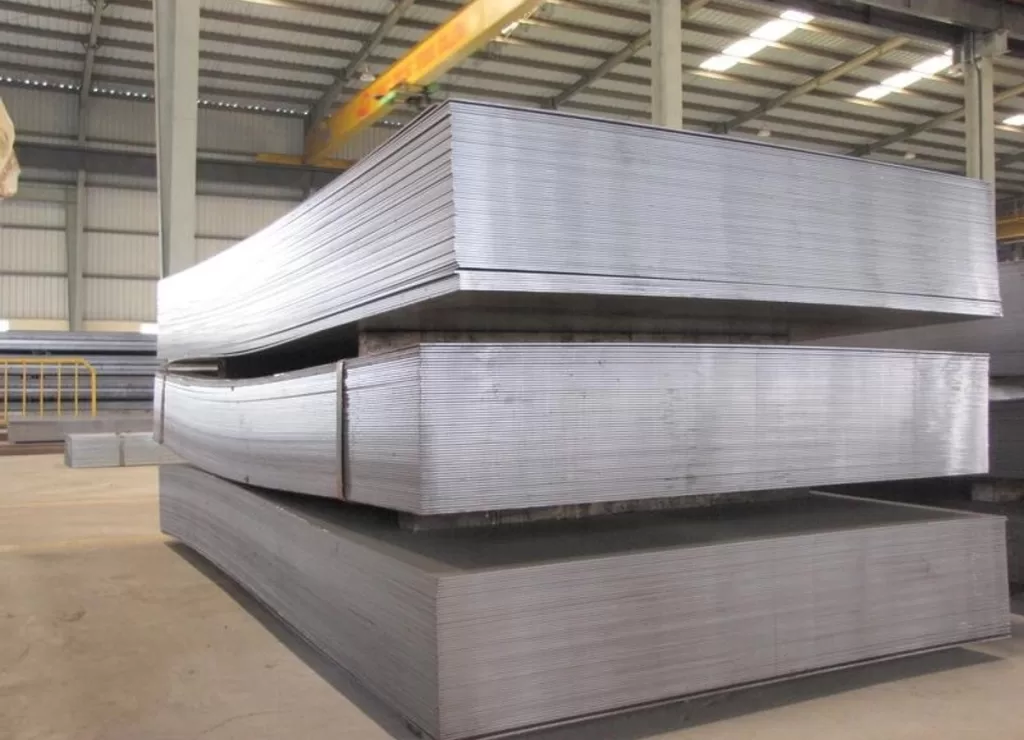
Compared to lightweight alloys, Q235 steel has higher structural rigidity per unit design cross-section. This allows injection molding robots to optimize geometry to improve torsional and bending stiffness while maintaining structural stability under load. In insert applications, especially under lateral insertion forces, even slight deformation of the robotic arm base can amplify tool-tip positioning errors. Q235 steel effectively reduces this mechanical amplification effect. Furthermore, Q235’s predictable weldability and machinability enable seamless integration of reinforcing ribs, precision-machined mounting surfaces, and cable-routing channels into the structure. These design features further enhance overall stability.
Rigidity and Repeatability of the MDE Series AC Servo Injection Molding Robots
In the MDE series of AC servo injection robots, the Q235 steel main arm serves as the system’s rigid mechanical skeleton. High rigidity directly reduces elastic deformation, especially at the precision-critical end effector (EOAT).
The repeatability of an injection molding robot depends not only on servo resolution but also on structural flexibility. If the robotic arm bends during insertion, the servo controller must compensate, increasing control force and introducing micro-oscillations. Rigid Q235 robotic arms significantly reduce this compensation requirement, resulting in smoother closed-loop motion and higher endpoint consistency.
This advantage makes them ideal for various non-standard insert movements, such as multi-angle insert placement, sequential multi-piece insertion, and deep-cavity or narrow-gate insert feeding. In these applications, structural stiffness ensures that insertion angles and depths remain within tight tolerances. Furthermore, lower deflection improves process repeatability across shifts and production batches. This achieves high dynamic response while maintaining positional stability.
Structural Durability and Long-Term Stability
Injection molding robots operate continuously under high-cycle conditions, typically exceeding 100,000 cycles per month. Under repetitive loads, material fatigue and microdeformation gradually degrade performance. Q235 steel exhibits reliable fatigue characteristics when stress levels remain within design limits. Topstar engineers optimized the robotic arm geometry through structural simulation and finite element analysis (FEA) to achieve uniform stress distribution and eliminate localized stress concentrations. This reduces the risk of long-term deformation and extends service life.
Furthermore, Q235 steel supports robust bearing mounting and stable joint alignment, both of which are crucial for maintaining kinematic repeatability. In practical applications, durability directly translates into economic value. Reduced maintenance frequency, minimized recalibration, and consistent repeatability ensure long-term stable operation.
Performance Advantages of Injection Molding Robots in Non-Standard Insert Applications
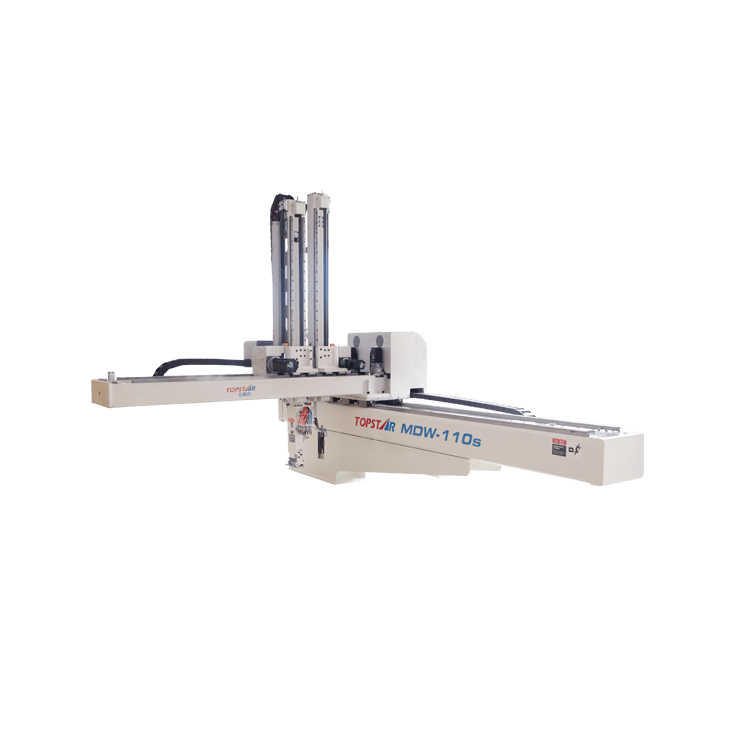
The performance of injection molding robots depends on the integration of structural engineering and motion-control algorithms. In the MDE series of AC servo injection molding robots, the rigid Q235 robotic arm provides a stable mechanical platform for high-resolution servo motors to operate efficiently.
When performing complex insert movements, the servo motors generate dynamic torque to maintain trajectory accuracy. If the robotic arm’s structure bends, the feedback loop must correct for deviations, which reduces control efficiency. However, the high stiffness of Q235 minimizes structural flexibility, allowing servo commands to be directly translated into precise mechanical motion. This synergy enables smoother trajectory transitions, faster settling times, and less oscillation. In high-precision insert molding applications, this combination of structural rigidity and servo intelligence provides measurable performance advantages, improving repeatability and enhancing process capabilities.
Capable of Multiple Non-Standard Insertion Motions
Non-standard insert molding applications often require customized motion sequences, going beyond traditional vertical extraction. Examples include angular insertion combined with rotation, offset lateral feeding, and multi-axis collaborative press-fit operations. These tasks can lead to uneven stress distribution on the robotic arm.
The Q235 steel structure provides the necessary rigidity to withstand the torsional and bending stresses generated during such operations. Alignment accuracy remains stable even under peak transient loads due to minimized deformation. Furthermore, the high structural strength of Q235 enables it to support heavier end-effector systems, such as dual-gripper assemblies or integrated sensor modules, without compromising positioning accuracy. This expands its capabilities and supports more complex automated layouts.
In modern injection molding applications, performance is no longer solely dependent on cycle time and servo speed; it also depends on structural reliability, repeatability, and the execution of complex motion paths. The Q235 steel main arm of the Topstar MDE series AC servo injection molding robot embodies a well-thought-out engineering decision—prioritizing rigidity, dimensional stability, and predictable long-term performance under harsh production conditions.
Stable Structure and High Repeatability
By combining a high-rigidity Q235 structure with an AC servo control system, this injection molding robot achieves consistent trajectory accuracy, reduces elastic deformation, and maintains stable insert performance even during non-standard insert movements. This ensures rigidity, long-term stability, and high repeatability during deep-cavity inserts, angled placement, press-fit operations, and multi-stage assembly processes.
TRENDING POSTS
- TOPSTAR Global Open Day 2025: Humanoid Robot Debuts, Pioneering a New Decade of Intelligent Manufacturing 2026/03/04
- Topstar Showcases TE II Electric Injection Molding Machines at InterPlas Thailand 2025 2026/03/04
- Topstar Expands Its Ecosystem Partnerships to Drive Smart Manufacturing Innovation 2026/03/04
- What factors can cause delays in the injection molding process of plastic molding machine? 2026/03/04
HOT TOPIC
- .ervo motor-driven linear robots
- •
- 1.0 guangdong topstar technology co. ltd
- 1.0 topstar china
- 1.0 topstar robot
- 11
- 160℃ mold temperature controller
- 170 ton injection molding machine
- 2
- 21
- 220-ton injection molding machine
- 23
- 260 ton injection molding machine
- 3 axis robot
- 3 axis robots
- 3 in 1 Compact Dehumidifying Dryer
- 3-axis robot
- 3-axis robots
- 39
- 41
- 460T injection molding machine
- 5-axis CNC machine
- 62
- 90 ton injection molding machine
- accuracy
- Air Chillers
- all electric injection molding machine
- all electric injection molding machines
- all-electric injection molding machine
- All-electric injection molding machines
- and overall production quality. Therefore
- AP-RubberPlas
- auto loader
- automated injection molding machine
- Automation changed engineering
- automation of injection molding robots
- automotive parts injection molding
- Auxiliary Equipment
- auxiliary machine
- Bench Injection Molding Machine
- cabinet dryer
- Cabinet dryer manufacturers
- Cabinet dryers
- chiller
- CNC Drilling Machine
- CNC Drilling Machines
- cnc engraving machine manufacturer
- cnc laser cutting machine manufacturer
- CNC machine
- CNC Machine Center
- CNC Machine for Sale
- CNC Machine Manufacturing
- CNC Machine Tool
- CNC machine tool product
- CNC Machining Center
- CNC wood carving machine
- Cooling system
- Cross-Walking Single Axis Servo Cylinder Robot
- Cross-Walking Single-Axis Servo Cylinder Robot
- Cross-Walking Three-Axis/Five-Axis Servo Driven Robot
- cross-walking three-axis/five-axis servo-driven robot
- Dehumidifier Dryer
- Dehumidifying Dryer
- delta parallel robot
- Desktop Injection Molding Machine
- Desktop injection molding machines
- Desktop Molding Machine
- desktop plastic injection machine
- Desktop Plastic Injection Molding Machine
- Digital Transformation
- direct clamp injection molding machine
- Direct clamp injection molding machines
- Dosing & mixing system
- Drilling Centers
- Drying and dehumidification system
- drying and dehumidifying equipment
- Drying and Dehumidifying System
- drying system
- effective and efficient. Cabinet dryers are also used in other industries where large quantities of material need to be dried
- efficient injection molding machine
- elbow hydraulic injection molding machines
- electric injection molding machine
- electric injection molding machines
- energy-efficient injection molding robot
- energy-efficient water chiller
- energy-efficient water chillers
- energy-saving injection molding machine
- etc. Among injection molding robots
- exhibition
- features of CNC machine
- Feeding And Conveying System
- Five Axis Machine Center
- Flexible Production Line
- Fully automatic injection molding machine
- Gathering Topstar
- giant injection molding machine
- GMU-600 5-Axis Machining Center
- Granulating & Recycling System
- granulator machine
- gravimetric blender
- Heavy duty injection molding machine
- High-precision electric molding machines
- high-precision plastic molding machines
- high-speed all electric injection molding machine
- high-speed electric injection molding machine
- High-Speed Packaging Injection Molding
- Honeycomb rotor dehumidifier
- Hopper Dryers
- horizontal injection molding machine
- Horizontal Injection Molding Machines
- Horizontal Injection Moulding Machine
- Horizontal Mixer manufacturer
- How The CNC Machine Works
- hybrid injection molding machine
- hydraulic injection molding machine
- Hydraulic Injection Molding Machines
- in this article
- Industrial AI
- Industrial Automation
- Industrial robot
- Industrial Robot Chinese brand
- industrial robot parts
- industrial robot supplier
- Industrial robots
- Industry Chain
- Injection Manipulator
- injection manipulator robot
- injection mold machines
- Injection molding
- Injection molding automation
- Injection Molding Automation Solution
- injection molding dryer
- Injection molding equipment
- injection molding hopper dryer
- Injection molding machine
- injection molding machine brand
- Injection Molding Machine Factory
- Injection Molding Machine Manufacture
- Injection molding machine manufacturer
- injection molding machine manufacturers
- Injection molding machine procurement
- injection molding machine robotic arm
- injection molding machine with a robot
- Injection molding machines
- injection molding material dehumidifying
- injection molding plant
- injection molding process
- Injection Molding Robot
- injection molding robot arm
- Injection molding robot automation
- Injection molding robotic arm
- injection molding robots
- injection moulding dryer
- Injection moulding machine
- injection moulding machines
- Injection Moulding Robots
- Injection Robot
- Injection robot arm
- Injection robot manufacturer
- Injection robot wholesale
- injection robots
- Intelligent Factory
- intelligent injection molding machines
- Intelligent Manufacturing
- intelligent mold temperature
- intelligent mold temperature controller
- Intelligent mould temperature controller
- InterPlas Thailand 2025
- Introducing Injection Robot
- It is the best choice for drying large quantities of material at once. Cabinetmakers use these machines because they are fast
- Large flow water type mold temperature controller
- large injection molding machine
- large injection molding machines
- Learn what industrial automation and robotics is
- linear robot
- linear robots
- low speed sound-proof granulator
- machine plastic molding
- make sure to add some! Improvements (2) Keyphrase in introduction: Your keyphrase or its synonyms appear in the first paragraph of the copy
- manipulator machine
- manufacturing
- Manufacturing Innovation
- medical grade injection molding machines
- Medical Injection Molding
- medical injection molding machine
- medical injection molding machines
- micro injection molding machine
- middle speed granulator
- Mini CNC machine manufacturers.
- mobile cover making machine
- Mold Temperature Control System
- mold temperature controller
- mold temperature controllers
- molding machine
- molding material Dehumidifying System
- mould temperature control system
- mould temperature controller
- mould temperature controllers
- New electric injection molding machine
- nitrogen dryer manufacturer
- nitrogen dryer system manufacturer
- Oil type mold temperature controller
- Oil type mold temperature controllers
- open day
- optical component injection molding
- Outbound links: No outbound links appear in this page. Add some! Images: No images appear on this page. Add some! Internal links: No internal links appear in this page
- packaging injection molding
- Packaging Solutions
- PET Preform injection molding
- phone case maker machine
- phone case making machine
- phone cover making machine
- PID Control Mold Temperature Controller
- plastic auto loader
- plastic bottle making machine
- plastic bottle manufacturing
- plastic bucket making machine
- plastic bucket manufacturing
- Plastic chair making machine
- plastic dryer for injection molding
- plastic forming equipment
- Plastic Granulators
- plastic hopper dryer
- plastic injection machine
- plastic injection machines
- plastic injection molding
- Plastic injection molding equipment
- Plastic injection molding machine
- Plastic Injection Molding Machines
- plastic injection moulding machine
- plastic injection moulding machines
- plastic injection robot
- plastic molding
- Plastic Molding Industry
- Plastic Molding machine
- plastic molding machine 1
- Plastic Molding Machines
- plastic molding press
- plastic moulding machine
- plastic phone case making machine
- plastic-molding machine
- powerful granulator
- Powerful Type Sound-Proof Granulator
- precision injection molding
- precision injection molding machines
- production of plastic seats
- pure water mould temperature controller
- Robot injection molding
- robot injection molding machine
- robot manufacturing companies
- Robotic arm for injection molding machine
- robotic injection molding machines
- robotics in injection molding
- SCARA robot
- SCARA robots
- Screw dosers
- Service-oriented manufacturing
- Servo Cylinder Robot
- servo driven robot
- Servo Driven Robots
- servo injection molding machine
- servo injection robots
- servo motor-driven linear robots
- servo-driven 3-axis robot
- Servo-driven injection molding machine
- Servo-Driven Robot
- Setup of injection machine
- Silicone Injection Molding Machine
- six-axis industrial robot
- Smart Manufacturing
- soundproof granulator
- Stainless Hopper Dryer
- Stainless Hopper Dryers
- star club
- swing arm robot
- take-out robot
- take-out robots
- Thailand 4.0
- the choice between servo-driven robots and hydraulic robots will have a certain impact on efficiency
- the most popular injection molding machine
- the type of injection molding robot
- TIC2000 Control System
- TMII injection molding machine
- toggle clamp injection molding machine
- Toggle Hydraulic Injection Molding Machines
- toggle injection molding machine
- Top 10 brands of injection robots
- Topstar
- Topstar Electric Injection Molding Machine InterPlas Thailand 2025 Smart Manufacturing Thailand 4.0
- Topstar Engineering
- Topstar Industrial Robots
- Topstar injection molding intelligent
- Topstar Scara Robots
- Useful Injection molding machine
- Vertical machining centers
- volumetric type blender
- water chiller
- water chillers
- water distributor
- water type mold temperature controller
- Water Type MoldTemperature Controller
- Water-Type Mould Temperature Controllers
- We often face choices when performing injection molding. We will choose the type of injection molding machine
- wholesale of injection molding machines
- x carve CNC
- 热门查询 点击次数 展示 排名 topstar