
Double hopper Design: A Dehumidifying Dryer Suitable for Drying Multiple Materials
2026/03/20 By le zhan
Frequent material changeovers, diverse product requirements, and high-volume orders all demand more flexible drying systems. Traditional single-hopper dehumidifying dryers often create bottlenecks because they can only process one type of material at a time, at a fixed temperature setting. Consequently, operators are forced to wait during cycle intervals or purchase multiple independent drying units—solutions that increase both costs and space requirements. Furthermore, these limitations negatively impact overall production efficiency, particularly in facilities operating under tight lead times. When a dehumidifying dryer fails to keep pace with the injection molding machine’s operating speed, it becomes an invisible bottleneck that drags down productivity. Over time, these inefficiencies accumulate, leading to increased labor costs and reduced equipment utilization.
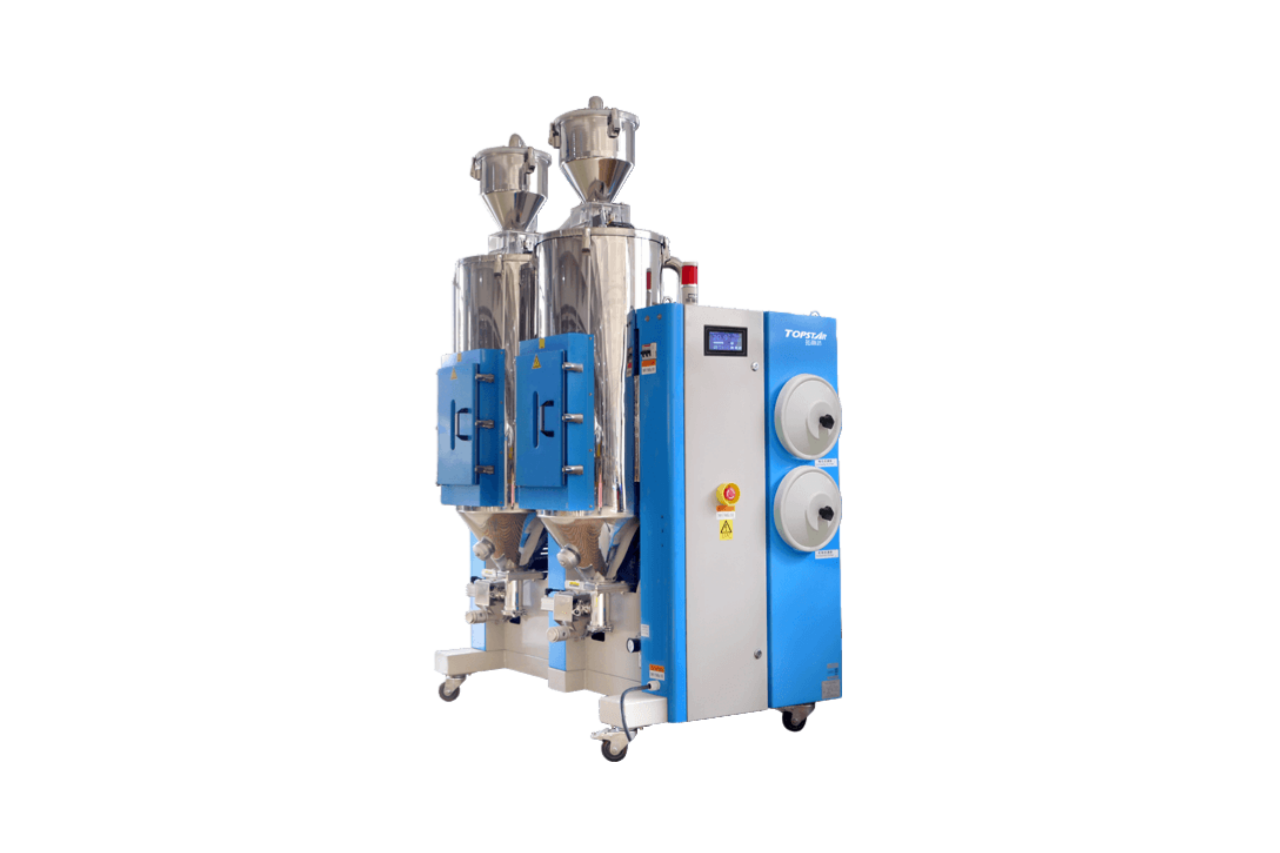
Topstar’s double hopper dehumidifying dryer offers a precise solution to this problem. Not only does it integrate dehumidifying, drying, and conveying functions into a single unit, but its dual-hopper design also enables the simultaneous drying of two different plastic materials at distinct temperatures.
Design and Advantages of the Double Hopper Dehumidifying Dryer
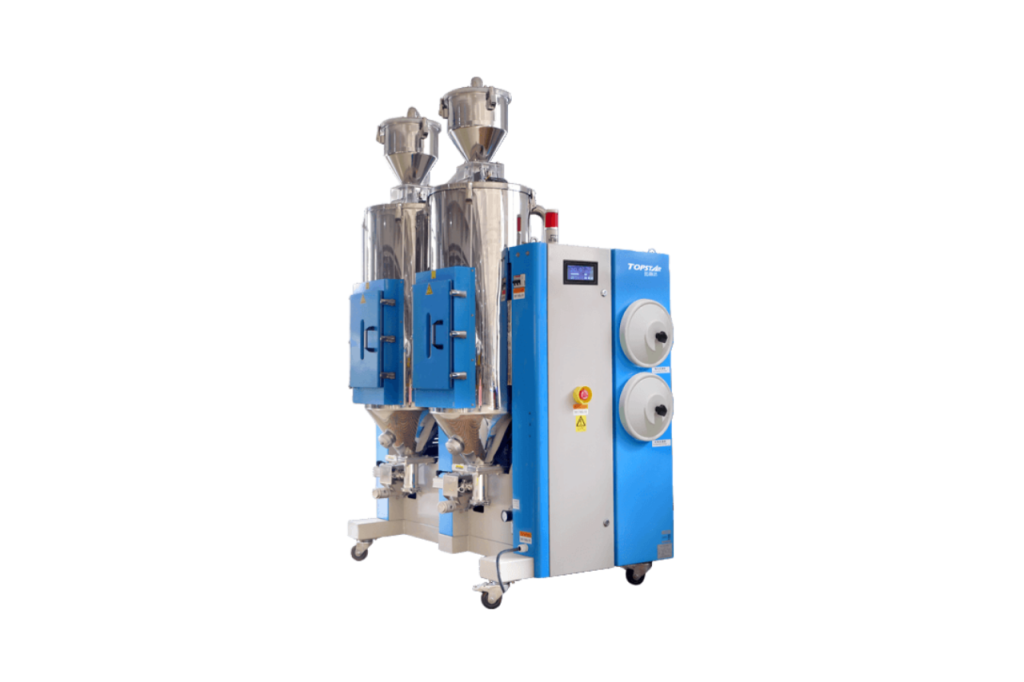
The double hopper 3 in 1 compact dehumidifying dryer integrates dehumidification, drying, and conveying functions and features two independent hoppers. Each hopper can be configured with its own temperature and drying parameters, enabling the simultaneous processing of two different plastic materials. This design not only streamlines material handling but also eliminates the need for multiple separate pieces of equipment. Moreover, the integrated structure simplifies workflows by minimizing material transfer steps and reducing the risk of contamination. Operators can manage multiple materials more efficiently without having to move between different machines or systems. This centralized control enhances operational consistency and reduces the likelihood of human error. Consequently, these dehumidifying dryers boost both production efficiency and reliability.
Independent Temperature Control for Different Plastic Materials
Different types of plastics exhibit distinct characteristics during drying. Some materials are highly hygroscopic—meaning they readily absorb moisture—and therefore require higher temperatures and longer drying times; others, however, require a gentler approach to prevent issues such as warping, yellowing, or thermal degradation. While a dehumidifying dryer equipped with a single hopper can process only one material formulation at a time, the double hopper 3 in 1 compact dehumidifying dryer offers a far more flexible solution. This is particularly crucial for facilities that process engineering plastics or manage mixed production orders. If the same production day requires two different materials, the dual-hopper system ensures that each material undergoes its own independent, stable drying process.
This independence contributes to enhanced product quality consistency. The dehumidifying dryer eliminates the need to let one material sit idle while the other completes its drying cycle; instead, operators can pre-condition both materials precisely according to their respective technical specifications. This not only ensures that the resin delivered to the injection molding machine is in a more stable and reliable state but also significantly reduces the risk of defects caused by residual moisture.
PLC-Controlled Dehumidifying Dryer with Stable Operation
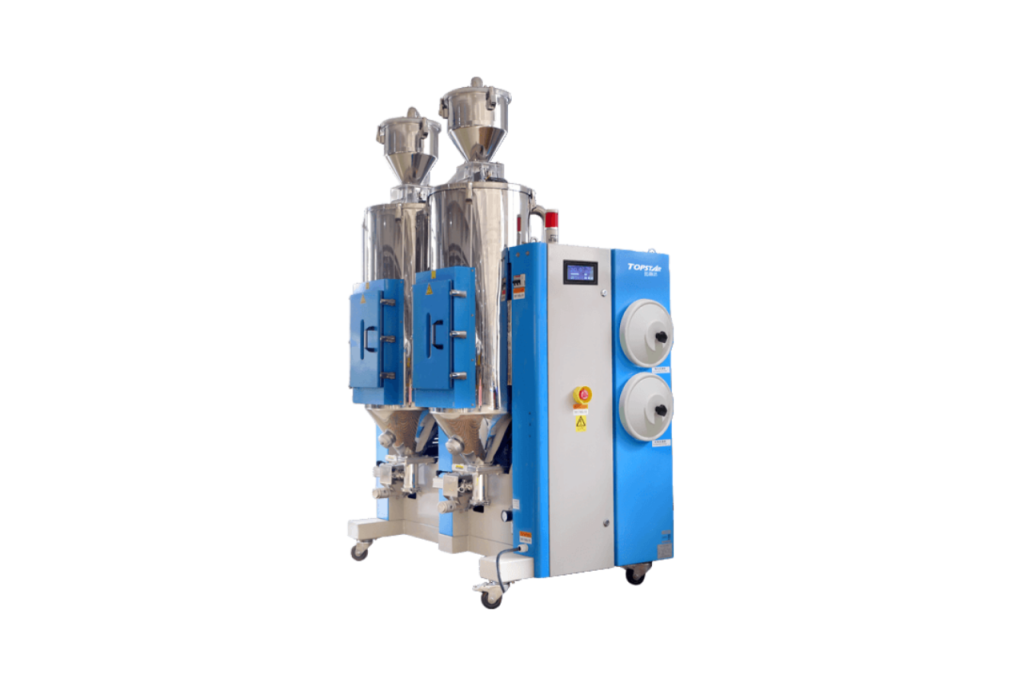
The Topstar double hopper 3 in 1 compact dehumidifying dryer utilizes PLC control, making operation simpler, more precise, and more stable. The PLC interface allows operators to set and monitor drying parameters clearly. Once the material type and target temperature are entered, the system automatically manages the entire process. This minimizes human error and helps ensure that every drying cycle is conducted under controlled conditions. In terms of performance, the PLC-controlled dehumidifying dryer responds more stably to load fluctuations and maintains more uniform operating conditions. Excessive temperature fluctuations can lead to inconsistent drying quality; conversely, when the system remains stable, the resin’s state becomes more predictable, making the moulding process easier to control. By maintaining appropriate drying conditions without incurring excessive energy consumption, the PLC control system helps balance these requirements while providing a more reliable foundation for repeatable production.
Energy Efficiency and Space Optimization
Structurally, the double hopper design features a highly compact footprint, thereby minimizing floor space requirements and maximizing energy efficiency. This eliminates the need for manufacturers to operate two separate dehumidifying dryers, allowing a single unit to handle the workload. The PLC control system further enhances efficiency by optimizing energy use in response to real-time demand. In the long run, this reduction in energy consumption translates into significant cost savings. The resulting lower energy footprint not only reduces operational expenses but also contributes to achieving sustainability goals. Furthermore, the equipment’s smaller footprint facilitates better factory layout planning, thereby improving workflows and enhancing safety.
Ideal for Multi-Material Injection Molding
In many factories where production batches are small—requiring frequent color changes or the processing of orders involving multiple materials—flexibility takes precedence over sheer scale. It is precisely in these scenarios that the double hopper 3 in 1 compact dehumidifying dryer excels. Multi-material injection moulding is one of the prime applications of this technology. When different molds necessitate different resins, the dual-hopper design allows each material to be dried under its own specific, optimal conditions. This not only minimizes downtime but also boosts production efficiency.
In facilities where material changeovers occur frequently, the ability to prepare a new resin while another is still in use saves valuable time. This translates to shorter intervals between operations and higher machine utilization rates. In such contexts, a dehumidifying dryer must facilitate rapid adaptation without introducing unnecessary complexity. Topstar’s compact double hopper system does exactly that, offering manufacturers a practical balance between flexibility, efficiency, and cost control.
A Smarter Approach to Material Drying
This double hopper 3 in 1 compact dehumidifying dryer ingeniously combines the flexibility of a dual-hopper configuration with integrated dehumidification, drying, and conveying capabilities, enabling manufacturers to efficiently process multiple types of materials within a limited footprint. This design not only streamlines operational procedures but also significantly boosts overall production efficiency. By reducing system complexity and optimizing control mechanisms, the equipment allows manufacturers to focus their efforts on refining core production processes. Furthermore, featuring independent temperature control, energy-efficient operation modes, and user-friendly microcomputer management functions, the system simultaneously enhances material quality and further optimizes production workflows.
TRENDING POSTS
- New Year, New Beginnings: Topstar Robotics Delivers Heartfelt Service to Keep Customers Thriving! 2026/03/20
- TOPSTAR Global Open Day 2025: Humanoid Robot Debuts, Pioneering a New Decade of Intelligent Manufacturing 2026/03/20
- Topstar Showcases TE II Electric Injection Molding Machines at InterPlas Thailand 2025 2026/03/20
- Topstar Expands Its Ecosystem Partnerships to Drive Smart Manufacturing Innovation 2026/03/20
HOT TOPIC
- .ervo motor-driven linear robots
- •
- 1.0 guangdong topstar technology co. ltd
- 1.0 topstar china
- 1.0 topstar robot
- 11
- 160℃ mold temperature controller
- 170 ton injection molding machine
- 2
- 21
- 220-ton injection molding machine
- 23
- 260 ton injection molding machine
- 3 axis robot
- 3 axis robots
- 3 in 1 Compact Dehumidifying Dryer
- 3-axis robot
- 3-axis robots
- 39
- 41
- 460T injection molding machine
- 5-axis CNC machine
- 62
- 90 ton injection molding machine
- accuracy
- Air Chillers
- all electric injection molding machine
- all electric injection molding machines
- all-electric injection molding machine
- All-electric injection molding machines
- and overall production quality. Therefore
- AP-RubberPlas
- auto loader
- automated injection molding machine
- Automation changed engineering
- automation of injection molding robots
- automotive parts injection molding
- Auxiliary Equipment
- auxiliary machine
- Bench Injection Molding Machine
- cabinet dryer
- Cabinet dryer manufacturers
- Cabinet dryers
- chiller
- CNC Drilling Machine
- CNC Drilling Machines
- cnc engraving machine manufacturer
- cnc laser cutting machine manufacturer
- CNC machine
- CNC Machine Center
- CNC Machine for Sale
- CNC Machine Manufacturing
- CNC Machine Tool
- CNC machine tool product
- CNC Machining Center
- CNC wood carving machine
- Cooling system
- Cross-Walking Single Axis Servo Cylinder Robot
- Cross-Walking Single-Axis Servo Cylinder Robot
- Cross-Walking Three-Axis/Five-Axis Servo Driven Robot
- cross-walking three-axis/five-axis servo-driven robot
- Dehumidifier Dryer
- Dehumidifying Dryer
- delta parallel robot
- Desktop Injection Molding Machine
- Desktop injection molding machines
- Desktop Molding Machine
- desktop plastic injection machine
- Desktop Plastic Injection Molding Machine
- Digital Transformation
- direct clamp injection molding machine
- Direct clamp injection molding machines
- Dosing & mixing system
- Drilling Centers
- Drying and dehumidification system
- drying and dehumidifying equipment
- Drying and Dehumidifying System
- drying system
- effective and efficient. Cabinet dryers are also used in other industries where large quantities of material need to be dried
- efficient injection molding machine
- elbow hydraulic injection molding machines
- electric injection molding machine
- electric injection molding machines
- energy-efficient injection molding robot
- energy-efficient water chiller
- energy-efficient water chillers
- energy-saving injection molding machine
- etc. Among injection molding robots
- exhibition
- features of CNC machine
- Feeding And Conveying System
- Five Axis Machine Center
- Flexible Production Line
- Fully automatic injection molding machine
- Gathering Topstar
- giant injection molding machine
- GMU-600 5-Axis Machining Center
- Granulating & Recycling System
- granulator machine
- gravimetric blender
- Heavy duty injection molding machine
- High-precision electric molding machines
- high-precision plastic molding machines
- high-speed all electric injection molding machine
- high-speed electric injection molding machine
- High-Speed Packaging Injection Molding
- Honeycomb rotor dehumidifier
- hopper dryer
- Hopper Dryers
- horizontal injection molding machine
- Horizontal Injection Molding Machines
- Horizontal Injection Moulding Machine
- Horizontal Mixer manufacturer
- How The CNC Machine Works
- hybrid injection molding machine
- hydraulic injection molding machine
- Hydraulic Injection Molding Machines
- in this article
- Industrial AI
- Industrial Automation
- Industrial robot
- Industrial Robot Chinese brand
- industrial robot parts
- industrial robot supplier
- Industrial robots
- Industry Chain
- Injection Manipulator
- injection manipulator robot
- injection mold machines
- Injection molding
- Injection molding automation
- Injection Molding Automation Solution
- injection molding dryer
- Injection molding equipment
- injection molding hopper dryer
- Injection molding machine
- injection molding machine brand
- Injection Molding Machine Factory
- Injection Molding Machine Manufacture
- Injection molding machine manufacturer
- injection molding machine manufacturers
- Injection molding machine procurement
- injection molding machine robotic arm
- injection molding machine with a robot
- Injection molding machines
- injection molding material dehumidifying
- injection molding plant
- injection molding process
- Injection Molding Robot
- injection molding robot arm
- Injection molding robot automation
- Injection molding robotic arm
- injection molding robots
- injection moulding dryer
- Injection moulding machine
- injection moulding machines
- Injection Moulding Robots
- Injection Robot
- Injection robot arm
- Injection robot manufacturer
- Injection robot wholesale
- injection robots
- Intelligent Factory
- intelligent injection molding machines
- Intelligent Manufacturing
- intelligent mold temperature
- intelligent mold temperature controller
- Intelligent mould temperature controller
- InterPlas Thailand 2025
- Introducing Injection Robot
- It is the best choice for drying large quantities of material at once. Cabinetmakers use these machines because they are fast
- Large flow water type mold temperature controller
- large injection molding machine
- large injection molding machines
- Learn what industrial automation and robotics is
- linear robot
- linear robots
- low speed sound-proof granulator
- machine plastic molding
- make sure to add some! Improvements (2) Keyphrase in introduction: Your keyphrase or its synonyms appear in the first paragraph of the copy
- manipulator machine
- manufacturing
- Manufacturing Innovation
- medical grade injection molding machines
- Medical Injection Molding
- medical injection molding machine
- medical injection molding machines
- micro injection molding machine
- middle speed granulator
- Mini CNC machine manufacturers.
- mobile cover making machine
- Mold Temperature Control System
- mold temperature controller
- mold temperature controllers
- molding machine
- molding material Dehumidifying System
- mould temperature control system
- mould temperature controller
- mould temperature controllers
- New electric injection molding machine
- nitrogen dryer manufacturer
- nitrogen dryer system manufacturer
- Oil type mold temperature controller
- Oil type mold temperature controllers
- open day
- optical component injection molding
- Outbound links: No outbound links appear in this page. Add some! Images: No images appear on this page. Add some! Internal links: No internal links appear in this page
- packaging injection molding
- Packaging Solutions
- PET Preform injection molding
- phone case maker machine
- phone case making machine
- phone cover making machine
- PID Control Mold Temperature Controller
- plastic auto loader
- plastic bottle making machine
- plastic bottle manufacturing
- plastic bucket making machine
- plastic bucket manufacturing
- Plastic chair making machine
- plastic dryer for injection molding
- plastic forming equipment
- Plastic Granulators
- plastic hopper dryer
- plastic injection machine
- plastic injection machines
- plastic injection molding
- Plastic injection molding equipment
- Plastic injection molding machine
- Plastic Injection Molding Machines
- plastic injection moulding machine
- plastic injection moulding machines
- plastic injection robot
- plastic molding
- Plastic Molding Industry
- Plastic Molding machine
- plastic molding machine 1
- Plastic Molding Machines
- plastic molding press
- plastic moulding machine
- plastic phone case making machine
- plastic-molding machine
- powerful granulator
- Powerful Type Sound-Proof Granulator
- precision injection molding
- precision injection molding machines
- production of plastic seats
- pure water mould temperature controller
- Robot injection molding
- robot injection molding machine
- robot manufacturing companies
- Robotic arm for injection molding machine
- robotic injection molding machines
- robotics in injection molding
- SCARA robot
- SCARA robots
- Screw dosers
- Service-oriented manufacturing
- Servo Cylinder Robot
- servo driven robot
- Servo Driven Robots
- servo injection molding machine
- servo injection robots
- servo motor-driven linear robots
- servo-driven 3-axis robot
- Servo-driven injection molding machine
- Servo-Driven Robot
- Setup of injection machine
- Silicone Injection Molding Machine
- six-axis industrial robot
- Smart Manufacturing
- soundproof granulator
- Sprue Picker
- Stainless Hopper Dryer
- Stainless Hopper Dryers
- star club
- swing arm robot
- take-out robot
- take-out robots
- Thailand 4.0
- the choice between servo-driven robots and hydraulic robots will have a certain impact on efficiency
- the most popular injection molding machine
- the type of injection molding robot
- TIC2000 Control System
- TMII injection molding machine
- toggle clamp injection molding machine
- Toggle Hydraulic Injection Molding Machines
- toggle injection molding machine
- Top 10 brands of injection robots
- Topstar
- Topstar Electric Injection Molding Machine InterPlas Thailand 2025 Smart Manufacturing Thailand 4.0
- Topstar Engineering
- Topstar Industrial Robots
- Topstar injection molding intelligent
- Topstar Scara Robots
- Useful Injection molding machine
- Vertical machining centers
- volumetric type blender
- water chiller
- water chillers
- water distributor
- water type mold temperature controller
- Water Type MoldTemperature Controller
- Water-Type Mould Temperature Controllers
- We often face choices when performing injection molding. We will choose the type of injection molding machine
- wholesale of injection molding machines
- x carve CNC
- 热门查询 点击次数 展示 排名 topstar