
Topstar Swing Arm Robot: Fixing Uneven Sprue Placement with 90° Wrist Rotation
2026/03/13 By le zhan
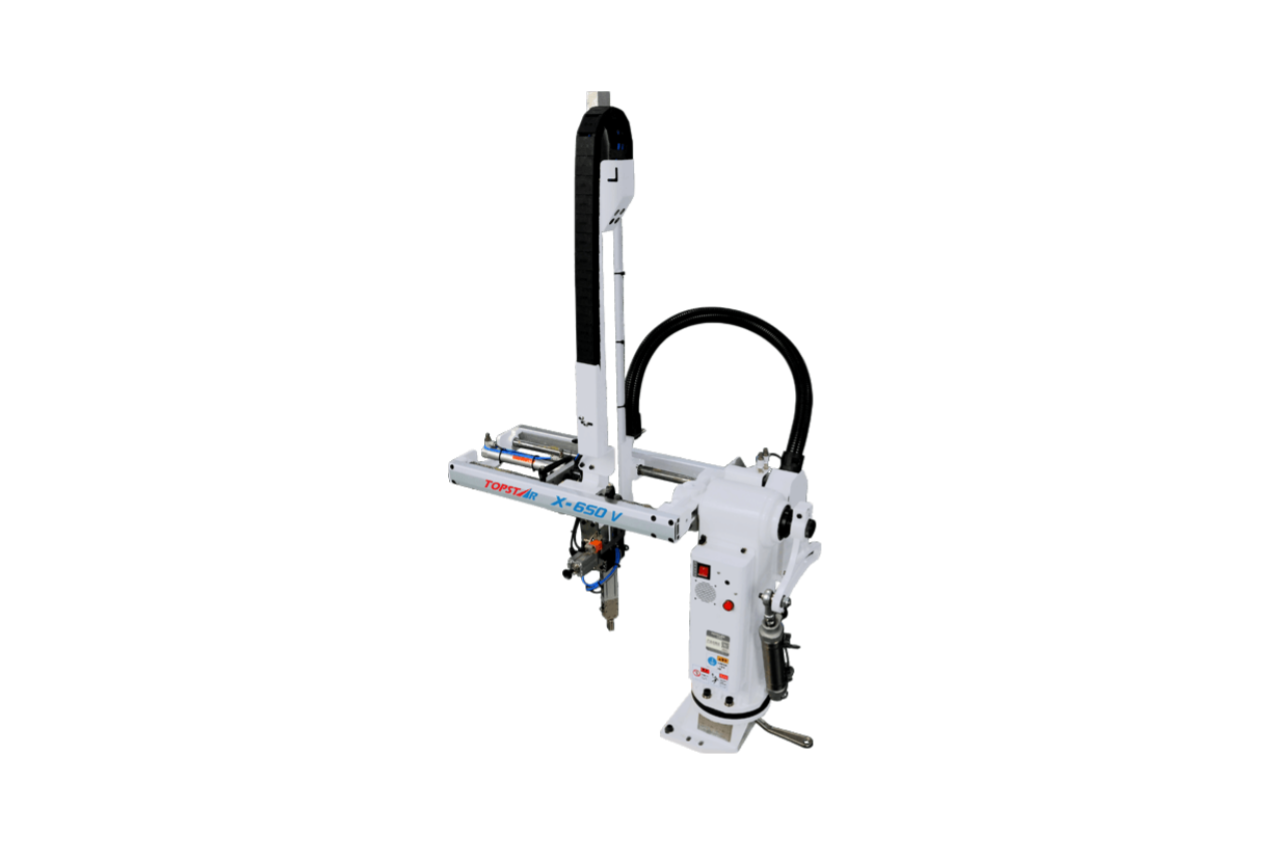
When injection-molded parts are ejected from a mold, their orientation may shift due to factors such as mold design, ejection force, cooling variations, or part geometry. Consequently, the gate—the point where the part connects to the runner system—may end up at an inconsistent angle or position, thereby complicating automated handling and assembly processes. Traditional injection molding robots often struggle to maintain consistent part orientation, particularly in high-speed molding environments. This inconsistency can lead to unstable gripping, inaccurate placement, and even product damage during handling. In contrast, Topstar’s swing arm robot—specifically engineered for high-speed part extraction—offers a powerful combination of speed, flexibility, and precision. By integrating a rotating wrist joint, these robots can automatically correct orientation deviations that occur during part ejection. As a result, the robot transforms the challenge of unpredictable gate orientations into a stable and repeatable positioning operation.
Swing Arm Robot Wrist 90° Rotation: The Core Mechanism
A standout feature of Topstar’s swing arm robots is their wrist rotation mechanism, which enables the end effector to execute a precise 90° rotation. This capability plays a pivotal role in correcting misaligned gate positions and adapting parts to meet diverse downstream processing requirements. The wrist-rotation mechanism allows the robot to rotate the product immediately after it extracts it from the mold. For instance, if the gate aligns vertically relative to the mold exit but the downstream conveyor requires horizontal alignment, the swing arm robot can swiftly execute a 90° rotation to adjust the part’s orientation seamlessly.
Unlike traditional fixed-angle pick-and-place systems, these swing-arm robots incorporate a dedicated rotational axis, thereby offering significantly greater flexibility. This rotation is precisely controlled by a servo motor and position encoder, ensuring that every movement is accurate, repeatable, and perfectly synchronized with the molding cycle. Furthermore, the 90° rotation capability enables manufacturers to standardize product placement orientation, thereby facilitating subsequent downstream processes such as trimming, inspection, packaging, or secondary assembly. In real-world production environments, this feature substantially boosts operational efficiency. It reduces the overall mechanical complexity of the entire production line.
Integration and Operational Advantages of the Swing Arm Robot
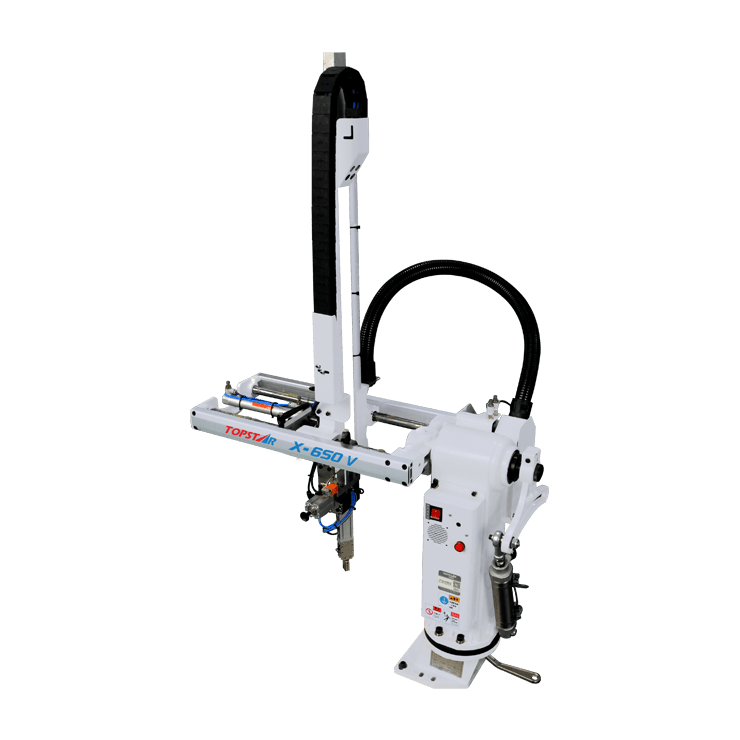
To maximize the advantages of the swing arm robot, Topstar’s swing arm robots feature precise motion coordination with the injection molding machine. Topstar equips them with a unified control system that synchronizes robot movement with mold opening, ejection time, and the part removal sequence. During operation, the robot begins movement immediately after the mold opens. The robotic arm quickly enters the mold cavity, grips the product and gate, and then smoothly withdraws. At this point, the wrist rotation mechanism performs a preset 90° rotation and ensures the part reaches the desired orientation before the robot places it on the conveyor or collection station.
Through intelligent motion planning, the rotation can be synchronized with the robot’s withdrawal movement. This coordinated movement minimizes cycle time while maintaining precise attitude control. The rotation is naturally integrated into the extraction process, without adding extra steps. Therefore, manufacturers can gain both speed and flexibility. The robot not only removes products at high speed but also ensures consistent product orientation, unaffected by changes in mold design.
End-of-Arm Tooling and Reliable Gate Gripper
Another key factor in correcting uneven gate placement is the design of the EOAT used in the swing arm robot. The gripper must firmly hold the gate or product without causing deformation or surface damage. By leveraging the robot’s wrist rotation, the EOAT design is greatly simplified. Without complex mechanical orientation devices, the gripper can focus on reliable grasping performance. At the same time, the robot adjusts its posture by rotating around its axis. Common end-effector configurations include mechanical grippers, vacuum suction cups, and hybrid gripping systems.
Each design is selected based on the part’s geometry, gate size, and material properties. For lightweight plastic parts, vacuum systems offer efficient handling. For larger or irregularly shaped parts, mechanical grippers typically provide greater stability. The advantage of combining an efficient end effector design with the EOAT robot’s rotation mechanism is that the entire part handling process is more robust and flexible. Even if the gate protrudes from the mold at a slightly different angle, the robot can still precisely rotate and position the product.
Meeting Diverse Production Needs
In injection molding production, there is a growing demand for flexible automation equipment capable of handling a variety of product types and adapting to diverse production conditions. The swing arm robot addresses this need by providing a critical 90° wrist rotation. In many injection molding lines, products must be oriented differently to meet downstream requirements. Operators must place some parts horizontally on a conveyor belt, while they must place others vertically for stacking or packaging. Without a rotational function, manufacturers would need to add additional orientation equipment.
However, Topstar swing arm robots eliminate this requirement by performing orientation adjustments directly during the handling process. Whether the production workflow calls for horizontal placement, vertical positioning, or an intermediate angle, the robot responds quickly and accurately. Furthermore, the flexibility of swing-arm robots supports mixed-product manufacturing. When switching between molds or product types, operators need to adjust the robot’s rotation parameters rather than redesign mechanical grippers. This adaptability reduces mold changeover times and boosts overall production efficiency.
Enhancing Injection Molding Precision via 90° Rotation
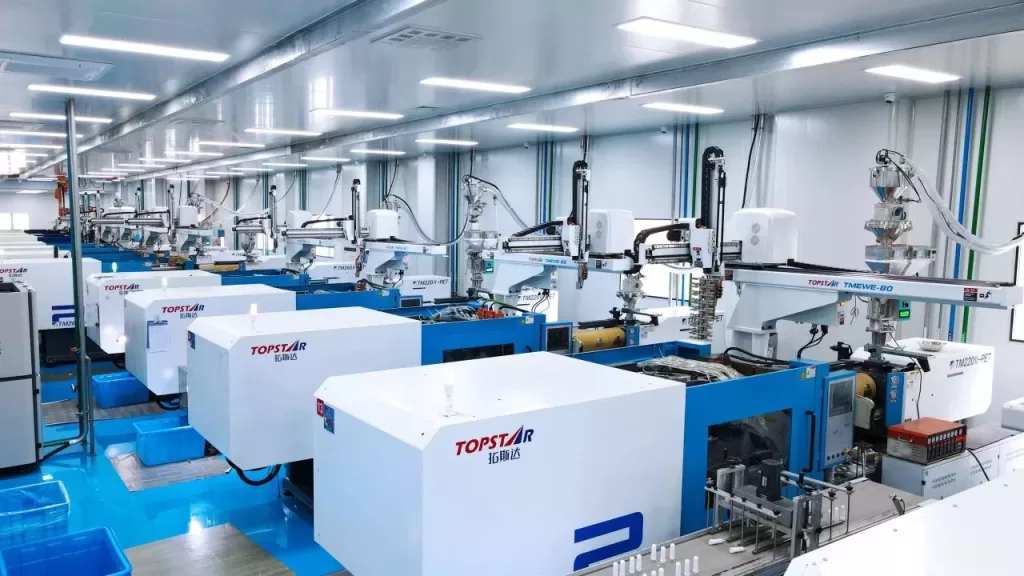
Inconsistent gate positioning can easily disrupt automated handling systems, increasing scrap rates and slowing down the overall production workflow. However, integrating swing arm robots equipped with a precise 90° wrist rotation mechanism offers a practical and efficient solution to these challenges. By enabling controlled horizontal and vertical rotation during extraction, swing-arm robots can automatically correct product orientation immediately after parts are ejected from the mold. This feature allows manufacturers to maintain the stable positioning of both parts and gates without relying on complex mechanical grippers or additional positioning devices. Concurrently, their coordinated motion control, optimized end-effectors, and flexible programming further enhance operational precision and efficiency.
TRENDING POSTS
- TOPSTAR Global Open Day 2025: Humanoid Robot Debuts, Pioneering a New Decade of Intelligent Manufacturing 2026/03/13
- Topstar Showcases TE II Electric Injection Molding Machines at InterPlas Thailand 2025 2026/03/13
- Topstar Expands Its Ecosystem Partnerships to Drive Smart Manufacturing Innovation 2026/03/13
- What factors can cause delays in the injection molding process of plastic molding machine? 2026/03/13
HOT TOPIC
- .ervo motor-driven linear robots
- •
- 1.0 guangdong topstar technology co. ltd
- 1.0 topstar china
- 1.0 topstar robot
- 11
- 160℃ mold temperature controller
- 170 ton injection molding machine
- 2
- 21
- 220-ton injection molding machine
- 23
- 260 ton injection molding machine
- 3 axis robot
- 3 axis robots
- 3 in 1 Compact Dehumidifying Dryer
- 3-axis robot
- 3-axis robots
- 39
- 41
- 460T injection molding machine
- 5-axis CNC machine
- 62
- 90 ton injection molding machine
- accuracy
- Air Chillers
- all electric injection molding machine
- all electric injection molding machines
- all-electric injection molding machine
- All-electric injection molding machines
- and overall production quality. Therefore
- AP-RubberPlas
- auto loader
- automated injection molding machine
- Automation changed engineering
- automation of injection molding robots
- automotive parts injection molding
- Auxiliary Equipment
- auxiliary machine
- Bench Injection Molding Machine
- cabinet dryer
- Cabinet dryer manufacturers
- Cabinet dryers
- chiller
- CNC Drilling Machine
- CNC Drilling Machines
- cnc engraving machine manufacturer
- cnc laser cutting machine manufacturer
- CNC machine
- CNC Machine Center
- CNC Machine for Sale
- CNC Machine Manufacturing
- CNC Machine Tool
- CNC machine tool product
- CNC Machining Center
- CNC wood carving machine
- Cooling system
- Cross-Walking Single Axis Servo Cylinder Robot
- Cross-Walking Single-Axis Servo Cylinder Robot
- Cross-Walking Three-Axis/Five-Axis Servo Driven Robot
- cross-walking three-axis/five-axis servo-driven robot
- Dehumidifier Dryer
- Dehumidifying Dryer
- delta parallel robot
- Desktop Injection Molding Machine
- Desktop injection molding machines
- Desktop Molding Machine
- desktop plastic injection machine
- Desktop Plastic Injection Molding Machine
- Digital Transformation
- direct clamp injection molding machine
- Direct clamp injection molding machines
- Dosing & mixing system
- Drilling Centers
- Drying and dehumidification system
- drying and dehumidifying equipment
- Drying and Dehumidifying System
- drying system
- effective and efficient. Cabinet dryers are also used in other industries where large quantities of material need to be dried
- efficient injection molding machine
- elbow hydraulic injection molding machines
- electric injection molding machine
- electric injection molding machines
- energy-efficient injection molding robot
- energy-efficient water chiller
- energy-efficient water chillers
- energy-saving injection molding machine
- etc. Among injection molding robots
- exhibition
- features of CNC machine
- Feeding And Conveying System
- Five Axis Machine Center
- Flexible Production Line
- Fully automatic injection molding machine
- Gathering Topstar
- giant injection molding machine
- GMU-600 5-Axis Machining Center
- Granulating & Recycling System
- granulator machine
- gravimetric blender
- Heavy duty injection molding machine
- High-precision electric molding machines
- high-precision plastic molding machines
- high-speed all electric injection molding machine
- high-speed electric injection molding machine
- High-Speed Packaging Injection Molding
- Honeycomb rotor dehumidifier
- Hopper Dryers
- horizontal injection molding machine
- Horizontal Injection Molding Machines
- Horizontal Injection Moulding Machine
- Horizontal Mixer manufacturer
- How The CNC Machine Works
- hybrid injection molding machine
- hydraulic injection molding machine
- Hydraulic Injection Molding Machines
- in this article
- Industrial AI
- Industrial Automation
- Industrial robot
- Industrial Robot Chinese brand
- industrial robot parts
- industrial robot supplier
- Industrial robots
- Industry Chain
- Injection Manipulator
- injection manipulator robot
- injection mold machines
- Injection molding
- Injection molding automation
- Injection Molding Automation Solution
- injection molding dryer
- Injection molding equipment
- injection molding hopper dryer
- Injection molding machine
- injection molding machine brand
- Injection Molding Machine Factory
- Injection Molding Machine Manufacture
- Injection molding machine manufacturer
- injection molding machine manufacturers
- Injection molding machine procurement
- injection molding machine robotic arm
- injection molding machine with a robot
- Injection molding machines
- injection molding material dehumidifying
- injection molding plant
- injection molding process
- Injection Molding Robot
- injection molding robot arm
- Injection molding robot automation
- Injection molding robotic arm
- injection molding robots
- injection moulding dryer
- Injection moulding machine
- injection moulding machines
- Injection Moulding Robots
- Injection Robot
- Injection robot arm
- Injection robot manufacturer
- Injection robot wholesale
- injection robots
- Intelligent Factory
- intelligent injection molding machines
- Intelligent Manufacturing
- intelligent mold temperature
- intelligent mold temperature controller
- Intelligent mould temperature controller
- InterPlas Thailand 2025
- Introducing Injection Robot
- It is the best choice for drying large quantities of material at once. Cabinetmakers use these machines because they are fast
- Large flow water type mold temperature controller
- large injection molding machine
- large injection molding machines
- Learn what industrial automation and robotics is
- linear robot
- linear robots
- low speed sound-proof granulator
- machine plastic molding
- make sure to add some! Improvements (2) Keyphrase in introduction: Your keyphrase or its synonyms appear in the first paragraph of the copy
- manipulator machine
- manufacturing
- Manufacturing Innovation
- medical grade injection molding machines
- Medical Injection Molding
- medical injection molding machine
- medical injection molding machines
- micro injection molding machine
- middle speed granulator
- Mini CNC machine manufacturers.
- mobile cover making machine
- Mold Temperature Control System
- mold temperature controller
- mold temperature controllers
- molding machine
- molding material Dehumidifying System
- mould temperature control system
- mould temperature controller
- mould temperature controllers
- New electric injection molding machine
- nitrogen dryer manufacturer
- nitrogen dryer system manufacturer
- Oil type mold temperature controller
- Oil type mold temperature controllers
- open day
- optical component injection molding
- Outbound links: No outbound links appear in this page. Add some! Images: No images appear on this page. Add some! Internal links: No internal links appear in this page
- packaging injection molding
- Packaging Solutions
- PET Preform injection molding
- phone case maker machine
- phone case making machine
- phone cover making machine
- PID Control Mold Temperature Controller
- plastic auto loader
- plastic bottle making machine
- plastic bottle manufacturing
- plastic bucket making machine
- plastic bucket manufacturing
- Plastic chair making machine
- plastic dryer for injection molding
- plastic forming equipment
- Plastic Granulators
- plastic hopper dryer
- plastic injection machine
- plastic injection machines
- plastic injection molding
- Plastic injection molding equipment
- Plastic injection molding machine
- Plastic Injection Molding Machines
- plastic injection moulding machine
- plastic injection moulding machines
- plastic injection robot
- plastic molding
- Plastic Molding Industry
- Plastic Molding machine
- plastic molding machine 1
- Plastic Molding Machines
- plastic molding press
- plastic moulding machine
- plastic phone case making machine
- plastic-molding machine
- powerful granulator
- Powerful Type Sound-Proof Granulator
- precision injection molding
- precision injection molding machines
- production of plastic seats
- pure water mould temperature controller
- Robot injection molding
- robot injection molding machine
- robot manufacturing companies
- Robotic arm for injection molding machine
- robotic injection molding machines
- robotics in injection molding
- SCARA robot
- SCARA robots
- Screw dosers
- Service-oriented manufacturing
- Servo Cylinder Robot
- servo driven robot
- Servo Driven Robots
- servo injection molding machine
- servo injection robots
- servo motor-driven linear robots
- servo-driven 3-axis robot
- Servo-driven injection molding machine
- Servo-Driven Robot
- Setup of injection machine
- Silicone Injection Molding Machine
- six-axis industrial robot
- Smart Manufacturing
- soundproof granulator
- Stainless Hopper Dryer
- Stainless Hopper Dryers
- star club
- swing arm robot
- take-out robot
- take-out robots
- Thailand 4.0
- the choice between servo-driven robots and hydraulic robots will have a certain impact on efficiency
- the most popular injection molding machine
- the type of injection molding robot
- TIC2000 Control System
- TMII injection molding machine
- toggle clamp injection molding machine
- Toggle Hydraulic Injection Molding Machines
- toggle injection molding machine
- Top 10 brands of injection robots
- Topstar
- Topstar Electric Injection Molding Machine InterPlas Thailand 2025 Smart Manufacturing Thailand 4.0
- Topstar Engineering
- Topstar Industrial Robots
- Topstar injection molding intelligent
- Topstar Scara Robots
- Useful Injection molding machine
- Vertical machining centers
- volumetric type blender
- water chiller
- water chillers
- water distributor
- water type mold temperature controller
- Water Type MoldTemperature Controller
- Water-Type Mould Temperature Controllers
- We often face choices when performing injection molding. We will choose the type of injection molding machine
- wholesale of injection molding machines
- x carve CNC
- 热门查询 点击次数 展示 排名 topstar