
What does Topstar’s injection molding whole plant solution encompass?
2026/03/27 By le zhan
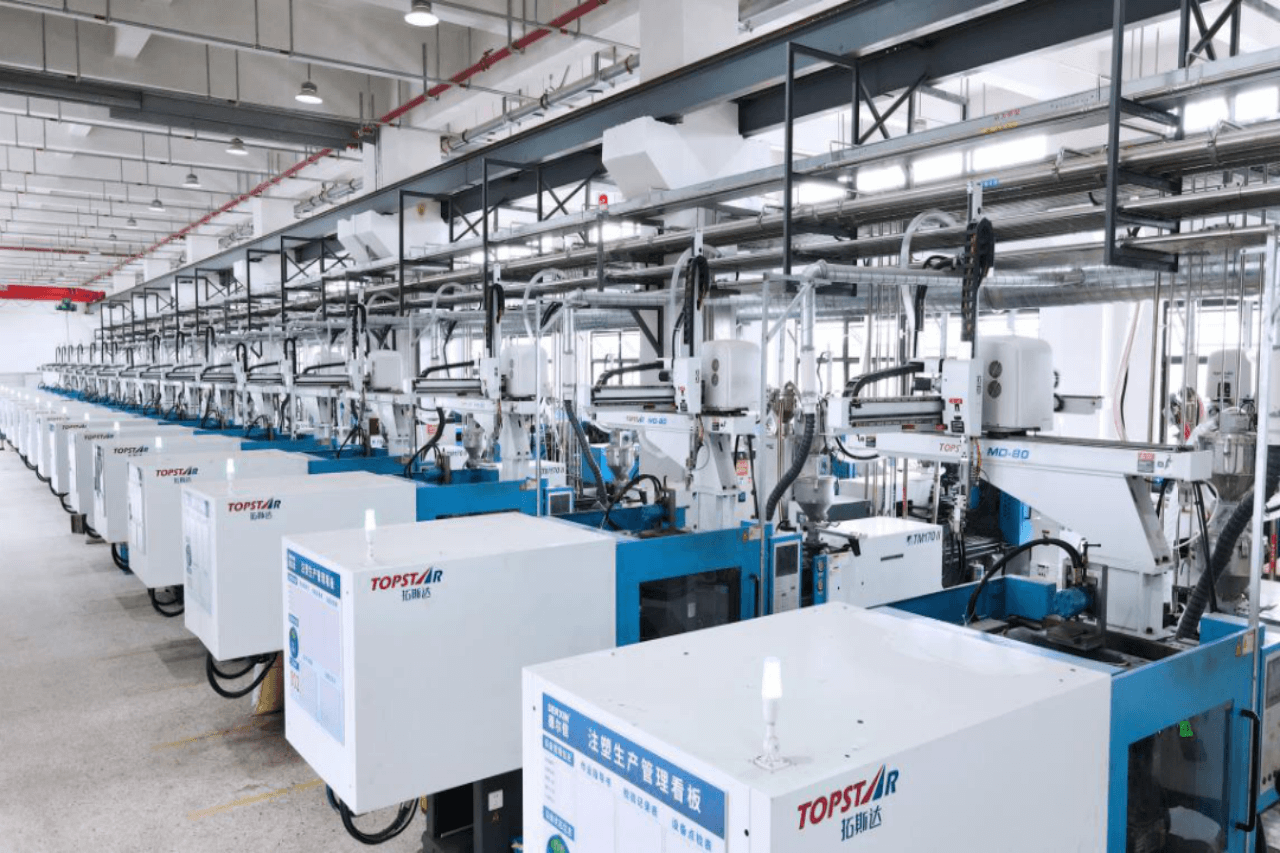
A comprehensive injection molding whole plant solution transforms the fragmented procurement of individual equipment into a unified, holistic layout strategy. It liberates manufacturers from the burden of assembling machines piecemeal, enabling them instead to implement a fully integrated system encompassing layout design, production planning, automation, and data control. Topstar’s philosophy centers on simplifying factory investment while simultaneously realizing the vision of intelligent manufacturing. By integrating machinery, auxiliary systems, and digital tools, the entire injection molding facility evolves from a mere collection of isolated assets into a cohesive, coordinated production ecosystem. A comprehensive plant solution typically incorporates injection molding machines, auxiliary equipment, central material conveying systems, robotic automation, utility infrastructure, and data management systems—often powered by a Manufacturing Execution System (MES)—thereby establishing a comprehensive service platform for intelligent manufacturing.
Modular Planning for Comprehensive Injection Molding Whole Plant Construction
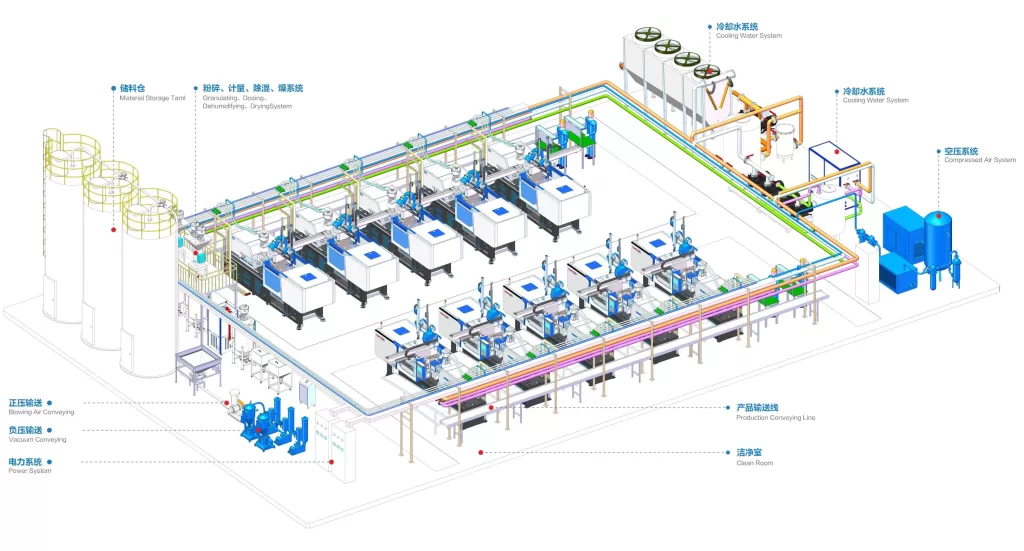
Topstar’s comprehensive injection molding whole plant solution begins with modular planning. This approach enables the factory to scale up efficiently by segmenting production into distinct functional units—such as molding zones, material handling systems, and automation cells. By adopting a modular construction methodology, we provide the flexibility necessary to accommodate future factory expansions while simultaneously mitigating the risks associated with upfront capital investment. Furthermore, this method ensures optimal material flow, operator access, and maintenance clearance, thereby enhancing overall workflow efficiency. Consequently, we empower manufacturers to achieve an injection molding whole plant layout that not only supports current production requirements but also satisfies their long-term growth objectives. A key advantage of this modular planning approach is the manufacturer’s ability to respond rapidly to shifts in production demands or product designs; specific modules can be independently upgraded or expanded without the need to redesign the entire facility.
Integration of Injection Molding Machines and Auxiliary Equipment
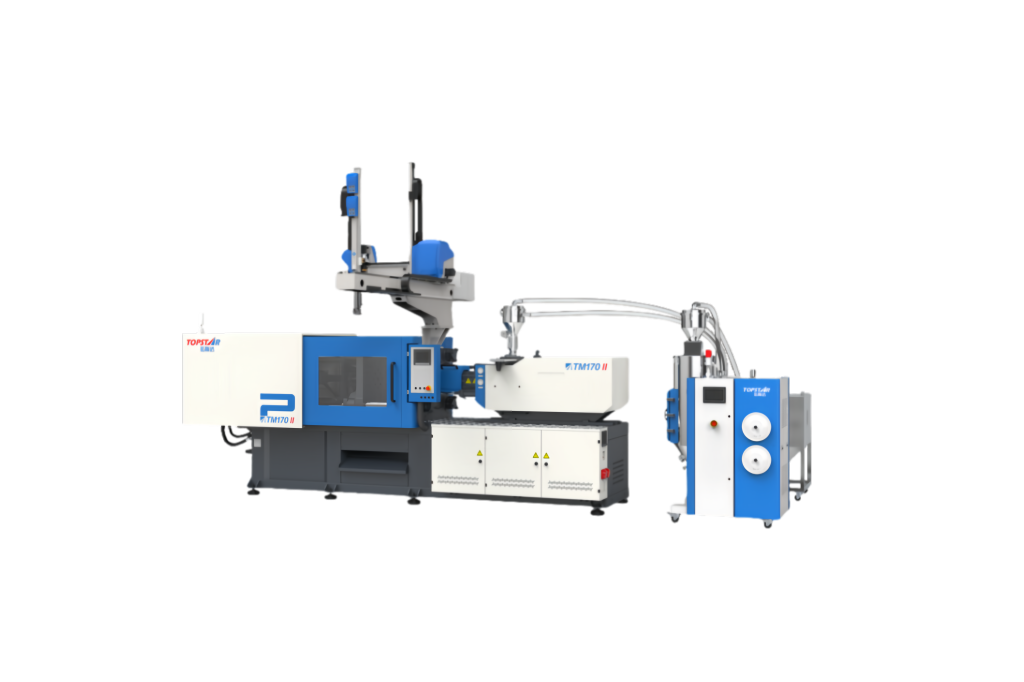
At the core of any comprehensive injection molding whole plant solution lies the injection molding machine and its associated auxiliary equipment. Devices such as mold temperature controllers and material dryers must operate in perfect harmony with the injection molding machine to ensure production stability. Through the integration of a unified control system, material preparation, temperature regulation, and cooling capabilities are precisely synchronized with the performance parameters of the molding machines. This coordinated system serves to minimize downtime, enhance product consistency, and boost overall production efficiency. Moreover, the integration of molding machines with auxiliary equipment facilitates superior synchronization of production parameters. For instance, consistent drying conditions ensure stable material properties. At the same time, precise temperature control helps maintain the dimensional accuracy of the finished products. Thus, a unified system ensures that every individual component effectively supports and complements the others. This not only optimizes operational efficiency but also leads to significant reductions in energy consumption and maintenance costs.
Front-End Material Handling in Comprehensive Injection Molding Whole Plant Planning
Material handling constitutes the front-end of the injection molding production line. A comprehensive injection molding plant solution incorporates a centralized feeding system, which automatically conveys raw materials from the warehouse to the machines. This ensures a stable supply of materials while minimizing manual labor. Furthermore, these systems enhance material traceability and prevent contamination; by maintaining consistent feeding conditions, they help guarantee product quality consistency and streamline factory operations.
Within this solution, automated material handling systems provide real-time visibility into material consumption and inventory levels, thereby optimizing stock management. This not only reduces waste but also ensures that the appropriate materials are always available precisely when needed. In multi-material production environments, a centralized system simplifies material changeovers and mitigates the risk of cross-contamination. Moreover, automated feeding methods reduce the need for manual handling, significantly enhancing workplace safety.
Automation, Utilities, and Smart Manufacturing for the Complete Injection Molding Whole Plant
Robotic automation and intelligent technologies can significantly enhance the overall operations of an injection molding facility. Injection molding robots are capable of executing tasks—such as part extraction, sorting, and stacking—with high precision and consistency. By operating in synchronization with the injection molding machines, these robots help shorten production cycles and improve production stability. Additionally, they minimize direct human contact with molds and high-temperature components, thereby elevating workplace safety standards.
Unlike manual operations, robots execute tasks with precise timing and high repeatability, thereby reducing the risk of defects caused by operational inconsistencies. Automation also facilitates higher production speeds, enabling manufacturers to meet growing market demand without compromising product quality. By integrating robotic systems throughout the entire facility, manufacturers can achieve production processes that are more efficient, reliable, and scalable.
Utility Infrastructure in Comprehensive Injection Molding Whole Plant Operations
A reliable, comprehensive injection molding whole plant solution must incorporate a well-designed utility system. Water, electricity, and compressed air serve as the fundamental pillars for maintaining stable production. In the infrastructure planning phase, Topstar ensures continuous cooling, a stable power supply, and efficient equipment operation. This approach supports future facility expansion and mitigates the risk of production disruptions caused by utility instabilities.
Within a comprehensive injection molding whole plant solution, strategic utility planning plays a pivotal role in enhancing energy efficiency and reducing operational costs. For instance, a cooling system can minimize energy consumption while maintaining effective heat transfer. Similarly, stable power distribution prevents equipment damage and ensures consistent machine performance. By designing utility systems as an integral part of a comprehensive factory solution, common issues such as insufficient capacity or uneven distribution are effectively avoided. This fosters a more stable and efficient production environment, thereby enhancing the overall reliability of the injection molding facility.
MES Data Management
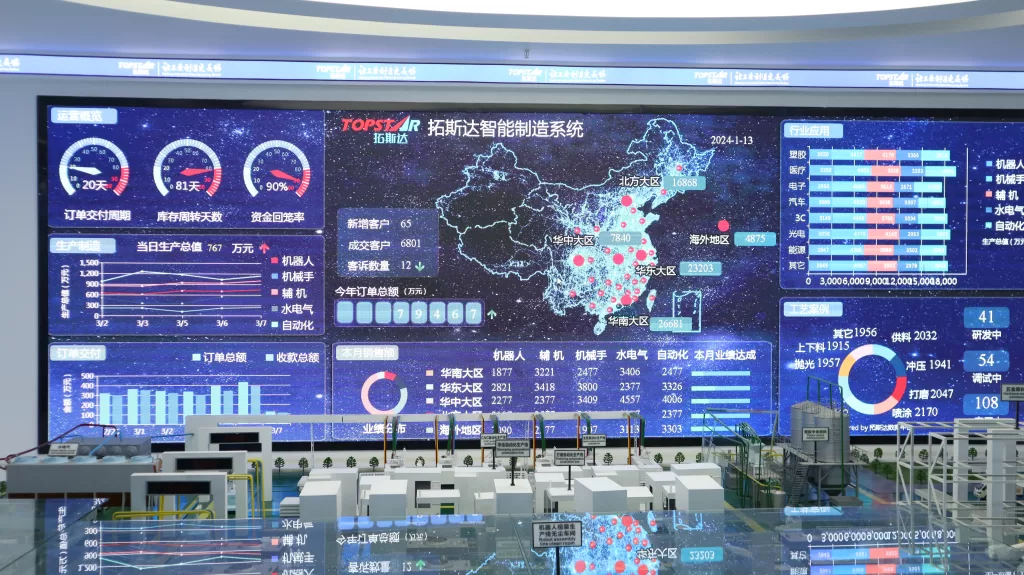
Data management can transform a traditional facility into a smart injection molding factory. A Manufacturing Execution System (MES) collects real-time production data, including machine status, output volume, and process parameters. This data enhances transparency, supports quality control, and facilitates more informed decision-making. Ultimately, it empowers manufacturers to optimize their operations and drive continuous efficiency improvements.
MES systems provide insights into production trends, helping managers identify inefficiencies and implement targeted improvements. By analyzing historical data, enterprises can anticipate maintenance requirements, optimize production schedules, and minimize downtime. Furthermore, such data-driven decision-making enables the early detection of deviations within the production process, thereby elevating quality control standards and allowing manufacturers to achieve highly efficient product manufacturing.
Building a Smarter Injection Molding Factory
Topstar’s comprehensive injection molding whole plant solution integrates design, production, implementation, and maintenance into a single, unified platform. This approach streamlines project execution and ensures that all systems operate in seamless harmony. Through a one-stop approach to modular planning and construction encompassing injection molding machines and auxiliary equipment, front-end automated central feeding systems, back-end robotic automation modules, utility infrastructure (water, electricity, and gas), and MES data management modules, we enable the modular planning of an entire smart injection molding facility. Ultimately, the factory evolves into a fully intelligent and sustainable production system.
TRENDING POSTS
- New Year, New Beginnings: Topstar Robotics Delivers Heartfelt Service to Keep Customers Thriving! 2026/03/27
- TOPSTAR Global Open Day 2025: Humanoid Robot Debuts, Pioneering a New Decade of Intelligent Manufacturing 2026/03/27
- Topstar Showcases TE II Electric Injection Molding Machines at InterPlas Thailand 2025 2026/03/27
- Topstar Expands Its Ecosystem Partnerships to Drive Smart Manufacturing Innovation 2026/03/27
HOT TOPIC
- .ervo motor-driven linear robots
- •
- 1.0 guangdong topstar technology co. ltd
- 1.0 topstar china
- 1.0 topstar robot
- 11
- 160℃ mold temperature controller
- 170 ton injection molding machine
- 2
- 21
- 220-ton injection molding machine
- 23
- 260 ton injection molding machine
- 3 axis robot
- 3 axis robots
- 3 in 1 Compact Dehumidifying Dryer
- 3-axis robot
- 3-axis robots
- 39
- 41
- 460T injection molding machine
- 5-axis CNC machine
- 62
- 90 ton injection molding machine
- accuracy
- Air Chillers
- all electric injection molding machine
- all electric injection molding machines
- all-electric injection molding machine
- All-electric injection molding machines
- and overall production quality. Therefore
- AP-RubberPlas
- auto loader
- automated injection molding machine
- Automation changed engineering
- automation of injection molding robots
- automotive parts injection molding
- Auxiliary Equipment
- auxiliary machine
- Bench Injection Molding Machine
- cabinet dryer
- Cabinet dryer manufacturers
- Cabinet dryers
- chiller
- CNC Drilling Machine
- CNC Drilling Machines
- cnc engraving machine manufacturer
- cnc laser cutting machine manufacturer
- CNC machine
- CNC Machine Center
- CNC Machine for Sale
- CNC Machine Manufacturing
- CNC Machine Tool
- CNC machine tool product
- CNC Machining Center
- CNC wood carving machine
- Cooling system
- Cross-Walking Single Axis Servo Cylinder Robot
- Cross-Walking Single-Axis Servo Cylinder Robot
- Cross-Walking Three-Axis/Five-Axis Servo Driven Robot
- cross-walking three-axis/five-axis servo-driven robot
- Dehumidifier Dryer
- Dehumidifying Dryer
- delta parallel robot
- Desktop Injection Molding Machine
- Desktop injection molding machines
- Desktop Molding Machine
- desktop plastic injection machine
- Desktop Plastic Injection Molding Machine
- Digital Transformation
- direct clamp injection molding machine
- Direct clamp injection molding machines
- Dosing & mixing system
- Drilling Centers
- Drying and dehumidification system
- drying and dehumidifying equipment
- Drying and Dehumidifying System
- drying system
- effective and efficient. Cabinet dryers are also used in other industries where large quantities of material need to be dried
- efficient injection molding machine
- elbow hydraulic injection molding machines
- electric injection molding machine
- electric injection molding machines
- energy-efficient injection molding robot
- energy-efficient water chiller
- energy-efficient water chillers
- energy-saving injection molding machine
- etc. Among injection molding robots
- exhibition
- features of CNC machine
- Feeding And Conveying System
- Five Axis Machine Center
- Flexible Production Line
- Fully automatic injection molding machine
- Gathering Topstar
- giant injection molding machine
- GMU-600 5-Axis Machining Center
- Granulating & Recycling System
- granulator machine
- gravimetric blender
- Heavy duty injection molding machine
- High-precision electric molding machines
- high-precision plastic molding machines
- high-speed all electric injection molding machine
- high-speed electric injection molding machine
- High-Speed Packaging Injection Molding
- Honeycomb rotor dehumidifier
- hopper dryer
- Hopper Dryers
- horizontal injection molding machine
- Horizontal Injection Molding Machines
- Horizontal Injection Moulding Machine
- Horizontal Mixer manufacturer
- How The CNC Machine Works
- hybrid injection molding machine
- hydraulic injection molding machine
- Hydraulic Injection Molding Machines
- in this article
- Industrial AI
- Industrial Automation
- Industrial robot
- Industrial Robot Chinese brand
- industrial robot parts
- industrial robot supplier
- Industrial robots
- Industry Chain
- Injection Manipulator
- injection manipulator robot
- injection mold machines
- Injection molding
- Injection molding automation
- Injection Molding Automation Solution
- injection molding dryer
- Injection molding equipment
- injection molding hopper dryer
- Injection molding machine
- injection molding machine brand
- Injection Molding Machine Factory
- Injection Molding Machine Manufacture
- Injection molding machine manufacturer
- injection molding machine manufacturers
- Injection molding machine procurement
- injection molding machine robotic arm
- injection molding machine with a robot
- Injection molding machines
- injection molding material dehumidifying
- injection molding plant
- injection molding process
- Injection Molding Robot
- injection molding robot arm
- Injection molding robot automation
- Injection molding robotic arm
- injection molding robots
- injection molding whole plant
- injection moulding dryer
- Injection moulding machine
- injection moulding machines
- Injection Moulding Robots
- Injection Robot
- Injection robot arm
- Injection robot manufacturer
- Injection robot wholesale
- injection robots
- Intelligent Factory
- intelligent injection molding machines
- Intelligent Manufacturing
- intelligent mold temperature
- intelligent mold temperature controller
- Intelligent mould temperature controller
- InterPlas Thailand 2025
- Introducing Injection Robot
- It is the best choice for drying large quantities of material at once. Cabinetmakers use these machines because they are fast
- Large flow water type mold temperature controller
- large injection molding machine
- large injection molding machines
- Learn what industrial automation and robotics is
- linear robot
- linear robots
- low speed sound-proof granulator
- machine plastic molding
- make sure to add some! Improvements (2) Keyphrase in introduction: Your keyphrase or its synonyms appear in the first paragraph of the copy
- manipulator machine
- manufacturing
- Manufacturing Innovation
- medical grade injection molding machines
- Medical Injection Molding
- medical injection molding machine
- medical injection molding machines
- micro injection molding machine
- middle speed granulator
- Mini CNC machine manufacturers.
- mobile cover making machine
- Mold Temperature Control System
- mold temperature controller
- mold temperature controllers
- molding machine
- molding material Dehumidifying System
- mould temperature control system
- mould temperature controller
- mould temperature controllers
- New electric injection molding machine
- nitrogen dryer manufacturer
- nitrogen dryer system manufacturer
- Oil type mold temperature controller
- Oil type mold temperature controllers
- open day
- optical component injection molding
- Outbound links: No outbound links appear in this page. Add some! Images: No images appear on this page. Add some! Internal links: No internal links appear in this page
- packaging injection molding
- Packaging Solutions
- PET Preform injection molding
- phone case maker machine
- phone case making machine
- phone cover making machine
- PID Control Mold Temperature Controller
- plastic auto loader
- plastic bottle making machine
- plastic bottle manufacturing
- plastic bucket making machine
- plastic bucket manufacturing
- Plastic chair making machine
- plastic dryer for injection molding
- plastic forming equipment
- Plastic Granulators
- plastic hopper dryer
- plastic injection machine
- plastic injection machines
- plastic injection molding
- Plastic injection molding equipment
- Plastic injection molding machine
- Plastic Injection Molding Machines
- plastic injection moulding machine
- plastic injection moulding machines
- plastic injection robot
- plastic molding
- Plastic Molding Industry
- Plastic Molding machine
- plastic molding machine 1
- Plastic Molding Machines
- plastic molding press
- plastic moulding machine
- plastic phone case making machine
- plastic-molding machine
- powerful granulator
- Powerful Type Sound-Proof Granulator
- precision injection molding
- precision injection molding machines
- production of plastic seats
- pure water mould temperature controller
- Robot injection molding
- robot injection molding machine
- robot manufacturing companies
- Robotic arm for injection molding machine
- robotic injection molding machines
- robotics in injection molding
- SCARA robot
- SCARA robots
- Screw dosers
- Service-oriented manufacturing
- Servo Cylinder Robot
- servo driven robot
- Servo Driven Robots
- servo injection molding machine
- servo injection robots
- servo motor-driven linear robots
- servo-driven 3-axis robot
- Servo-driven injection molding machine
- Servo-Driven Robot
- Setup of injection machine
- Silicone Injection Molding Machine
- six-axis industrial robot
- Smart Manufacturing
- soundproof granulator
- Sprue Picker
- Stainless Hopper Dryer
- Stainless Hopper Dryers
- star club
- swing arm robot
- take-out robot
- take-out robots
- Thailand 4.0
- the choice between servo-driven robots and hydraulic robots will have a certain impact on efficiency
- the most popular injection molding machine
- the type of injection molding robot
- TIC2000 Control System
- TMII injection molding machine
- toggle clamp injection molding machine
- Toggle Hydraulic Injection Molding Machines
- toggle injection molding machine
- Top 10 brands of injection robots
- Topstar
- Topstar Electric Injection Molding Machine InterPlas Thailand 2025 Smart Manufacturing Thailand 4.0
- Topstar Engineering
- Topstar Industrial Robots
- Topstar injection molding intelligent
- Topstar Scara Robots
- Useful Injection molding machine
- Vertical machining centers
- volumetric type blender
- water chiller
- water chillers
- water distributor
- water type mold temperature controller
- Water Type MoldTemperature Controller
- Water-Type Mould Temperature Controllers
- We often face choices when performing injection molding. We will choose the type of injection molding machine
- wholesale of injection molding machines
- x carve CNC
- 热门查询 点击次数 展示 排名 topstar