
How to use an electric injection molding machine to solve PET preform thickness errors?
2026/01/02 By le zhan

Even minute deviations in PET preform wall thickness can lead to unstable stretch blow molding performance, weak areas in the bottle body, weight discrepancies, and high scrap rates. In high-speed production, tolerances are typically only a few millimeters, and the margin for human error is tiny. Therefore, many manufacturers are now turning to electric injection molding machine to stabilize production, reduce variability, and improve yield. Electric injection molding provides the precise motion control, rapid data sampling, and deterministic feedback loop required for PET preform forming. When combined with integrated injection molding processes, these electric injection molding machines can transform variable manual operations into a highly repeatable, stable injection molding system.
PET Preform Thickness Errors: Root Causes and Early Warning Signs
Before adjusting any injection molding machine, a reliable diagnostic should be performed. PET preform thickness errors rarely occur out of thin air; they result from the interaction of multiple factors, including materials, machines, molds, and processes. Common root causes include:
1. Unstable Melt Temperature: PET is heat-sensitive; small temperature changes can alter its viscosity and flowability. Hot and cold spots in the barrel or nozzle can cause thickness variations.
2. Inconsistent Injection Speed/Pressure: Variations in speed or changeover time can lead to uneven filling and holding pressure.
3. Incorrect Speed/Pressure Switching: Switching too early or too late can alter the final part’s quality and Shore thickness.
4. Screw or Barrel Wear: Worn screw blades reduce melt uniformity, causing pressure and injection weight drift.

Why do electric injection molding machine improve the injection stability of PET preforms?
Electric platforms offer several advantages that significantly reduce thickness deviations during PET preform molding:
High-Resolution Servo Control: Electric servo drives enable millisecond-level position and speed control. This ensures highly repeatable injection profiles—crucial for thin-walled PET preforms, as filling dynamics determine the final thickness distribution.
Fast, Deterministic Response: Compared to many hydraulic systems, electric injection molding machines can reach and stop at target speeds with significantly less deviation. This minimizes deviations in speed/pressure switching and holding pressure profiles.
Integrated Digital Control and High-Speed Data: Electric injection molding machines typically employ a high-speed bus architecture, enabling real-time coordination among injection, screw reset, barrel temperature controllers, and peripheral devices. (For example, Topstar’s electric injection molding machines achieve high-speed data transmission and collaborative control between control units. Digital control allows for precise monitoring and control of various parameters during the injection process, thereby improving production efficiency and stability.)
Energy Efficiency and Lower Operating Temperatures: Electric drives generate less heat than hydraulic systems, helping to maintain a stable thermal environment around the machine and mold—crucial for sensitive materials like PET.
These characteristics provide processors with practical tools for stable filling, precise control of the process window, and the minimization of preform thickness errors.
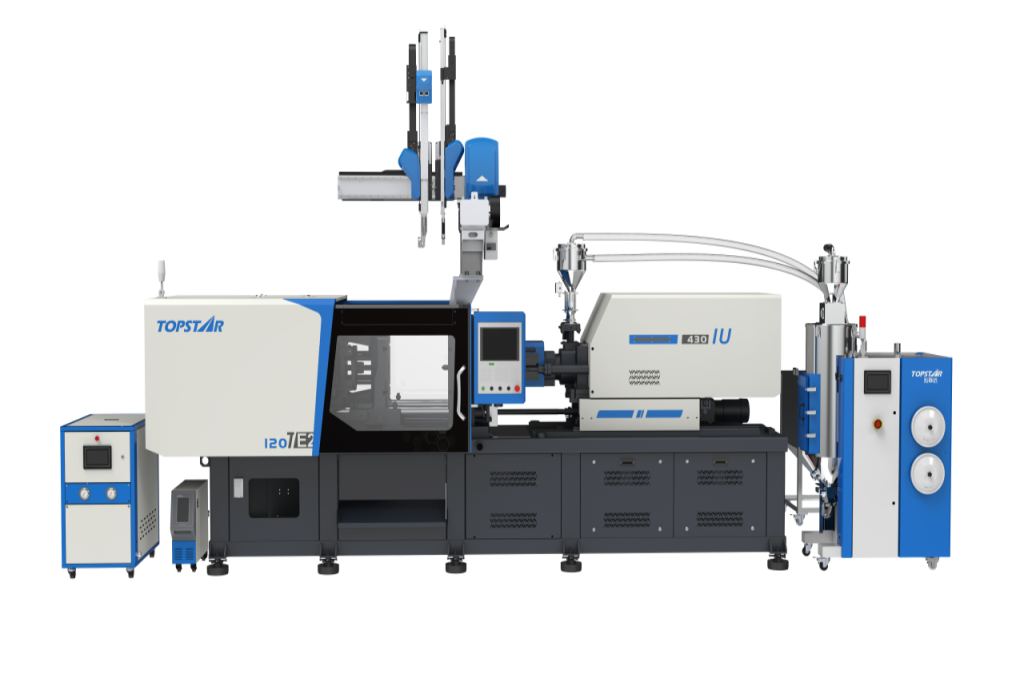
How to Adjust Injection, Holding Pressure, and Switching for Thickness Control?
After diagnosing potential causes and confirming the injection molding machine’s operating status, make targeted parameter adjustments. You can use the following structured adjustment path to reduce thickness deviations.
1. Stabilize Melt and Barrel Temperatures
- The goal is to keep the melt temperature stable throughout the cycles, with fluctuations within ±2°C. Use appropriately positioned thermocouples and verify through melt flow tests.
- Use uniform barrel area control; confirm nozzle tip temperature stability.
- If possible, use active nozzle heating with feedback.
2. Optimize the injection speed profile.
- Start with a conservative filling speed to reduce shear force and flow front variations, then gradually increase to the minimum speed required for balanced filling, avoiding flow stalls.
- Implement multi-stage, or “ramp,” speeds: increase the initial filling speed, then control the speed to slow near the gate for better material distribution.
3. Precisely set V/P switching.
- Use a chamber pressure sensor or a weight-based switching method. Chamber pressure V/P is most reliable: the switching point should maintain the same relative pressure rise point across all cycles.
- In electric injection molding machines, switching operations can employ smaller timing jitters. Set the switching operation before the gate freezes, but late enough to ensure adequate sealing.
4. Control Back Pressure and Screw Return
- Moderate back pressure improves melt uniformity, but excessive back pressure increases shear stress and heat, requiring adjustments to achieve a uniform melt density.
- Maintain consistent screw return stroke (±0.5 mm) and control return speed to avoid inconsistent injection volumes.
5. Minimize Cycle Variation
- Utilize motor position control to ensure injection/platen movement proceeds as expected.
- Lock formulation parameters to prevent operator adjustments without formal change control.
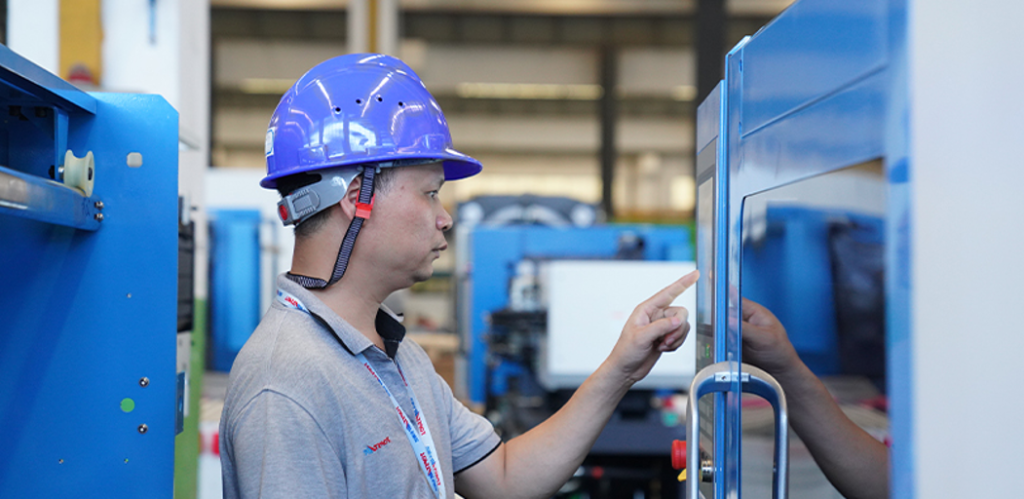
Mold and Cooling Design: Balancing Thermal Fields to Reduce Thickness Deviation
No matter how precise the injection molding machine is, a poorly designed mold will affect the final result. The thickness of PET preforms largely depends on the mold’s thermal conductivity during filling and packaging.
In design, we need to ensure that cooling channels are symmetrically arranged around each cavity. Flow rates should be balanced, and flow simulations can guide the selection of manifold dimensions and channel spacing. Additionally, ensuring short flow paths to vents/gates minimizes dwell time and flow-front instability, thereby preventing sudden cross-sectional changes, such as localized shearing and thinning. Simultaneously, insulation around the gate is crucial, as the gate area often becomes a grouting point due to uneven grout thickness. Controlling gate geometry and implementing localized cooling prevent overheating. Furthermore, conformal cooling can be used when necessary; for complex geometries, conformal channels or baffles can maintain a uniform temperature on the mold surface.
Stable PET Preform Production Achieved Through Integrated Electric Injection Molding Machine
Stable and repeatable PET preform thickness is achievable thanks to intelligent diagnostics, precise calibration, superior molds, and a suitable machine platform. Electric injection molding machines provide the exact motion, high-speed data transmission, and deterministic control required for modern PET preform manufacturing. Topstar’s electric injection molding machine utilize high-speed data transmission, cross-unit collaborative control, and an integrated injection molding process concept—providing a precise, real-time adjustment tool to minimize thickness errors and maximize PET preform yield.
TRENDING POSTS
- TOPS DAY 2026: Turning Industrial AI into Real-World Impact 2026/01/02
- Breaking Through the Full Scene-to-AI Link! Topstar Industrial Data Collection Matrix Achieves Major Technical Breakthro 2026/01/02
- TOPSTAR Selected in “Forbes China AI Top 50” and Wins “2026 Embodied AI Industry Benchmark Award” 2026/01/02
- Topstar Achieves ISO 13849 Functional Safety Certification for Robotics 2026/01/02
HOT TOPIC
- .ervo motor-driven linear robots
- •
- 1.0 guangdong topstar technology co. ltd
- 1.0 topstar china
- 1.0 topstar robot
- 11
- 160℃ mold temperature controller
- 170 ton injection molding machine
- 2
- 21
- 220-ton injection molding machine
- 23
- 260 ton injection molding machine
- 3 axis robot
- 3 axis robots
- 3 in 1 Compact Dehumidifying Dryer
- 3-axis robot
- 3-axis robots
- 39
- 4 axis robot
- 4-axis SCARA robot
- 41
- 460T injection molding machine
- 5-axis CNC machine
- 62
- 90 ton injection molding machine
- accuracy
- Air Chillers
- air-cooled chillers
- all electric injection molding machine
- all electric injection molding machines
- all-electric injection molding machine
- All-electric injection molding machines
- and overall production quality. Therefore
- AP-RubberPlas
- auto cooling system
- auto loader
- Auto Loaders
- automated injection molding machine
- Automation changed engineering
- automation of injection molding robots
- automotive parts injection molding
- Auxiliary Equipment
- auxiliary machine
- Bench Injection Molding Machine
- cabinet dryer
- Cabinet dryer manufacturers
- Cabinet dryers
- cartesian coordinate robot
- Cartesian Coordinate Robots
- Cartesian injection robot
- Cartesian robot
- Central Feeding System
- Central Feeding Systems
- chiller
- CNC Drilling Machine
- CNC Drilling Machines
- cnc engraving machine manufacturer
- cnc laser cutting machine manufacturer
- CNC machine
- CNC Machine Center
- CNC Machine for Sale
- CNC Machine Manufacturing
- CNC Machine Tool
- CNC machine tool product
- CNC Machining Center
- CNC wood carving machine
- Compact Dehumidifying Dryer
- Cooling system
- Cross-Walking Single Axis Servo Cylinder Robot
- Cross-Walking Single-Axis Servo Cylinder Robot
- Cross-Walking Three-Axis/Five-Axis Servo Driven Robot
- cross-walking three-axis/five-axis servo-driven robot
- Dehumidifier Dryer
- Dehumidifying Dryer
- dehumidifying dryers
- delta parallel robot
- Desktop Injection Molding Machine
- Desktop injection molding machines
- Desktop Molding Machine
- desktop plastic injection machine
- Desktop Plastic Injection Molding Machine
- detachable autoloader
- Digital Transformation
- direct clamp injection molding machine
- Direct clamp injection molding machines
- Dosing & mixing system
- Drilling Centers
- Drying and dehumidification system
- drying and dehumidifying equipment
- Drying and Dehumidifying System
- drying system
- effective and efficient. Cabinet dryers are also used in other industries where large quantities of material need to be dried
- efficient injection molding machine
- elbow hydraulic injection molding machines
- electric injection molding machine
- electric injection molding machines
- energy-efficient injection molding robot
- energy-efficient water chiller
- energy-efficient water chillers
- energy-saving injection molding machine
- etc. Among injection molding robots
- exhibition
- features of CNC machine
- Feeding And Conveying System
- Five Axis Machine Center
- Flexible Production Line
- Fully automatic injection molding machine
- Gathering Topstar
- giant injection molding machine
- GMU-600 5-Axis Machining Center
- Granulating & Recycling System
- granulator machine
- gravimetric blender
- Heavy duty injection molding machine
- Heavy-Duty Take-Out Robot
- High-precision electric molding machines
- high-precision plastic molding machines
- high-speed all electric injection molding machine
- high-speed electric injection molding machine
- High-Speed Packaging Injection Molding
- Honeycomb rotor dehumidifier
- hopper dryer
- Hopper Dryers
- horizontal injection molding machine
- Horizontal Injection Molding Machines
- Horizontal Injection Moulding Machine
- Horizontal Mixer manufacturer
- How The CNC Machine Works
- hybrid injection molding machine
- hydraulic injection molding machine
- Hydraulic Injection Molding Machines
- in this article
- Industrial AI
- Industrial Automation
- Industrial robot
- Industrial Robot Chinese brand
- industrial robot parts
- industrial robot supplier
- Industrial robots
- Industry Chain
- Injection Manipulator
- injection manipulator robot
- injection mold machines
- Injection molding
- Injection molding automation
- Injection Molding Automation Solution
- injection molding dryer
- Injection molding equipment
- injection molding hopper dryer
- Injection molding machine
- injection molding machine brand
- Injection Molding Machine Factory
- Injection Molding Machine Manufacture
- Injection molding machine manufacturer
- injection molding machine manufacturers
- Injection molding machine procurement
- injection molding machine robotic arm
- injection molding machine with a robot
- Injection molding machines
- injection molding material dehumidifying
- injection molding plant
- injection molding process
- Injection Molding Robot
- injection molding robot arm
- Injection molding robot automation
- Injection molding robotic arm
- injection molding robots
- injection molding whole plant
- injection moulding dryer
- Injection moulding machine
- injection moulding machines
- Injection Moulding Robots
- Injection Robot
- Injection robot arm
- Injection robot manufacturer
- Injection robot wholesale
- injection robots
- Intelligent Factory
- intelligent injection molding machines
- Intelligent Manufacturing
- intelligent mold temperature
- intelligent mold temperature controller
- Intelligent mould temperature controller
- intelligent whole plant solution
- InterPlas Thailand 2025
- Introducing Injection Robot
- It is the best choice for drying large quantities of material at once. Cabinetmakers use these machines because they are fast
- Large flow water type mold temperature controller
- large injection molding machine
- large injection molding machines
- Learn what industrial automation and robotics is
- linear robot
- linear robots
- low speed sound-proof granulator
- machine plastic molding
- make sure to add some! Improvements (2) Keyphrase in introduction: Your keyphrase or its synonyms appear in the first paragraph of the copy
- manipulator machine
- manufacturing
- Manufacturing Innovation
- medical grade injection molding machines
- Medical Injection Molding
- medical injection molding machine
- medical injection molding machines
- micro injection molding machine
- middle speed granulator
- Mini CNC machine manufacturers.
- mobile cover making machine
- Mold Temperature Control System
- mold temperature controller
- mold temperature controllers
- molding machine
- molding material Dehumidifying System
- mould temperature control system
- mould temperature controller
- mould temperature controller
- mould temperature controllers
- New electric injection molding machine
- Nitrogen Dryer
- nitrogen dryer manufacturer
- nitrogen dryer system manufacturer
- Oil type mold temperature controller
- Oil type mold temperature controllers
- open day
- optical component injection molding
- Optical-grade dehumidifying dryer
- Outbound links: No outbound links appear in this page. Add some! Images: No images appear on this page. Add some! Internal links: No internal links appear in this page
- packaging injection molding
- Packaging Solutions
- PET Preform injection molding
- phone case maker machine
- phone case making machine
- phone cover making machine
- PID Control Mold Temperature Controller
- plastic auto loader
- plastic bottle making machine
- plastic bottle manufacturing
- plastic bucket making machine
- plastic bucket manufacturing
- Plastic chair making machine
- plastic dryer for injection molding
- plastic forming equipment
- Plastic Granulator
- Plastic Granulators
- plastic hopper dryer
- plastic injection machine
- plastic injection machines
- plastic injection molding
- Plastic injection molding equipment
- Plastic injection molding machine
- Plastic Injection Molding Machines
- plastic injection moulding machine
- plastic injection moulding machines
- plastic injection robot
- plastic molding
- Plastic Molding Industry
- Plastic Molding machine
- plastic molding machine 1
- Plastic Molding Machines
- plastic molding press
- plastic moulding machine
- plastic phone case making machine
- plastic-molding machine
- powerful granulator
- Powerful Type Sound-Proof Granulator
- precision injection molding
- precision injection molding machines
- production of plastic seats
- pure water mould temperature controller
- Robot injection molding
- robot injection molding machine
- robot manufacturing companies
- Robotic arm for injection molding machine
- robotic injection molding machines
- robotics in injection molding
- SCARA robot
- SCARA robots
- Screw dosers
- Service-oriented manufacturing
- Servo Cylinder Robot
- servo driven robot
- Servo Driven Robots
- servo injection molding machine
- servo injection robots
- servo motor-driven linear robots
- servo-driven 3-axis robot
- Servo-driven injection molding machine
- Servo-Driven Robot
- Setup of injection machine
- Silicone Injection Molding Machine
- six-axis industrial robot
- Smart Manufacturing
- soundproof granulator
- Sprue Picker
- Stainless Hopper Dryer
- Stainless Hopper Dryers
- star club
- swing arm robot
- T1 Cartesian injection robot
- take-out robot
- take-out robots
- Thailand 4.0
- the choice between servo-driven robots and hydraulic robots will have a certain impact on efficiency
- the most popular injection molding machine
- the type of injection molding robot
- TIC2000 Control System
- TMII injection molding machine
- toggle clamp injection molding machine
- Toggle Hydraulic Injection Molding Machines
- toggle injection molding machine
- Top 10 brands of injection robots
- Topstar
- Topstar Electric Injection Molding Machine InterPlas Thailand 2025 Smart Manufacturing Thailand 4.0
- Topstar Engineering
- Topstar Industrial Robots
- Topstar injection molding intelligent
- Topstar Scara Robots
- Useful Injection molding machine
- Vertical machining centers
- volumetric type blender
- Washing Machine Case Molding Solution
- water chiller
- water chillers
- water distributor
- water type mold temperature controller
- Water Type MoldTemperature Controller
- Water-Cooled Chillers
- Water-cooled Mold Temperature Controller
- water-type mold temperature controller
- Water-Type Mould Temperature Controllers
- We often face choices when performing injection molding. We will choose the type of injection molding machine
- wholesale of injection molding machines
- x carve CNC
- 热门查询 点击次数 展示 排名 topstar