
Why can Topstar’s EU series injection molding robots improve overall production efficiency?
2026/02/20 By le zhan
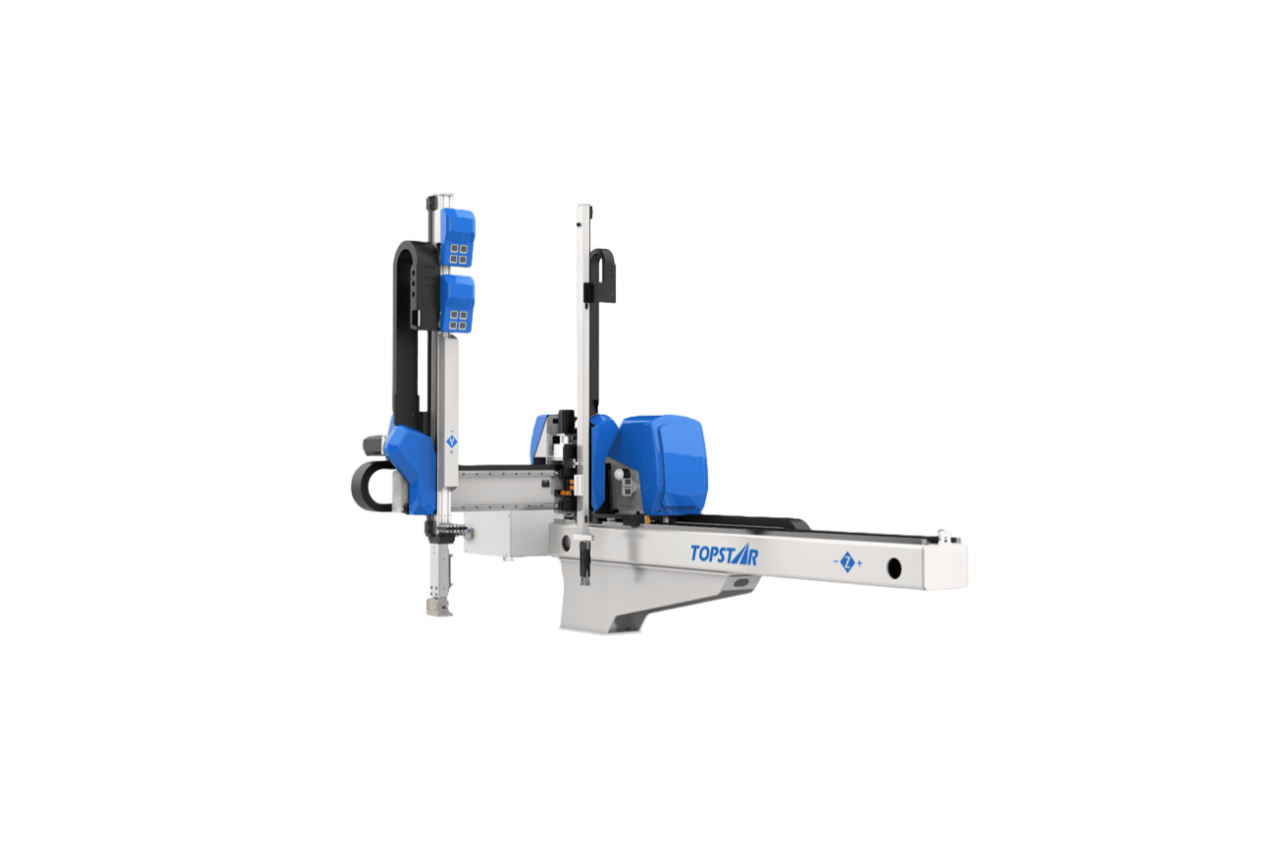
In Topstar’s injection molding robots series, the EU series is not simply an injection molding robot, but rather a system designed to improve molding efficiency throughout the entire injection molding production process. It shortens cycle times, stabilizes downstream operations, and reduces energy consumption per part. Topstar optimizes motion control and mechanical dynamics by combining AC servo drives, DC bus energy management, and a lightweight A6061 robotic arm, resulting in faster robot response, lower energy consumption, and reduced maintenance requirements.
AC Servo Technology in Injection Molding Robots: Achieving Both Precision Motion and Energy Efficiency
AC servo technology is the core control technology of Topstar’s EU series injection molding robots. Unlike traditional DC motor systems, modern AC servo systems provide high-resolution position feedback, faster control loop response speeds, and a higher torque-to-inertia ratio. These characteristics allow the injection molding robot to achieve clearer motion trajectories and more precise path tracking when working in conjunction with the injection molding machine.
In addition to superior motion accuracy, the AC servo system also supports advanced energy-saving algorithms. Topstar’s motion controller utilizes regenerative braking and torque-optimized trajectories to reuse or transfer the energy recovered during deceleration to the DC bus. Therefore, the motor only consumes current when it needs to overcome load or gravity. The combination of high precision and intelligent energy routing in the servo system reduces the net energy consumption of the injection molding robot during continuous operation, especially in the frequent pick-and-place cycles common in injection molding production lines. This directly reduces the power consumption per part and reduces the peak power demand on the factory’s electrical infrastructure. Furthermore, smoother motion curves reduce the mechanical shock transmitted to the injection molding machine during part transfer, thus reducing the risk of clamping interference and injection weight drift.
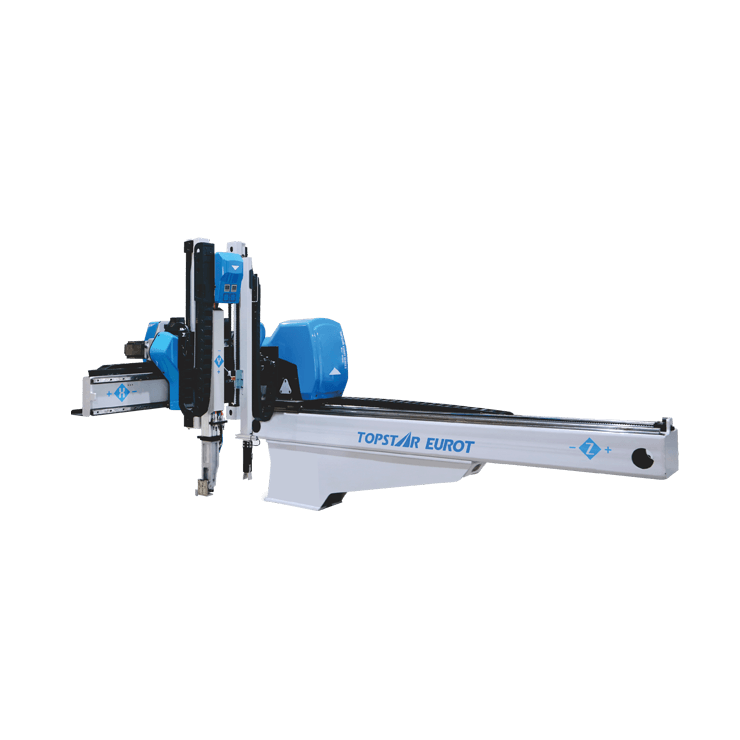
DC Bus Technology in Injection Molding Robots: Reducing Energy Consumption by 10%
One of the key architectural choices in the EU series is the adoption of DC bus technology. In this design, multiple servo drives share a common DC link for storing and distributing regenerative energy. In a typical injection molding robot operation, the robot repeatedly accelerates and decelerates in each cycle, and the braking phase generates a significant amount of kinetic energy. The DC bus captures this energy and redistributes it to other drives that require immediate power, instead of dissipating it as heat through braking resistors. This architectural change delivers significant energy savings.
Topstar’s internal testing and field data show that EU series injection molding robots consume approximately 10% less energy compared to similar robots using a resistive braking isolated drive architecture. The energy savings are particularly significant in high-load cyclic operating conditions such as injection molding: for example, short cycles, frequent starts and stops, and repetitive pick-and-place movements. Therefore, the EU series DC bus design provides immediate energy savings and reduces infrastructure and maintenance costs in the long run, all of which directly contribute to increased production efficiency.
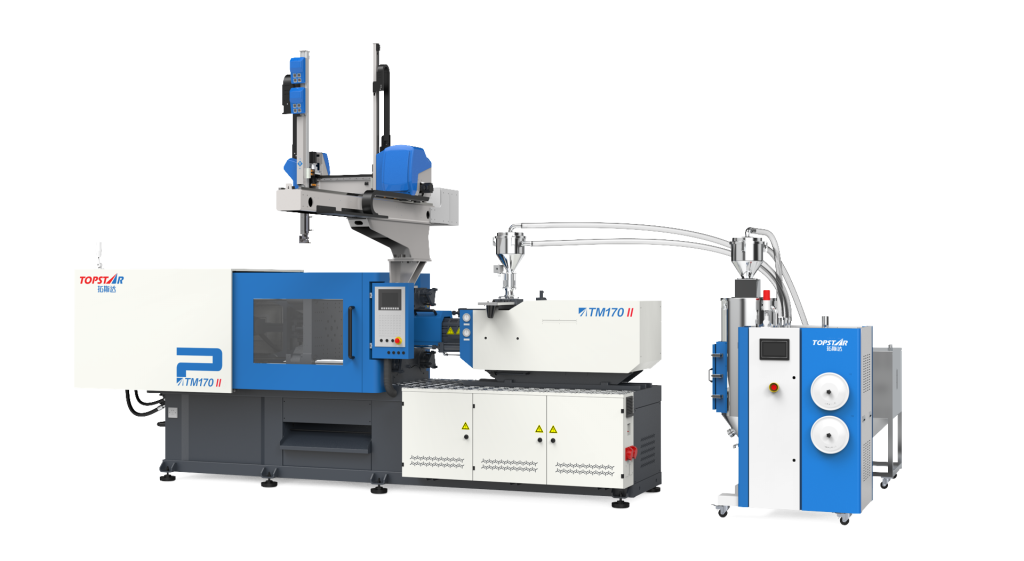
Lightweight A6061 Robotic Arm: Faster Response and Higher Throughput
Mechanical design is just as important as electrical design. Topstar uses A6061 high-strength aluminum alloy in the EU series injection molding robot arms, achieving an optimal balance between rigidity and lightweight design. Compared to traditional steel arms, the A6061 structure reduces moving mass and inertia, allowing the AC servo motors to control the arm’s acceleration and deceleration more quickly and precisely. As a result, the maximum speed of the EU series injection molding robot arm is increased by approximately 10%, and the acceleration and deceleration time is reduced by approximately 20%.
These dynamic improvements directly impact the injection molding machine’s cycle time, as the injection molding robot‘s movement is often on the critical path. Faster arm movement reduces the time spent on non-processing parts of the cycle. A 20% reduction in acceleration and deceleration time allows the robot to reach the required speed and stop with less dwell time, enabling the injection molding machine to start the next cycle faster. Furthermore, lower inertia reduces the stress and energy required for motion reversal, thus reducing cumulative wear on bearings and joints and minimizing high-torque events that could disrupt the injection molding unit. From an operational perspective, a lighter and faster injection molding robot can complete more handling cycles per hour without sacrificing payload capacity or positioning accuracy. For manufacturers, this means higher effective output per injection molding unit and higher overall equipment effectiveness (OEE).
Motion Control and Algorithm Optimization for High-Speed and Precise Molding
Topstar combines hardware improvements with advanced motion control algorithms, enabling EU series robots to achieve higher average speeds while maintaining positioning accuracy. These control strategies minimize overshoot and reduce the conservative speed limits that traditional injection molding robots must set to avoid vibration or part damage. In practical applications, injection molding robots can operate at near-peak speeds and perform complex motion path operations, such as removing parts from small cavities, adjusting the orientation of fragile parts, and placing them in narrow discharge chutes.
When energy-saving algorithms are combined with motion planning, the injection molding robot controller uses predictive models to calculate the most efficient torque commands to follow a preset path. These predictive models consider factors such as payload, center of gravity offset, and joint friction. More importantly, the motion control system is integrated with the injection molding machine’s cycle signals, allowing it to predict machine status. This synchronization reduces idle time: the robot arrives at the mold precisely when needed, avoiding energy waste from prolonged standby.
Increased Production Efficiency in Part Handling and Mold Transfer
The EU series significantly improves the production efficiency of common robotic tasks in injection molding operations, including product handling, insert positioning, in-mold assembly, and mold transfer. In product handling, the combination of speed, repeatability, and shorter cycle delays means more parts can be removed and packaged or further processed per unit of time. Higher acceleration reduces cycle times for parts with short cooling windows, allowing the injection molding machine to start the next cycle faster without compromising part quality.
For handling large plastic parts, the lightweight robotic arm and high-strength A6061 aluminum alloy structure provide better dynamic stability during motion and mold changes. Faster acceleration and deceleration speeds mean faster mold changes and shorter mold change downtime. Furthermore, the EU series injection molding robots can work collaboratively with auxiliary equipment, such as robots transporting parts to auxiliary workstations or conveyors, because their control system supports precise timing and networked I/O signals that can be integrated with the injection molding machine controller. These advantages improve overall production efficiency in injection molding, resulting in lower production costs.
Improved Overall Production Efficiency
Topstar’s EU series injection molding robots are not just auxiliary equipment, but strategic productivity tools that enhance the overall performance of the injection molding machine and the entire production unit. By combining AC servo technology, DC bus energy-saving architecture, and lightweight, high-strength A6061 robotic arms, the EU series injection molding robots offer faster response times, higher operating speeds, and approximately 10% lower energy consumption compared to traditional injection molding robots. These advantages translate directly into shorter production cycles, lower operating costs, greater process stability, and higher energy efficiency per unit of output. Whether used for high-speed product handling, mold transfer, or integrated automation systems, the EU series injection molding robots help manufacturers achieve more efficient and competitive injection molding production.
TRENDING POSTS
- CHINAPLAS 2026 is Coming Soon! 2026/02/20
- New Year, New Beginnings: Topstar Robotics Delivers Heartfelt Service to Keep Customers Thriving! 2026/02/20
- TOPSTAR Global Open Day 2025: Humanoid Robot Debuts, Pioneering a New Decade of Intelligent Manufacturing 2026/02/20
- Topstar Showcases TE II Electric Injection Molding Machines at InterPlas Thailand 2025 2026/02/20
HOT TOPIC
- .ervo motor-driven linear robots
- •
- 1.0 guangdong topstar technology co. ltd
- 1.0 topstar china
- 1.0 topstar robot
- 11
- 160℃ mold temperature controller
- 170 ton injection molding machine
- 2
- 21
- 220-ton injection molding machine
- 23
- 260 ton injection molding machine
- 3 axis robot
- 3 axis robots
- 3 in 1 Compact Dehumidifying Dryer
- 3-axis robot
- 3-axis robots
- 39
- 41
- 460T injection molding machine
- 5-axis CNC machine
- 62
- 90 ton injection molding machine
- accuracy
- Air Chillers
- all electric injection molding machine
- all electric injection molding machines
- all-electric injection molding machine
- All-electric injection molding machines
- and overall production quality. Therefore
- AP-RubberPlas
- auto loader
- automated injection molding machine
- Automation changed engineering
- automation of injection molding robots
- automotive parts injection molding
- Auxiliary Equipment
- auxiliary machine
- Bench Injection Molding Machine
- cabinet dryer
- Cabinet dryer manufacturers
- Cabinet dryers
- Cartesian Coordinate Robots
- chiller
- CNC Drilling Machine
- CNC Drilling Machines
- cnc engraving machine manufacturer
- cnc laser cutting machine manufacturer
- CNC machine
- CNC Machine Center
- CNC Machine for Sale
- CNC Machine Manufacturing
- CNC Machine Tool
- CNC machine tool product
- CNC Machining Center
- CNC wood carving machine
- Cooling system
- Cross-Walking Single Axis Servo Cylinder Robot
- Cross-Walking Single-Axis Servo Cylinder Robot
- Cross-Walking Three-Axis/Five-Axis Servo Driven Robot
- cross-walking three-axis/five-axis servo-driven robot
- Dehumidifier Dryer
- Dehumidifying Dryer
- delta parallel robot
- Desktop Injection Molding Machine
- Desktop injection molding machines
- Desktop Molding Machine
- desktop plastic injection machine
- Desktop Plastic Injection Molding Machine
- Digital Transformation
- direct clamp injection molding machine
- Direct clamp injection molding machines
- Dosing & mixing system
- Drilling Centers
- Drying and dehumidification system
- drying and dehumidifying equipment
- Drying and Dehumidifying System
- drying system
- effective and efficient. Cabinet dryers are also used in other industries where large quantities of material need to be dried
- efficient injection molding machine
- elbow hydraulic injection molding machines
- electric injection molding machine
- electric injection molding machines
- energy-efficient injection molding robot
- energy-efficient water chiller
- energy-efficient water chillers
- energy-saving injection molding machine
- etc. Among injection molding robots
- exhibition
- features of CNC machine
- Feeding And Conveying System
- Five Axis Machine Center
- Flexible Production Line
- Fully automatic injection molding machine
- Gathering Topstar
- giant injection molding machine
- GMU-600 5-Axis Machining Center
- Granulating & Recycling System
- granulator machine
- gravimetric blender
- Heavy duty injection molding machine
- High-precision electric molding machines
- high-precision plastic molding machines
- high-speed all electric injection molding machine
- high-speed electric injection molding machine
- High-Speed Packaging Injection Molding
- Honeycomb rotor dehumidifier
- hopper dryer
- Hopper Dryers
- horizontal injection molding machine
- Horizontal Injection Molding Machines
- Horizontal Injection Moulding Machine
- Horizontal Mixer manufacturer
- How The CNC Machine Works
- hybrid injection molding machine
- hydraulic injection molding machine
- Hydraulic Injection Molding Machines
- in this article
- Industrial AI
- Industrial Automation
- Industrial robot
- Industrial Robot Chinese brand
- industrial robot parts
- industrial robot supplier
- Industrial robots
- Industry Chain
- Injection Manipulator
- injection manipulator robot
- injection mold machines
- Injection molding
- Injection molding automation
- Injection Molding Automation Solution
- injection molding dryer
- Injection molding equipment
- injection molding hopper dryer
- Injection molding machine
- injection molding machine brand
- Injection Molding Machine Factory
- Injection Molding Machine Manufacture
- Injection molding machine manufacturer
- injection molding machine manufacturers
- Injection molding machine procurement
- injection molding machine robotic arm
- injection molding machine with a robot
- Injection molding machines
- injection molding material dehumidifying
- injection molding plant
- injection molding process
- Injection Molding Robot
- injection molding robot arm
- Injection molding robot automation
- Injection molding robotic arm
- injection molding robots
- injection molding whole plant
- injection moulding dryer
- Injection moulding machine
- injection moulding machines
- Injection Moulding Robots
- Injection Robot
- Injection robot arm
- Injection robot manufacturer
- Injection robot wholesale
- injection robots
- Intelligent Factory
- intelligent injection molding machines
- Intelligent Manufacturing
- intelligent mold temperature
- intelligent mold temperature controller
- Intelligent mould temperature controller
- InterPlas Thailand 2025
- Introducing Injection Robot
- It is the best choice for drying large quantities of material at once. Cabinetmakers use these machines because they are fast
- Large flow water type mold temperature controller
- large injection molding machine
- large injection molding machines
- Learn what industrial automation and robotics is
- linear robot
- linear robots
- low speed sound-proof granulator
- machine plastic molding
- make sure to add some! Improvements (2) Keyphrase in introduction: Your keyphrase or its synonyms appear in the first paragraph of the copy
- manipulator machine
- manufacturing
- Manufacturing Innovation
- medical grade injection molding machines
- Medical Injection Molding
- medical injection molding machine
- medical injection molding machines
- micro injection molding machine
- middle speed granulator
- Mini CNC machine manufacturers.
- mobile cover making machine
- Mold Temperature Control System
- mold temperature controller
- mold temperature controllers
- molding machine
- molding material Dehumidifying System
- mould temperature control system
- mould temperature controller
- mould temperature controllers
- New electric injection molding machine
- nitrogen dryer manufacturer
- nitrogen dryer system manufacturer
- Oil type mold temperature controller
- Oil type mold temperature controllers
- open day
- optical component injection molding
- Outbound links: No outbound links appear in this page. Add some! Images: No images appear on this page. Add some! Internal links: No internal links appear in this page
- packaging injection molding
- Packaging Solutions
- PET Preform injection molding
- phone case maker machine
- phone case making machine
- phone cover making machine
- PID Control Mold Temperature Controller
- plastic auto loader
- plastic bottle making machine
- plastic bottle manufacturing
- plastic bucket making machine
- plastic bucket manufacturing
- Plastic chair making machine
- plastic dryer for injection molding
- plastic forming equipment
- Plastic Granulators
- plastic hopper dryer
- plastic injection machine
- plastic injection machines
- plastic injection molding
- Plastic injection molding equipment
- Plastic injection molding machine
- Plastic Injection Molding Machines
- plastic injection moulding machine
- plastic injection moulding machines
- plastic injection robot
- plastic molding
- Plastic Molding Industry
- Plastic Molding machine
- plastic molding machine 1
- Plastic Molding Machines
- plastic molding press
- plastic moulding machine
- plastic phone case making machine
- plastic-molding machine
- powerful granulator
- Powerful Type Sound-Proof Granulator
- precision injection molding
- precision injection molding machines
- production of plastic seats
- pure water mould temperature controller
- Robot injection molding
- robot injection molding machine
- robot manufacturing companies
- Robotic arm for injection molding machine
- robotic injection molding machines
- robotics in injection molding
- SCARA robot
- SCARA robots
- Screw dosers
- Service-oriented manufacturing
- Servo Cylinder Robot
- servo driven robot
- Servo Driven Robots
- servo injection molding machine
- servo injection robots
- servo motor-driven linear robots
- servo-driven 3-axis robot
- Servo-driven injection molding machine
- Servo-Driven Robot
- Setup of injection machine
- Silicone Injection Molding Machine
- six-axis industrial robot
- Smart Manufacturing
- soundproof granulator
- Sprue Picker
- Stainless Hopper Dryer
- Stainless Hopper Dryers
- star club
- swing arm robot
- take-out robot
- take-out robots
- Thailand 4.0
- the choice between servo-driven robots and hydraulic robots will have a certain impact on efficiency
- the most popular injection molding machine
- the type of injection molding robot
- TIC2000 Control System
- TMII injection molding machine
- toggle clamp injection molding machine
- Toggle Hydraulic Injection Molding Machines
- toggle injection molding machine
- Top 10 brands of injection robots
- Topstar
- Topstar Electric Injection Molding Machine InterPlas Thailand 2025 Smart Manufacturing Thailand 4.0
- Topstar Engineering
- Topstar Industrial Robots
- Topstar injection molding intelligent
- Topstar Scara Robots
- Useful Injection molding machine
- Vertical machining centers
- volumetric type blender
- water chiller
- water chillers
- water distributor
- water type mold temperature controller
- Water Type MoldTemperature Controller
- Water-Type Mould Temperature Controllers
- We often face choices when performing injection molding. We will choose the type of injection molding machine
- wholesale of injection molding machines
- x carve CNC
- 热门查询 点击次数 展示 排名 topstar