
Why do plastic granulators produce plastic granules of varying sizes?
2026/02/09 By le zhan
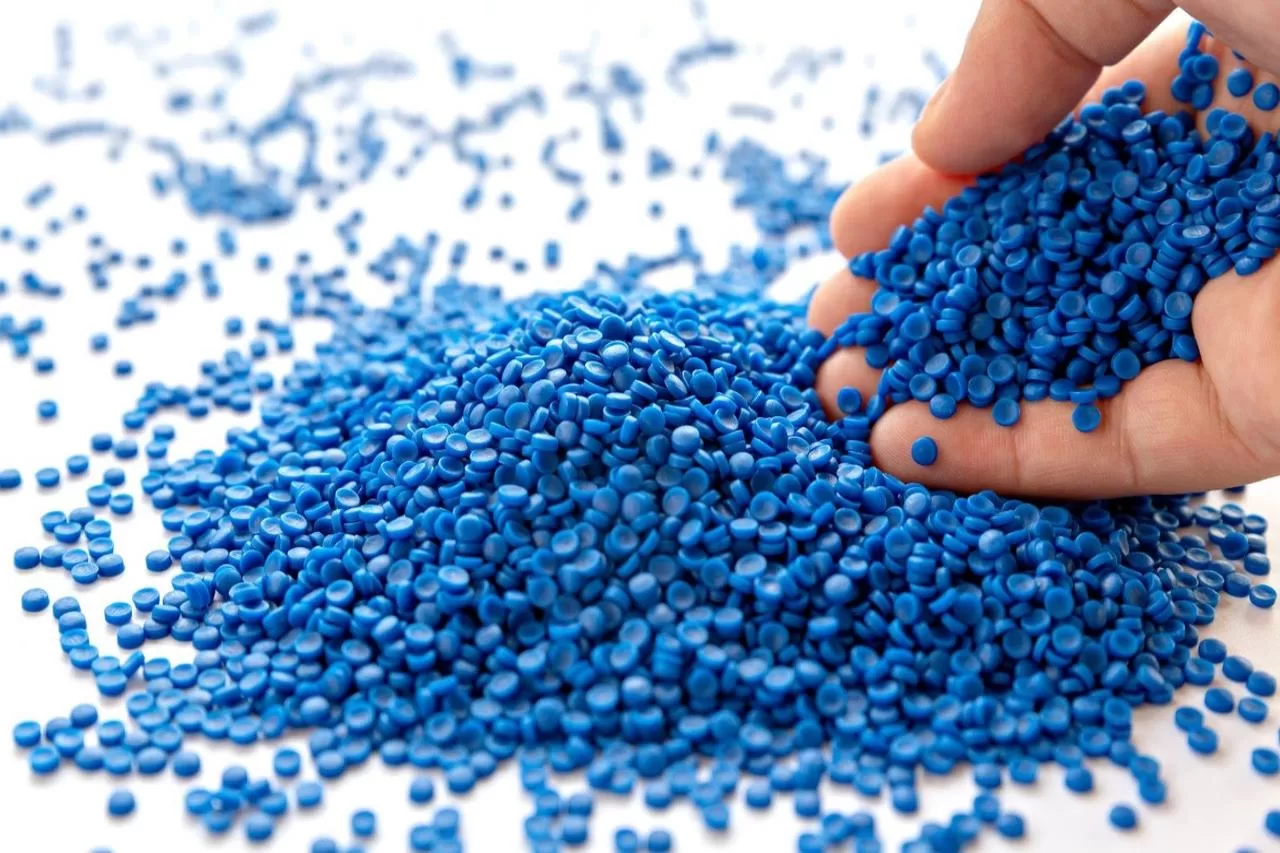
In plastic recycling and injection molding, particle size affects melt uniformity, metering accuracy, drying performance, filtration performance, and ultimately, part quality. Plastic granulators produce particles of varying sizes because a multitude of interacting factors, from material properties to machine geometry and operating parameters, collectively determine particle breakage behavior during the grinding process. For plastic product manufacturers and processors, consistent particle size reduces subsequent screening steps, minimizes dust and fines, and improves injection molding line throughput. Conversely, a broad particle size distribution leads to metering drift in gravity feeders, causes uneven melting, and increases production cycle times.
Plastic Granulators are Affected by Raw Material Characteristics
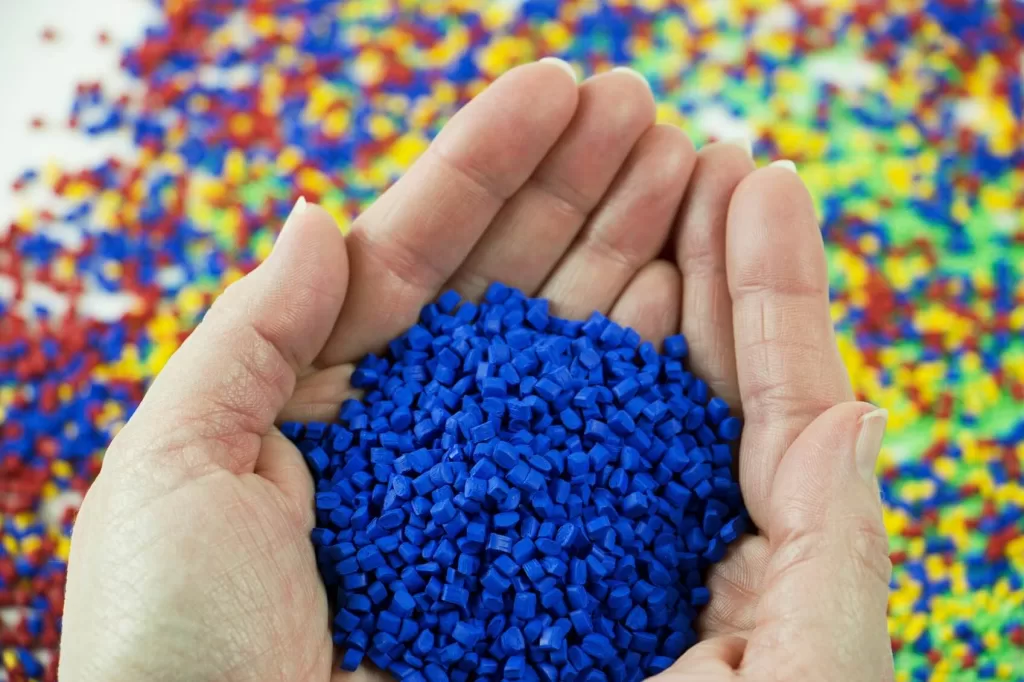
Raw material characteristics fundamentally influence the grinding behavior in plastic granulators. Different polymers (e.g., PP, PE, ABS, PET, PA) have varying tensile properties, glass transition temperatures or melting points, and fracture mechanics; brittle materials break into small fragments, while ductile materials tend to deform and shear into longer ribbons or strips. Additives, fillers, and reinforcing fibers alter cutting resistance: glass fiber-reinforced compounds wear down blades and produce powdery fines; soft elastomers are prone to smearing and agglomeration, resulting in a broader particle size distribution. Furthermore, moisture content exacerbates this situation, as hydrophilic or damp materials can clump, clog feed channels, and cause unstable rotor feeding, leading to fines and oversized flakes. Similarly, the geometry of production scrap—long runners, thin sheets, thick sprues, or complete parts—affects how the material enters the rotor and, consequently, the grinding pattern.
Therefore, you must treat raw materials as a controllable variable. Pre-sorting by material type and geometry reduces cross-contamination and controls the hardness and elasticity range. When operators mix regrind with virgin material, they must maintain documented mixing ratios and expected particle sizes, because the regrind’s hardness and prior processing history affect the grinding outcome. Additionally, a consistent feed rate and controlled feed direction contribute to uniform feeding of the granulator. Conversely, intermittent or overloaded feeding causes variations in rotor energy per part, leading to inconsistent particle size.
Plastic Granulators Design and Cutting Mechanisms
The physical design of a plastic granulator dictates how the material is broken down. Key design elements include rotor diameter and inertia, blade type and arrangement, cutting bed geometry, blade clearance, and housing shape. High-speed rotor designs favor impact and shearing, typically resulting in finer particles and more powder, while low-speed, high-torque rotors produce compressive crushing and shearing, tending to create uniform, regularly shaped granules with less fine powder. Blade geometry is also essential: straight blades produce predictable cutting effects, while serrated or toothed blades can provide more efficient shearing. Blade clearance controls the particle exit size in the screening system, but it is only one of several parameters that affect particle size distribution.
Granulators with screens rely on the size and shape of the screen holes to determine the maximum particle size, but this also introduces secondary effects. The screen repeatedly cuts particles until they can pass through the holes, increasing the likelihood of generating fines and dust. Furthermore, screen clogging can alter local flow patterns and temporarily change the particle size distribution. Conversely, in screenless granulator designs, the crushing process can be controlled by mechanical geometry and rotor dynamics, without forcing particles to cycle through screen holes. Therefore, the core mechanical structure of the granulator determines whether it tends to produce a narrow or wide particle size distribution.
Advantages of Screenless Design
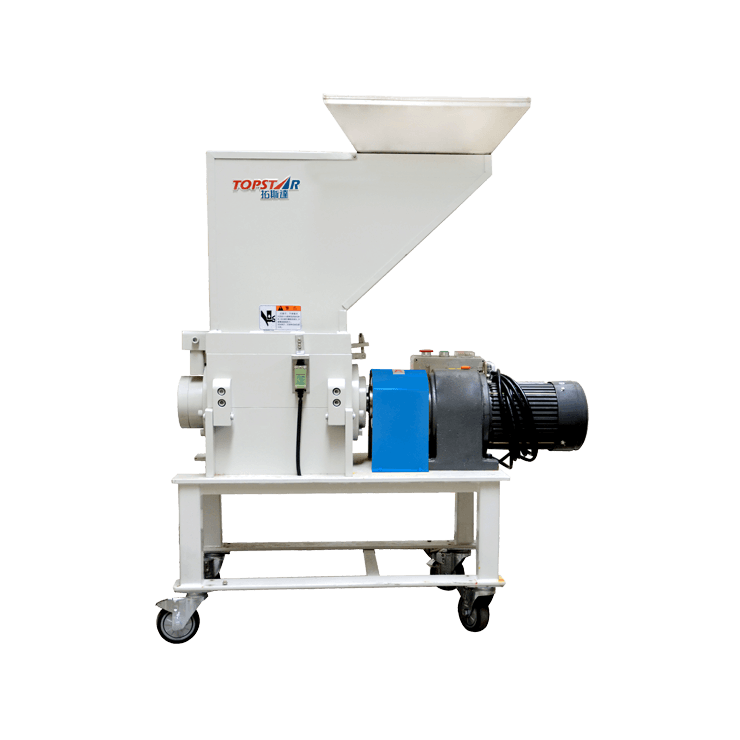
Topstar’s plastic granulators utilize a screenless design, cleverly avoiding the material cycling and repeated cutting problems inherent in traditional screen-based machines. Instead of relying on perforated screens to determine particle size, Topstar’s granulator architecture employs a low-speed, high-torque rotor, optimized blade geometry, and a controlled discharge path. This approach enables uniform granulation. Secondly, the high torque ensures thorough shearing and crushing of each piece of material, resulting in predictable fracture surfaces and consistent particle shapes. Thirdly, because there is no screen, particles are not repeatedly forced through screen holes; therefore, they only undergo the intended cutting process and are discharged with minimal over-grinding. In practical applications, these advantages reduce dust-related losses and improve the feeding accuracy of gravimetric blenders and injection molding machines.
Furthermore, the uniform particles flow more readily through hoppers and feeders, reducing the risk of bridging and hopper blockages. At the same time, the process reduces blade wear associated with repeated cutting and screen friction, resulting in blades typically lasting longer and maintenance intervals increasing. This results in lower speeds, greater control, and better uniformity.
Operating Parameters and Process Control
Even with optimally designed plastic granulators, specific operating settings still determine the final particle size distribution. Rotor speed is a critical variable: higher speeds tend to increase fines production, while lower speeds facilitate controlled shearing, resulting in larger, more uniform particles. Therefore, the feed rate and rotor speed are interdependent; a matched feed rate ensures consistent material mass and energy for each rotor tooth, resulting in predictable cutting effects. Overloading the feed can lead to inconsistent cutting depths and produce particles of varying sizes. Blade clearance and blade angle also affect crushing; reducing the clearance can reduce long, stringy fines but may accelerate blade wear and heating, while increasing the clearance may allow longer fragments to escape.
In addition, the cutting chamber temperature is essential. Heat buildup can soften thermoplastics, leading to material smearing and stringing rather than clean fracture. Cooling systems, staged feeding, or intermittent feeding strategies can mitigate this. For filled or reinforced materials, lower cutting speeds and optimized blade geometry can reduce fiber stretching and dust generation. By controlling speed, feed rate, blade settings, and chamber temperature as an integrated system, operators can achieve the desired particle size distribution and obtain repeatable results.
Material Handling, Cooling, and Auxiliary Systems
In injection molding, other auxiliary equipment significantly impacts particle uniformity, but is sometimes overlooked. Material handling systems—feed conveyors and hoppers—affect how the material contacts the rotor. For example, irregular feed direction can lead to variations in cutting geometry and increase the range of particle size distribution. A conveying system that can stably meter and transport materials in a controlled direction can reduce this variability. Similarly, cooling and dust collection systems are also critical: the granulation process generates heat and fine dust in the air; an efficient dust collection system can remove the fine dust before it re-enters the product stream, while a cooling system ensures that the material is cleanly cut rather than smeared.
Post-granulation processing can further optimize particle size distribution. Even in Topstar’s screenless system, engineers can use classifiers and screens downstream to ensure the product meets the narrow specifications required for applications with strict particle-size control. By carefully designing the entire material flow path, you can eliminate many of the secondary factors that contribute to particle size variation.
Achieving More Uniform Plastic Pellets
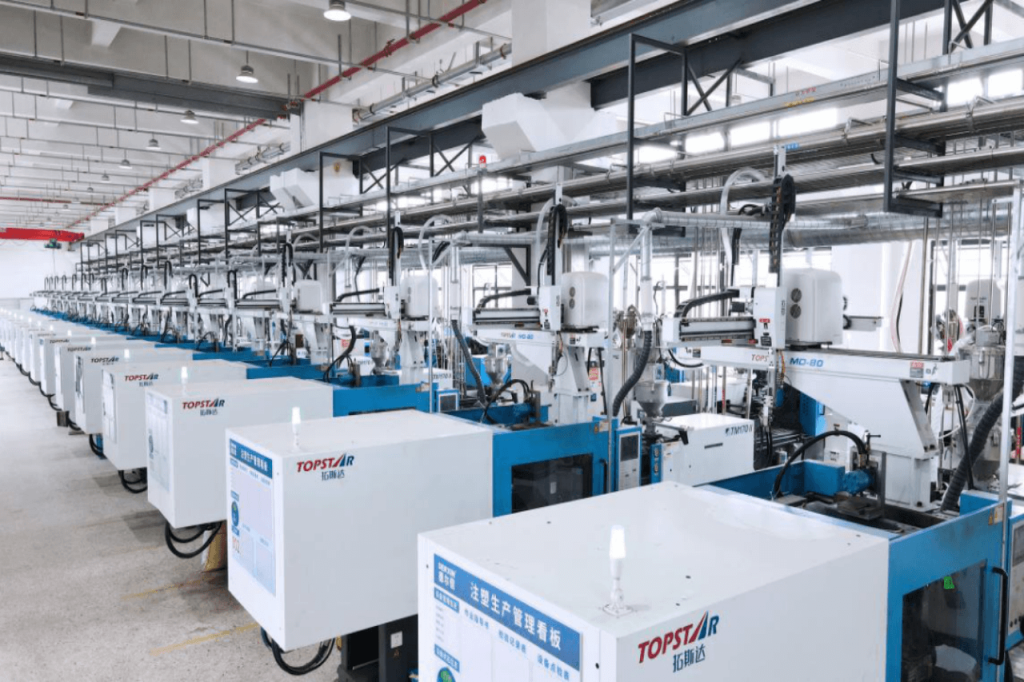
Plastic pellet size is the result of the interaction of material properties, granulator design, operating parameters, and maintenance practices during the crushing process. By understanding these factors, manufacturers can shift from reacting to variability to proactively controlling it. Topstar’s plastic granulators, with their screenless, low-speed, high-torque design, directly address the root causes of size inconsistency by minimizing repeated cutting and reducing powder generation. This results in uniform granulation, stable material flow, and more reliable feeding.
TRENDING POSTS
- CHINAPLAS 2026 is Coming Soon! 2026/02/09
- New Year, New Beginnings: Topstar Robotics Delivers Heartfelt Service to Keep Customers Thriving! 2026/02/09
- TOPSTAR Global Open Day 2025: Humanoid Robot Debuts, Pioneering a New Decade of Intelligent Manufacturing 2026/02/09
- Topstar Showcases TE II Electric Injection Molding Machines at InterPlas Thailand 2025 2026/02/09
HOT TOPIC
- .ervo motor-driven linear robots
- •
- 1.0 guangdong topstar technology co. ltd
- 1.0 topstar china
- 1.0 topstar robot
- 11
- 160℃ mold temperature controller
- 170 ton injection molding machine
- 2
- 21
- 220-ton injection molding machine
- 23
- 260 ton injection molding machine
- 3 axis robot
- 3 axis robots
- 3 in 1 Compact Dehumidifying Dryer
- 3-axis robot
- 3-axis robots
- 39
- 41
- 460T injection molding machine
- 5-axis CNC machine
- 62
- 90 ton injection molding machine
- accuracy
- Air Chillers
- all electric injection molding machine
- all electric injection molding machines
- all-electric injection molding machine
- All-electric injection molding machines
- and overall production quality. Therefore
- AP-RubberPlas
- auto loader
- automated injection molding machine
- Automation changed engineering
- automation of injection molding robots
- automotive parts injection molding
- Auxiliary Equipment
- auxiliary machine
- Bench Injection Molding Machine
- cabinet dryer
- Cabinet dryer manufacturers
- Cabinet dryers
- chiller
- CNC Drilling Machine
- CNC Drilling Machines
- cnc engraving machine manufacturer
- cnc laser cutting machine manufacturer
- CNC machine
- CNC Machine Center
- CNC Machine for Sale
- CNC Machine Manufacturing
- CNC Machine Tool
- CNC machine tool product
- CNC Machining Center
- CNC wood carving machine
- Cooling system
- Cross-Walking Single Axis Servo Cylinder Robot
- Cross-Walking Single-Axis Servo Cylinder Robot
- Cross-Walking Three-Axis/Five-Axis Servo Driven Robot
- cross-walking three-axis/five-axis servo-driven robot
- Dehumidifier Dryer
- Dehumidifying Dryer
- delta parallel robot
- Desktop Injection Molding Machine
- Desktop injection molding machines
- Desktop Molding Machine
- desktop plastic injection machine
- Desktop Plastic Injection Molding Machine
- Digital Transformation
- direct clamp injection molding machine
- Direct clamp injection molding machines
- Dosing & mixing system
- Drilling Centers
- Drying and dehumidification system
- drying and dehumidifying equipment
- Drying and Dehumidifying System
- drying system
- effective and efficient. Cabinet dryers are also used in other industries where large quantities of material need to be dried
- efficient injection molding machine
- elbow hydraulic injection molding machines
- electric injection molding machine
- electric injection molding machines
- energy-efficient injection molding robot
- energy-efficient water chiller
- energy-efficient water chillers
- energy-saving injection molding machine
- etc. Among injection molding robots
- exhibition
- features of CNC machine
- Feeding And Conveying System
- Five Axis Machine Center
- Flexible Production Line
- Fully automatic injection molding machine
- Gathering Topstar
- giant injection molding machine
- GMU-600 5-Axis Machining Center
- Granulating & Recycling System
- granulator machine
- gravimetric blender
- Heavy duty injection molding machine
- High-precision electric molding machines
- high-precision plastic molding machines
- high-speed all electric injection molding machine
- high-speed electric injection molding machine
- High-Speed Packaging Injection Molding
- Honeycomb rotor dehumidifier
- hopper dryer
- Hopper Dryers
- horizontal injection molding machine
- Horizontal Injection Molding Machines
- Horizontal Injection Moulding Machine
- Horizontal Mixer manufacturer
- How The CNC Machine Works
- hybrid injection molding machine
- hydraulic injection molding machine
- Hydraulic Injection Molding Machines
- in this article
- Industrial AI
- Industrial Automation
- Industrial robot
- Industrial Robot Chinese brand
- industrial robot parts
- industrial robot supplier
- Industrial robots
- Industry Chain
- Injection Manipulator
- injection manipulator robot
- injection mold machines
- Injection molding
- Injection molding automation
- Injection Molding Automation Solution
- injection molding dryer
- Injection molding equipment
- injection molding hopper dryer
- Injection molding machine
- injection molding machine brand
- Injection Molding Machine Factory
- Injection Molding Machine Manufacture
- Injection molding machine manufacturer
- injection molding machine manufacturers
- Injection molding machine procurement
- injection molding machine robotic arm
- injection molding machine with a robot
- Injection molding machines
- injection molding material dehumidifying
- injection molding plant
- injection molding process
- Injection Molding Robot
- injection molding robot arm
- Injection molding robot automation
- Injection molding robotic arm
- injection molding robots
- injection molding whole plant
- injection moulding dryer
- Injection moulding machine
- injection moulding machines
- Injection Moulding Robots
- Injection Robot
- Injection robot arm
- Injection robot manufacturer
- Injection robot wholesale
- injection robots
- Intelligent Factory
- intelligent injection molding machines
- Intelligent Manufacturing
- intelligent mold temperature
- intelligent mold temperature controller
- Intelligent mould temperature controller
- InterPlas Thailand 2025
- Introducing Injection Robot
- It is the best choice for drying large quantities of material at once. Cabinetmakers use these machines because they are fast
- Large flow water type mold temperature controller
- large injection molding machine
- large injection molding machines
- Learn what industrial automation and robotics is
- linear robot
- linear robots
- low speed sound-proof granulator
- machine plastic molding
- make sure to add some! Improvements (2) Keyphrase in introduction: Your keyphrase or its synonyms appear in the first paragraph of the copy
- manipulator machine
- manufacturing
- Manufacturing Innovation
- medical grade injection molding machines
- Medical Injection Molding
- medical injection molding machine
- medical injection molding machines
- micro injection molding machine
- middle speed granulator
- Mini CNC machine manufacturers.
- mobile cover making machine
- Mold Temperature Control System
- mold temperature controller
- mold temperature controllers
- molding machine
- molding material Dehumidifying System
- mould temperature control system
- mould temperature controller
- mould temperature controllers
- New electric injection molding machine
- nitrogen dryer manufacturer
- nitrogen dryer system manufacturer
- Oil type mold temperature controller
- Oil type mold temperature controllers
- open day
- optical component injection molding
- Outbound links: No outbound links appear in this page. Add some! Images: No images appear on this page. Add some! Internal links: No internal links appear in this page
- packaging injection molding
- Packaging Solutions
- PET Preform injection molding
- phone case maker machine
- phone case making machine
- phone cover making machine
- PID Control Mold Temperature Controller
- plastic auto loader
- plastic bottle making machine
- plastic bottle manufacturing
- plastic bucket making machine
- plastic bucket manufacturing
- Plastic chair making machine
- plastic dryer for injection molding
- plastic forming equipment
- Plastic Granulators
- plastic hopper dryer
- plastic injection machine
- plastic injection machines
- plastic injection molding
- Plastic injection molding equipment
- Plastic injection molding machine
- Plastic Injection Molding Machines
- plastic injection moulding machine
- plastic injection moulding machines
- plastic injection robot
- plastic molding
- Plastic Molding Industry
- Plastic Molding machine
- plastic molding machine 1
- Plastic Molding Machines
- plastic molding press
- plastic moulding machine
- plastic phone case making machine
- plastic-molding machine
- powerful granulator
- Powerful Type Sound-Proof Granulator
- precision injection molding
- precision injection molding machines
- production of plastic seats
- pure water mould temperature controller
- Robot injection molding
- robot injection molding machine
- robot manufacturing companies
- Robotic arm for injection molding machine
- robotic injection molding machines
- robotics in injection molding
- SCARA robot
- SCARA robots
- Screw dosers
- Service-oriented manufacturing
- Servo Cylinder Robot
- servo driven robot
- Servo Driven Robots
- servo injection molding machine
- servo injection robots
- servo motor-driven linear robots
- servo-driven 3-axis robot
- Servo-driven injection molding machine
- Servo-Driven Robot
- Setup of injection machine
- Silicone Injection Molding Machine
- six-axis industrial robot
- Smart Manufacturing
- soundproof granulator
- Sprue Picker
- Stainless Hopper Dryer
- Stainless Hopper Dryers
- star club
- swing arm robot
- take-out robot
- take-out robots
- Thailand 4.0
- the choice between servo-driven robots and hydraulic robots will have a certain impact on efficiency
- the most popular injection molding machine
- the type of injection molding robot
- TIC2000 Control System
- TMII injection molding machine
- toggle clamp injection molding machine
- Toggle Hydraulic Injection Molding Machines
- toggle injection molding machine
- Top 10 brands of injection robots
- Topstar
- Topstar Electric Injection Molding Machine InterPlas Thailand 2025 Smart Manufacturing Thailand 4.0
- Topstar Engineering
- Topstar Industrial Robots
- Topstar injection molding intelligent
- Topstar Scara Robots
- Useful Injection molding machine
- Vertical machining centers
- volumetric type blender
- water chiller
- water chillers
- water distributor
- water type mold temperature controller
- Water Type MoldTemperature Controller
- Water-Type Mould Temperature Controllers
- We often face choices when performing injection molding. We will choose the type of injection molding machine
- wholesale of injection molding machines
- x carve CNC
- 热门查询 点击次数 展示 排名 topstar