
What type of linear robot can meet high-speed and high-precision process requirements?
2026/04/27 By le zhan
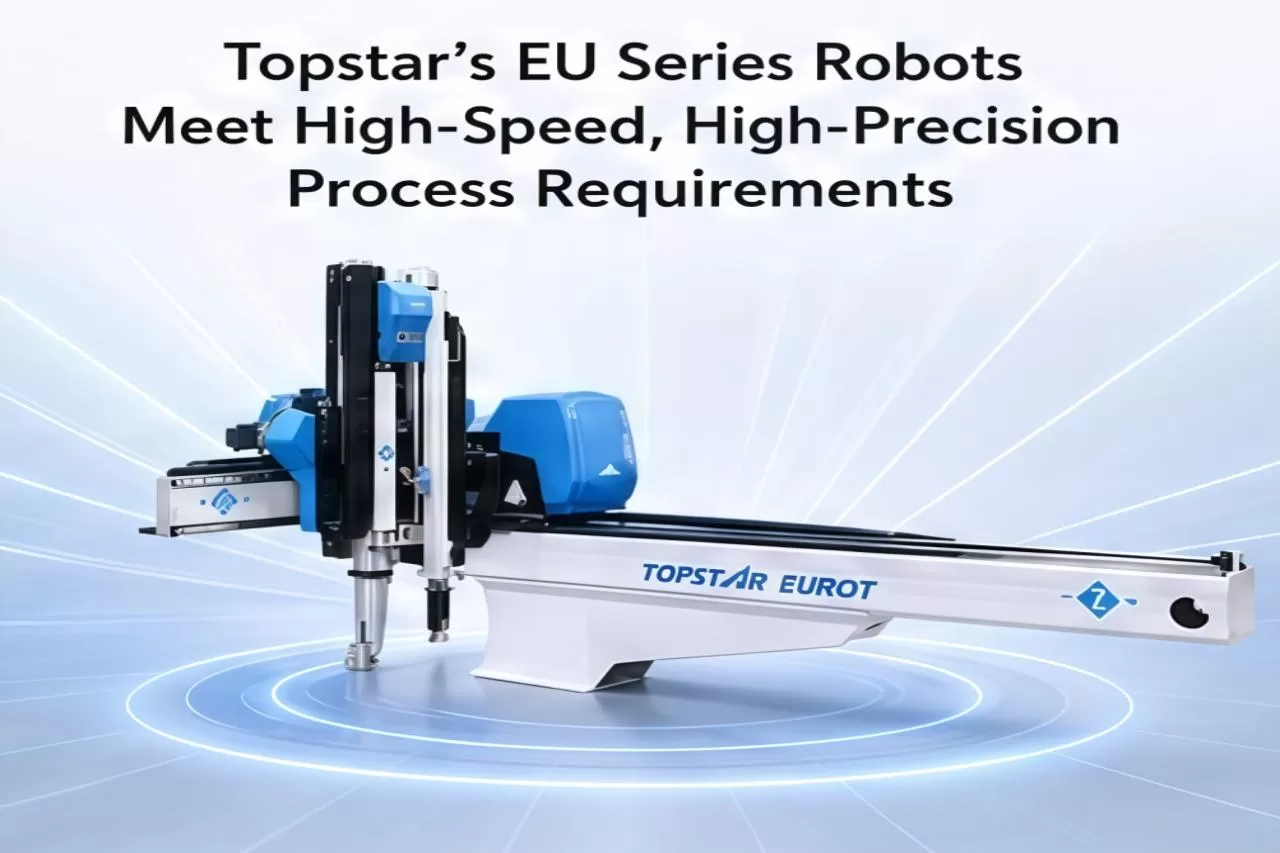
In automated processes such as injection molding and electronics assembly, linear robots are required to achieve rapid cycle times and extremely high precision. A linear robot that moves quickly but lacks positioning accuracy can destabilize the production line, whereas a robot with high positioning accuracy but excessively slow movement speeds will compromise overall production output. How, then, can these two attributes be effectively combined? Topstar believes that a linear robot capable of meeting the demands for both high speed and high precision must possess the following key characteristics:
- High-speed motors
- A rigid structural design
- Precise drive control
- vibration suppression capabilities
When these characteristics are integrated into a linear robot, it becomes capable of satisfying the high-speed and high-precision requirements inherent in injection molding and electronics assembly processes, precisely what Topstar’s EU series of injection molding robots delivers.
Linear Robot Meeting High-Speed and High-Precision Process Requirements
A linear robot equipped with high-speed motors capable of reaching speeds up to 6,000 RPM can boost maximum operating speeds by 10% while simultaneously reducing acceleration and deceleration times by 20%. With instantaneous speeds of up to 3 m/s, the robot can significantly shorten the overall cycle time. Building upon this foundation, the main arm utilizes a lightweight, high-strength A6061 aluminum alloy material. This is combined with a dual-sided front-and-rear rack-and-pinion drive and an imported drive featuring built-in vibration suppression functionality. This configuration effectively minimizes vibration and enhances operational stability, ensuring a repetitive positioning accuracy of ±0.01 mm during gripping operations.
Equipped with High-Speed Motors Reaching 6,000 RPM
The most direct method for increasing the speed of a linear robot is the adoption of high-speed motors. Topstar’s EU series employs high-speed motors capable of reaching 6,000 RPM, thereby boosting operating speeds by 10% and shortening acceleration/deceleration times by 20%. As a result, this gives the robot the dynamic responsiveness it needs for processes that require rapid cycle times, allowing it to start moving faster, complete extraction tasks more quickly, and return to the home position more efficiently. Such rapid motor responsiveness allows the robot to execute operations within the extremely brief window of the mold-opening phase, resulting in significantly faster overall cycle times.

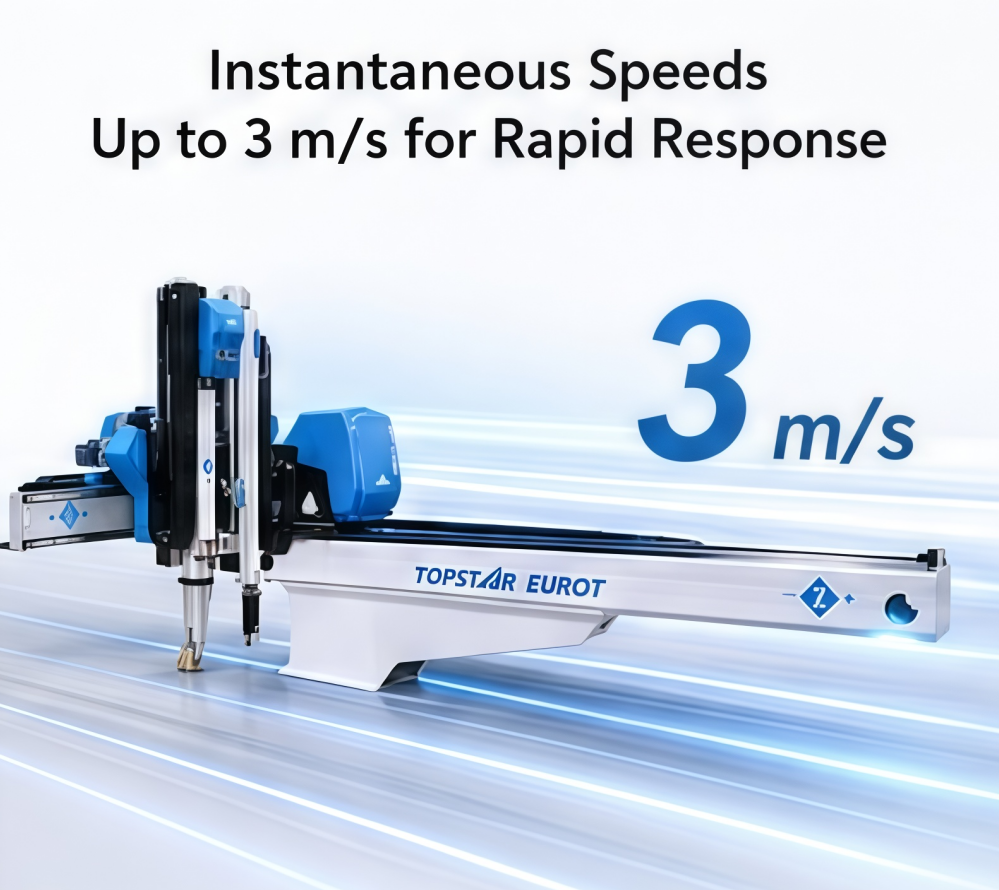
Instantaneous Speeds Up to 3 m/s for Rapid Response
Topstar’s EU series injection molding robots can achieve maximum speeds of up to 3 m/s, making them ideally suited for part extraction applications across various sectors, including thin-walled products, 3C electronics, medical devices, and packaging.
The capability to achieve instantaneous speeds of up to 3 meters per second without any waiting time translates directly into higher production efficiency, enabling immediate response, smooth motion, and precise stopping. When the injection molding machine, the mold, and the robot operate in perfect synchronization, the entire production line achieves greater efficiency, and production management becomes significantly more streamlined.
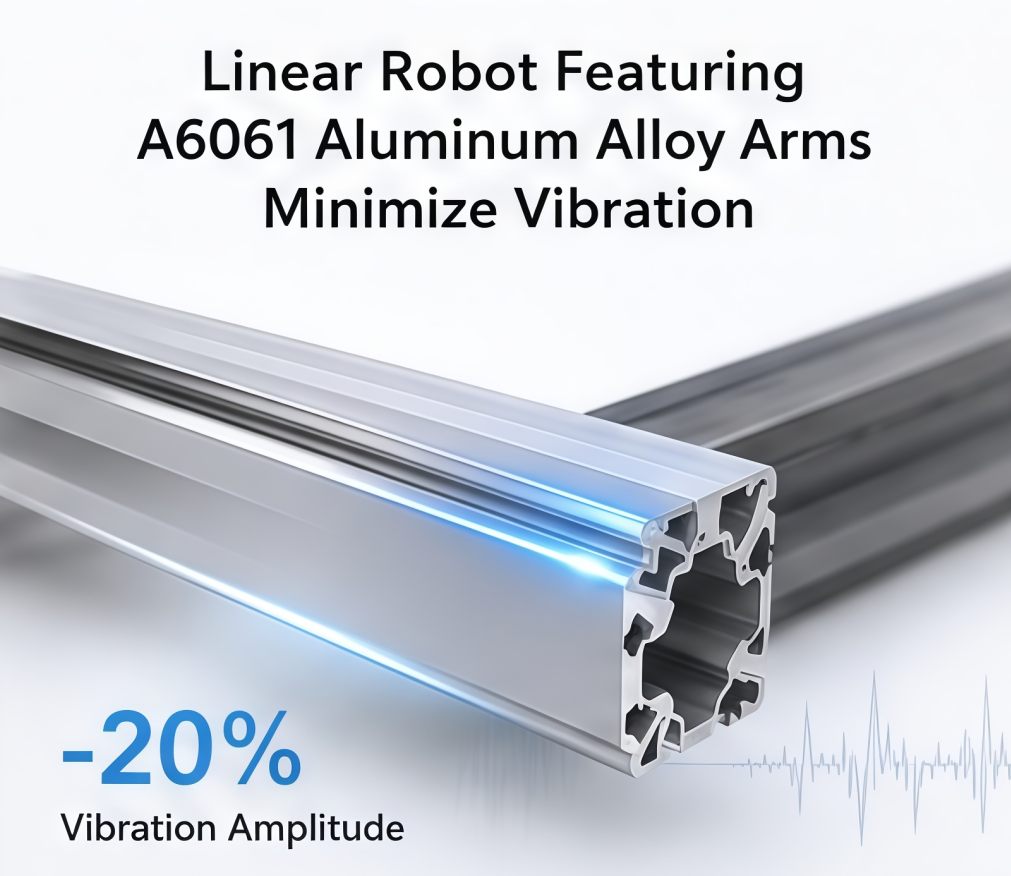
Linear Robot Featuring A6061 Aluminum Alloy Arms Minimize Vibration
By utilizing lightweight, high-strength A6061 aluminum alloy for the main arm, these linear robots can reduce vibration amplitude by 20%, thereby enhancing control precision during high-speed movements. High-frequency vibrations in a linear robot can compromise positioning accuracy, part stability, and repeatability. If the robot arm vibrates excessively, the robot may fail to return to the same position during every cycle. This can lead to issues during critical operations such as part extraction, insert placement, and the transfer of parts to downstream equipment. The key advantage of A6061 aluminum alloy lies in its optimal balance between strength and weight; it makes the robot arm lighter, facilitating faster movement and requiring less energy for acceleration while simultaneously ensuring the arm maintains its structural rigidity under specific loads.
Rack-and-Pinion Drive System Achieves Repeatability of ±0.01 mm
Topstar employs a rack-and-pinion drive system for both the fore-and-aft axes of its linear robots. This design enhances the robot’s positioning accuracy and enables a remarkable repeatability of ±0.01 mm. The primary benefit of the rack-and-pinion system is that it provides the robot with direct and stable motion transmission. Unlike other drive mechanisms that may introduce excessive backlash or uncertainty into the motion path, this system helps the injection molding robot return to the same position with exceptional consistency. In injection molding applications, this allows for the precise execution of operations such as part extraction, insert loading, or component transfer.
This precision is particularly critical in scenarios involving small parts such as optical components or precision inserts, where an exact extraction trajectory is essential. In such cases, the linear robot must not only move rapidly but also execute movements along a highly predictable trajectory. Linear robots equipped with a rack-and-pinion drive system possess the requisite control precision to meet these exacting requirements.
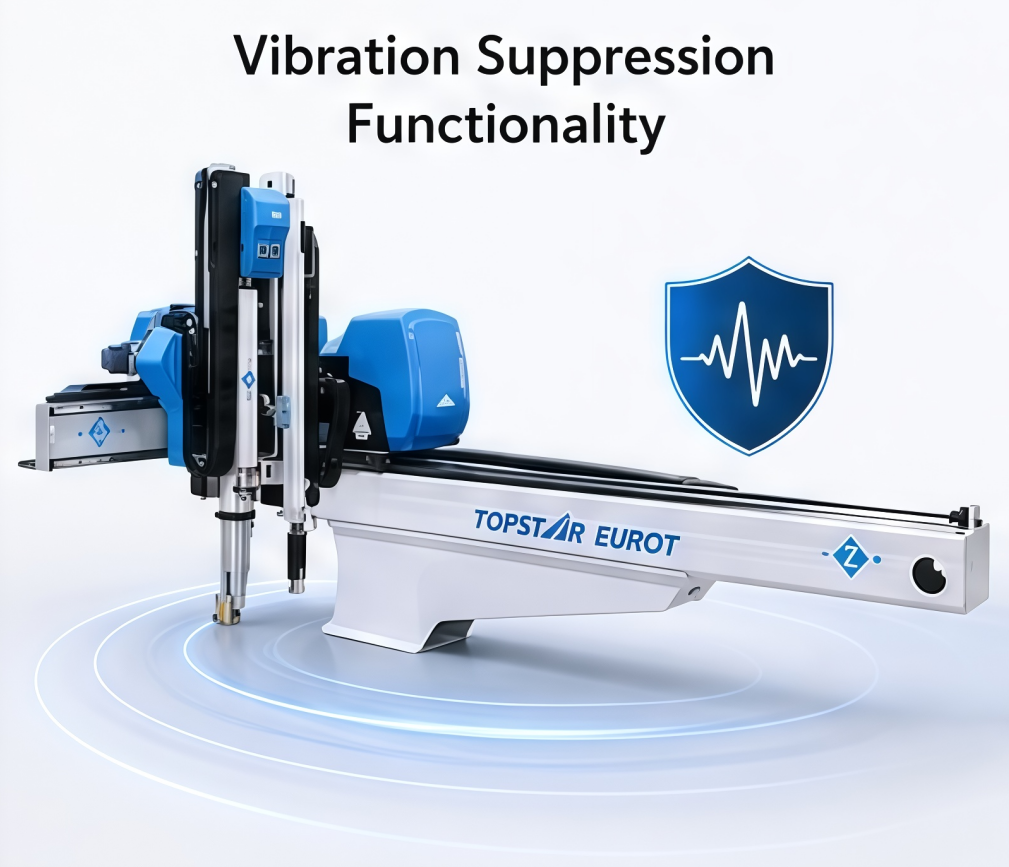
Integrated Vibration Suppression for Stable Extraction
Featuring an integrated vibration suppression function, the robot maintains stability during high-speed operation, specifically during part extraction, placement, and motion transitions. Part extraction represents the phase of greatest stress for the robot; at this critical juncture, the part is in proximity to the mold, the timing for ejection may be extremely tight, and the robot must execute rapid movements without interfering with the product. With its integrated vibration suppression capability, the linear robot handles these scenarios with significantly greater smoothness. This technology minimizes vibration, enhances motion consistency, and facilitates more precise gripping.
The EU Series linear robot: Meeting High-Speed, High-Precision Process Requirements
A linear robot designed to meet the demands of high-speed, high-precision processes must possess the following attributes: high-speed motors, rapid acceleration and deceleration capabilities, a lightweight yet robust mechanical arm, a high-precision drive and transmission system, and vibration suppression functionality. Topstar’s EU Series robots integrate all these essential features into a single, cohesive system.
| Selection Requirement | What the Robot Needs | Topstar EU Series Feature |
|---|---|---|
| Fast cycle time | High motor speed and quick response | Motors up to 6,000 rpm, +10% max speed |
| Stable acceleration | Reduced motion lag | -20% acceleration/deceleration time |
| High precision | Repeatable motion under load | Rack-and-pinion drive, ±0.01 mm repeatability |
| Lower vibration | Stable arm structure | A6061 aluminum alloy arm, -20% vibration amplitude |
| Stable extraction | Motion control under real load | Integrated vibration suppression |
TRENDING POSTS
- Breaking Through the Full Scene-to-AI Link! Topstar Industrial Data Collection Matrix Achieves Major Technical Breakthro 2026/04/27
- TOPSTAR Selected in “Forbes China AI Top 50” and Wins “2026 Embodied AI Industry Benchmark Award” 2026/04/27
- Topstar Achieves ISO 13849 Functional Safety Certification for Robotics 2026/04/27
- Topstar Completes Key Puzzle in Embodied Intelligence Data Closed Loop — Industrial AI Capability Foundation Now in Place 2026/04/27
HOT TOPIC
- .ervo motor-driven linear robots
- •
- 1.0 guangdong topstar technology co. ltd
- 1.0 topstar china
- 1.0 topstar robot
- 11
- 160℃ mold temperature controller
- 170 ton injection molding machine
- 2
- 21
- 220-ton injection molding machine
- 23
- 260 ton injection molding machine
- 3 axis robot
- 3 axis robots
- 3 in 1 Compact Dehumidifying Dryer
- 3-axis robot
- 3-axis robots
- 39
- 4 axis robot
- 4-axis SCARA robot
- 41
- 460T injection molding machine
- 5-axis CNC machine
- 62
- 90 ton injection molding machine
- accuracy
- Air Chillers
- air-cooled chillers
- all electric injection molding machine
- all electric injection molding machines
- all-electric injection molding machine
- All-electric injection molding machines
- and overall production quality. Therefore
- AP-RubberPlas
- auto cooling system
- auto loader
- Auto Loaders
- automated injection molding machine
- Automation changed engineering
- automation of injection molding robots
- automotive parts injection molding
- Auxiliary Equipment
- auxiliary machine
- Bench Injection Molding Machine
- cabinet dryer
- Cabinet dryer manufacturers
- Cabinet dryers
- cartesian coordinate robot
- Cartesian Coordinate Robots
- Cartesian injection robot
- Cartesian robot
- Central Feeding System
- Central Feeding Systems
- chiller
- CNC Drilling Machine
- CNC Drilling Machines
- cnc engraving machine manufacturer
- cnc laser cutting machine manufacturer
- CNC machine
- CNC Machine Center
- CNC Machine for Sale
- CNC Machine Manufacturing
- CNC Machine Tool
- CNC machine tool product
- CNC Machining Center
- CNC wood carving machine
- Compact Dehumidifying Dryer
- Cooling system
- Cross-Walking Single Axis Servo Cylinder Robot
- Cross-Walking Single-Axis Servo Cylinder Robot
- Cross-Walking Three-Axis/Five-Axis Servo Driven Robot
- cross-walking three-axis/five-axis servo-driven robot
- Dehumidifier Dryer
- Dehumidifying Dryer
- dehumidifying dryers
- delta parallel robot
- Desktop Injection Molding Machine
- Desktop injection molding machines
- Desktop Molding Machine
- desktop plastic injection machine
- Desktop Plastic Injection Molding Machine
- detachable autoloader
- Digital Transformation
- direct clamp injection molding machine
- Direct clamp injection molding machines
- Dosing & mixing system
- Drilling Centers
- Drying and dehumidification system
- drying and dehumidifying equipment
- Drying and Dehumidifying System
- drying system
- effective and efficient. Cabinet dryers are also used in other industries where large quantities of material need to be dried
- efficient injection molding machine
- elbow hydraulic injection molding machines
- electric injection molding machine
- electric injection molding machines
- energy-efficient injection molding robot
- energy-efficient water chiller
- energy-efficient water chillers
- energy-saving injection molding machine
- etc. Among injection molding robots
- exhibition
- features of CNC machine
- Feeding And Conveying System
- Five Axis Machine Center
- Flexible Production Line
- Fully automatic injection molding machine
- Gathering Topstar
- giant injection molding machine
- GMU-600 5-Axis Machining Center
- Granulating & Recycling System
- granulator machine
- gravimetric blender
- Heavy duty injection molding machine
- Heavy-Duty Take-Out Robot
- High-precision electric molding machines
- high-precision plastic molding machines
- high-speed all electric injection molding machine
- high-speed electric injection molding machine
- High-Speed Packaging Injection Molding
- Honeycomb rotor dehumidifier
- hopper dryer
- Hopper Dryers
- horizontal injection molding machine
- Horizontal Injection Molding Machines
- Horizontal Injection Moulding Machine
- Horizontal Mixer manufacturer
- How The CNC Machine Works
- hybrid injection molding machine
- hydraulic injection molding machine
- Hydraulic Injection Molding Machines
- in this article
- Industrial AI
- Industrial Automation
- Industrial robot
- Industrial Robot Chinese brand
- industrial robot parts
- industrial robot supplier
- Industrial robots
- Industry Chain
- Injection Manipulator
- injection manipulator robot
- injection mold machines
- Injection molding
- Injection molding automation
- Injection Molding Automation Solution
- injection molding dryer
- Injection molding equipment
- injection molding hopper dryer
- Injection molding machine
- injection molding machine brand
- Injection Molding Machine Factory
- Injection Molding Machine Manufacture
- Injection molding machine manufacturer
- injection molding machine manufacturers
- Injection molding machine procurement
- injection molding machine robotic arm
- injection molding machine with a robot
- Injection molding machines
- injection molding material dehumidifying
- injection molding plant
- injection molding process
- Injection Molding Robot
- injection molding robot arm
- Injection molding robot automation
- Injection molding robotic arm
- injection molding robots
- injection molding whole plant
- injection moulding dryer
- Injection moulding machine
- injection moulding machines
- Injection Moulding Robots
- Injection Robot
- Injection robot arm
- Injection robot manufacturer
- Injection robot wholesale
- injection robots
- Intelligent Factory
- intelligent injection molding machines
- Intelligent Manufacturing
- intelligent mold temperature
- intelligent mold temperature controller
- Intelligent mould temperature controller
- intelligent whole plant solution
- InterPlas Thailand 2025
- Introducing Injection Robot
- It is the best choice for drying large quantities of material at once. Cabinetmakers use these machines because they are fast
- Large flow water type mold temperature controller
- large injection molding machine
- large injection molding machines
- Learn what industrial automation and robotics is
- linear robot
- linear robots
- low speed sound-proof granulator
- machine plastic molding
- make sure to add some! Improvements (2) Keyphrase in introduction: Your keyphrase or its synonyms appear in the first paragraph of the copy
- manipulator machine
- manufacturing
- Manufacturing Innovation
- medical grade injection molding machines
- Medical Injection Molding
- medical injection molding machine
- medical injection molding machines
- micro injection molding machine
- middle speed granulator
- Mini CNC machine manufacturers.
- mobile cover making machine
- Mold Temperature Control System
- mold temperature controller
- mold temperature controllers
- molding machine
- molding material Dehumidifying System
- mould temperature control system
- mould temperature controller
- mould temperature controller
- mould temperature controllers
- New electric injection molding machine
- Nitrogen Dryer
- nitrogen dryer manufacturer
- nitrogen dryer system manufacturer
- Oil type mold temperature controller
- Oil type mold temperature controllers
- open day
- optical component injection molding
- Optical-grade dehumidifying dryer
- Outbound links: No outbound links appear in this page. Add some! Images: No images appear on this page. Add some! Internal links: No internal links appear in this page
- packaging injection molding
- Packaging Solutions
- PET Preform injection molding
- phone case maker machine
- phone case making machine
- phone cover making machine
- PID Control Mold Temperature Controller
- plastic auto loader
- plastic bottle making machine
- plastic bottle manufacturing
- plastic bucket making machine
- plastic bucket manufacturing
- Plastic chair making machine
- plastic dryer for injection molding
- plastic forming equipment
- Plastic Granulator
- Plastic Granulators
- plastic hopper dryer
- plastic injection machine
- plastic injection machines
- plastic injection molding
- Plastic injection molding equipment
- Plastic injection molding machine
- Plastic Injection Molding Machines
- plastic injection moulding machine
- plastic injection moulding machines
- plastic injection robot
- plastic molding
- Plastic Molding Industry
- Plastic Molding machine
- plastic molding machine 1
- Plastic Molding Machines
- plastic molding press
- plastic moulding machine
- plastic phone case making machine
- plastic-molding machine
- powerful granulator
- Powerful Type Sound-Proof Granulator
- precision injection molding
- precision injection molding machines
- production of plastic seats
- pure water mould temperature controller
- Robot injection molding
- robot injection molding machine
- robot manufacturing companies
- Robotic arm for injection molding machine
- robotic injection molding machines
- robotics in injection molding
- SCARA robot
- SCARA robots
- Screw dosers
- Service-oriented manufacturing
- Servo Cylinder Robot
- servo driven robot
- Servo Driven Robots
- servo injection molding machine
- servo injection robots
- servo motor-driven linear robots
- servo-driven 3-axis robot
- Servo-driven injection molding machine
- Servo-Driven Robot
- Setup of injection machine
- Silicone Injection Molding Machine
- six-axis industrial robot
- Smart Manufacturing
- soundproof granulator
- Sprue Picker
- Stainless Hopper Dryer
- Stainless Hopper Dryers
- star club
- swing arm robot
- T1 Cartesian injection robot
- take-out robot
- take-out robots
- Thailand 4.0
- the choice between servo-driven robots and hydraulic robots will have a certain impact on efficiency
- the most popular injection molding machine
- the type of injection molding robot
- TIC2000 Control System
- TMII injection molding machine
- toggle clamp injection molding machine
- Toggle Hydraulic Injection Molding Machines
- toggle injection molding machine
- Top 10 brands of injection robots
- Topstar
- Topstar Electric Injection Molding Machine InterPlas Thailand 2025 Smart Manufacturing Thailand 4.0
- Topstar Engineering
- Topstar Industrial Robots
- Topstar injection molding intelligent
- Topstar Scara Robots
- Useful Injection molding machine
- Vertical machining centers
- volumetric type blender
- Washing Machine Case Molding Solution
- water chiller
- water chillers
- water distributor
- water type mold temperature controller
- Water Type MoldTemperature Controller
- Water-Cooled Chillers
- Water-cooled Mold Temperature Controller
- water-type mold temperature controller
- Water-Type Mould Temperature Controllers
- We often face choices when performing injection molding. We will choose the type of injection molding machine
- wholesale of injection molding machines
- x carve CNC
- 热门查询 点击次数 展示 排名 topstar