
How do you select a feeding and conveying system for your injection molding production?
2026/08/17 By le zhan
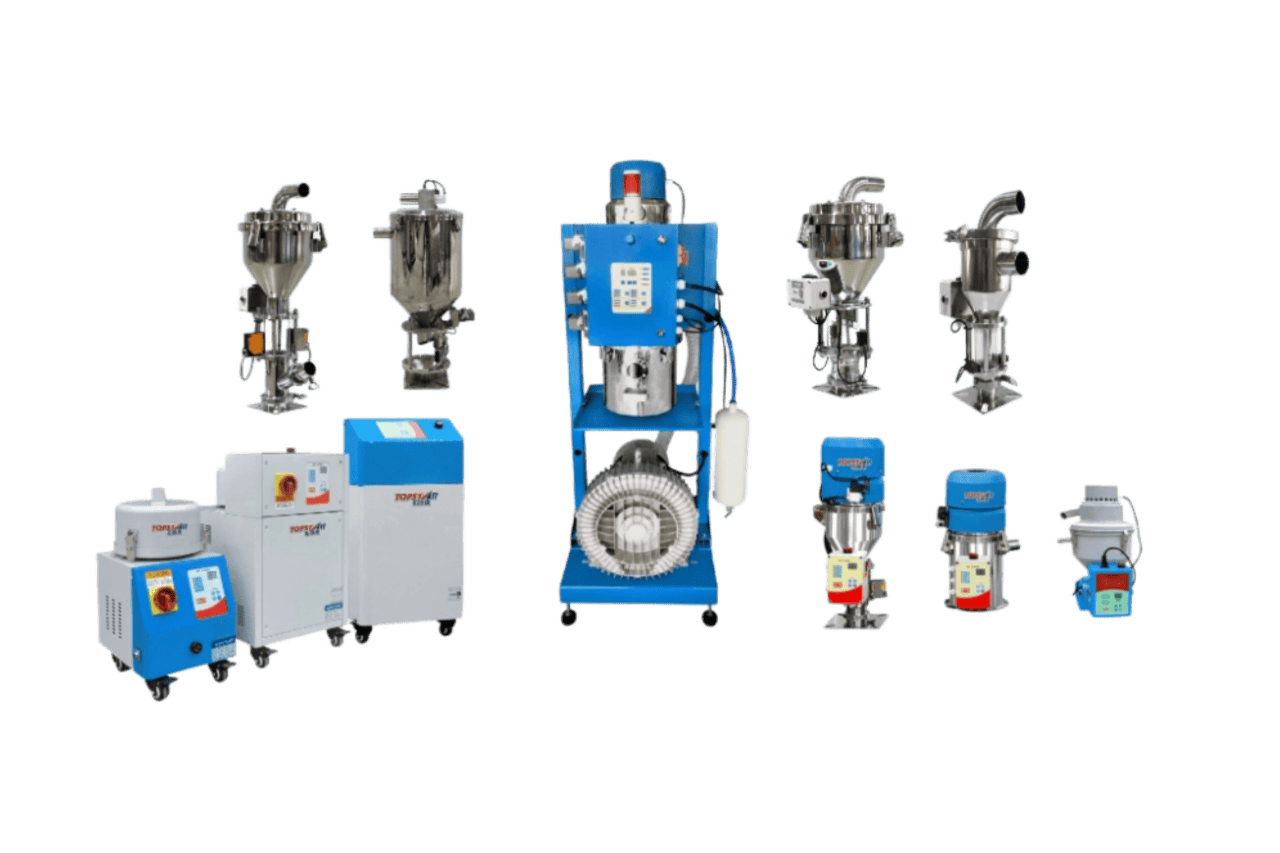
A feeding and conveying system does more than transport plastic pellets from one location to another; it also establishes a controlled feed link between the raw material storage area and the injection molding machine. At the same time, it reduces manual handling, improves material supply reliability, and creates a cleaner, more scalable production environment. We recommend selecting a feeding system based on your actual production process and understanding the differences between the various types of automatic feeders available on the market. This product selection guide introduces Topstar’s main feeding and conveying systems and their differences, and explains the most suitable production scenarios for each automatic feeder.
First, Consider Material Supply Requirements
Before purchasing an auto loader or hopper receiver, you should first clarify the material handling conditions in your injection molding process. This helps avoid the pitfall of selecting a model based solely on conveying capacity while overlooking key factors such as conveying distance, material properties, the number of machines, or cleanliness requirements.
Different plastic materials place varying demands on conveying systems. Common injection molding materials include PP, PE, ABS, PC, PA, PET, and others.
Virgin pellets are generally easier to convey, while recycled and regrind materials may generate more dust and fine particles. Optical-grade materials require even stricter contamination control. For this reason, Topstar offers a diverse range of material-contact components and filtration configurations tailored to different conveying applications, rather than relying on a one-size-fits-all solution.
Therefore, the primary principle for selection is simple:
First, determine the feeding configuration based on material characteristics, then determine the specifications and dimensions of the conveying equipment based on production requirements.
Matching Conveying Capacity, Material Consumption, and Production Layout
When selecting feeding and conveying systems, it is also necessary to comprehensively consider material consumption and conveying distance. The system must have sufficient conveying capacity to meet actual material demands while also accommodating the conveying range required by the production layout. Over-sizing the feeding and conveying equipment may lead to unnecessary complexity, while under-sizing may result in unstable material supply.
The basic selection principles are as follows:
Single machine + low demand + short distance → Compact, integrated auto loaders
High material demand + long conveying distance → High-capacity conveying system
Multiple machines + shared material source → Detachable auto loaders with multiple hopper receivers
Selecting the Right Topstar Feeding and Conveying System
Once you have identified the material characteristics, production capacity requirements, and workshop layout needs, let’s take a look at the equipment configurations available in Topstar’s feeding and conveying systems.
Feeding and Conveying System: TAL Series Single Autoloaders
The TAL series single autoloaders are specifically designed for direct installation on injection molding machines. Their core advantages are simplicity and efficiency. There is no need to build a complex centralized conveying network; mount the feeder directly above the injection molding machine to automatically supply material according to production needs.
Key features include:
- All-stainless-steel construction;
- Dual-layer filtration system;
- Combination of filter cloth and stainless-steel mesh for filtration;
- Motor reverse rotation dust removal function;
- Motor protection system;
- Intelligent material level sensing;
- Automatic low-material alarm.
- When should you choose the TAL Series standalone feeder?
This equipment is particularly suitable for standalone production, compact workshops with limited installation space, short conveying distances, applications requiring high ease of operation, and scenarios involving injection molding machines that require independent feeding. It is an excellent choice when different machines process different materials and manufacturers wish to avoid unnecessary cross-machine material contamination.
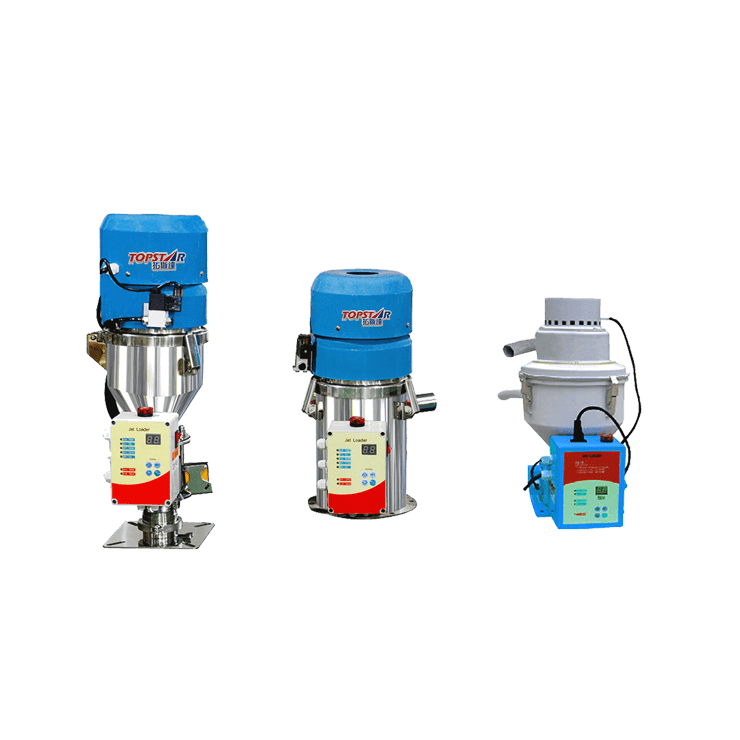
Feeding and Conveying System: TAL Series Detachable Autoloaders, Enabling Flexible Multi-Machine Conveying
The TAL Series detachable autoloader features a unique architectural design. Its main controller and hopper receivers are physically separated. This split design offers exceptional installation flexibility, allowing multiple hopper receivers to be configured around a single feed source. Two or more hopper receivers can be combined to achieve a “one-to-many” conveying mode. A detachable autoloader can supply material to multiple receiving points according to the production layout.
Depending on the selected configuration, the TAL Series detachable autoloader can achieve a maximum conveying capacity of up to 700 kg/h. This makes the TAL Series detachable autoloader ideal for production environments with high material demand. It also supports conveying distances of up to 10 meters; When the material source is located far from the injection molding machine, it offers significant advantages over compact, machine-mounted feeders.
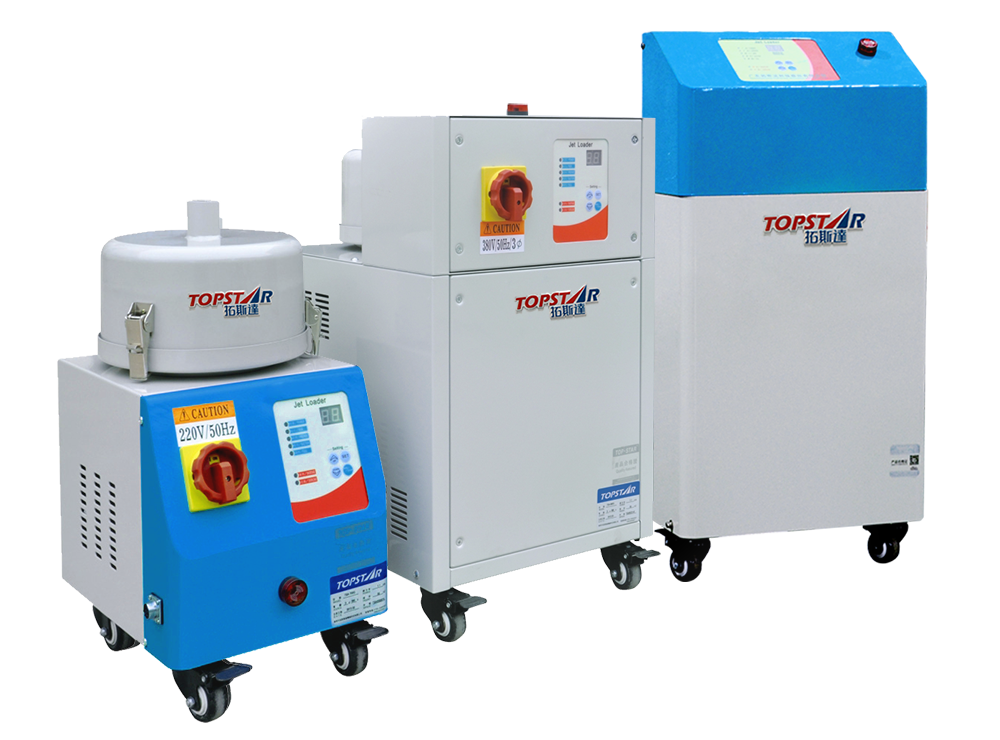
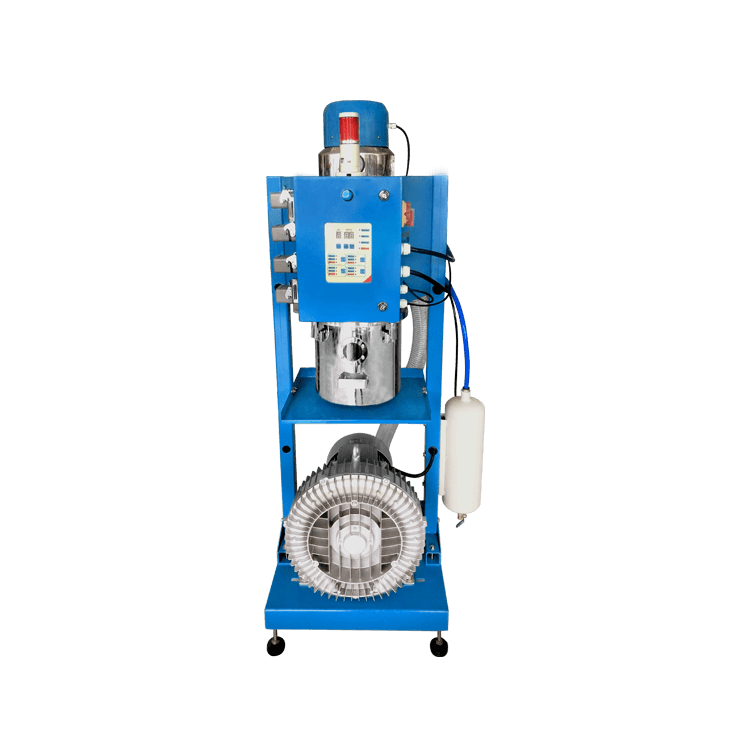
TAL Series Detachable Autoloader(Open type)—Easy to Maintain and Clean to Operate
The TAL Series open-type detachable autoloaders are designed for customers who value both industrial aesthetics and dust management.
Featuring a stainless steel construction, it ensures a clean material conveying process while presenting a professional appearance suited to modern production environments. Its most notable feature is the “downward suction” conveying design, which incorporates the following components:
Cyclone separation baffle;
A separate dust collection bin;
A filtration system.
This configuration effectively treats dust before it can overload the main filter element. The TAL open-style model uses cyclone separation baffles and a separate dust collection bin to significantly reduce the dust load reaching the filter. Rather than allowing all dust to accumulate directly on the filter, a portion of the dust is separated before it reaches the filtration stage.
Selecting the Right Hopper Receiver for Effective Material Control
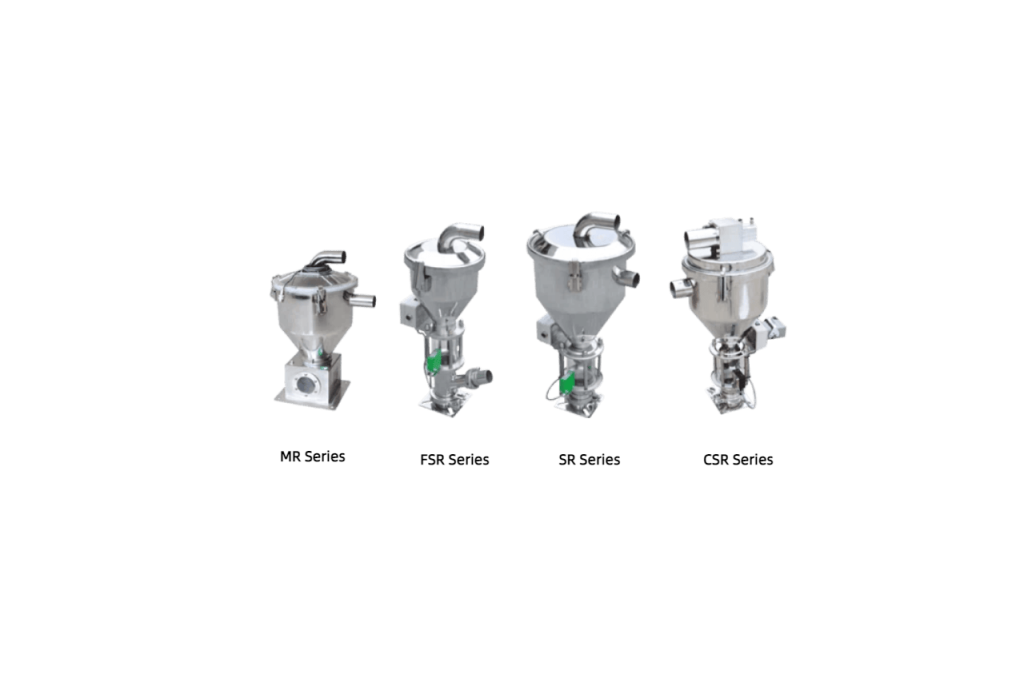
Hopper receivers are critical components in feeding and conveying systems, serving as the link between material conveyance and the injection molding machine. When selecting a hopper receiver, it is important to comprehensively consider material cleanliness, application requirements, conveying architecture, and the level of automation.
Topstar offers a variety of hopper receivers to meet different production needs:
FSR Series Optical-Grade Stainless Steel Hopper Receivers: Designed specifically for optical material applications with extremely high cleanliness and material visibility requirements, these are suitable for producing optical lenses, light-guiding components, and other products.
SR Series Stainless Steel Hopper Receivers: A general-purpose option suitable for conveying standard clean materials; constructed of stainless steel, they facilitate material monitoring and equipment cleaning.
CSR Series Centralized Stainless Steel Hopper Receivers: Designed specifically for central conveying systems, these are particularly suitable for scenarios where multiple injection molding machines share a single material source.
MR Series Magnetic Induction Hopper Receivers: Utilize magnetic induction technology to monitor material demand and support automatic feeding, thereby reducing unnecessary manual intervention.
Therefore, the selection logic can be summarized as follows:
Cleanliness-sensitive applications → FSR Series
Standard machine-side feeding → SR Series
Centralized multi-machine conveying → CSR Series
Automated material level control → MR Series
Final Selection Guide for Different Injection Molding Applications
The simplest decision-making method is to match the system to the actual production scenario.
The selection principles are very clear:
| Production Scenario | Recommended Topstar Solution | Main Reason |
|---|---|---|
| One IMM, compact installation | TAL Series Single Autoloaders | Simple machine-side feeding |
| One IMM with clean material handling | TAL Single + stainless hopper receiver | Clean material contact |
| Multiple IMMs using shared material | TAL Series Detachable Autoloaders | One-to-many conveying |
| Long-distance conveying | TAL Series Detachable Autoloaders | Up to 10 m loading distance |
| High material demand | TAL Series Detachable Autoloaders | Up to 700 kg/h, configuration dependent |
| Crushed/recycled material | TAL Detachable / Open Type | Independent filtration and dust management |
| Dust-intensive conveying | TAL Detachable Autoloaders Open Type | Cyclone baffle + separate dust barrel |
| Optical materials | FSR Series Optics Stainless Steel Hopper Receivers | Cleanliness-focused material handling |
| General stainless-steel material handling | SR Series Stainless Steel Hopper Receivers | Clean and durable construction |
| Centralized material distribution | CSR Series Central Stainless Steel Hopper Receivers | Central conveying architecture |
| Magnetic-induction receiving | MR Series Magnetic Induction Hopper Receivers | Automatic sensing and feeding |
Do not base your selection solely on the automatic feeder itself. Instead, comprehensively consider material characteristics, production capacity, conveying distance, the number of injection molding machines, cleanliness requirements, and maintenance needs to select a complete feeding and conveying system.
TRENDING POSTS
- Breaking Through the Full Scene-to-AI Link! Topstar Industrial Data Collection Matrix Achieves Major Technical Breakthro 2026/08/17
- TOPSTAR Selected in “Forbes China AI Top 50” and Wins “2026 Embodied AI Industry Benchmark Award” 2026/08/17
- Topstar Achieves ISO 13849 Functional Safety Certification for Robotics 2026/08/17
- Topstar Completes Key Puzzle in Embodied Intelligence Data Closed Loop — Industrial AI Capability Foundation Now in Place 2026/08/17
HOT TOPIC
- .ervo motor-driven linear robots
- •
- 1.0 guangdong topstar technology co. ltd
- 1.0 topstar china
- 1.0 topstar robot
- 11
- 160℃ mold temperature controller
- 170 ton injection molding machine
- 2
- 21
- 220-ton injection molding machine
- 23
- 260 ton injection molding machine
- 3 axis robot
- 3 axis robots
- 3 in 1 Compact Dehumidifying Dryer
- 3-axis robot
- 3-axis robots
- 39
- 4 axis robot
- 4-axis SCARA robot
- 41
- 460T injection molding machine
- 5-axis CNC machine
- 62
- 90 ton injection molding machine
- accuracy
- Air Chillers
- air-cooled chillers
- all electric injection molding machine
- all electric injection molding machines
- all-electric injection molding machine
- All-electric injection molding machines
- and overall production quality. Therefore
- AP-RubberPlas
- auto cooling system
- auto loader
- Auto Loaders
- automated injection molding machine
- Automation changed engineering
- automation of injection molding robots
- automotive parts injection molding
- Auxiliary Equipment
- auxiliary machine
- Bench Injection Molding Machine
- cabinet dryer
- Cabinet dryer manufacturers
- Cabinet dryers
- cartesian coordinate robot
- Cartesian Coordinate Robots
- Cartesian injection robot
- Cartesian robot
- Central Feeding System
- Central Feeding Systems
- chiller
- CNC Drilling Machine
- CNC Drilling Machines
- cnc engraving machine manufacturer
- cnc laser cutting machine manufacturer
- CNC machine
- CNC Machine Center
- CNC Machine for Sale
- CNC Machine Manufacturing
- CNC Machine Tool
- CNC machine tool product
- CNC Machining Center
- CNC wood carving machine
- Compact Dehumidifying Dryer
- Cooling system
- Cross-Walking Single Axis Servo Cylinder Robot
- Cross-Walking Single-Axis Servo Cylinder Robot
- Cross-Walking Three-Axis/Five-Axis Servo Driven Robot
- cross-walking three-axis/five-axis servo-driven robot
- Dehumidifier Dryer
- Dehumidifying Dryer
- dehumidifying dryers
- delta parallel robot
- Desktop Injection Molding Machine
- Desktop injection molding machines
- Desktop Molding Machine
- desktop plastic injection machine
- Desktop Plastic Injection Molding Machine
- detachable autoloader
- Digital Transformation
- direct clamp injection molding machine
- Direct clamp injection molding machines
- Dosing & mixing system
- Drilling Centers
- Drying and dehumidification system
- drying and dehumidifying equipment
- Drying and Dehumidifying System
- drying system
- effective and efficient. Cabinet dryers are also used in other industries where large quantities of material need to be dried
- efficient injection molding machine
- elbow hydraulic injection molding machines
- electric injection molding machine
- electric injection molding machines
- energy-efficient injection molding robot
- energy-efficient water chiller
- energy-efficient water chillers
- energy-saving injection molding machine
- etc. Among injection molding robots
- exhibition
- features of CNC machine
- Feeding And Conveying System
- Five Axis Machine Center
- Flexible Production Line
- Fully automatic injection molding machine
- Gathering Topstar
- giant injection molding machine
- GMU-600 5-Axis Machining Center
- Granulating & Recycling System
- granulator machine
- gravimetric blender
- Heavy duty injection molding machine
- Heavy-Duty Take-Out Robot
- High-precision electric molding machines
- high-precision plastic molding machines
- high-speed all electric injection molding machine
- high-speed electric injection molding machine
- High-Speed Packaging Injection Molding
- Honeycomb rotor dehumidifier
- hopper dryer
- Hopper Dryers
- horizontal injection molding machine
- Horizontal Injection Molding Machines
- Horizontal Injection Moulding Machine
- Horizontal Mixer manufacturer
- How The CNC Machine Works
- hybrid injection molding machine
- hydraulic injection molding machine
- Hydraulic Injection Molding Machines
- in this article
- Industrial AI
- Industrial Automation
- Industrial robot
- Industrial Robot Chinese brand
- industrial robot parts
- industrial robot supplier
- Industrial robots
- Industry Chain
- Injection Manipulator
- injection manipulator robot
- injection mold machines
- Injection molding
- Injection molding automation
- Injection Molding Automation Solution
- injection molding dryer
- Injection molding equipment
- injection molding hopper dryer
- Injection molding machine
- injection molding machine brand
- Injection Molding Machine Factory
- Injection Molding Machine Manufacture
- Injection molding machine manufacturer
- injection molding machine manufacturers
- Injection molding machine procurement
- injection molding machine robotic arm
- injection molding machine with a robot
- Injection molding machines
- injection molding material dehumidifying
- injection molding plant
- injection molding process
- Injection Molding Robot
- injection molding robot arm
- Injection molding robot automation
- Injection molding robotic arm
- injection molding robots
- injection molding whole plant
- injection moulding dryer
- Injection moulding machine
- injection moulding machines
- Injection Moulding Robots
- Injection Robot
- Injection robot arm
- Injection robot manufacturer
- Injection robot wholesale
- injection robots
- Intelligent Factory
- intelligent injection molding machines
- Intelligent Manufacturing
- intelligent mold temperature
- intelligent mold temperature controller
- Intelligent mould temperature controller
- intelligent whole plant solution
- InterPlas Thailand 2025
- Introducing Injection Robot
- It is the best choice for drying large quantities of material at once. Cabinetmakers use these machines because they are fast
- Large flow water type mold temperature controller
- large injection molding machine
- large injection molding machines
- Learn what industrial automation and robotics is
- linear robot
- linear robots
- low speed sound-proof granulator
- machine plastic molding
- make sure to add some! Improvements (2) Keyphrase in introduction: Your keyphrase or its synonyms appear in the first paragraph of the copy
- manipulator machine
- manufacturing
- Manufacturing Innovation
- medical grade injection molding machines
- Medical Injection Molding
- medical injection molding machine
- medical injection molding machines
- micro injection molding machine
- middle speed granulator
- Mini CNC machine manufacturers.
- mobile cover making machine
- Mold Temperature Control System
- mold temperature controller
- mold temperature controllers
- molding machine
- molding material Dehumidifying System
- mould temperature control system
- mould temperature controller
- mould temperature controller
- mould temperature controllers
- New electric injection molding machine
- Nitrogen Dryer
- nitrogen dryer manufacturer
- nitrogen dryer system manufacturer
- Oil type mold temperature controller
- Oil type mold temperature controllers
- open day
- optical component injection molding
- Optical-grade dehumidifying dryer
- Outbound links: No outbound links appear in this page. Add some! Images: No images appear on this page. Add some! Internal links: No internal links appear in this page
- packaging injection molding
- Packaging Solutions
- PET Preform injection molding
- phone case maker machine
- phone case making machine
- phone cover making machine
- PID Control Mold Temperature Controller
- plastic auto loader
- plastic bottle making machine
- plastic bottle manufacturing
- plastic bucket making machine
- plastic bucket manufacturing
- Plastic chair making machine
- plastic dryer for injection molding
- plastic forming equipment
- Plastic Granulator
- Plastic Granulators
- plastic hopper dryer
- plastic injection machine
- plastic injection machines
- plastic injection molding
- Plastic injection molding equipment
- Plastic injection molding machine
- Plastic Injection Molding Machines
- plastic injection moulding machine
- plastic injection moulding machines
- plastic injection robot
- plastic molding
- Plastic Molding Industry
- Plastic Molding machine
- plastic molding machine 1
- Plastic Molding Machines
- plastic molding press
- plastic moulding machine
- plastic phone case making machine
- plastic-molding machine
- powerful granulator
- Powerful Type Sound-Proof Granulator
- precision injection molding
- precision injection molding machines
- production of plastic seats
- pure water mould temperature controller
- Robot injection molding
- robot injection molding machine
- robot manufacturing companies
- Robotic arm for injection molding machine
- robotic injection molding machines
- robotics in injection molding
- SCARA robot
- SCARA robots
- Screw dosers
- Service-oriented manufacturing
- Servo Cylinder Robot
- servo driven robot
- Servo Driven Robots
- servo injection molding machine
- servo injection robots
- servo motor-driven linear robots
- servo-driven 3-axis robot
- Servo-driven injection molding machine
- Servo-Driven Robot
- Setup of injection machine
- Silicone Injection Molding Machine
- six-axis industrial robot
- Smart Manufacturing
- soundproof granulator
- Sprue Picker
- Stainless Hopper Dryer
- Stainless Hopper Dryers
- star club
- swing arm robot
- T1 Cartesian injection robot
- take-out robot
- take-out robots
- Thailand 4.0
- the choice between servo-driven robots and hydraulic robots will have a certain impact on efficiency
- the most popular injection molding machine
- the type of injection molding robot
- TIC2000 Control System
- TMII injection molding machine
- toggle clamp injection molding machine
- Toggle Hydraulic Injection Molding Machines
- toggle injection molding machine
- Top 10 brands of injection robots
- Topstar
- Topstar Electric Injection Molding Machine InterPlas Thailand 2025 Smart Manufacturing Thailand 4.0
- Topstar Engineering
- Topstar Industrial Robots
- Topstar injection molding intelligent
- Topstar Scara Robots
- Useful Injection molding machine
- Vertical machining centers
- volumetric type blender
- Washing Machine Case Molding Solution
- water chiller
- water chillers
- water distributor
- water type mold temperature controller
- Water Type MoldTemperature Controller
- Water-Cooled Chillers
- Water-cooled Mold Temperature Controller
- water-type mold temperature controller
- Water-Type Mould Temperature Controllers
- We often face choices when performing injection molding. We will choose the type of injection molding machine
- wholesale of injection molding machines
- x carve CNC
- 热门查询 点击次数 展示 排名 topstar