
When Should You Use a 160°C High-Temperature Mould Temperature Controller?
2026/08/28 By le zhan
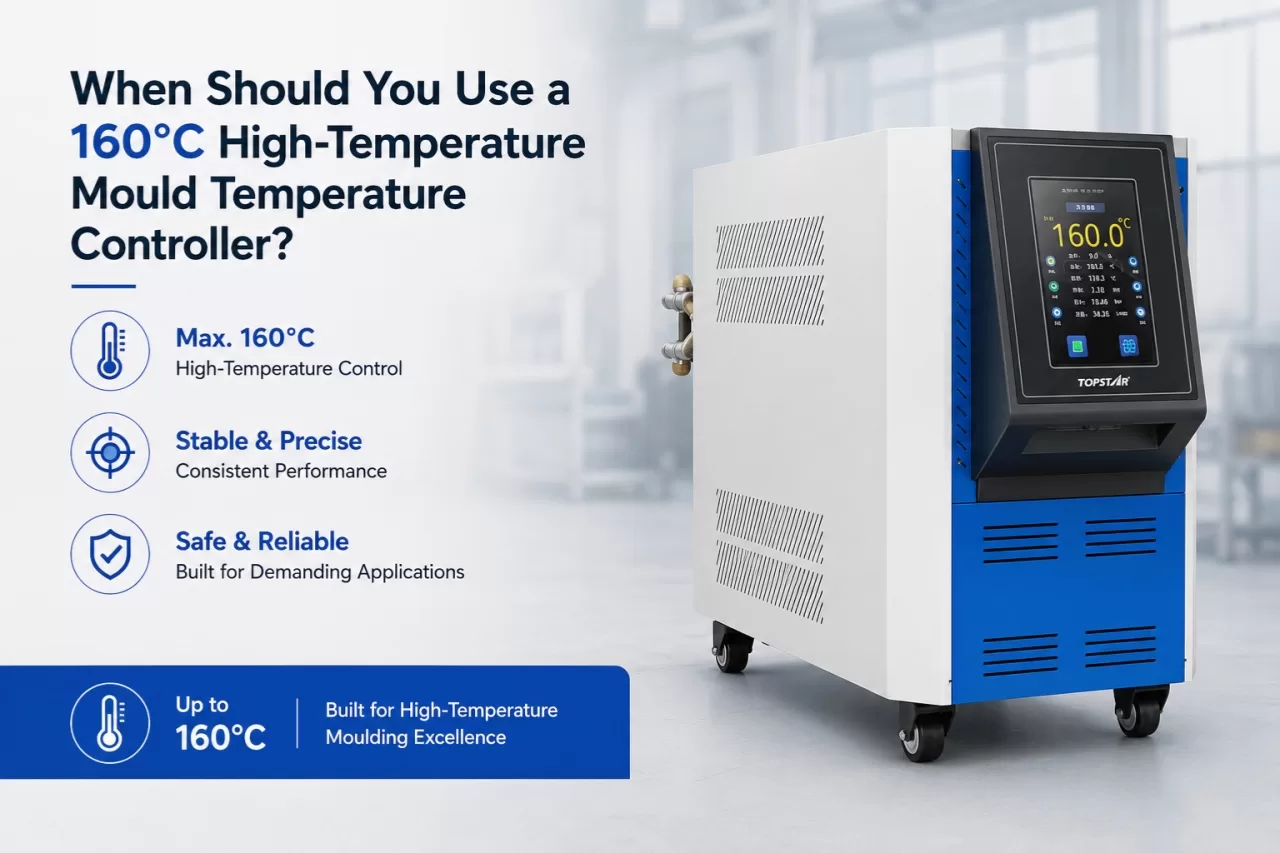
For most injection moulding applications, a standard 120°C mould temperature controller provides a sufficient temperature range. However, certain engineering plastics, precision components, and injection moulding processes with extremely high quality requirements demand higher, more stable mould temperatures. In such cases, if the equipment operates near the upper temperature limit of a 120°C system, it may compromise process flexibility and temperature stability. This is where a 160°C high-temperature mould temperature controller comes in.
Specifically, you should consider using a 160°C mould temperature controller in the following situations:
- The required mould temperature exceeds the suitable operating range of a 120°C model;
- The processing of engineering plastics requires higher mould temperatures;
- Surface quality, dimensional stability or filling consistency are highly dependent on mould temperature;
- You wish to continue using water as the heat transfer medium;
- The process does not require the higher operating temperature range offered by 180°C systems or oil-based temperature controllers.
The 160°C mould temperature controller bridges the gap between conventional water temperature control and high-temperature applications.
A 160°C high-temperature mould temperature controller should be selected when sufficient temperature headroom cannot be provided
The most direct reason for selecting a 160°C high-temperature mould temperature controller is that the required process temperature exceeds the practical operating range of conventional 120°C models.
However, this does not mean that the mould itself must operate at 160°C.
The rated temperature represents the heat transfer circuit’s maximum operating capacity. The actual mould temperature may be considerably lower. The more critical issue is whether the mould temperature controller possesses sufficient temperature headroom to maintain the required process temperature stably.
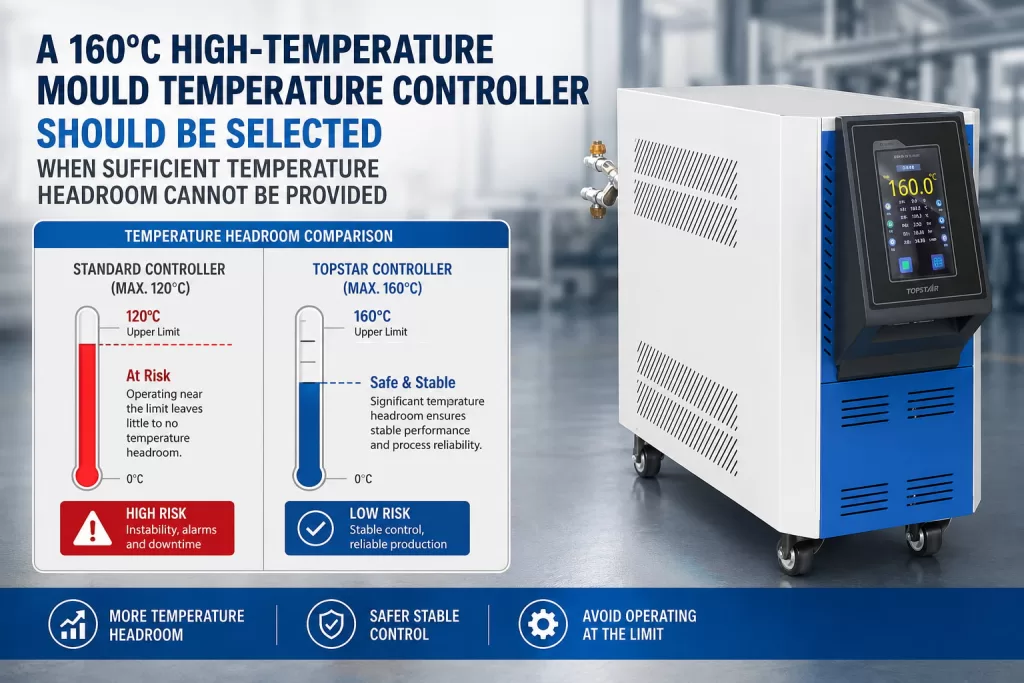
Avoiding Prolonged Operation of the Mould Temperature Controller at Its Limits
Suppose a moulding process requires a higher mould temperature.
If a 120°C unit operates for an extended period close to its maximum capacity, its operational margin will prove insufficient in the following scenarios:
- Startup with a cold mould;
- Increased production speed;
- Large moulds absorbing more heat;
- Changes in cooling conditions.
A 160°C model provides additional thermal capacity, making it easier to maintain the set temperature without operating continuously near the unit’s maximum limits.
Therefore, the basic selection principle is straightforward:
Normal-temperature moulding → 120°C
Medium-to-high-temperature moulding → 160°C
Ultra-high-temperature water temperature control → 180°C
Temperatures exceeding the applicable water temperature range → Select an oil-based temperature control unit.
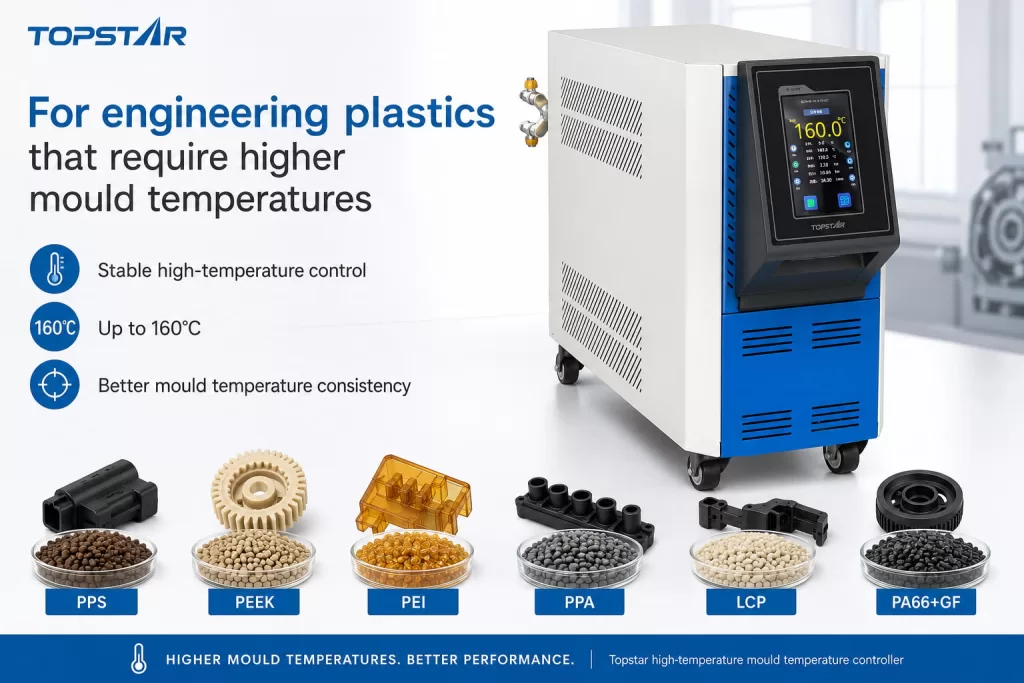
For engineering plastics that require higher mould temperatures
The second main application area for 160°C high-temperature mould temperature controllers is processing engineering plastics.
Certain engineering plastics require higher mould temperatures to ensure stable flow, surface reproduction, crystallisation behaviour, dimensional control or mechanical properties.
Always follow the material supplier’s processing recommendations and determine specific temperature settings in conjunction with actual moulding trials. However, when the recommended mould temperature approaches or exceeds the suitable operating range of a standard mould temperature controller, you can decide whether a 160°C model is required based on the specific mould temperature. Even with the same resin, two products may require vastly different mould temperatures because of variations in wall thickness, geometry, surface requirements, and moulding cycle conditions.
Select the 160°C model when raising the mould temperature helps improve filling performance
Higher mould temperatures help delay the premature solidification of molten plastic near the cavity walls. This is particularly beneficial for products featuring thin-walled sections, long flow paths, fine textures, or complex cavity geometries.
If the mould temperature is too low, the plastic may solidify before these areas fill. By controlling a higher mould temperature, the melt has more time to flow into hard-to-fill areas before solidification progresses further. Therefore, when the required temperature range exceeds what a standard 120°C system provides, a 160°C mould temperature controller ensures more stable filling results.
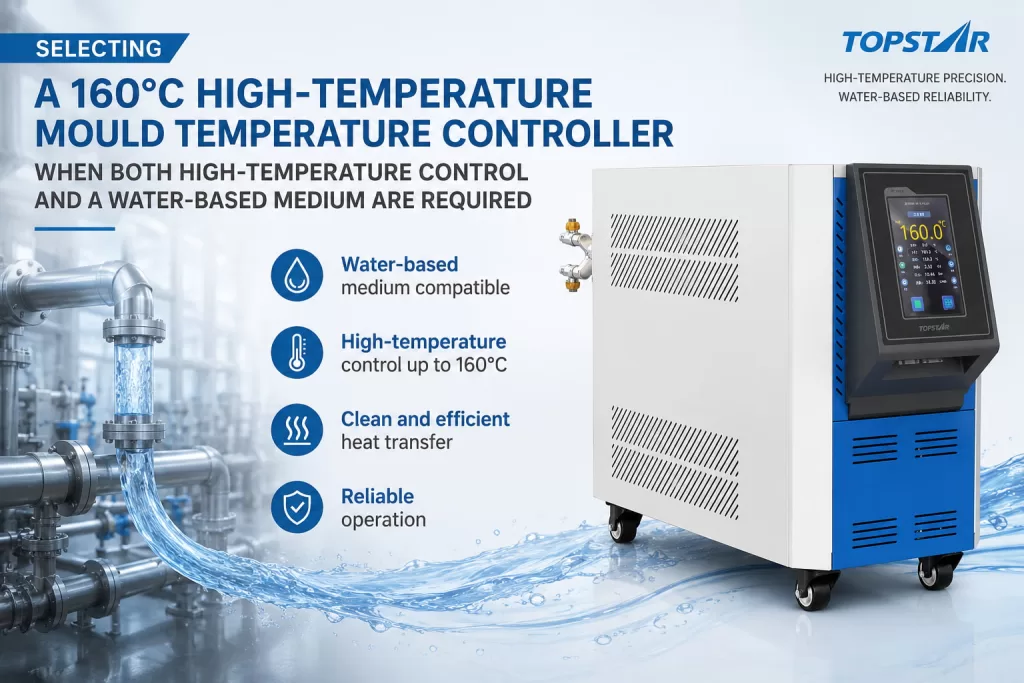
Selecting a 160°C High-Temperature Mould Temperature Controller When Both High-Temperature Control and a Water-Based Medium Are Required
The third key consideration when selecting a 160°C mould temperature controller relates to the heat transfer medium. Water has long been an efficient medium for mould temperature control because of its excellent heat-transfer properties. However, when operating above the boiling point at atmospheric pressure, the circulation system must maintain appropriate pressure to prevent boiling, gas accumulation, and unstable flow rates.
Conventional low-temperature mould temperature controllers cannot be directly converted into reliable high-temperature units simply by increasing the heater power.
Therefore, Topstar’s 160°C high-temperature water temperature controller employs a sealed circulation design, combining indirect cooling technology with a miniature pressurised make-up water pump. This makes the 160°C model the ideal choice for manufacturers who need a wider temperature control range while retaining the heat-transfer advantages of a water medium.
Choose 160°C when ‘stable high-temperature circulation’ is more important than ‘maximum temperature’
When water temperature rises significantly, simply withstanding high temperatures is not enough. The mould temperature controller must also maintain stable circulation flow. This is a key difference between specialised 160°C high-temperature mould temperature controllers and conventional low-temperature systems. Topstar ensures stable high-temperature circulation through several specialised design features.
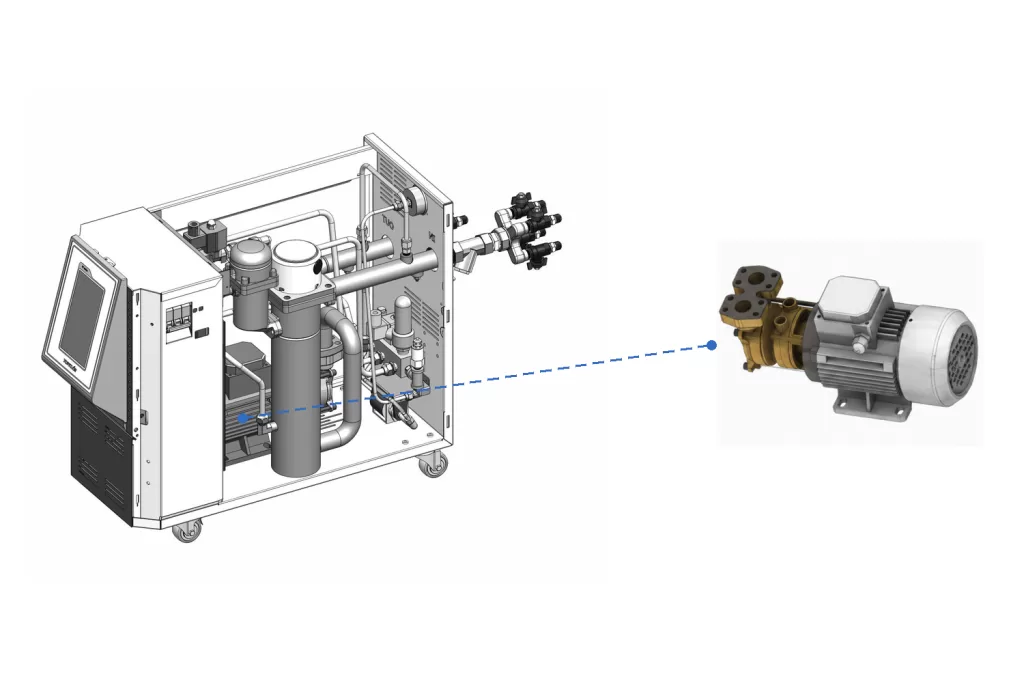
Design of a cooling pump for protecting the circulation system
The Topstar 160°C series utilises a pump featuring a cooling circuit in the mechanical seal area. In high-temperature environments, mechanical seals face greater thermal stress. Prolonged exposure to high temperatures accelerates wear and increases leakage risk. The cooling circuit reduces thermal stress around the seals, thereby extending the pump’s service life and maintaining circulation stability.
This is also a key difference between the Topstar 160°C and 180°C models.
The 160°C series uses a mechanically sealed pump with a cooling function, while the 180°C series uses a magnetically driven pump to handle the more demanding operating conditions at higher temperatures.
For users, this provides a clear guideline for model selection:
If the 160°C operating range meets requirements, the ‘cooled pump’ solution offers a practical balance between performance and system complexity.
Gas-liquid separation design for enhanced circulation stability
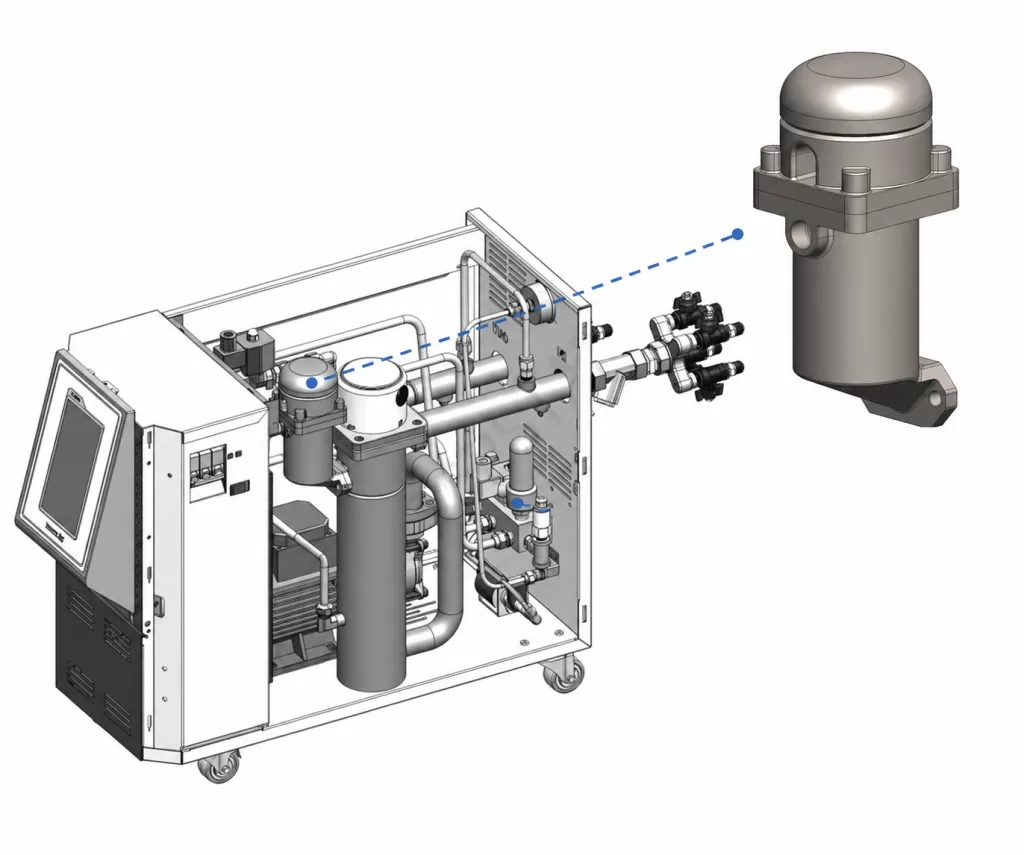
High-temperature water may release dissolved gases and expand thermally. If gas remains trapped within the circulation loop, it may cause bubble formation, pressure fluctuations, and unstable heat transfer.
Consequently, Topstar employs a gravity-fed gas-liquid separator.
This separator isolates released gases from the circulating water, preventing them from re-entering the mould circuit. At the same time, it buffers volume and pressure changes caused by thermal expansion.
This results in a more stable high-temperature circulation. Other features designed to enhance reliability include:
- Solid Teflon (PTFE) level float;
- Integrated piping structure;
- Specialised one-way check valve design;
- Reduction of unnecessary connection points.
These technical features ensure that the 160°C high-temperature mould temperature controller not only reaches the set temperature but also reliably maintains it throughout continuous production.
160°C mould temperature controllers for applications falling between standard and high-temperature control requirements
For manufacturers needing a maximum temperature above the capacity of standard 120°C water-based mould temperature controllers, the 160°C high-temperature mould temperature controller is the ideal choice.
The selection criteria are very straightforward:
- If standard mould temperature control meets your requirements, select a 120°C model.
- Where engineering plastics processing requires a higher and more stable water temperature range, select the 160°C model.
- Where the 160°C model cannot provide sufficient operating margin, select the 180°C model.
- If the required temperature exceeds the practical operating range of a high-temperature water temperature control unit, use an oil temperature control unit instead.
TRENDING POSTS
- TOPS DAY 2026: Turning Industrial AI into Real-World Impact 2026/08/28
- Breaking Through the Full Scene-to-AI Link! Topstar Industrial Data Collection Matrix Achieves Major Technical Breakthro 2026/08/28
- TOPSTAR Selected in “Forbes China AI Top 50” and Wins “2026 Embodied AI Industry Benchmark Award” 2026/08/28
- Topstar Achieves ISO 13849 Functional Safety Certification for Robotics 2026/08/28
HOT TOPIC
- .ervo motor-driven linear robots
- •
- 1.0 guangdong topstar technology co. ltd
- 1.0 topstar china
- 1.0 topstar robot
- 11
- 160℃ mold temperature controller
- 170 ton injection molding machine
- 2
- 21
- 220-ton injection molding machine
- 23
- 260 ton injection molding machine
- 3 axis robot
- 3 axis robots
- 3 in 1 Compact Dehumidifying Dryer
- 3-axis robot
- 3-axis robots
- 39
- 4 axis robot
- 4-axis SCARA robot
- 41
- 460T injection molding machine
- 5-axis CNC machine
- 62
- 90 ton injection molding machine
- accuracy
- Air Chillers
- air-cooled chillers
- all electric injection molding machine
- all electric injection molding machines
- all-electric injection molding machine
- All-electric injection molding machines
- and overall production quality. Therefore
- AP-RubberPlas
- auto cooling system
- auto loader
- Auto Loaders
- automated injection molding machine
- Automation changed engineering
- automation of injection molding robots
- automotive parts injection molding
- Auxiliary Equipment
- auxiliary machine
- Bench Injection Molding Machine
- cabinet dryer
- Cabinet dryer manufacturers
- Cabinet dryers
- cartesian coordinate robot
- Cartesian Coordinate Robots
- Cartesian injection robot
- Cartesian robot
- Central Feeding System
- Central Feeding Systems
- chiller
- CNC Drilling Machine
- CNC Drilling Machines
- cnc engraving machine manufacturer
- cnc laser cutting machine manufacturer
- CNC machine
- CNC Machine Center
- CNC Machine for Sale
- CNC Machine Manufacturing
- CNC Machine Tool
- CNC machine tool product
- CNC Machining Center
- CNC wood carving machine
- Compact Dehumidifying Dryer
- Cooling system
- Cross-Walking Single Axis Servo Cylinder Robot
- Cross-Walking Single-Axis Servo Cylinder Robot
- Cross-Walking Three-Axis/Five-Axis Servo Driven Robot
- cross-walking three-axis/five-axis servo-driven robot
- Dehumidifier Dryer
- Dehumidifying Dryer
- dehumidifying dryers
- delta parallel robot
- Desktop Injection Molding Machine
- Desktop injection molding machines
- Desktop Molding Machine
- desktop plastic injection machine
- Desktop Plastic Injection Molding Machine
- detachable autoloader
- Digital Transformation
- direct clamp injection molding machine
- Direct clamp injection molding machines
- Dosing & mixing system
- Drilling Centers
- Drying and dehumidification system
- drying and dehumidifying equipment
- Drying and Dehumidifying System
- drying system
- effective and efficient. Cabinet dryers are also used in other industries where large quantities of material need to be dried
- efficient injection molding machine
- elbow hydraulic injection molding machines
- electric injection molding machine
- electric injection molding machines
- energy-efficient injection molding robot
- energy-efficient water chiller
- energy-efficient water chillers
- energy-saving injection molding machine
- etc. Among injection molding robots
- exhibition
- features of CNC machine
- Feeding And Conveying System
- Five Axis Machine Center
- Flexible Production Line
- Fully automatic injection molding machine
- Gathering Topstar
- giant injection molding machine
- GMU-600 5-Axis Machining Center
- Granulating & Recycling System
- granulator machine
- gravimetric blender
- Heavy duty injection molding machine
- Heavy-Duty Take-Out Robot
- High-precision electric molding machines
- high-precision plastic molding machines
- high-speed all electric injection molding machine
- high-speed electric injection molding machine
- High-Speed Packaging Injection Molding
- Honeycomb rotor dehumidifier
- hopper dryer
- Hopper Dryers
- horizontal injection molding machine
- Horizontal Injection Molding Machines
- Horizontal Injection Moulding Machine
- Horizontal Mixer manufacturer
- How The CNC Machine Works
- hybrid injection molding machine
- hydraulic injection molding machine
- Hydraulic Injection Molding Machines
- in this article
- Industrial AI
- Industrial Automation
- Industrial robot
- Industrial Robot Chinese brand
- industrial robot parts
- industrial robot supplier
- Industrial robots
- Industry Chain
- Injection Manipulator
- injection manipulator robot
- injection mold machines
- Injection molding
- Injection molding automation
- Injection Molding Automation Solution
- injection molding dryer
- Injection molding equipment
- injection molding hopper dryer
- Injection molding machine
- injection molding machine brand
- Injection Molding Machine Factory
- Injection Molding Machine Manufacture
- Injection molding machine manufacturer
- injection molding machine manufacturers
- Injection molding machine procurement
- injection molding machine robotic arm
- injection molding machine with a robot
- Injection molding machines
- injection molding material dehumidifying
- injection molding plant
- injection molding process
- Injection Molding Robot
- injection molding robot arm
- Injection molding robot automation
- Injection molding robotic arm
- injection molding robots
- injection molding whole plant
- injection moulding dryer
- Injection moulding machine
- injection moulding machines
- Injection Moulding Robots
- Injection Robot
- Injection robot arm
- Injection robot manufacturer
- Injection robot wholesale
- injection robots
- Intelligent Factory
- intelligent injection molding machines
- Intelligent Manufacturing
- intelligent mold temperature
- intelligent mold temperature controller
- Intelligent mould temperature controller
- intelligent whole plant solution
- InterPlas Thailand 2025
- Introducing Injection Robot
- It is the best choice for drying large quantities of material at once. Cabinetmakers use these machines because they are fast
- Large flow water type mold temperature controller
- large injection molding machine
- large injection molding machines
- Learn what industrial automation and robotics is
- linear robot
- linear robots
- low speed sound-proof granulator
- machine plastic molding
- make sure to add some! Improvements (2) Keyphrase in introduction: Your keyphrase or its synonyms appear in the first paragraph of the copy
- manipulator machine
- manufacturing
- Manufacturing Innovation
- medical grade injection molding machines
- Medical Injection Molding
- medical injection molding machine
- medical injection molding machines
- micro injection molding machine
- middle speed granulator
- Mini CNC machine manufacturers.
- mobile cover making machine
- Mold Temperature Control System
- mold temperature controller
- mold temperature controllers
- molding machine
- molding material Dehumidifying System
- mould temperature control system
- mould temperature controller
- mould temperature controller
- mould temperature controllers
- New electric injection molding machine
- Nitrogen Dryer
- nitrogen dryer manufacturer
- nitrogen dryer system manufacturer
- Oil type mold temperature controller
- Oil type mold temperature controllers
- open day
- optical component injection molding
- Optical-grade dehumidifying dryer
- Outbound links: No outbound links appear in this page. Add some! Images: No images appear on this page. Add some! Internal links: No internal links appear in this page
- packaging injection molding
- Packaging Solutions
- PET Preform injection molding
- phone case maker machine
- phone case making machine
- phone cover making machine
- PID Control Mold Temperature Controller
- plastic auto loader
- plastic bottle making machine
- plastic bottle manufacturing
- plastic bucket making machine
- plastic bucket manufacturing
- Plastic chair making machine
- plastic dryer for injection molding
- plastic forming equipment
- Plastic Granulator
- Plastic Granulators
- plastic hopper dryer
- plastic injection machine
- plastic injection machines
- plastic injection molding
- Plastic injection molding equipment
- Plastic injection molding machine
- Plastic Injection Molding Machines
- plastic injection moulding machine
- plastic injection moulding machines
- plastic injection robot
- plastic molding
- Plastic Molding Industry
- Plastic Molding machine
- plastic molding machine 1
- Plastic Molding Machines
- plastic molding press
- plastic moulding machine
- plastic phone case making machine
- plastic-molding machine
- powerful granulator
- Powerful Type Sound-Proof Granulator
- precision injection molding
- precision injection molding machines
- production of plastic seats
- pure water mould temperature controller
- Robot injection molding
- robot injection molding machine
- robot manufacturing companies
- Robotic arm for injection molding machine
- robotic injection molding machines
- robotics in injection molding
- SCARA robot
- SCARA robots
- Screw dosers
- Service-oriented manufacturing
- Servo Cylinder Robot
- servo driven robot
- Servo Driven Robots
- servo injection molding machine
- servo injection robots
- servo motor-driven linear robots
- servo-driven 3-axis robot
- Servo-driven injection molding machine
- Servo-Driven Robot
- Setup of injection machine
- Silicone Injection Molding Machine
- six-axis industrial robot
- Smart Manufacturing
- soundproof granulator
- Sprue Picker
- Stainless Hopper Dryer
- Stainless Hopper Dryers
- star club
- swing arm robot
- T1 Cartesian injection robot
- take-out robot
- take-out robots
- Thailand 4.0
- the choice between servo-driven robots and hydraulic robots will have a certain impact on efficiency
- the most popular injection molding machine
- the type of injection molding robot
- TIC2000 Control System
- TMII injection molding machine
- toggle clamp injection molding machine
- Toggle Hydraulic Injection Molding Machines
- toggle injection molding machine
- Top 10 brands of injection robots
- Topstar
- Topstar Electric Injection Molding Machine InterPlas Thailand 2025 Smart Manufacturing Thailand 4.0
- Topstar Engineering
- Topstar Industrial Robots
- Topstar injection molding intelligent
- Topstar Scara Robots
- Useful Injection molding machine
- Vertical machining centers
- volumetric type blender
- Washing Machine Case Molding Solution
- water chiller
- water chillers
- water distributor
- water type mold temperature controller
- Water Type MoldTemperature Controller
- Water-Cooled Chillers
- Water-cooled Mold Temperature Controller
- water-type mold temperature controller
- Water-Type Mould Temperature Controllers
- We often face choices when performing injection molding. We will choose the type of injection molding machine
- wholesale of injection molding machines
- x carve CNC
- 热门查询 点击次数 展示 排名 topstar