
Core Technology of the Topstar Dehumidifying Dryer Series
2026/06/26 By le zhan
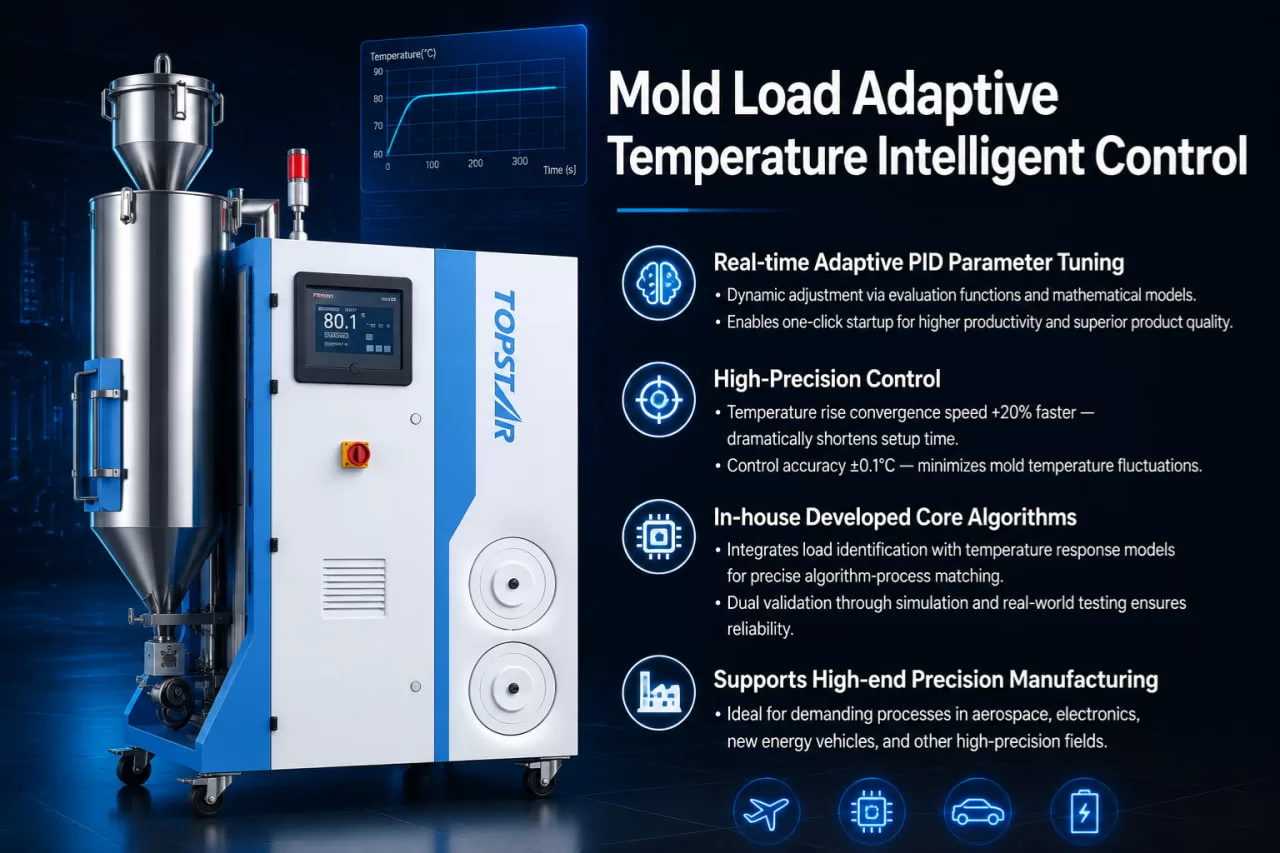
The Topstar dehumidifying dryer series was designed from the outset to address the various issues that traditional drying and dehumidifying systems cannot resolve. Rather than making minor improvements to existing architectures, we reimagined what intelligent drying and dehumidifying systems should look like. This led to the development of our core technology:
Mold Load Adaptive Temperature Intelligent Control. Its adaptive algorithm identifies load characteristics in real time, and PID parameters are dynamically adjusted throughout the drying cycle. Even as operating conditions constantly change, temperature control remains within ±0.1°C. This gives Topstar dehumidifying dryers precision and reliability far surpassing those of ordinary drying equipment.
Topstar Dehumidifying Dryer’s Core Technology: “Mold Load Adaptive Temperature Intelligent Control”
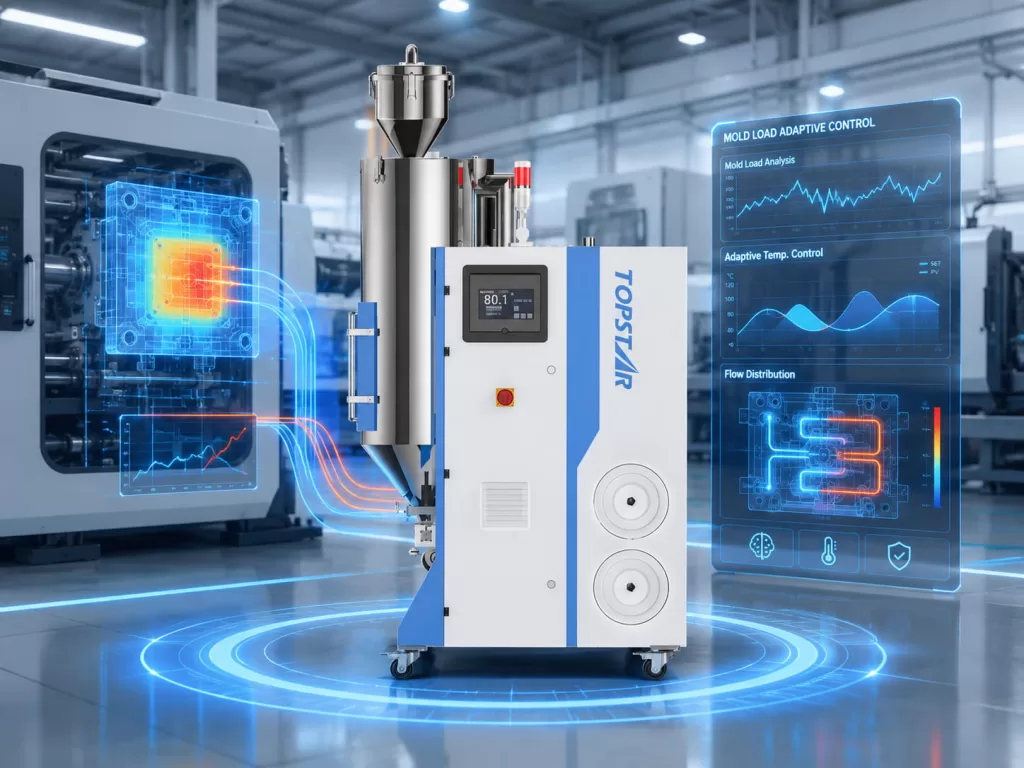
The moisture content of materials processed by any drying and dehumidifying system varies from batch to batch; batch weights fluctuate with orders; ambient temperature and humidity fluctuate hourly; and the heat capacity of a specific mold configuration depends on its shape. These factors often make it difficult for operators to preset parameters. Traditional drying systems typically employ limited methods to address this complexity.
The Topstar dehumidifying dryer, however, adopts a radically different strategy. “Intelligent Temperature Control Adaptive to Mold Load” technology endows the system with autonomous capabilities: it can independently identify the operating environment, select an appropriate control strategy, and dynamically adjust that strategy based on changing conditions throughout the drying cycle.
Operators need only set the desired process targets:
such as the target drying temperature, desired dew point, and required processing time.
The system then precisely determines the optimal plan to achieve these targets, ensuring maximum efficiency and minimizing process fluctuations. This adaptive algorithm serves as the foundation for all technologies in the Topstar dehumidifying dryer series.
Real-Time Adaptive PID Parameter Setting for Dehumidifying Dryer
PID control is at the heart of nearly all existing industrial temperature regulation systems. In most practical applications of drying and dehumidifying systems, PID parameters are typically set only once during commissioning; although occasionally fine-tuned by skilled technicians, they generally remain fixed. However, in virtually all other application scenarios, this approach often results in a trade-off between response speed and system stability.
Topstar dehumidifying dryers eliminate this trade-off through real-time adaptive PID parameter tuning technology. The system no longer relies on fixed parameter settings; instead, it continuously evaluates its own control behavior and updates PID gains in real time to match current operating conditions. These adjustments are not performed at preset intervals but are truly dynamic and real-time.
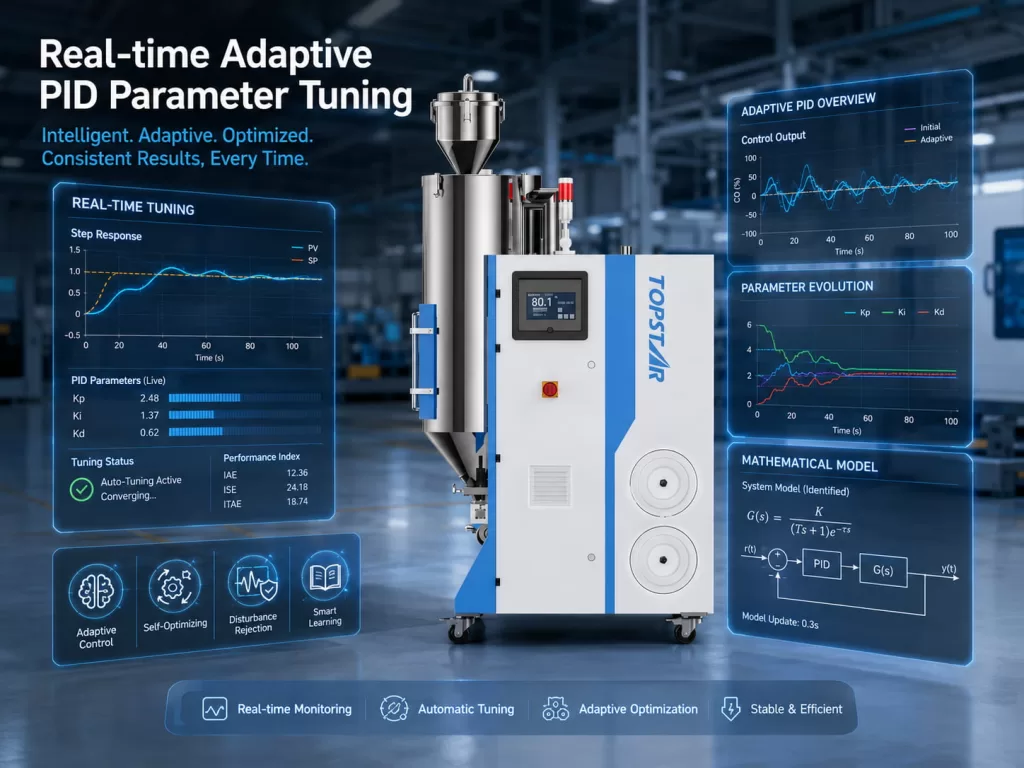
Dynamic Adjustment Mechanism Based on Evaluation Functions and Mathematical Models
The evaluation functions used by the Topstar dehumidifying dryer to adjust control parameters are based on mathematical models of system behavior developed through the company’s in-house R&D projects. These models precisely describe the interactions between factors such as temperature, heat input, thermal inertia (thermal mass), and moisture release across the system’s entire operating range. By embedding these models directly into the real-time control loop, Topstar dehumidifying dryers endow their PID systems with predictive capabilities. During actual operation, there is no need to wait for a temperature error to occur before making a hasty correction. The system can anticipate system behavior based on the current state and identified load conditions, and adjust control parameters in advance, thereby preventing errors at their source.
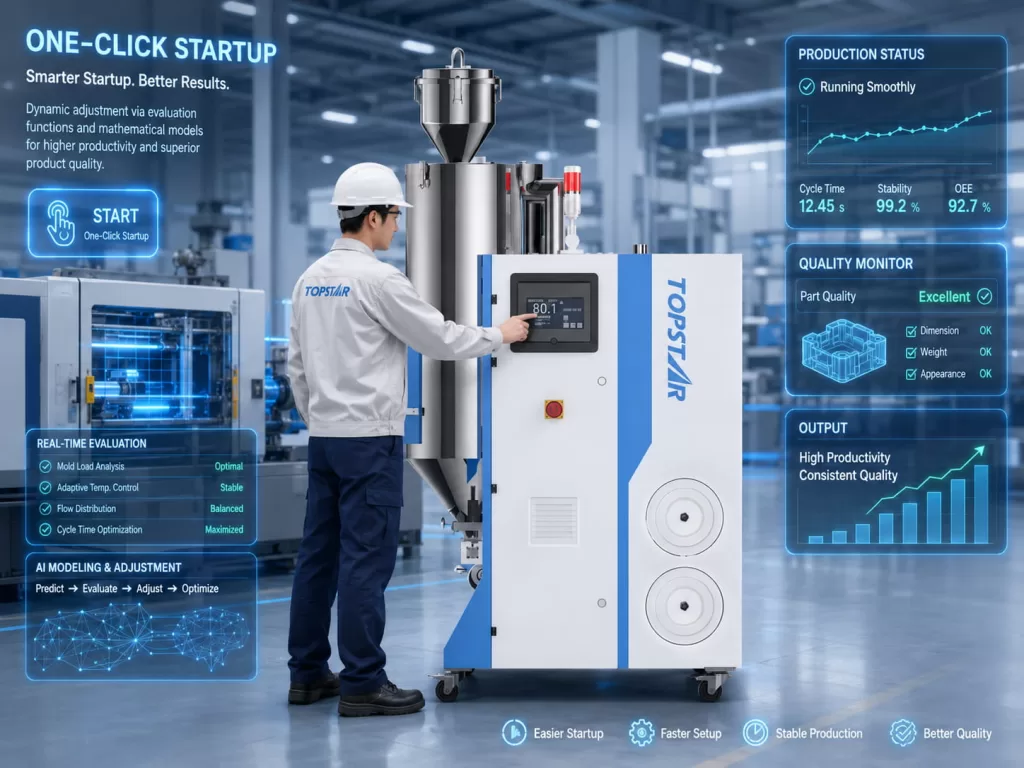
Achieving “One-Click Start-Up”
The most significant achievement of the adaptive PID architecture in practical operation is the “one-button start-up” function built into the dehumidifying dryer. In traditional drying and dehumidifying systems, starting the dryer typically requires specialized personnel to confirm that the system is operating stably within acceptable limits before feeding material into it. In environments with frequent changes to production tasks, this entire process consumes significant time and reduces efficiency.
Topstar dehumidifying dryers replace this cumbersome process with a single operating command. Once started, the system automatically executes a load identification program, selects the appropriate PID parameter curve based on the identified material and operating conditions, performs an optimized preheating program, and confirms that the equipment is ready—all without requiring any additional operator intervention. This directly enhances the equipment’s production efficiency and product quality.
High-Precision Temperature Control
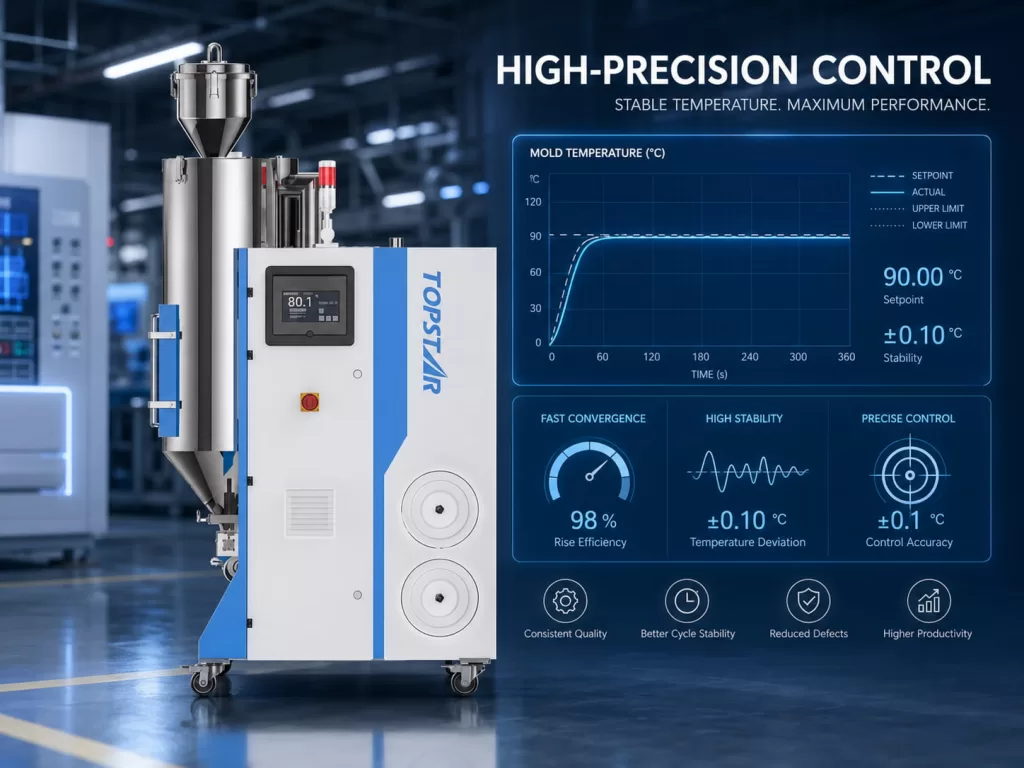
The speed at which the temperature reaches the setpoint (convergence speed) and steady-state control accuracy are two distinct—and often mutually limiting—aspects of a drying and dehumidifying system’s performance. Systems with fast convergence speeds are prone to temperature overshoot and oscillations, while systems prioritizing high steady-state accuracy typically have slower, more conservative heating processes. Topstar dehumidification dryers balance both of these aspects:
- Its heating convergence rate is 20% faster than that of traditional drying and dehumidifying systems;
- It maintains a steady-state control accuracy of ±0.1°C throughout the entire operating cycle.
The benefits of a 20% increase in convergence speed accumulate year after year, leading to significant yield growth and substantially reducing energy consumption from lengthy, conservative preheating phases. Topstar’s dehumidifying dryers can control temperature fluctuations within ±0.1°C throughout the entire drying cycle, thereby eliminating uncertainties in thermal parameters.
Proprietary Core Algorithms: The Core Competitive Advantage of Topstar Dehumidifying Dryer
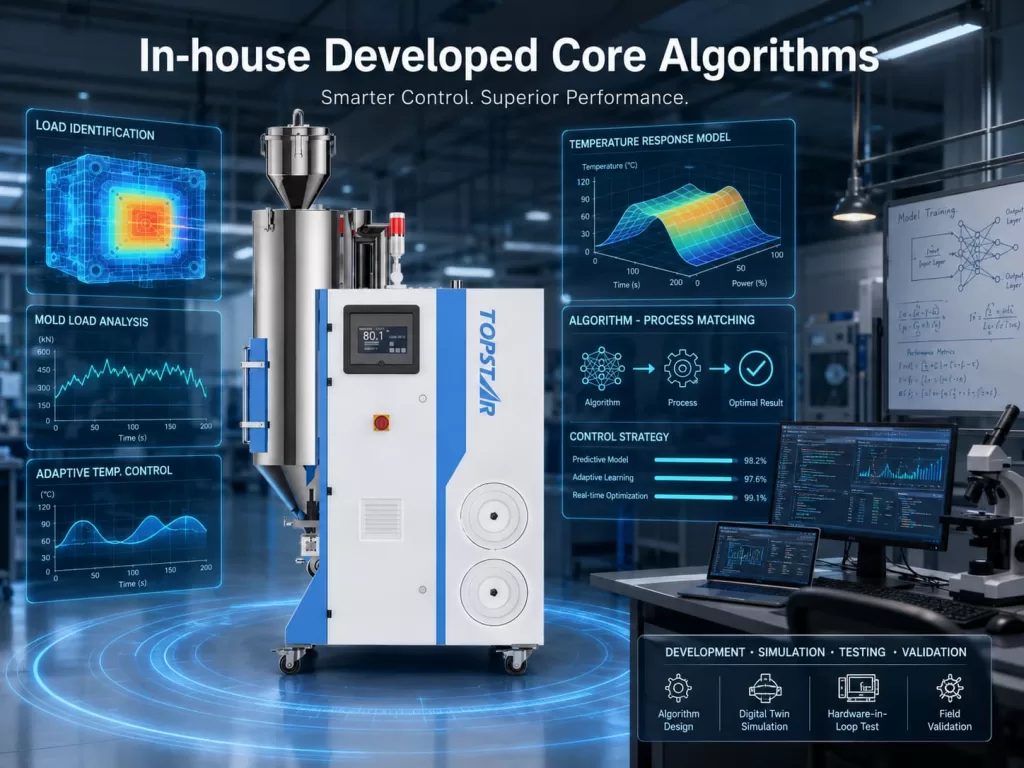
The adaptive load recognition, real-time PID tuning, rapid convergence, and ±0.1°C temperature control accuracy featured in Topstar dehumidifying dryers do not originate from commercial control software packages or generic automation platforms. Instead, the Topstar engineering team has developed the core algorithms that enable these functions entirely in-house. This allows us to maintain direct control over every level of the system’s intelligence, enabling rapid optimization, deep customization for specific application requirements, and precise alignment of algorithms and processes that generic solutions cannot architecturally achieve.
We validate each core algorithm using a rigorous dual-method approach that combines computational simulation with actual production testing.
During the simulation phase, we use detailed mathematical models of the system’s physical behavior—covering thermodynamics, fluid dynamics, and control architecture—to test candidate algorithms under thousands of simulated operating conditions. Subsequently, under conditions simulating actual production environments, we validate the simulation results by comparing them with the system’s actual operational performance through field testing. Field performance data is fed back into the simulation models, thereby continuously improving their fidelity and ensuring reliability.
High-End Precision Manufacturing
The core technology used in the Topstar dehumidifying dryer series is suitable for precision manufacturing processes across industries such as aerospace, electronics, electrical appliances, and new energy vehicles.
Aerospace Manufacturing
With precise thermal control and adaptive load management, Topstar dehumidifying dryers ensure that aerospace-grade materials consistently meet specified moisture content standards before processing, eliminating quality fluctuations.
Electronics and Electrical Manufacturing
Topstar dehumidifying dryers feature temperature control accuracy of ±0.1°C, meeting stringent dimensional tolerance requirements of electronics manufacturers. Additionally, their “one-touch start” and adaptive load control functions effectively support rapid changeover between multiple product varieties, as commonly required in electronics production.
New Energy Vehicle Manufacturing
The complexity and critical nature of material systems place extremely high demands on the performance of drying and dehumidifying systems. Whether it’s battery housings, structural frames, charging system components, thermal management interfaces, or interior structural parts, all require a stable and precisely controlled material pretreatment process. Topstar dehumidification dryers can handle the diverse materials used in new energy vehicle production while maintaining the consistency and repeatability that traditional systems struggle to achieve.
In addition to these three core sectors, Topstar dehumidifying dryers are widely used in precision manufacturing industries, including medical devices, optical components, fluid-handling systems, and semiconductor packaging.
Redefining Performance Standards for Dehumidifying Dryer
“Intelligent Temperature Control with Adaptive Mold Flow Load” technology provides the “situational awareness” required for dehumidification and drying systems to perform their various functions. Without precise identification of load characteristics, PID parameter optimization and accelerated convergence cannot achieve their maximum effectiveness. Empowered by this technology, Topstar’s dehumidification and drying systems meet the high-precision demands of industries such as aerospace, electronics, and new energy vehicles.
TRENDING POSTS
- TOPSTAR Selected in “Forbes China AI Top 50” and Wins “2026 Embodied AI Industry Benchmark Award” 2026/06/26
- Topstar Achieves ISO 13849 Functional Safety Certification for Robotics 2026/06/26
- Topstar Completes Key Puzzle in Embodied Intelligence Data Closed Loop — Industrial AI Capability Foundation Now in Place 2026/06/26
- Topstar Honored with SING TAO GLOBAL CHINA 2025 Distinguished Leading Enterprise in Global Expansion 2026/06/26
HOT TOPIC
- .ervo motor-driven linear robots
- •
- 1.0 guangdong topstar technology co. ltd
- 1.0 topstar china
- 1.0 topstar robot
- 11
- 160℃ mold temperature controller
- 170 ton injection molding machine
- 2
- 21
- 220-ton injection molding machine
- 23
- 260 ton injection molding machine
- 3 axis robot
- 3 axis robots
- 3 in 1 Compact Dehumidifying Dryer
- 3-axis robot
- 3-axis robots
- 39
- 4 axis robot
- 4-axis SCARA robot
- 41
- 460T injection molding machine
- 5-axis CNC machine
- 62
- 90 ton injection molding machine
- accuracy
- Air Chillers
- air-cooled chillers
- all electric injection molding machine
- all electric injection molding machines
- all-electric injection molding machine
- All-electric injection molding machines
- and overall production quality. Therefore
- AP-RubberPlas
- auto cooling system
- auto loader
- Auto Loaders
- automated injection molding machine
- Automation changed engineering
- automation of injection molding robots
- automotive parts injection molding
- Auxiliary Equipment
- auxiliary machine
- Bench Injection Molding Machine
- cabinet dryer
- Cabinet dryer manufacturers
- Cabinet dryers
- cartesian coordinate robot
- Cartesian Coordinate Robots
- Cartesian injection robot
- Cartesian robot
- Central Feeding System
- Central Feeding Systems
- chiller
- CNC Drilling Machine
- CNC Drilling Machines
- cnc engraving machine manufacturer
- cnc laser cutting machine manufacturer
- CNC machine
- CNC Machine Center
- CNC Machine for Sale
- CNC Machine Manufacturing
- CNC Machine Tool
- CNC machine tool product
- CNC Machining Center
- CNC wood carving machine
- Compact Dehumidifying Dryer
- Cooling system
- Cross-Walking Single Axis Servo Cylinder Robot
- Cross-Walking Single-Axis Servo Cylinder Robot
- Cross-Walking Three-Axis/Five-Axis Servo Driven Robot
- cross-walking three-axis/five-axis servo-driven robot
- Dehumidifier Dryer
- Dehumidifying Dryer
- dehumidifying dryers
- delta parallel robot
- Desktop Injection Molding Machine
- Desktop injection molding machines
- Desktop Molding Machine
- desktop plastic injection machine
- Desktop Plastic Injection Molding Machine
- detachable autoloader
- Digital Transformation
- direct clamp injection molding machine
- Direct clamp injection molding machines
- Dosing & mixing system
- Drilling Centers
- Drying and dehumidification system
- drying and dehumidifying equipment
- Drying and Dehumidifying System
- drying system
- effective and efficient. Cabinet dryers are also used in other industries where large quantities of material need to be dried
- efficient injection molding machine
- elbow hydraulic injection molding machines
- electric injection molding machine
- electric injection molding machines
- energy-efficient injection molding robot
- energy-efficient water chiller
- energy-efficient water chillers
- energy-saving injection molding machine
- etc. Among injection molding robots
- exhibition
- features of CNC machine
- Feeding And Conveying System
- Five Axis Machine Center
- Flexible Production Line
- Fully automatic injection molding machine
- Gathering Topstar
- giant injection molding machine
- GMU-600 5-Axis Machining Center
- Granulating & Recycling System
- granulator machine
- gravimetric blender
- Heavy duty injection molding machine
- Heavy-Duty Take-Out Robot
- High-precision electric molding machines
- high-precision plastic molding machines
- high-speed all electric injection molding machine
- high-speed electric injection molding machine
- High-Speed Packaging Injection Molding
- Honeycomb rotor dehumidifier
- hopper dryer
- Hopper Dryers
- horizontal injection molding machine
- Horizontal Injection Molding Machines
- Horizontal Injection Moulding Machine
- Horizontal Mixer manufacturer
- How The CNC Machine Works
- hybrid injection molding machine
- hydraulic injection molding machine
- Hydraulic Injection Molding Machines
- in this article
- Industrial AI
- Industrial Automation
- Industrial robot
- Industrial Robot Chinese brand
- industrial robot parts
- industrial robot supplier
- Industrial robots
- Industry Chain
- Injection Manipulator
- injection manipulator robot
- injection mold machines
- Injection molding
- Injection molding automation
- Injection Molding Automation Solution
- injection molding dryer
- Injection molding equipment
- injection molding hopper dryer
- Injection molding machine
- injection molding machine brand
- Injection Molding Machine Factory
- Injection Molding Machine Manufacture
- Injection molding machine manufacturer
- injection molding machine manufacturers
- Injection molding machine procurement
- injection molding machine robotic arm
- injection molding machine with a robot
- Injection molding machines
- injection molding material dehumidifying
- injection molding plant
- injection molding process
- Injection Molding Robot
- injection molding robot arm
- Injection molding robot automation
- Injection molding robotic arm
- injection molding robots
- injection molding whole plant
- injection moulding dryer
- Injection moulding machine
- injection moulding machines
- Injection Moulding Robots
- Injection Robot
- Injection robot arm
- Injection robot manufacturer
- Injection robot wholesale
- injection robots
- Intelligent Factory
- intelligent injection molding machines
- Intelligent Manufacturing
- intelligent mold temperature
- intelligent mold temperature controller
- Intelligent mould temperature controller
- intelligent whole plant solution
- InterPlas Thailand 2025
- Introducing Injection Robot
- It is the best choice for drying large quantities of material at once. Cabinetmakers use these machines because they are fast
- Large flow water type mold temperature controller
- large injection molding machine
- large injection molding machines
- Learn what industrial automation and robotics is
- linear robot
- linear robots
- low speed sound-proof granulator
- machine plastic molding
- make sure to add some! Improvements (2) Keyphrase in introduction: Your keyphrase or its synonyms appear in the first paragraph of the copy
- manipulator machine
- manufacturing
- Manufacturing Innovation
- medical grade injection molding machines
- Medical Injection Molding
- medical injection molding machine
- medical injection molding machines
- micro injection molding machine
- middle speed granulator
- Mini CNC machine manufacturers.
- mobile cover making machine
- Mold Temperature Control System
- mold temperature controller
- mold temperature controllers
- molding machine
- molding material Dehumidifying System
- mould temperature control system
- mould temperature controller
- mould temperature controller
- mould temperature controllers
- New electric injection molding machine
- Nitrogen Dryer
- nitrogen dryer manufacturer
- nitrogen dryer system manufacturer
- Oil type mold temperature controller
- Oil type mold temperature controllers
- open day
- optical component injection molding
- Optical-grade dehumidifying dryer
- Outbound links: No outbound links appear in this page. Add some! Images: No images appear on this page. Add some! Internal links: No internal links appear in this page
- packaging injection molding
- Packaging Solutions
- PET Preform injection molding
- phone case maker machine
- phone case making machine
- phone cover making machine
- PID Control Mold Temperature Controller
- plastic auto loader
- plastic bottle making machine
- plastic bottle manufacturing
- plastic bucket making machine
- plastic bucket manufacturing
- Plastic chair making machine
- plastic dryer for injection molding
- plastic forming equipment
- Plastic Granulator
- Plastic Granulators
- plastic hopper dryer
- plastic injection machine
- plastic injection machines
- plastic injection molding
- Plastic injection molding equipment
- Plastic injection molding machine
- Plastic Injection Molding Machines
- plastic injection moulding machine
- plastic injection moulding machines
- plastic injection robot
- plastic molding
- Plastic Molding Industry
- Plastic Molding machine
- plastic molding machine 1
- Plastic Molding Machines
- plastic molding press
- plastic moulding machine
- plastic phone case making machine
- plastic-molding machine
- powerful granulator
- Powerful Type Sound-Proof Granulator
- precision injection molding
- precision injection molding machines
- production of plastic seats
- pure water mould temperature controller
- Robot injection molding
- robot injection molding machine
- robot manufacturing companies
- Robotic arm for injection molding machine
- robotic injection molding machines
- robotics in injection molding
- SCARA robot
- SCARA robots
- Screw dosers
- Service-oriented manufacturing
- Servo Cylinder Robot
- servo driven robot
- Servo Driven Robots
- servo injection molding machine
- servo injection robots
- servo motor-driven linear robots
- servo-driven 3-axis robot
- Servo-driven injection molding machine
- Servo-Driven Robot
- Setup of injection machine
- Silicone Injection Molding Machine
- six-axis industrial robot
- Smart Manufacturing
- soundproof granulator
- Sprue Picker
- Stainless Hopper Dryer
- Stainless Hopper Dryers
- star club
- swing arm robot
- T1 Cartesian injection robot
- take-out robot
- take-out robots
- Thailand 4.0
- the choice between servo-driven robots and hydraulic robots will have a certain impact on efficiency
- the most popular injection molding machine
- the type of injection molding robot
- TIC2000 Control System
- TMII injection molding machine
- toggle clamp injection molding machine
- Toggle Hydraulic Injection Molding Machines
- toggle injection molding machine
- Top 10 brands of injection robots
- Topstar
- Topstar Electric Injection Molding Machine InterPlas Thailand 2025 Smart Manufacturing Thailand 4.0
- Topstar Engineering
- Topstar Industrial Robots
- Topstar injection molding intelligent
- Topstar Scara Robots
- Useful Injection molding machine
- Vertical machining centers
- volumetric type blender
- Washing Machine Case Molding Solution
- water chiller
- water chillers
- water distributor
- water type mold temperature controller
- Water Type MoldTemperature Controller
- Water-Cooled Chillers
- Water-cooled Mold Temperature Controller
- water-type mold temperature controller
- Water-Type Mould Temperature Controllers
- We often face choices when performing injection molding. We will choose the type of injection molding machine
- wholesale of injection molding machines
- x carve CNC
- 热门查询 点击次数 展示 排名 topstar